
2026 Zahner Conservation Lecture Series
Get the Latest on Foundation Events & Programs
Each summer, the Highlands Biological Foundation has hosted evening lectures at the Highlands Nature Center focused on the theme of natural history and conservation, a tradition that began in the 1930s. Today, these lectures are known as the Zahner Conservation Lecture Series – named for the significant contributions of Dr. Robert Zahner and his wife Glenda, of Highlands, to land conservation efforts on the Highlands Plateau.
Highlands Nature Center
930 Horse Cove Rd
Directions | Parking Info
Thursday Evenings
June 11 - August 6 at 6:00 PM
(excluding July 2)
Free Admission
Open to the public.
No registration necessary.
These lectures serve to educate and inspire the public through a series of talks from well-known regional scientists, conservationists, artists, and writers.
The series is made possible by the Highlands Biological Foundation and it's generous supporters.
2026 Lectures
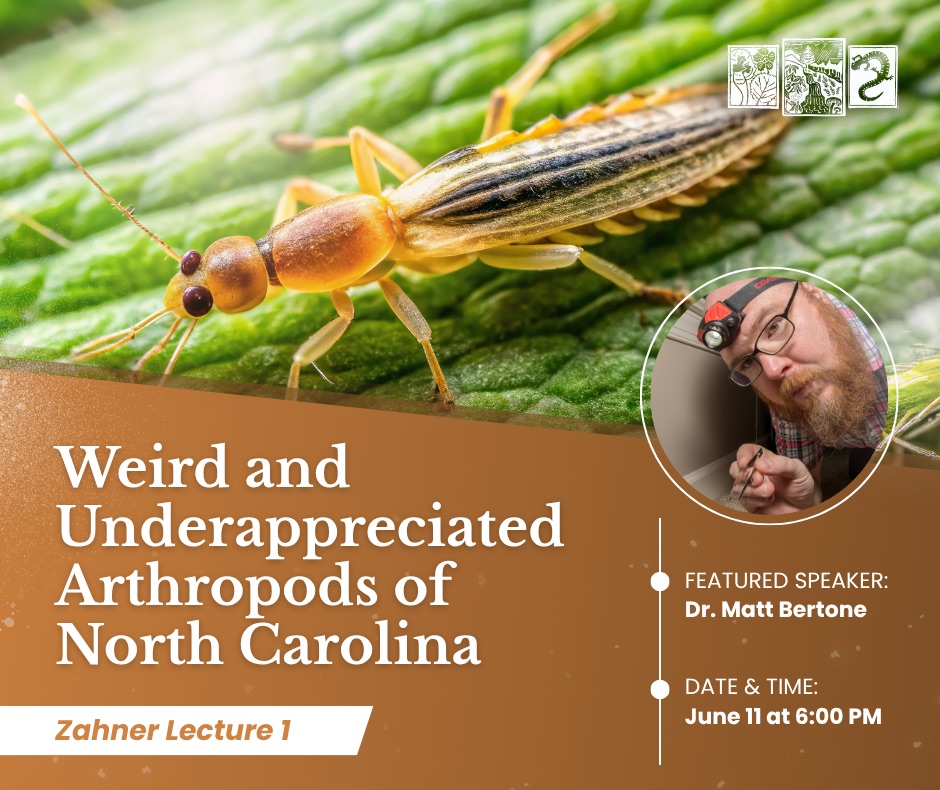
LECTURE 1
Weird and Underappreciated Arthropods of North Carolina
Featured Speaker
Dr. Matt Bertone, Entomologist and Director, NC State Plant Disease and Insect Clinic (NCSU)
Date: Thursday, June 11
Time: 6pm - 7pm
Cost: FREE
Sponsored by Vicki and Donny Ferguson
Everyone knows butterflies, dragonflies, and praying mantises, among other popular arthropods. However, have you heard of thrips? Bark lice? Eriophyid mites? In this presentation Dr. Matt Bertone, strange critter enthusiast, will share with you information and photos of some of North Carolina's weirdest and least talked about arthropods.
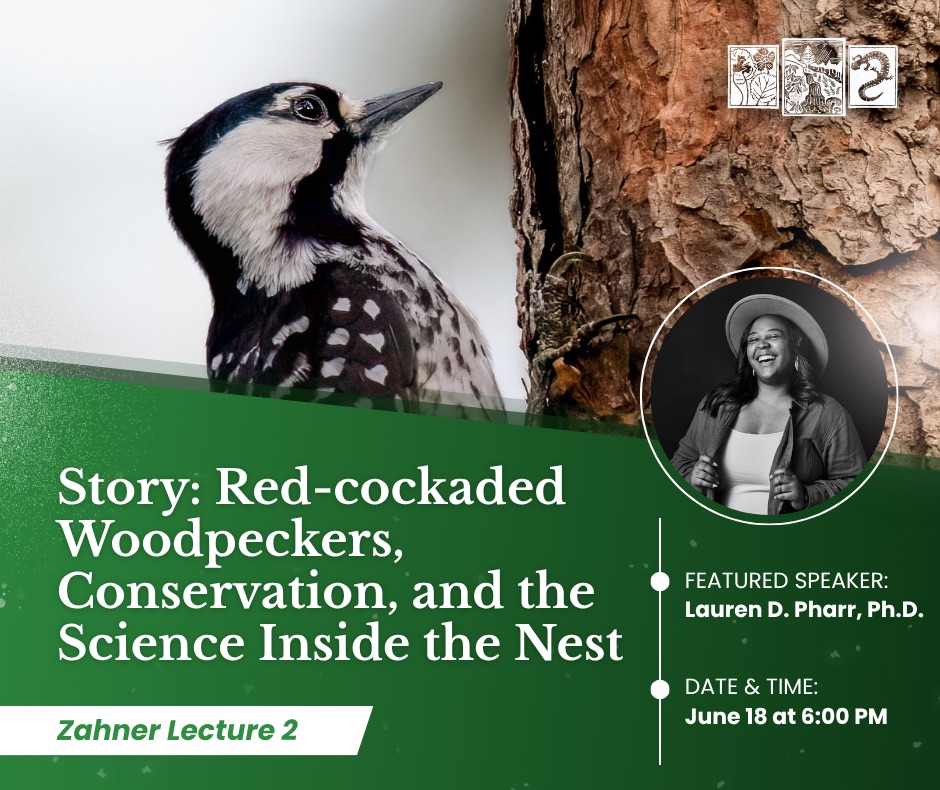
LECTURE 2
Story: Red-cockaded Woodpeckers, Conservation, and the Science Inside the Nest
Featured Speaker
Lauren D. Pharr, Ph.D., Postgraduate Researcher, North Carolina State University
Date: Thursday, June 18
Time: 6pm - 7pm
Cost: FREE
Sponsored by Jennie Stowers
The red-cockaded woodpecker once faced a severe decline as longleaf pine forests disappeared across the southeastern United States. Today it is one of the most recognized examples of successful species recovery. In this talk, avian behavioral ecologist Dr. Lauren Pharr shares the “w(hole) story” of this remarkable bird—from the history of its conservation to the science happening inside its nest cavities. Drawing from her research on partial brood loss, Dr. Pharr explores how these cooperative birds live in family groups and how factors such as group size and environmental conditions shape chick survival, offering new insights into life inside the nest.
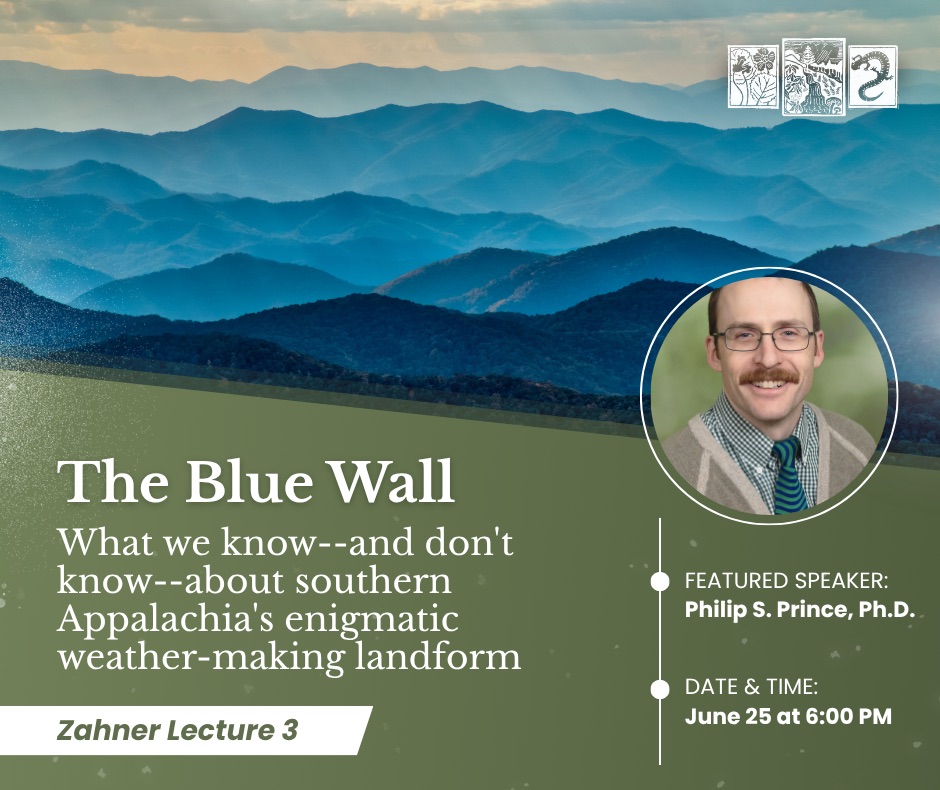
LECTURE 3
The Blue Wall: What we know--and don't know--about southern Appalachia's enigmatic weather-making landform
Featured Speaker
Philip S. Prince, Ph.D., Project Geologist, Appalachian Landslide Consultants, PLLC, Virginia Tech Department of Geosciences
Date: Thursday, June 25
Time: 6pm - 7pm
Cost: FREE
Sponsored by Suzanne & Don Duggan, Ruthie & Franko Oliver, Margaret Waters, Adele & Nick Scielzo, and Florence & Tom Holmes
Highlands owes its natural beauty to its location atop the Blue Ridge Escarpment, the steep, 1,500-3,000 foot topographic step defining the southeastern edge of Appalachian Mountain topography from northeastern Georgia to Roanoke, Virginia. Along its entire length, the Escarpment separates river systems, controls weather, and presents a significant obstacle to entry into the mountains from Piedmont cities like Greenville and Charlotte. Despite its massive geographic extent and ecological and societal significance in southern Appalachia, surprisingly little is known about the origins of the Escarpment and which chapter of Appalachian Mountain development its existence represents. Notable as the only major Appalachian landform that is not a direct result of bedrock outcrop patterns, geologists have long sought to understand why the Escarpment is even here in the first place. This talk will discuss both the Escarpment's well-known functions as a river divide and weather-maker and the questions surrounding its formation, history, and overall relationship to the rest of the modern-day southern Appalachian Mountains.
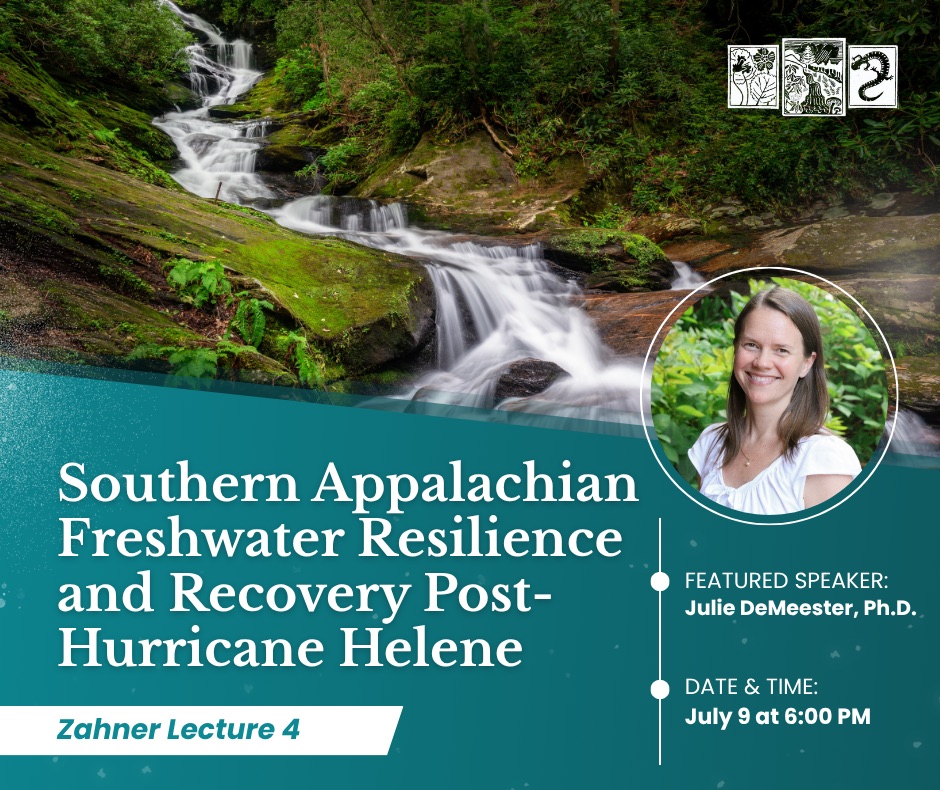
LECTURE 4
Southern Appalachian Freshwater Resilience and Recovery Post-Hurricane Helene
Featured Speaker
Julie DeMeester, Ph.D., Director of Freshwater and Coastal Programs, The Nature Conservancy, North Carolina Chapter
Date: Thursday, July 9
Time: 6pm - 7pm
Cost: FREE
Sponsored by Martha & Michael Dupuis, Monte & Palmer Gaillard, and Melanie & Tom Mauldin
Join Dr. Julie DeMeester from TNC’s North Carolina Chapter for an engaging discussion about mountain streams, freshwater resilience, Hurricane Helene impacts, and watershed restoration efforts. She will explore the unique aspects of mountain streams, describe TNC’s concept of freshwater resilience, and overlay these themes in a post-Helene landscape. Julie will also describe TNC’s 10-year plan to improve mountain watersheds across the Southern Appalachians.
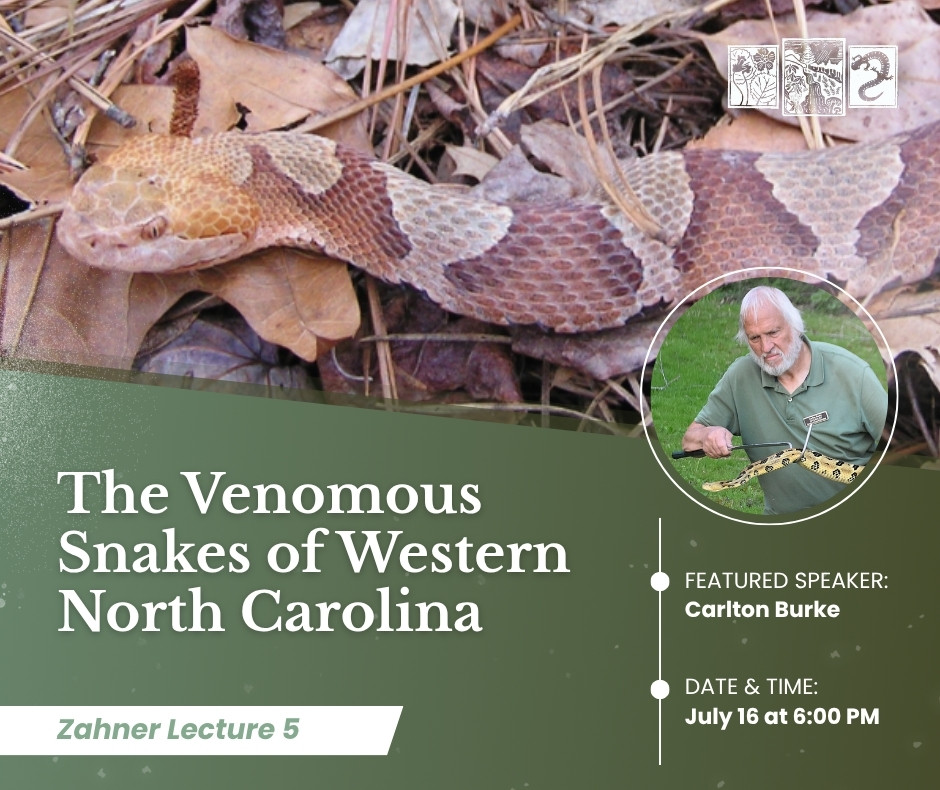
LECTURE 5
The Venomous Snakes of Western North Carolina
Featured Speaker
Carlton Burke, local naturalist and wildlife rehabilitator, Carolina Mountain Naturalists
Date: Thursday, July 16
Time: 6pm - 7pm
Cost: FREE
Sponsored by Gayle Watkins & Andy Chmar, Linda & Tod Chmar, Lisa & Cove Geary
Many people live in fear of coming into contact with a venomous snake in the outdoors. However the average person often has trouble identifying one from the many non-venomous and harmless snakes that are also found here. Learn how to identify the venomous species, how to react if you see one, and find out why we actually need these snake species in our forest ecosystem. We will also have some live venomous snake examples on hand to study closely.
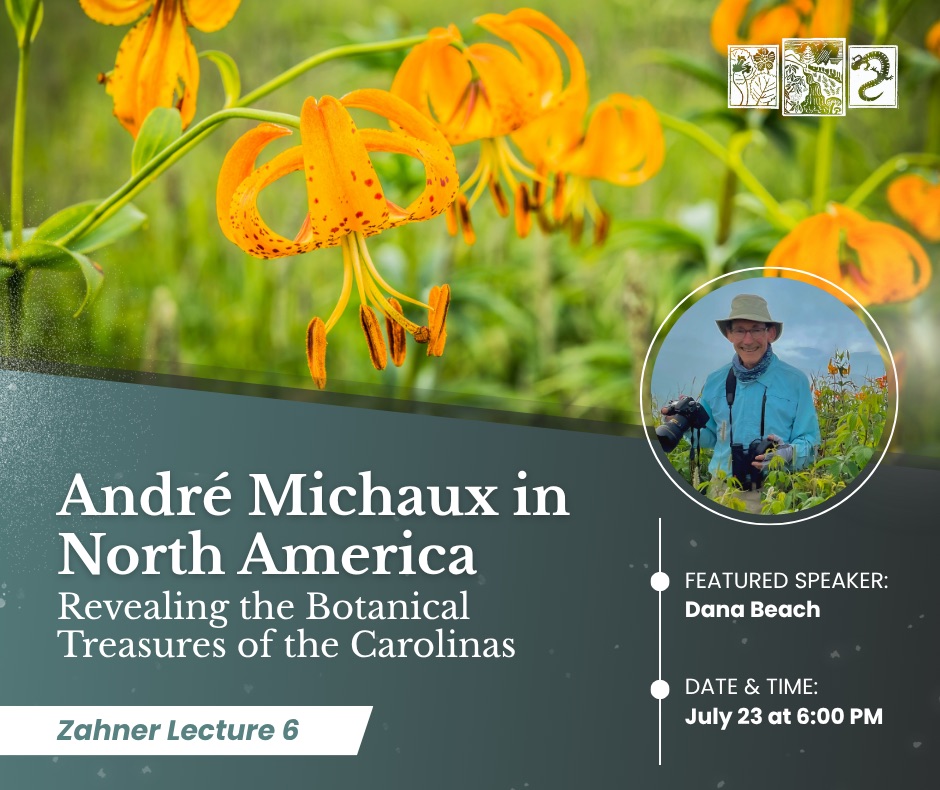
LECTURE 6
André Michaux in North America: Revealing the Botanical Treasures of the Carolinas
Featured Speaker
Dana Beach, Founder and former Executive Director, SC Coastal Conservation League, Board Member, Butler Parklands
Date: Thursday, July 23
Time: 6pm - 7pm
Cost: FREE
Sponsored by Ruthie & Berry Edwards
Dana explores the remarkable legacy of 18th-century botanist André Michaux, tracing his expeditions from the Carolina coast to the Southern Appalachians and his foundational contributions to North American botany. Blending science, history, and adventure, the talk highlights the discovery and rediscovery of the rare Oconee bell (Shortia galacifolia), the intersection of botany and early American exploration, and the lasting impact of Michaux’s work on the region’s rich plant life.
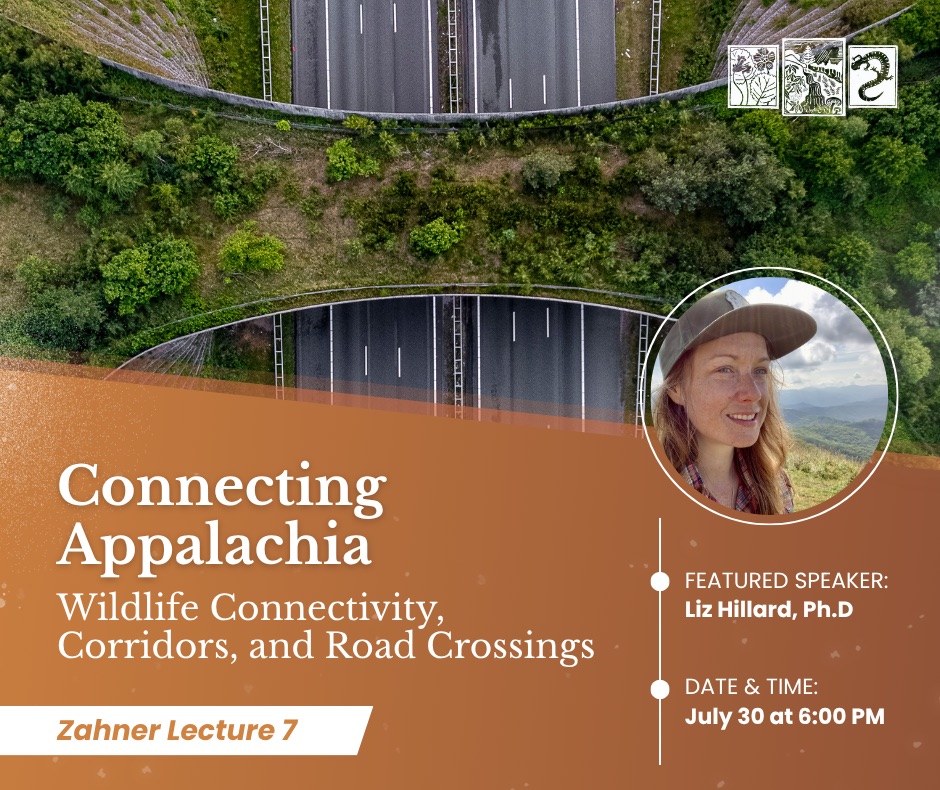
LECTURE 7
Connecting Appalachia: Wildlife Connectivity, Corridors, and Road Crossings
Featured Speaker
Liz Hillard, PhD, Senior Wildlife Biologist-Appalachian Region for Wildlands Network
Date: Thursday, July 30
Time: 6pm - 7pm
Cost: FREE
Sponsored by Lori & Ed Heys
This talk explores efforts to understand and improve wildlife connectivity across the Appalachian region, from local road crossing projects to large-scale corridor planning. It will highlight how wildlife crossing structures, habitat connectivity, and landscape scale conservation vision can work together to improve wildlife conservation.
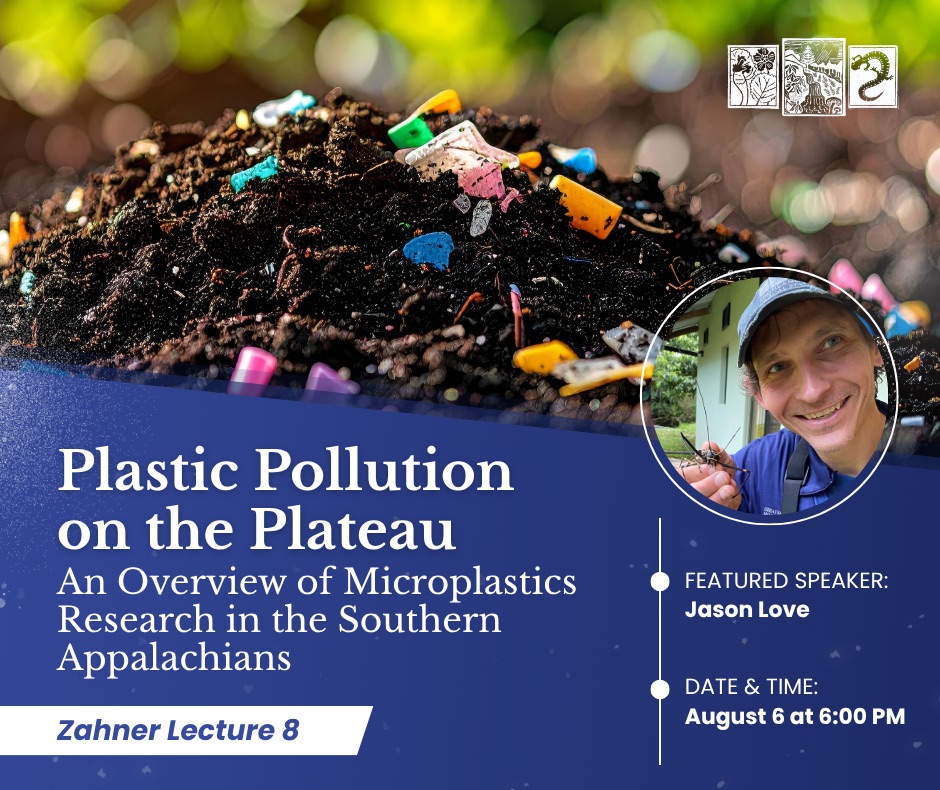
LECTURE 8
Plastic Pollution on the Plateau: An Overview of Microplastics Research in the Southern Appalachians
Featured Speaker
Jason Love, Associate Director of Highlands Biological Station, Western Carolina University
Date: Thursday, August 6
Time: 6pm - 7pm
Cost: FREE
Sponsored by Paul Manos & Diane Lennox
Microplastics are a growing environmental and human health concern. Recent research from HBS and others shows that microplastics are being deposited from the atmosphere, where they end up in the environment, including soils, forested headwater streams, valley rivers, and in both terrestrial and aquatic animals. This presentation will provide an overview of plastic pollution, including research from the Plateau and surrounding region.
View lectures from previous years:
Parking
Please note that parking is limited on campus. Parking can be found behind and across from the Highlands Nature Center (930 Horse Cove Rd), in the Valentine House parking lot (888 Horse Cove Rd), and at our admin. building (265 N. 6th Street). For those who are able, some parking is available at our North Campus area (111 Lower Lake Rd) with a ~15 to 20 minute hike to the Nature Center. After 5:30 p.m., parking is also available at Hudson Library (554 Main St.) with a ~15 to 20 minute hike to the Nature Center along Horse Cove Rd (note that the sidewalk switches to the opposite side of the road once you reach 6th Street, so please use caution as you cross the street).