
HBS Archives · Object Study · Moving Image History
“They Give Us Those
Nice Bright Colors”
How a silent 16mm projector, a Depression-era museum, and the films of the American Museum of Natural History brought nature to life for generations of Highlands visitors.
As in the words of Simon and Garfunkel’s Kodachrome — those nice bright colors, the greens of summer — the Kodascope Model D, a 16mm projector introduced by Eastman Kodak between 1933 and 1935, made learning about science at the Highlands Museum a sunny day for many. Its story takes us back to the very beginning of the motion picture industry, involving several entrepreneurial companies and the dreams of a small mountain community.
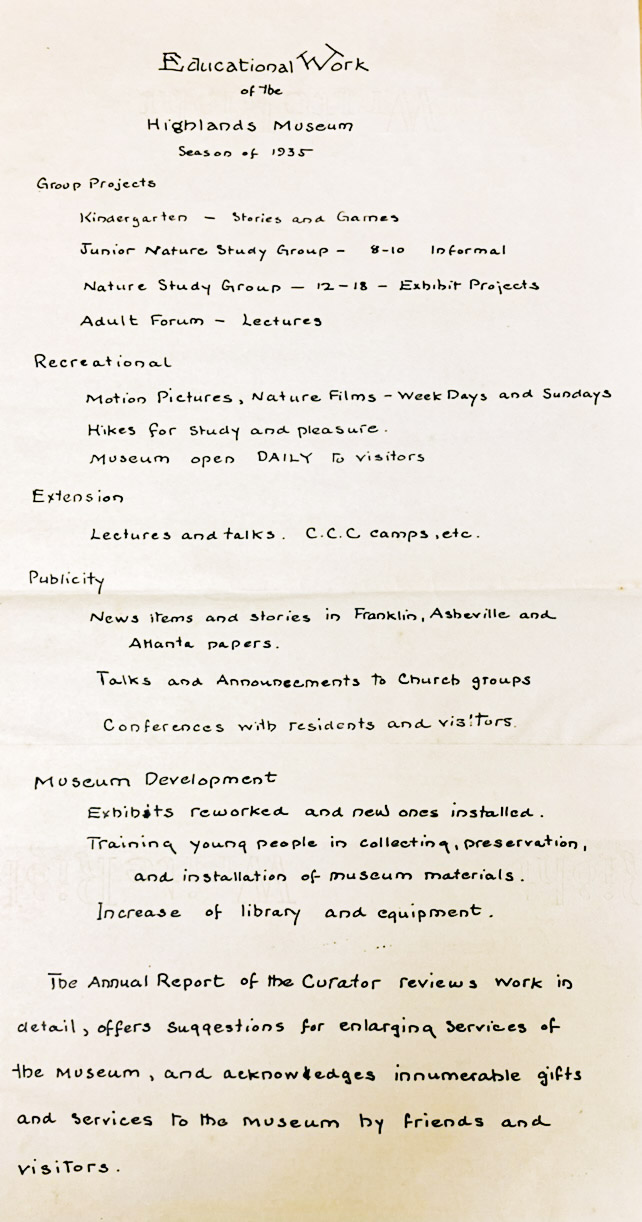
The HBS Archives holdings are mostly documents, but recently a new object for the Archives turned up — having been owned by HBS since about 1935. A Highlands Museum (Nature Center) was located in a one-room wing of the Hudson Library until 1941. A hand-lettered poster of summer events reveals the showing of “Motion Pictures, Nature Films — Week Days and Sundays” for “recreational” public viewing.
Films from the Government Vaults
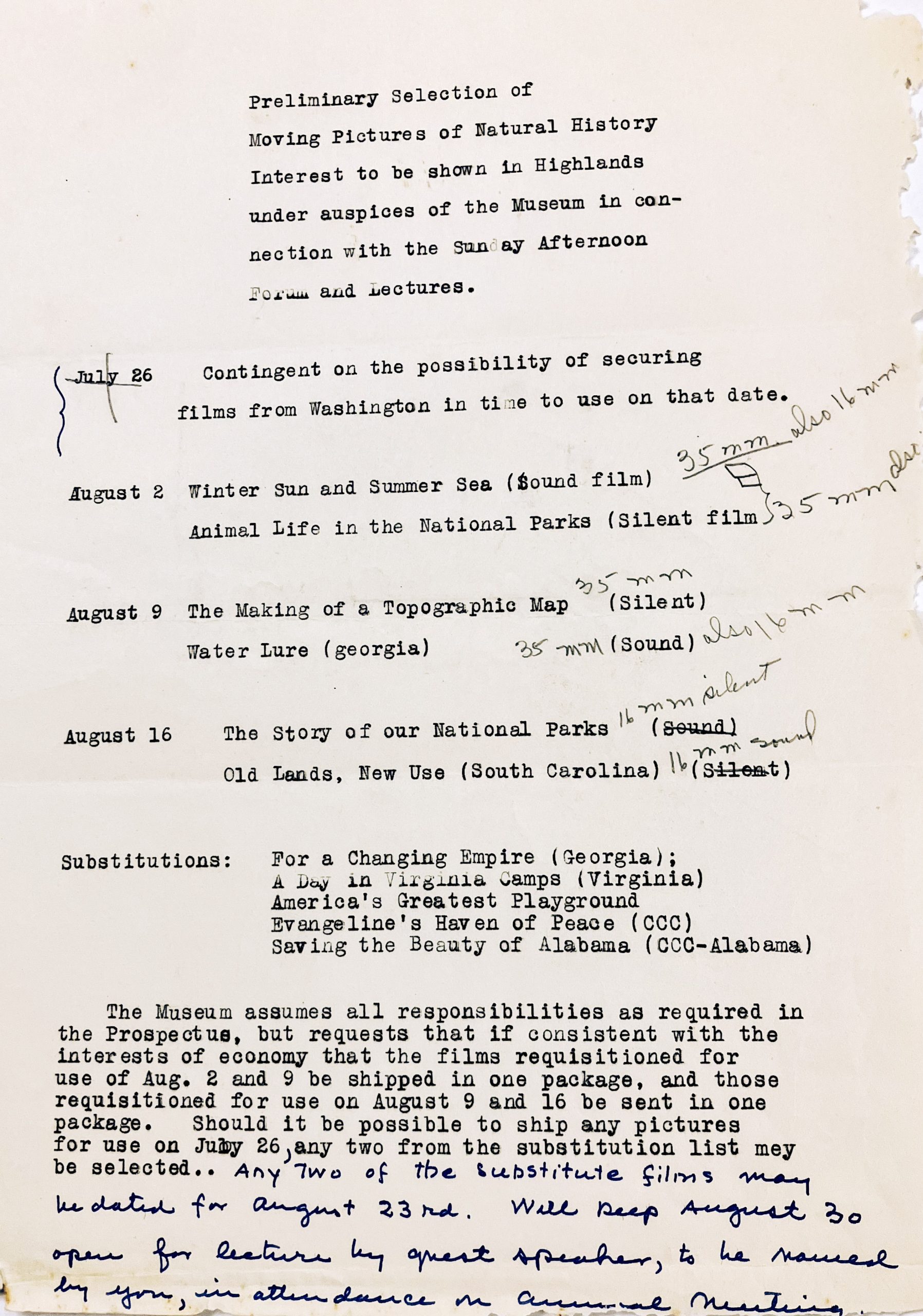
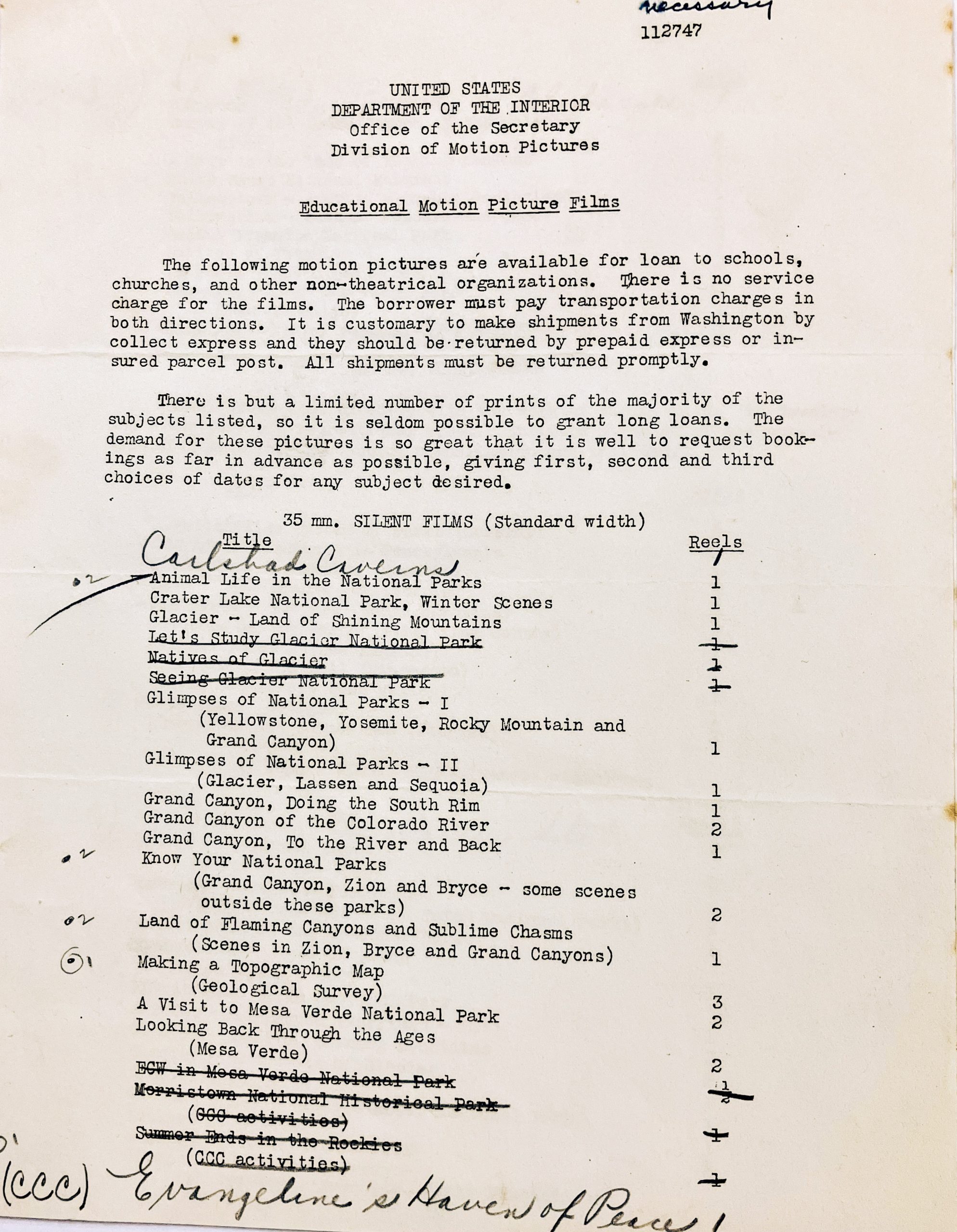
Several documents reveal the films were obtained from the U.S. Department of Interior, Office of the Secretary, Division of Motion Pictures — produced by the American Museum of Natural History — and shown in August of 1935 and 1936 at the school auditorium. Some of the films were silent, others had sound. The Kodascope Model D was a silent movie projector, so the school must have had a sound projector as well.
The 1936 Program
- Winter Sun and Summer SeaSound
- Animal Life in the National ParksSilent
- The Making of a Topographic MapSilent
- Water Lure (Georgia)Sound · CCC
- The Story of Our National ParksSilent
- Old Lands, New Use (South Carolina)Sound · CCC
- The Plow That Broke the PlainSilent
- A Day in Virginia CCC CampsSilent · CCC
- Evangeline’s Haven of PeaceSilent · CCC
The four films marked CCC “deal directly with the work of the Civilian Conservation Corps in developing state park and recreational areas. Intimate glimpses of the activities of this highly successful organization are included.”
From the Detail of Museum Expenses in the Minutes of 1936, Dr. H.E. Wheeler’s itemized statements include charges for express on films ($4.18), return expenses ($6.17), and express and postage ($14.33) — all thought to be for shipping and receiving the motion pictures across mountain roads.
The Machine Itself
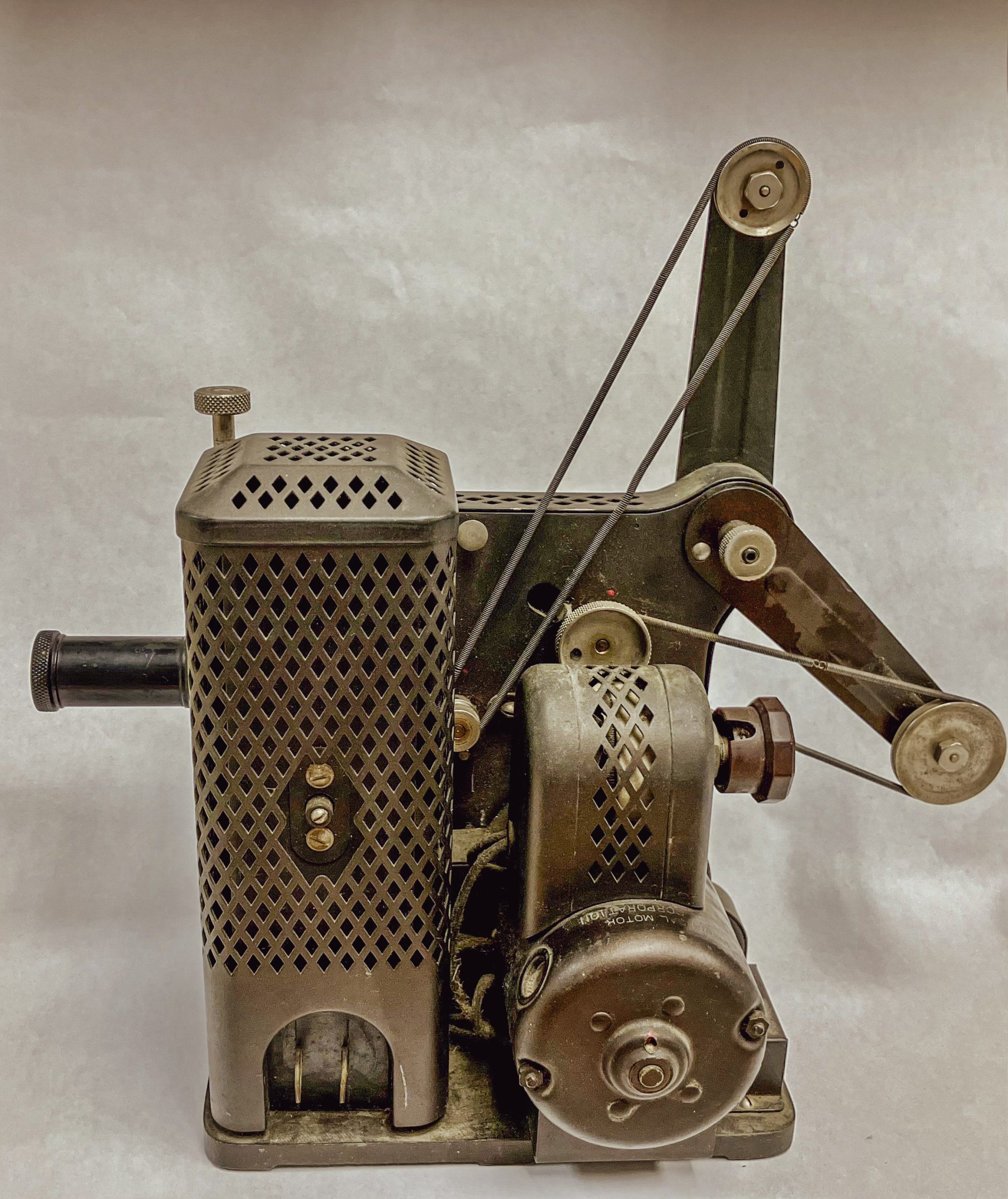
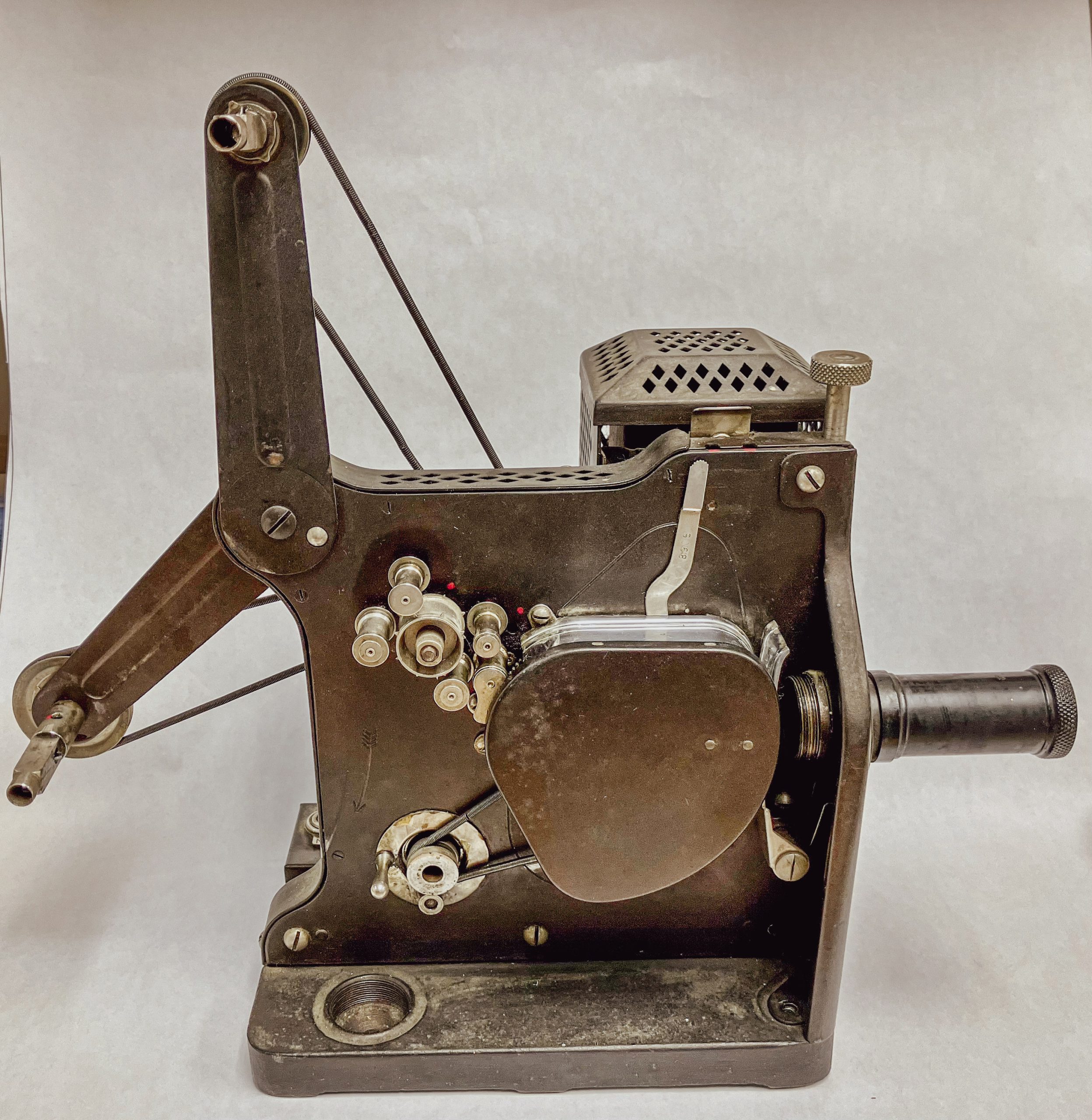
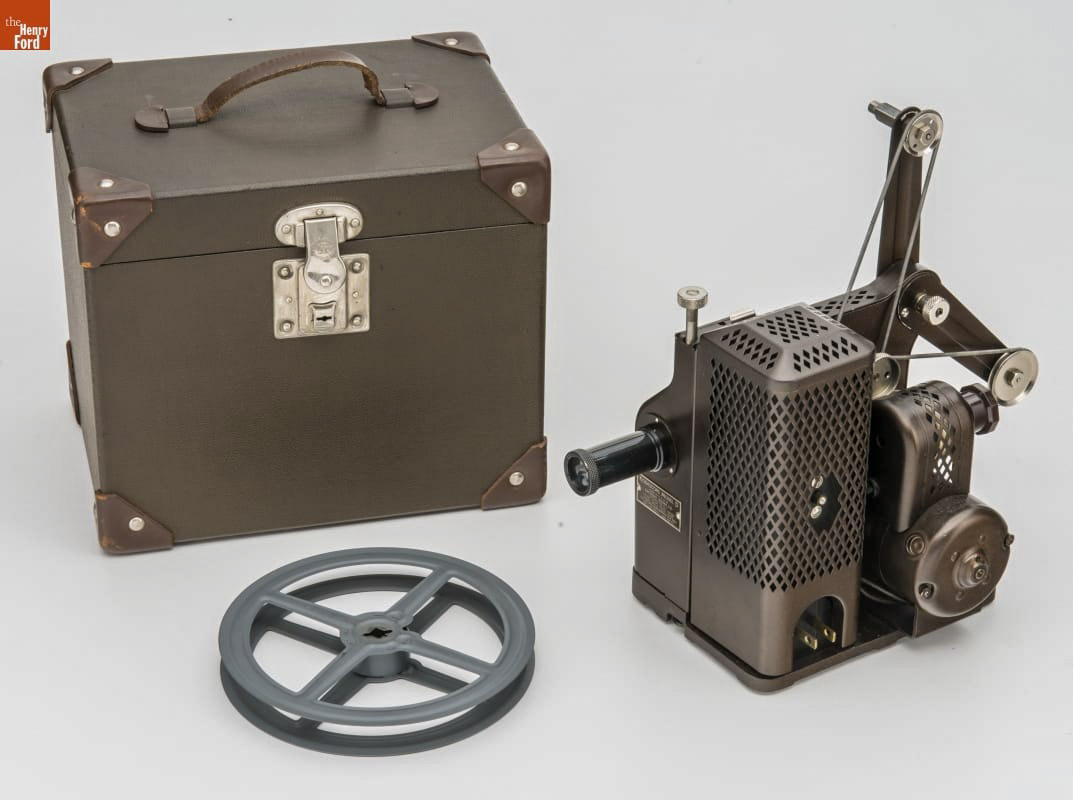
The Kodascope Model D was a landmark 16mm home movie projector, released by Eastman Kodak in the early 1930s. Highly portable, it was introduced to make home cinema more affordable and accessible — a budget-friendly counterpart to Kodak’s more heavy-duty projectors of the era. Its art deco design in black iron casing, with steel parts relating to the film mechanism, measured just 12 inches long by 6 inches deep by 11½ inches high.
Technical Specifications
- Format
- 16mm silent, acetate safety film (slow-burning)
- Reel
- Up to 800 feet continuous
- Lens
- Kodak F:1½ inch projection lens
- Drive
- Motor drive, claw intermittent, single sprocket
- Optics
- Right-angle condenser mirror
- Speed
- Adjustable speed control
- Power
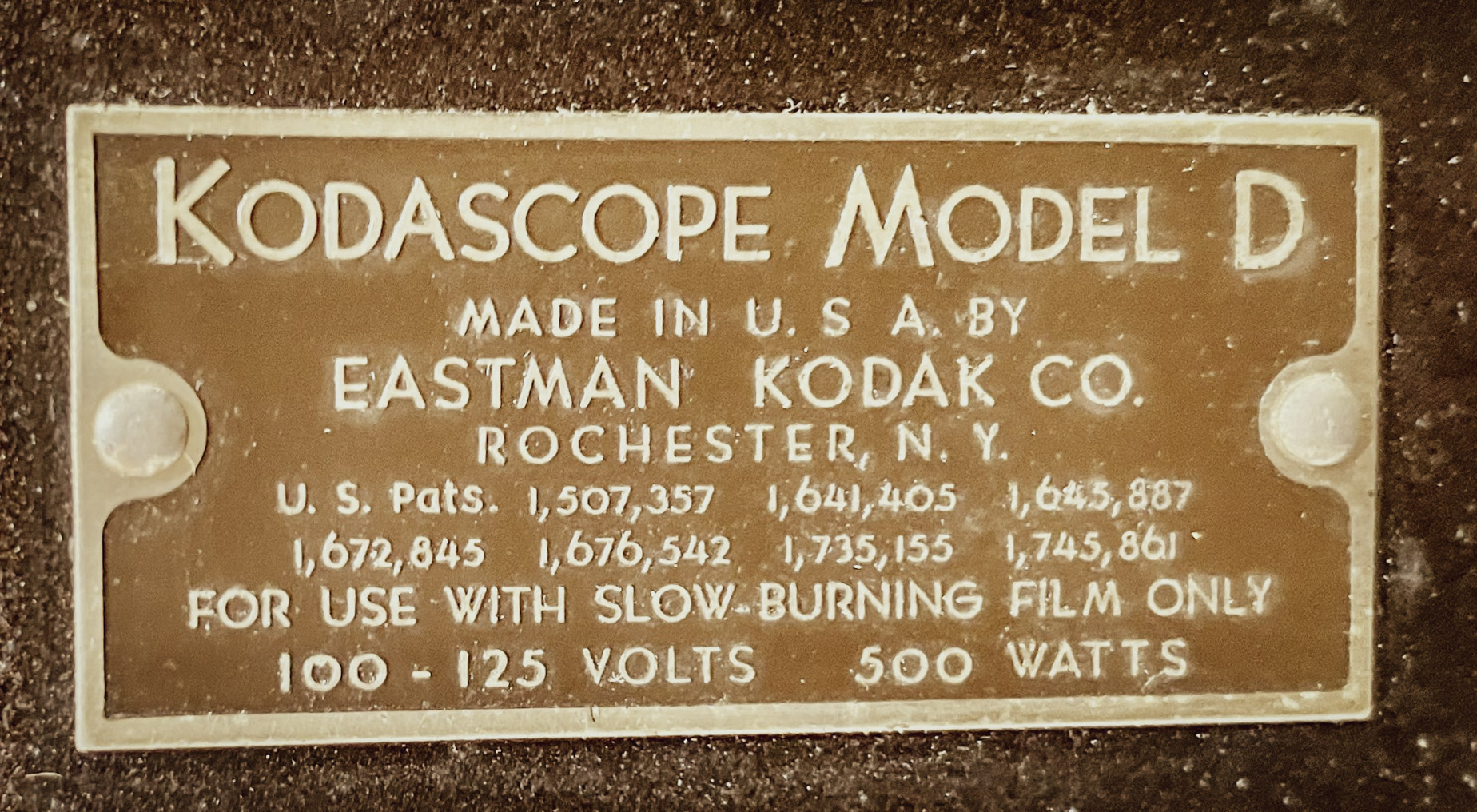
- 100–125 V, 500 W
- Motor
- 115V Universal Motor — Delco Appliance Corp.
- Case
- Dark brown wood or fibre carrying case
MADE IN U.S.A. BY EASTMAN KODAK CO., ROCHESTER, N.Y.
FOR USE WITH SLOW-BURNING FILM ONLY
“A Motion picture was shown in the school house. The picture dealt with various phases of natural history and was of an educational nature. It was loaned free to the Museum by the DeVry Co. of New York. Although admission was charged the school house auditorium was packed to capacity and the Museum made a net profit of sixty-five dollars.”
— Clark Foreman, Progress Report, August 1929Seven Patents, Seven Inventors
Through the U.S. Patents Office we can trace the seven patents stamped on the machine’s label, each referring to individual parts — some invented by captains of the projector industry, all clearly working toward the best possible projection experience.
| Patent No. | Inventor & Subject | Year |
|---|---|---|
| 1,507,357 | Albert S. Howell — reel and spindle mount | 1925 |
| 1,641,405 | Reel holding structure | 1927 |
| 1,645,887 | Motor disconnecting means | 1927 |
| 1,672,845 | John G. Capstaff — motion picture projector | 1928 |
| 1,676,542 | Edwin C. Fitts — motion picture projector | 1928 |
| 1,735,155 | John G. Capstaff — motion picture projector | 1929 |
| 1,745,861 | Edward J. Nolan — rewinding mechanism | 1930 |
The projector’s round motor is stamped “115 Volt Universal Motor / Delco Appliance Corporation / Made in Roche[ster]” with part number DELCO 5034482. The Delco Appliance Corporation (1930–1934) was founded following a merger between the Delco-Light Company and the North East Electric Company, conducted by General Motors. In 1965, operations were consolidated with GM’s Delco Products division.
The DeVry Connection
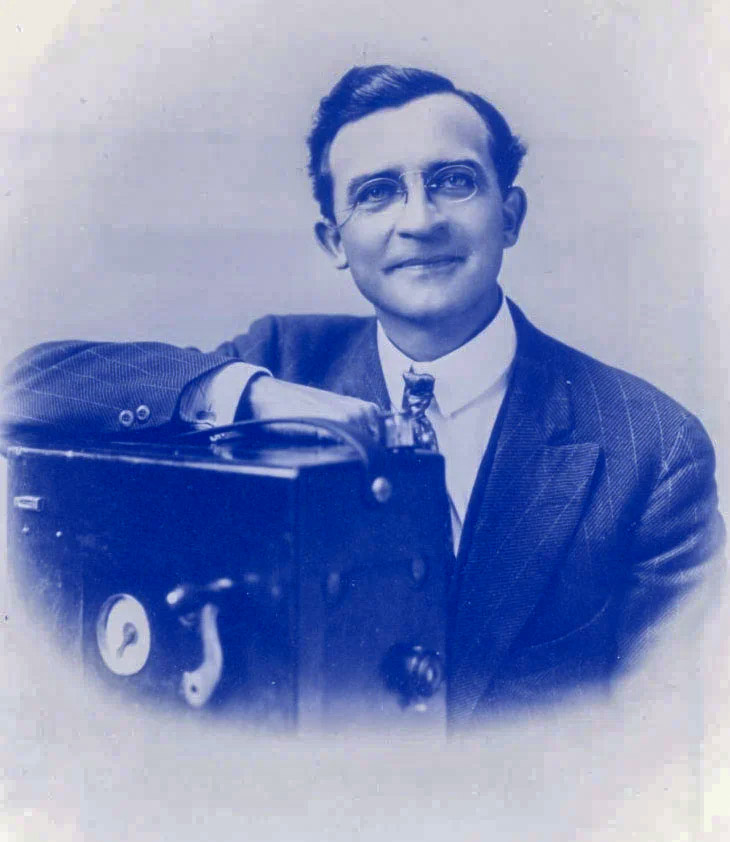
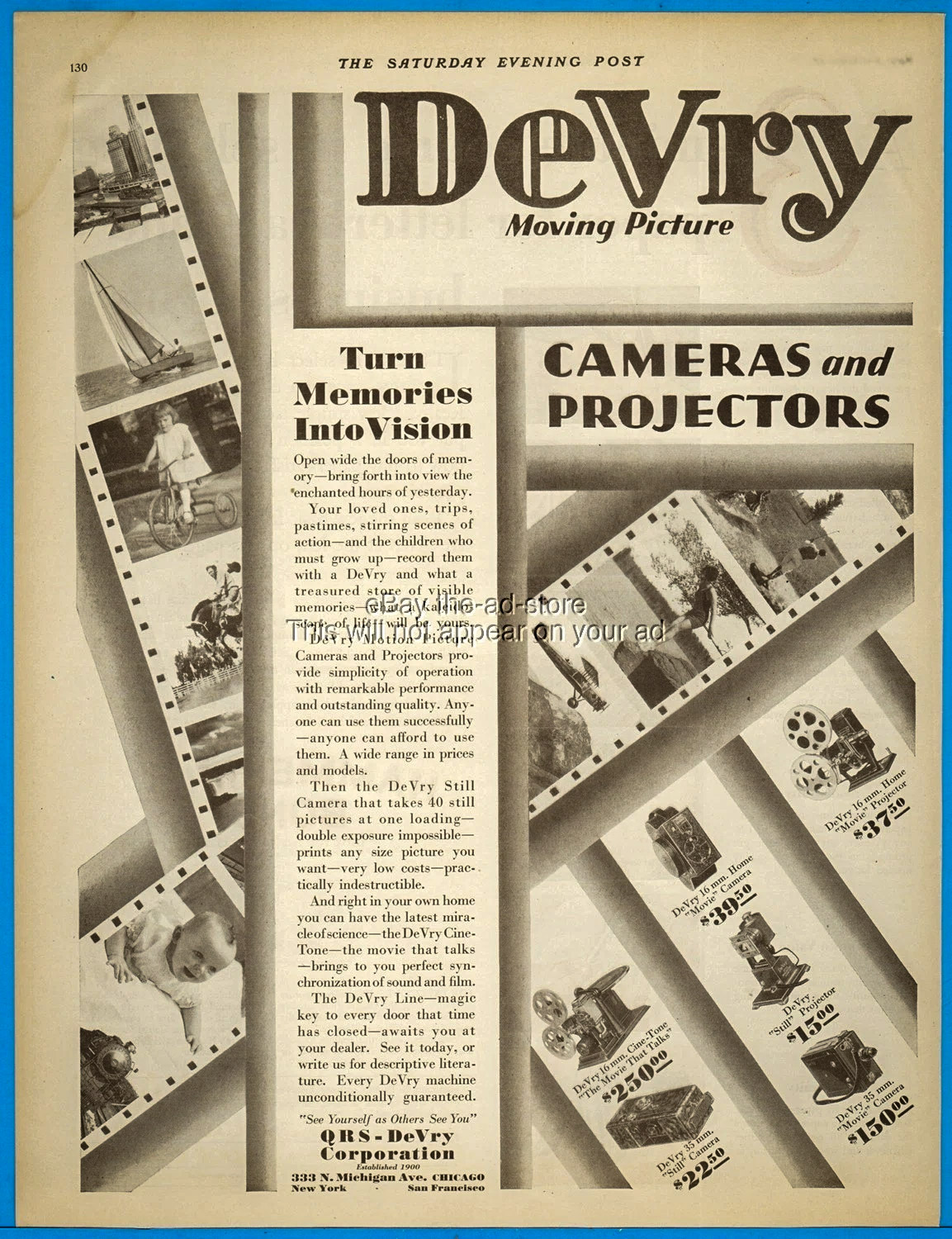
The story of how cinema came to the Highlands Museum begins even earlier — not with Kodak, but with Herman Adolf DeVry. A German immigrant and inventor, DeVry founded his company in 1931 with a particular emphasis on using film in classrooms, churches, and businesses. He invented the first portable silent motion picture projector — the Model E, sold between 1912 and 1925, a “theatre in a suitcase.”
In 1929, DeVry began producing a pioneer series of educational films with lesson plans, made available to schools throughout the nation — hence the free film loaned to the museum in August of that same year. Clark Foreman’s report describes the packed school house auditorium and the net profit of sixty-five dollars, a small fortune for a fledgling institution. DeVry’s company was later purchased by Bell & Howell in 1966. Today, DeVry University in Lisle, Illinois, carries his legacy.
The 16mm Revolution
The Model D was part of Kodak’s grander vision for 16mm amateur filmmaking, which began in 1923. Originally, Kodak required buyers to purchase an entire filmmaking “outfit” at once — camera, projector, screen, and splicer — to establish the format. By the time the Model D was in production, 16mm had become incredibly popular, and accessories and projectors were sold individually to a growing public hungry for moving images.
The machine was specifically engineered to run 16mm silent, acetate safety film — “slow burning film” — rather than the hazardous 35mm nitrate film used in commercial theaters. This safety dimension was no small consideration in a wooden mountain village in the Southern Appalachians.
The End of an Era
H.E. Wheeler’s report as Curator of the Museum noted that by 1937 they “gave up the plan of featuring moving pictures partly on account of the expense involved, but more because we wanted to make larger appeal to our adult contingency.” The Kodascope Model D fell quiet.
But the building it helped inspire lived on. During planning for the new WPA building — the Highlands Museum, Nature Center of today — a May 29, 1940 letter from Clark Foreman to builder Louis Edwards noted that architect Alfred Kastner was sending “the detail for the panel on the wall on the other side of the staircase, so it will be possible to have a moving picture projector play from the utility room onto a screen in the special exhibition room.” The dream of projected nature, encoded into the architecture.
At the Nature Center, motion pictures were supplanted by slide projectors in the 1950s, becoming the norm in 1961 with the innovation of the Kodak Carousel. In the late 1990s, digital photography and PowerPoint software rapidly ended the era of slide presentations. Today, the Kodascope Model D rests in the HBS Archives — a century-old object that once filled a mountain schoolhouse with the greens of summer.
* With deep gratitude to Liam Stiefel for finding this projector while cleaning out the Balance Room at HBS, and for recognizing the importance of saving this historic object.
Further reading on Herman Adolf DeVry: immigrantentrepreneurship.org