
Notes from the Field NFF · 010
The Salamanders Remember
After logging, wildfire and nearly two decades of changing weather, one of the world’s most extensive salamander studies is revealing how Appalachian forests recover — and how long we must watch to understand them.
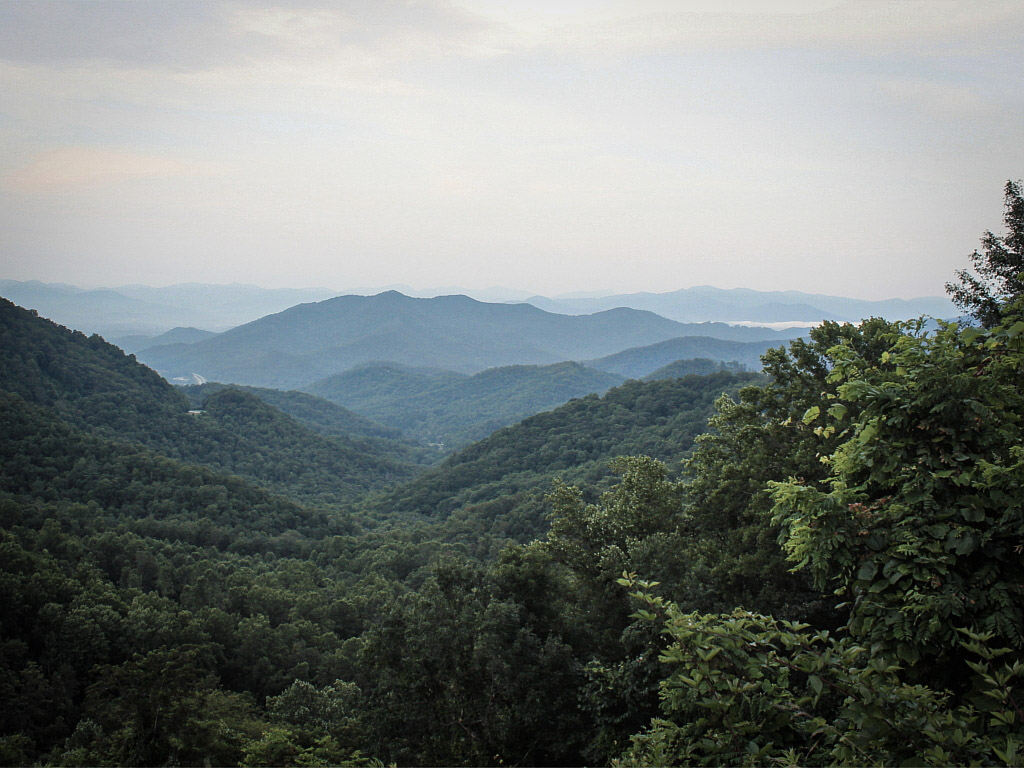
After dark, the forest changes hands. The birdsong and insect hum of the day fade out, the air cools, and a damp, mineral smell rises from the leaf litter. On a marked plot deep in the Nantahala National Forest, a row of headlamps clicks on — small, low moons drifting across the ground.
The researchers move slowly and systematically, reading the forest floor by lamplight: wet leaves, cushions of moss, the pale tangle of exposed roots. They are watching for one thing — the brief, slick gleam of a salamander on the surface. When a beam catches one, a hand closes around it, gentle and quick, and the animal is eased into a resealable bag with a handful of moist litter.
After surveying several plots — usually four in a night — the team carries the salamanders back to Highlands Biological Station. There, over the next day and a half, each animal is weighed, measured and examined.
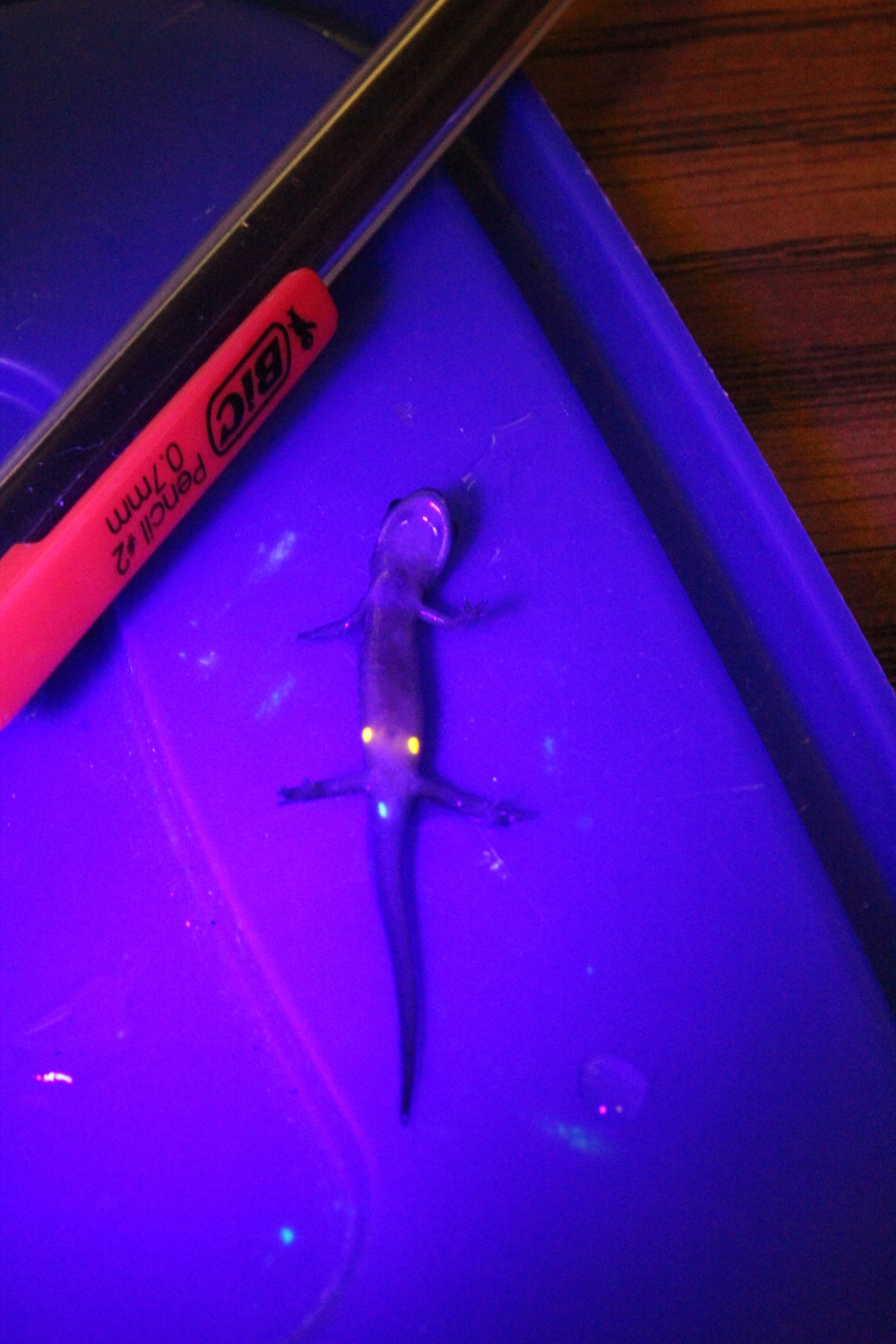
Each one receives tiny fluorescent marks beneath the skin — glowing tattoos made with Visual Implant Elastomer, or VIE. The colors and their positions form a private signature that lets researchers recognize that exact individual if it is ever caught again.
Then the salamanders are returned to the forest and released precisely where they were found.
Some have made this journey before.
A few have been making it for more than a decade.
“We still occasionally catch salamanders today that we first marked as adults in the early 2010s,” said Grant Connette, the ecologist who began the study. Those animals may now be roughly 20 years old.
Connette gives each new field crew a simple instruction: “Respect the salamanders — they may be as old as you are.”
It is a fitting motto for a project built around patience.
What began in 2009 as a single doctoral project has continued into its 18th year, following salamanders across 16 forest plots through timber harvests, wildfire, wet years, dry years and the slow regeneration of the Appalachian forest. The team has now recorded more than 35,000 salamander captures.
The researchers believe it is the largest salamander capture-mark-recapture project conducted to date.
Its longevity has let the study document something shorter projects rarely survive long enough to see: not only how wildlife responds in the moment a forest is disturbed, but how that response keeps unfolding for years — and sometimes decades — afterward.
It is an 18-year biography of a forest, written in salamanders.
From the Southern Appalachians to Global Conservation
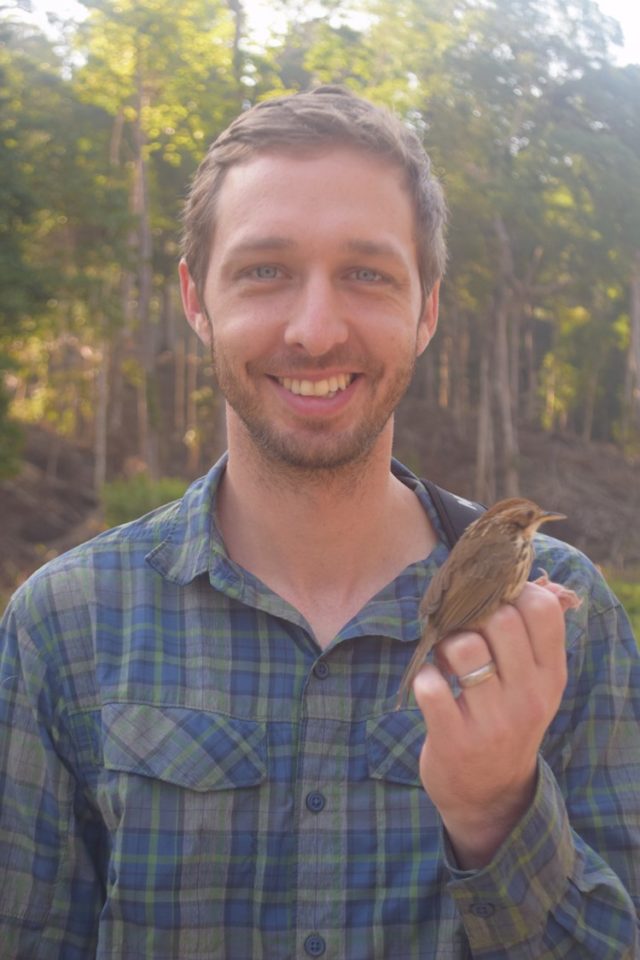
Connette is an ecologist at the Smithsonian Conservation Biology Institute, where his work brings together landscape ecology, population dynamics, Geographic Information Systems, spatial data analysis and biodiversity conservation.
He earned his bachelor’s degree from Davidson College and his doctorate from the University of Missouri, where he studied the effects of timber management on salamander populations in the Southern Appalachian Mountains of North Carolina.
His broader work has contributed data, analytical tools and scientific guidance to large-scale conservation planning, and his career has carried him far beyond the mountains of western North Carolina.
He joined the Smithsonian in 2015 as a postdoctoral fellow with its Myanmar Biodiversity initiative and spent four years living and working in Myanmar, collaborating with local organizations on biodiversity data analysis and conservation planning. Since becoming a research ecologist in 2019, he has contributed to projects including Myanmar’s National Tiger Action Plan, the country’s National Red List of Birds and the IUCN Amphibian Specialist Group’s Amphibian Conservation Action Plan.
But one of his longest-running projects keeps bringing him back to the forests surrounding Highlands Biological Station.
His connection to the Station began in 2008, the summer after he completed his undergraduate degree. Connette had already worked on a project involving stream salamanders and was eager to return to the field. He took a summer position assisting Mark Mackey, then a master’s student studying stream salamander populations on golf courses in the Highlands area.
Mackey worked in the laboratory of Dr. Ray Semlitsch, an influential amphibian ecologist who had taught courses and supported student research at HBS for years.
The opportunity placed Connette in the middle of one of the most biologically important salamander regions on Earth. It also changed the direction of his life.
After getting to know Mackey, Semlitsch and the Highlands area, Connette began shaping a plan for doctoral research based at the Station. In the summer of 2009, he started studying how forest-dependent salamanders respond to logging.
What Happens After the Trees Fall?
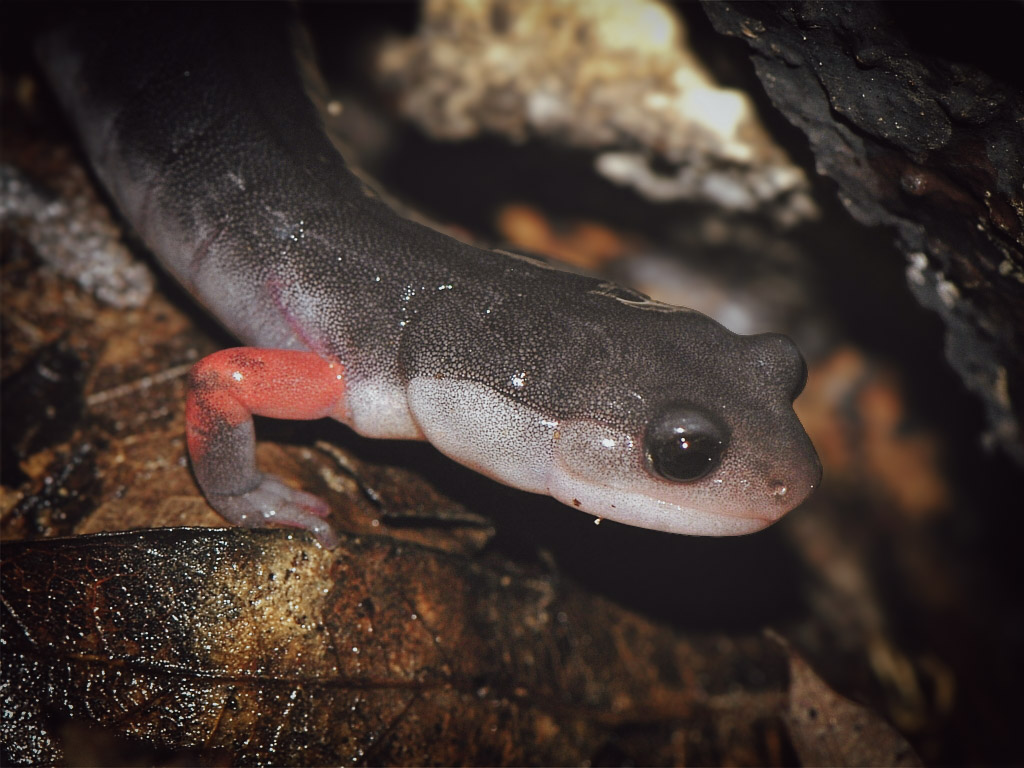
Scientists already knew that salamander numbers often fell after timber harvests. What remained uncertain was exactly why.
Were the salamanders dying?
Were they leaving the logged forest?
Or were they simply retreating underground — spending more time below the surface, and becoming harder to find?
Connette wanted a study capable of telling those possibilities apart.
He established eight survey plots in areas scheduled to be logged and another eight undisturbed plots to serve as references. Logging occurred between 2011 and 2013.
By repeatedly capturing and identifying individual salamanders, he could look past the raw number of animals visible on any single night. The marks let him estimate changes in survival, reproduction, movement and overall population size.
That distinction matters. A quiet forest floor does not necessarily mean its salamanders are gone. They may simply be underground, waiting out the heat for cooler temperatures or wetter conditions.
Capture-mark-recapture research offers a way to begin separating true absence from mere invisibility.
At first, Connette designed several studies examining salamander behavior and population dynamics, returning every summer from 2009 through 2015 to carry out his dissertation work.
One of those projects — the long-term mark-recapture study — outlasted the dissertation itself.
Then the fire came.
An Experiment No One Planned
In 2016, the Boteler wildfire swept through a broad section of the Nantahala National Forest.
The study’s field sites became ground zero for fire-control efforts. Firefighters halted the wildfire after it had burned through exactly half of the project’s 16 plots.
An event that might have ended the research instead transformed it.
The team suddenly had an unplanned natural experiment: eight burned plots and eight unburned plots, layered across sites that had already lived through different histories of logging.
The researchers could now examine salamander responses to timber harvests, wildfire, both disturbances together, or neither — all against a shifting background of rainfall, temperature and other climatic conditions.
“This project offers a really unique chance to understand how salamanders respond to different combinations of disturbance and climate conditions,” Connette said.
The results have not followed a simple path.
Salamanders are often described as stable, dependable components of forest ecosystems — valuable indicators of environmental health. Yet the team has found their populations can be extraordinarily dynamic.
They have recorded dramatic recruitment booms in wet years. They have watched several populations nearly collapse years after the combined blow of logging and wildfire. More recently, they have begun finding salamander numbers that are increasingly similar across logged, burned and undisturbed plots.
After nearly two decades, the populations may be approaching the numerical baseline at which the study began.
“It feels like we’ve followed the salamanders in these 16 survey plots for this 18-year adventure,” Connette said, “and that we may have almost arrived back at our original baseline in terms of salamander numbers.”
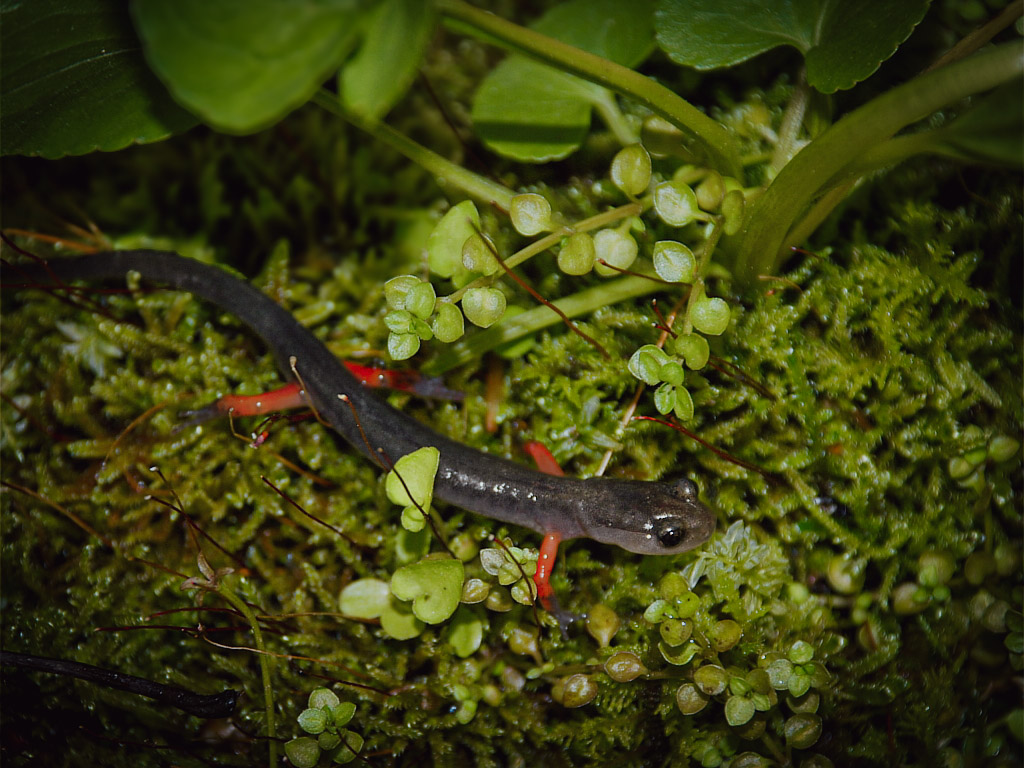
That recovery is remarkable. But it does not mean a regenerating forest has become identical to the forest that came before it.
In a separate study, conducted as a graduate student, Connette counted salamanders around the Wayah Bald area. He found that their abundance did not peak until forests were more than 100 years old.
The pattern suggests a long and complicated disturbance cycle.
Salamander numbers may fall sharply within a few years of logging. Populations may stay low as the forest begins to regrow, then recover considerably over the following 15 or 20 years. But exceptionally mature forests appear to offer something more — qualities that may take a century to develop.
Deep shade, accumulated organic matter, stable moisture and the structural complexity of old forests may sustain salamander populations at levels younger forests cannot yet match.
Recovery is not the same as replacement.
A forest may regain much of what was lost while still lacking the qualities only time can produce.
The Fluorescent Signature of a Salamander
On survey nights, the whole crew enters the forest together.
Each person wears a headlamp and searches within the boundaries of a designated plot. The team moves methodically, catching every salamander visible on the ground and slipping it into a bag with damp leaves.
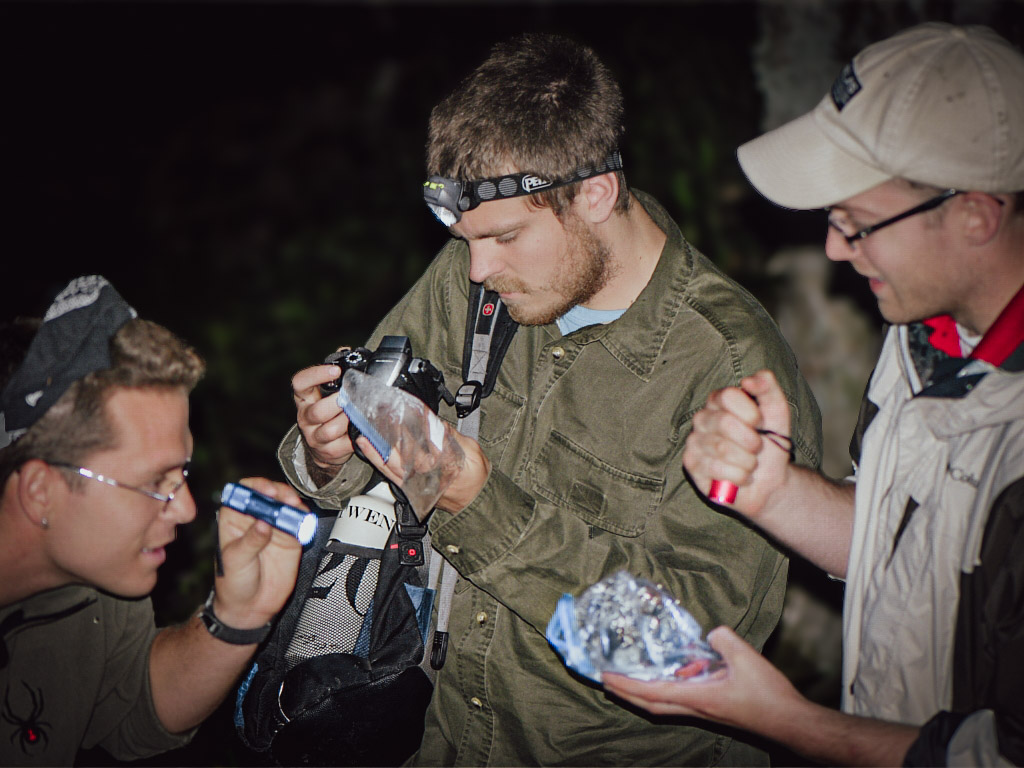
Back at HBS, the laboratory work begins.
Every salamander is weighed and measured. Researchers then use Visual Implant Elastomer to place tiny deposits of colored material beneath the skin. The marks are nearly invisible under ordinary light — but under ultraviolet light, they glow.
A salamander might receive one color near a front leg and another near a hind leg. Together, the colors and their positions form an individual identification code.
When that salamander is caught again, the fluorescent signature reconnects the animal to its own earlier records.
A single recapture can show that an animal survived a timber harvest, a wildfire, a drought, or another long winter beneath the forest floor. Thousands of recaptures, gathered over many years, let scientists estimate the fate of entire populations.
The work demands precision, repetition and an enormous amount of collective effort.
In the early years, the crew was usually Connette, a single summer field assistant and whichever relatives he could persuade to help. His wife, his father, several cousins and a stepsister all took part.
In 2015, Dr. Michael Osbourn of Lees-McRae College joined as a project lead, and would direct much of the fieldwork in the years that followed. Osbourn brought in current and former students, dramatically widening the community around the research.
More than 100 people have now helped with field surveys and laboratory marking. Graduate students, professors and amphibian researchers have joined the crew to learn the project and its methods.
An especially devoted group returns year after year, setting aside part of each summer for what has become known simply as “salamander week.” Nick Del Paoli, Summer Wong Chong, Mike Meadows and James Cadolino have each given between six and 12 years to the project.
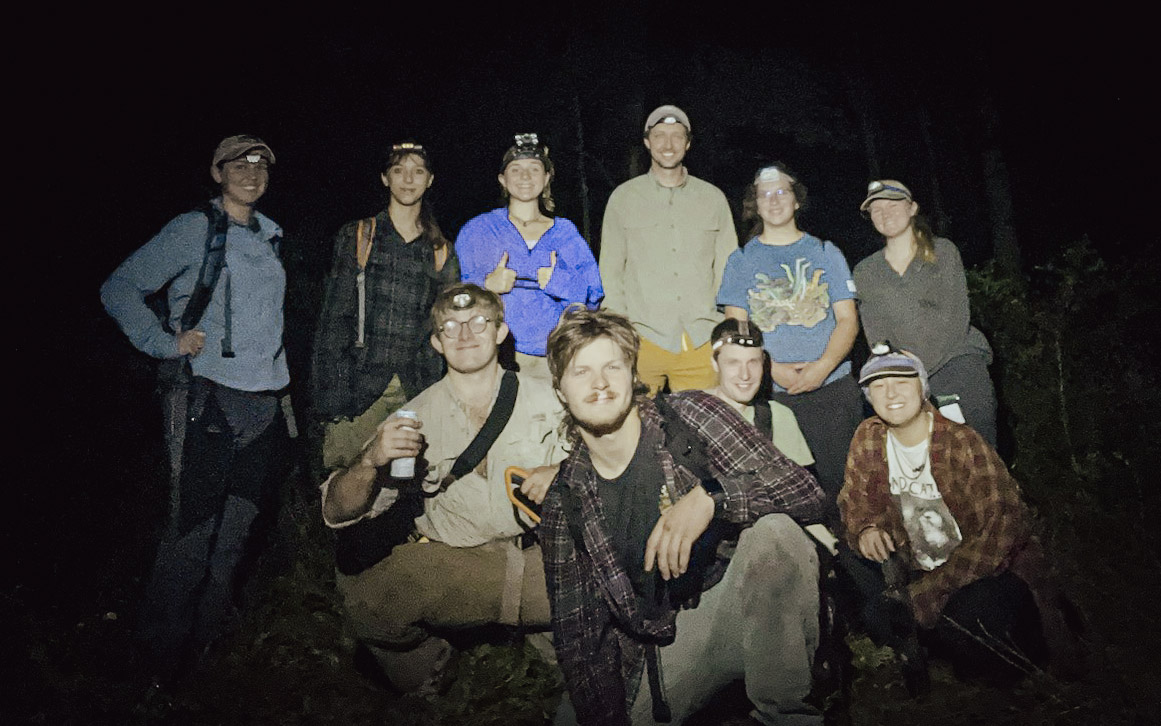
Everyone helps catch salamanders. Most assist in the lab. A handful have gained enough experience to run nearly every part of the project themselves.
The expanded team now completes in a single week the work that took Connette 14 weeks in 2009.
That efficiency is not just a matter of more hands. It reflects years of knowledge passed from one field crew to the next — how to cross a plot without missing a section, how to handle a salamander safely, how to read a fluorescent mark, and how to return each animal to exactly the right place.
The study has become its own kind of living system — sustained by relationships, repetition and accumulated memory.
A Global Center of Salamander Life
The Appalachian Mountains are among the most biologically diverse temperate regions on the planet.
Their cool, wet climate especially favors salamanders, which reach their greatest global abundance and diversity in the Southern Appalachians. In parts of the region, more than 20 species may occur within a relatively small area.
The mountains’ complex topography has shaped that evolution. Steep slopes, broad valleys and isolated summits create distinct climatic zones. Some salamanders are “sky island” species, confined to narrow bands of suitable habitat near particular mountaintops. A valley that looks modest on a map can be an impassable boundary for a small, moisture-dependent animal.
The Highlands Plateau and the surrounding Nantahala Mountains, then, are not merely scenic backdrops for the research. They are part of the reason such extraordinary salamander diversity exists here at all.
Salamanders are small, secretive and easily overlooked. Much of their lives plays out beneath leaves, inside decaying logs, or in the cool spaces below the soil.
Yet they are woven into the life of Appalachian forests. They eat insects and other invertebrates, become prey for larger animals, and help shape how energy and nutrients move through the forest floor. Their permeable skin and dependence on cool, moist conditions also make them unusually responsive to environmental change.
And they are witnesses.
Across eighteen years, the project has tracked salamander populations through logging, wildfire, wet summers, dry summers and the gradual return of the forest canopy. On the plots that were both logged and burned, few of the original animals survived. But elsewhere, a handful of individuals first marked years ago still turn up under the headlamps, season after season.
Each time one of them is found again, it connects the present forest to an earlier version of itself.
The Value of Staying
Most scientific studies are bound by practical timelines — the length of a graduate degree, a temporary position, a limited grant.
Forests do not keep those schedules.
The consequences of a timber harvest may take years to become fully visible. The effects of one disturbance can be transformed by the arrival of another. A population that looks lost may rebound, while a forest that looks recovered may still be decades from its greatest ecological richness.
Long-term research asks us to resist the pull of an early conclusion. It requires scientists and institutions willing to return to the same places, repeat the same measurements and protect the same questions long after the first results are published.
It also requires a community.
Connette began this work with a summer assistant and a rotating cast of relatives. It now belongs, in part, to more than 100 students, volunteers, scientists and collaborators — and to Highlands Biological Station, which has provided a base for the project since its earliest years.
Together, they have produced a record no single summer could have revealed.
They have watched salamander populations fall and rise. They have seen young forests regain much of their former abundance while old forests keep something irreplaceable. They have followed individual animals long enough for one generation of student researchers to give way to the next.
And every so often, under the beam of an ultraviolet light, a familiar set of colors appears again.
A salamander first marked in the early 2010s has returned — not as a symbol or an estimate, but as the same living animal.
It carries nearly two decades of forest history beneath its skin.
Notes from the Field · NFF·010
Story & visualization by Sarah Vickery · Photographs by Grant Connette
Highlands Biological Station