
Jason Love on Microplastics in WNC
The Air We Breathe, the Water We Share
HBS Associate Director Jason Love has spent his career exploring how ecological systems respond to human impacts—from wildlife dynamics to long-term watershed research. His recent work on microplastics in Western North Carolina has revealed striking patterns in our rivers, forests, and even the atmosphere.
In this Q&A, Jason discusses the origins of this research, current findings, and the broader implications for conservation, policy, and the future of the Highlands Plateau.
Can you share a bit about your background and what led you to your current role as Associate Director at the Highlands Biological Station?
My background is in wildlife. I earned my B.S. in Forest Resources from the University of Georgia, where I majored in Wildlife, and an M.S. in Fisheries and Wildlife Management from West Virginia University. I’ve worked with black bears, salamanders, and songbirds, and have also conducted research on invertebrates, plants, and trees.
I previously served as the Citizen Science Director at the Great Smoky Mountains Institute at Tremont, where I conducted surveys and research with middle school students, high school students, and adults. Before coming to HBS, I spent 12 years as the Site Manager for the Coweeta Long-Term Ecological Research Program, helping coordinate long-term research projects and working with undergraduates, graduate students, and professors from more than a dozen universities and colleges.
What first sparked your interest in studying microplastics, and how did that area of research evolve for you over time?
In 2018, I received funding to support two high school students for a summer research internship. Microplastics were becoming a hot topic, but at that time there were no studies on microplastics in the Southeast. I thought it would be interesting to examine microplastics in Asian clams from local rivers. I didn’t expect to find much, but the concentrations we found were as high—or higher—than those reported in Asian clams from the Yangtze River in China, a notoriously polluted river.
A year later, after accepting the Associate Director position at HBS, I learned that Dr. Jerry Miller at WCU was also beginning to study microplastics in Western North Carolina streams. We decided to collaborate and brought on additional PIs, including Dr. Robert Youker (WCU) and Dr. Austin Gray (Virginia Tech). The research has since expanded substantially, including studies in headwater streams, with recent work examining microplastic concentrations in caddisflies.
Students in the UNC-Chapel Hill IE Highlands Field Site program have expanded the research into terrestrial systems, including microplastics in earthworms, shrews, and bats. This past semester, students re-sampled Asian clams from the same sites my high school students and I sampled in 2018 to see whether concentrations have changed over time. We’re also analyzing river water samples to compare microplastic concentrations to those found in headwater streams. But perhaps the most exciting area of the research has been atmospheric deposition.
Your current research focuses on microplastics in Western North Carolina, including through atmospheric deposition. Could you tell us more about that work—what questions you’re exploring and why this topic is important in our region?
In 2021, IE students conducted their Capstone project on microplastics in the headwaters of the Chattooga River, a National Wild and Scenic River. On a whim, we set out buckets to see whether any microplastics were arriving via atmospheric deposition. Surprisingly, we found quite a lot.
In 2023, we received state funding and installed three atmospheric deposition collectors in the region—including one at HBS—that sample both “wet” deposition (during precipitation events) and “dry” deposition. We now have more than two years of data, including sampling during Hurricane Helene.
We’re seeing that microplastic deposition varies by location and is strongly influenced by rainfall: the more precipitation an area receives, the more microplastics are deposited. We also discovered that Hurricane Helene delivered an enormous load of microplastics to our region and to the Southeast as a whole. We are currently preparing a manuscript describing these findings.
How does your microplastics research intersect with your work at the Station—particularly in terms of research, education, and conservation?
Most ecologists recognize that we are now living in the Anthropocene (though some argue it should be called the Plasticene), a time when humans have become a force of nature. We’ve changed the pH of the ocean, altered atmospheric chemistry, and reduced wildlife populations to the point that if you weighed all mammals on Earth, 36% would be humans, 60% would be livestock we use, and only 4% would be wildlife.
Plastics are another indicator of our environmental impact. They are durable, long-lasting, and inexpensive—the same qualities that make them useful products also make them persistent pollutants. We use the topic of plastics and microplastics to talk not only about how humans affect the environment, but also about how we can change our behavior by reducing our plastic consumption. We also hope this research will inform the public and policymakers so that plastic production and use can be curbed.
This semester, you’re mentoring Institute for the Environment students on several projects. What kinds of research are they conducting, and how do these projects tie into your broader interests in environmental science?
The research projects vary widely—from assessing how bats use mines and caves to measuring the amount of trash and plastic in our rivers. Some projects are in their third or fourth year and have terabytes of data to analyze (such as acoustic files used to monitor bats), along with established research protocols. Others are in their first year, and students must figure things out with guidance from their mentors.
One project I’m especially interested in this year examines the impacts of the U.S. Army Corps of Engineers’ “debris removal” efforts in the upper Little Tennessee River watershed. This past summer, contractors permitted by the Corps drove 30-ton feller bunchers into rivers to remove large wood and even cut live trees in the name of public safety. In doing so, they removed tens of thousands of cubic feet of fish habitat, eliminated shade, and caused ecological damage to a river that did not experience catastrophic flooding during Hurricane Helene. We hope this study will help inform policy so that future debris removal efforts are more targeted and less damaging.
In your experience, what makes the Highlands Plateau such a compelling place for field-based research on pollution and ecosystem health?
A typical scientific response would be that the Highlands Plateau is rich in biodiversity—particularly in flora, salamanders, mosses, and fungi—and that is certainly true. But what makes the Plateau especially interesting is that people live here. That allows us to measure how development affects stream water quality, the spread of invasive species, the impacts of habitat fragmentation on songbirds, and more.
It’s also a place where people come to enjoy nature, clean air, and pristine streams. But what we’re finding is that these areas aren’t necessarily pristine, and that microplastic concentrations in our streams are among the highest ever measured.
Looking ahead, what are some of the biggest questions—or challenges—you’re most eager to tackle in your work on microplastics?
Funding is often the biggest challenge. We’ve been fortunate to receive strong support from the Water Resources Research Institute, and support from the Highlands Biological Foundation allows us to hire technicians—without them, our research capacity would be much lower.
I would like to establish additional atmospheric deposition sampling sites—ideally in Great Smoky Mountains National Park or adjacent to Class I Wilderness Areas like Linville Gorge or Shining Rock. These places are supposed to have “wilderness-quality” air and water. While pollutants such as sulfur dioxide and ozone are monitored there, no one is measuring microplastics.
I’d also like to expand our mussel work on microplastics to more watersheds. But all of this requires additional funding, and federal funding has become increasingly difficult to secure.
Lastly, what advice would you give to students or early-career scientists who are interested in pursuing research that blends ecology, conservation, and environmental science?
I would encourage them to pursue hands-on experiences—such as summer internships—to build their résumés. That is something the Highlands IE program does exceptionally well. Students spend three out of their five weekdays conducting either Capstone research or independent research, and these experiences help them secure internships and jobs they might not otherwise have access to.
I would also let them know that this work is highly rewarding but can be depressing. We are ecological accountants in a human-dominated world that derives wealth from exploiting natural resources. For example, McDonald’s annual advertising budget is about $100 million more than the portion of the U.S. Fish and Wildlife Service’s budget dedicated to conserving endangered species.
You have to be comfortable being the underdog in this profession and hold tightly to the few positive environmental trends—such as the fact that surface waters in the U.S. are generally much cleaner than they were before the Clean Water Act, even though that progress is now threatened. So yes—this field can be a bummer sometimes.
We’re finding that areas people consider pristine have some of the highest microplastic concentrations ever measured.
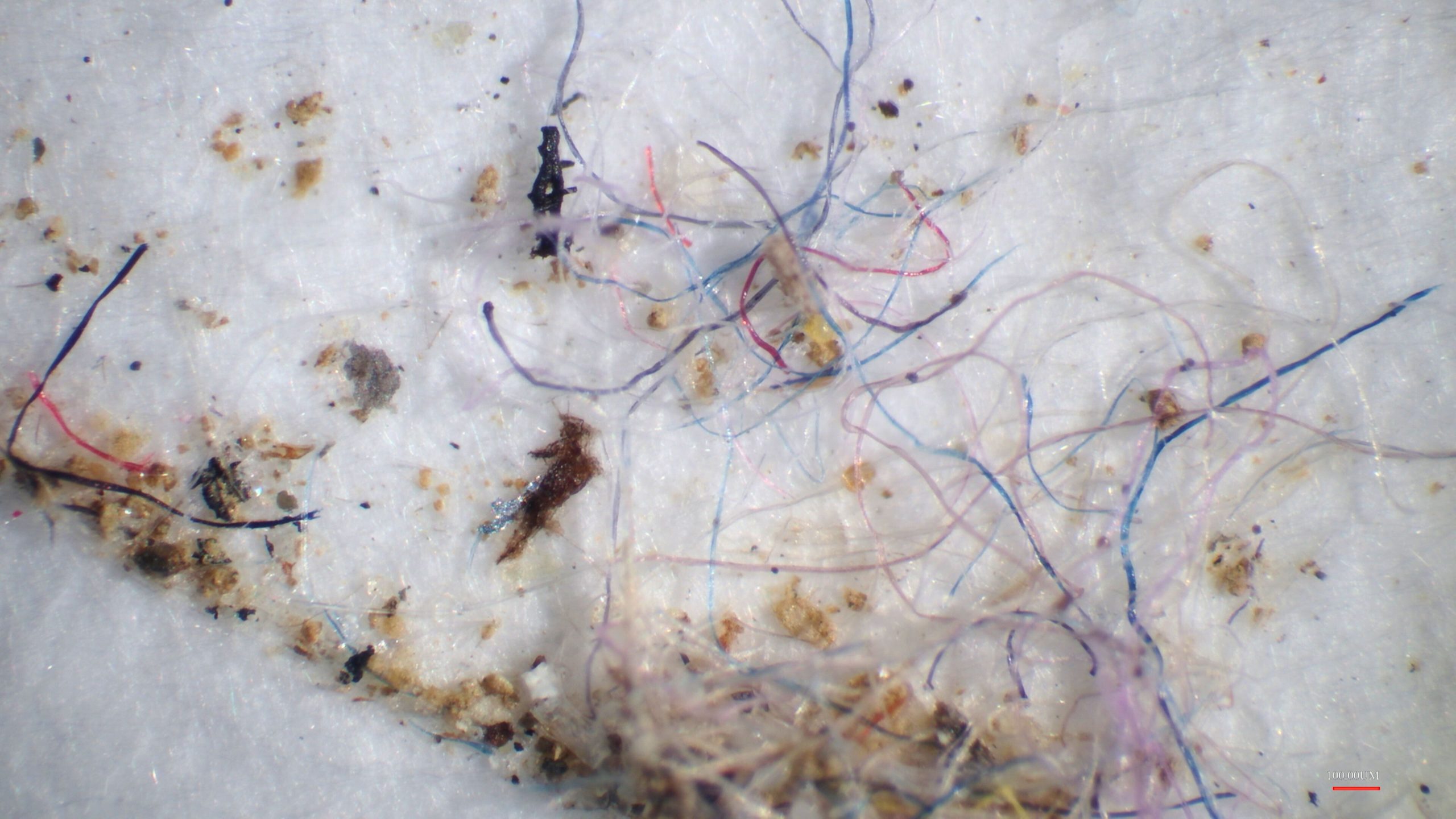
This came from an atmospheric deposition sample. Fibers are the most common microplastic we find in our samples.
The more rain an area receives, the more microplastics are deposited—it’s a direct relationship.
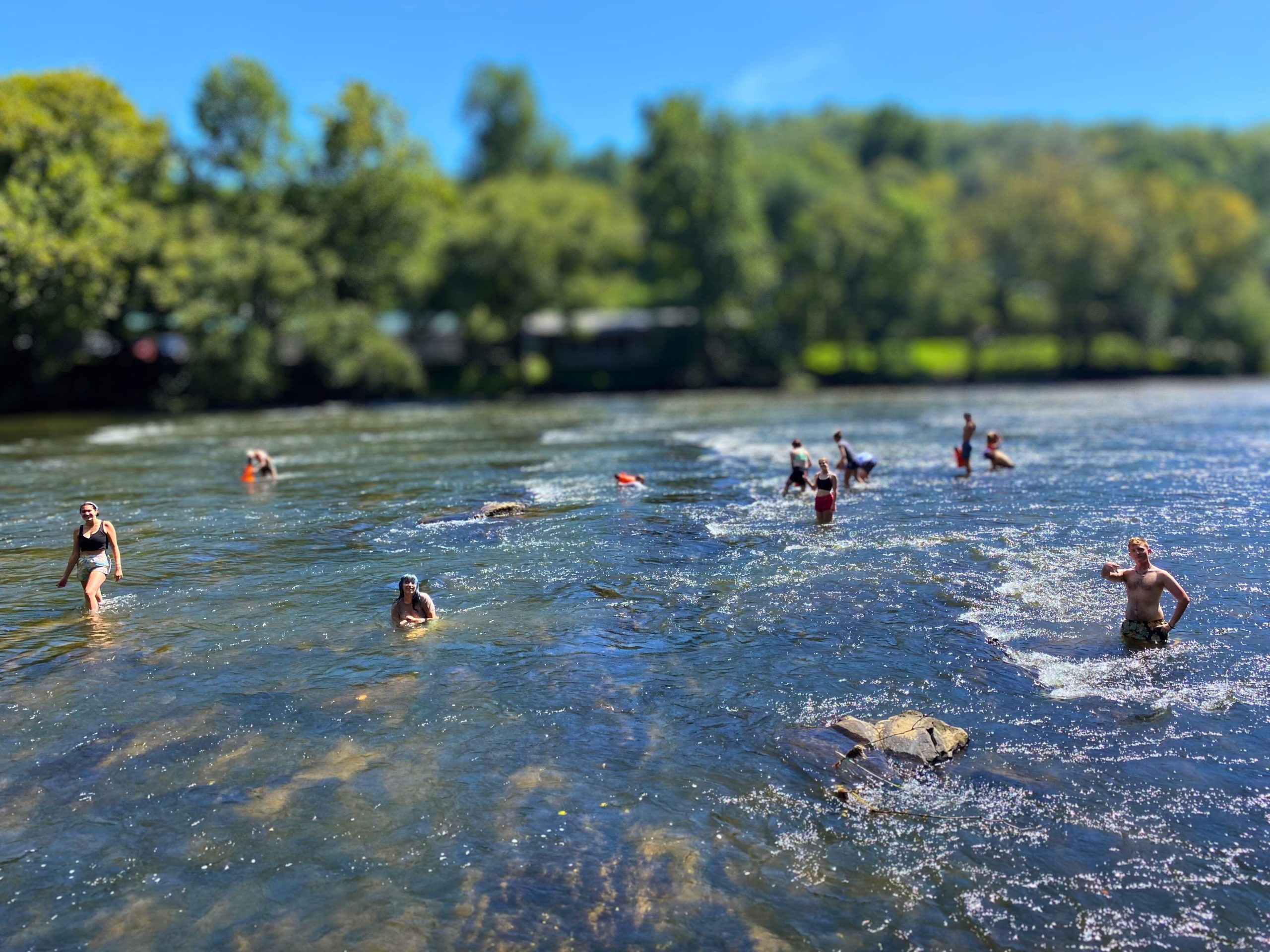
2025 Institute for the Environment students searching for and collecting mussels in the Tuckasegee River
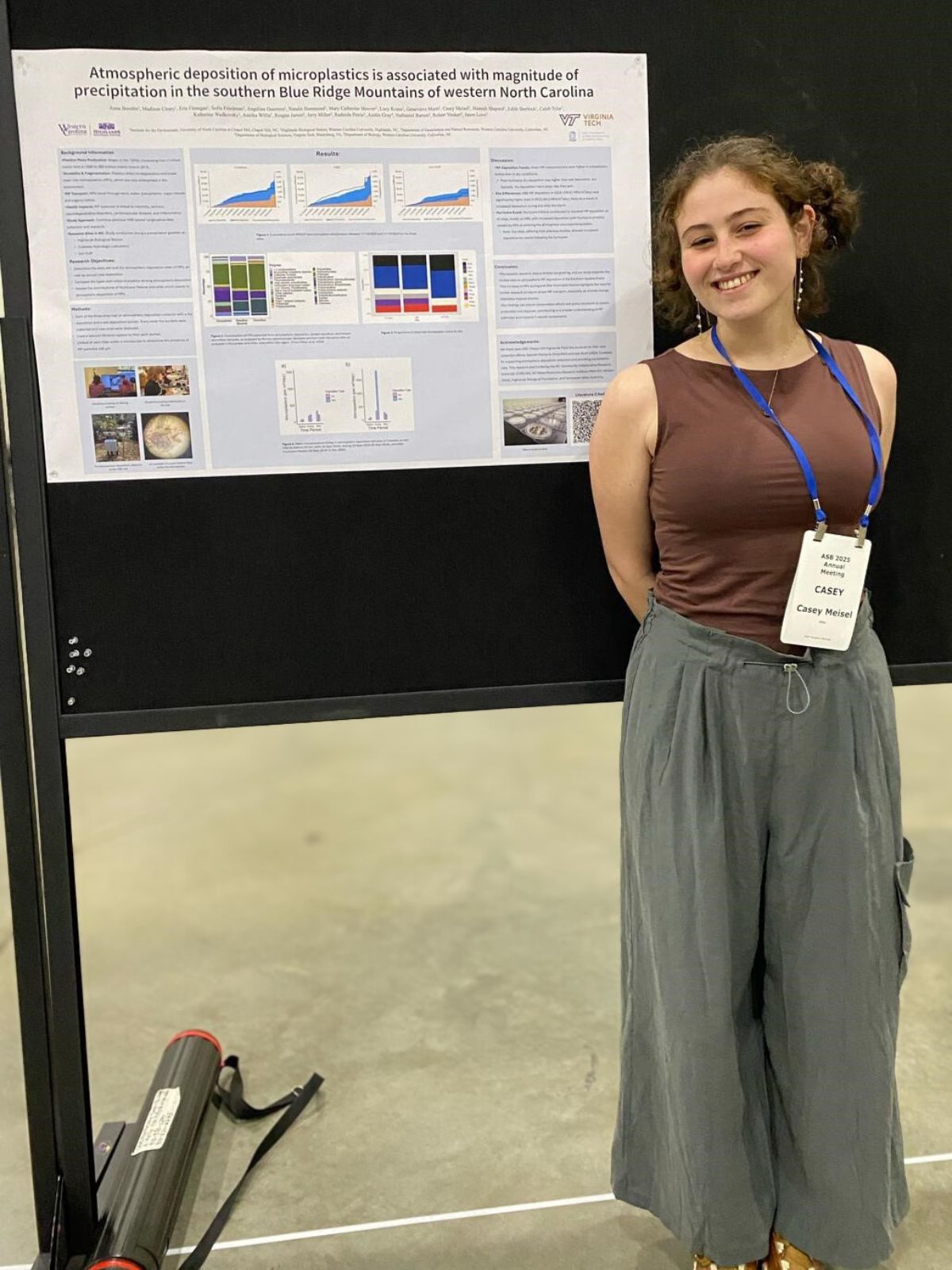
Former IE student Casey Meisel delivered a presentation on atmospheric deposition and microplastic collection at the 2024 Association of Southeastern Biologists (ASB) Conference.
We’re grateful to Associate Director Jason Love for offering his time and insight into this expanding field of research. All information shared here reflects the most current understanding and project updates as of December 2025.