How a Lake Built for Leisure Became the Heart of a Laboratory
By Bryding Adams & Sarah Vickery
The story of Lindenwood—later Ravenel Lake—is a story of land, science and the long work of stewardship in Highlands, North Carolina.
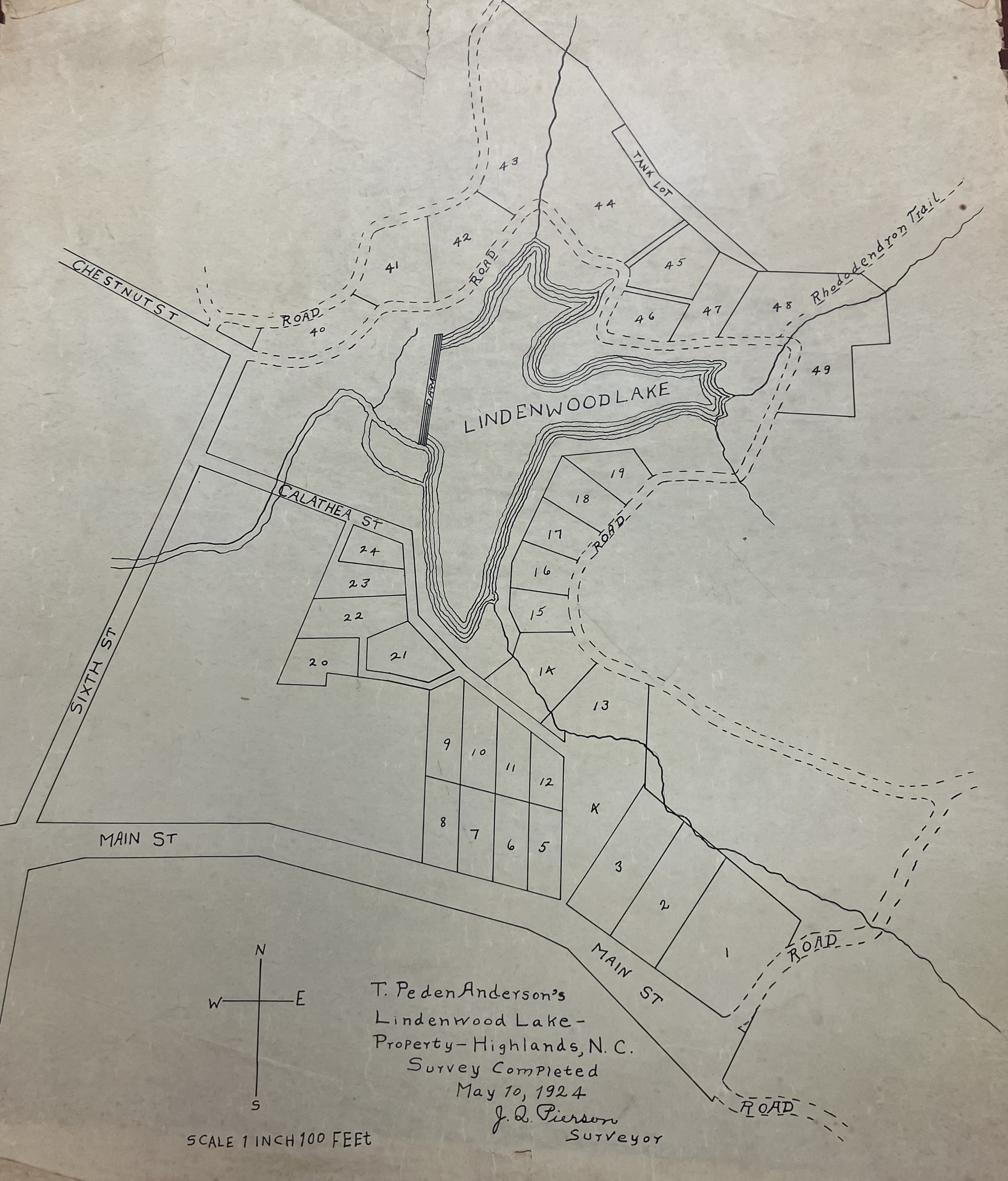
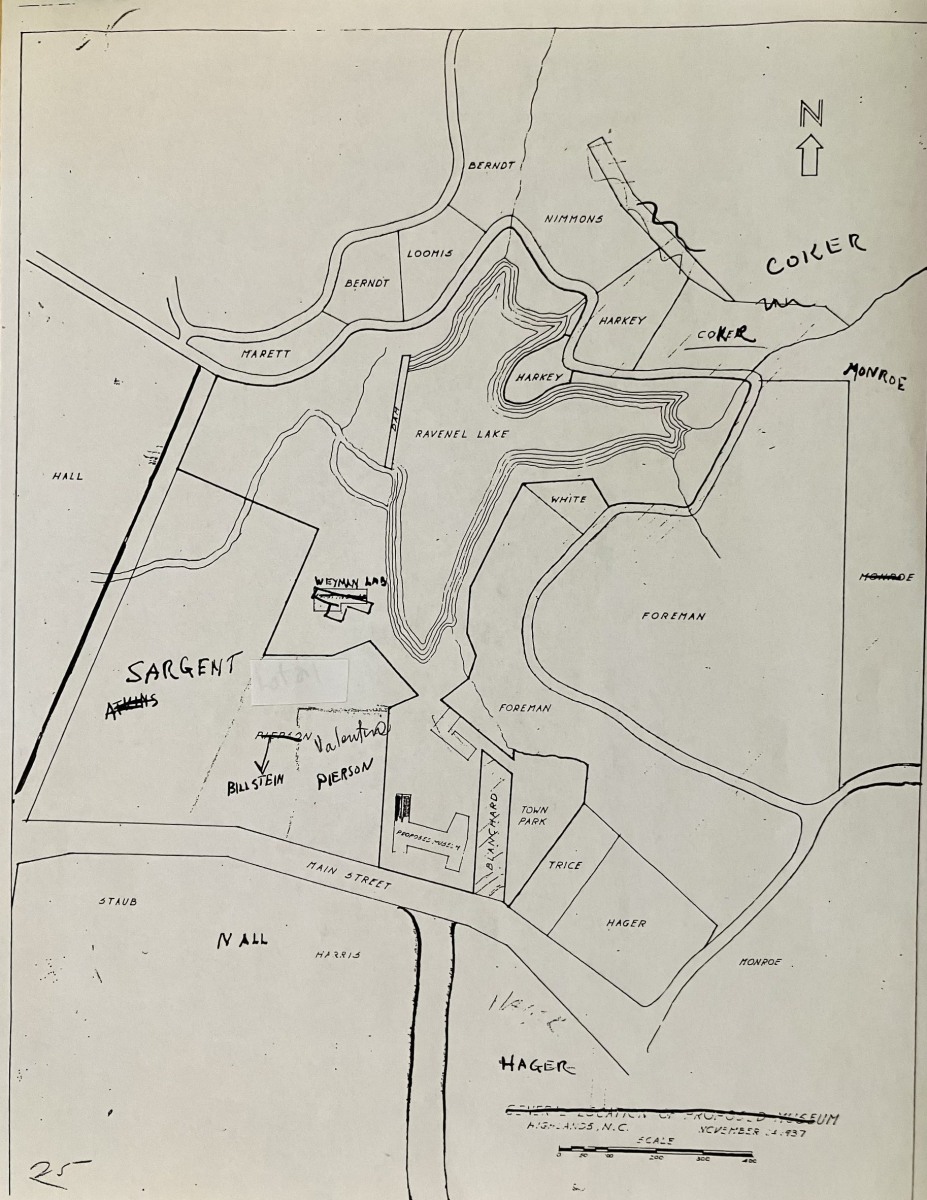
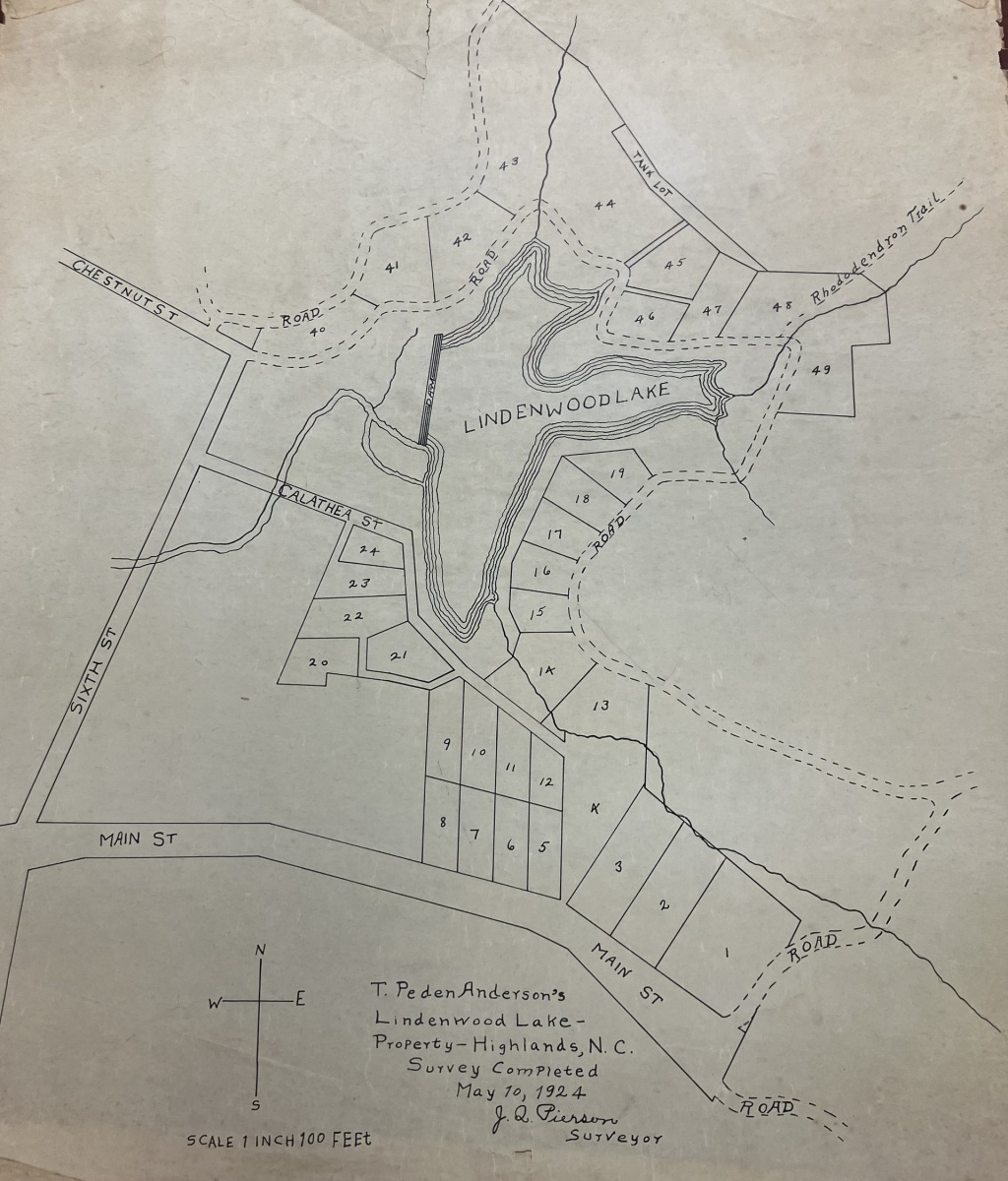
Highlands Biological Station sits in a landscape shaped by water. At its center is Lindenwood Lake—once known as Ravenel Lake—chosen in 1931 as the best location for the Station’s first laboratory. The surrounding property had been divided into lots in the early 1920s by developer Thomas Peden Anderson, based on a survey completed May 10, 1924 by J. Q. Pierson.
This is the story of the land, the lake, and the people who secured it—transforming a scenic park lake into a living laboratory.
A Lake Before the Laboratory: Lindenwood Park (1886–1895)
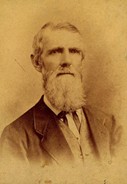
The story begins with the Ravenel family. Samuel Prioleau Ravenel Sr. (1822–1902) and his wife Margaretta (1833–1912) acquired vast holdings across the Highlands plateau—some 30,000 acres from Satulah to Sagee—land that likely included today’s Lindenwood Lake area. The Ravenel descendants later donated Sunset Rock to the Town of Highlands (1914), in memory of Samuel Sr. and Margaretta.
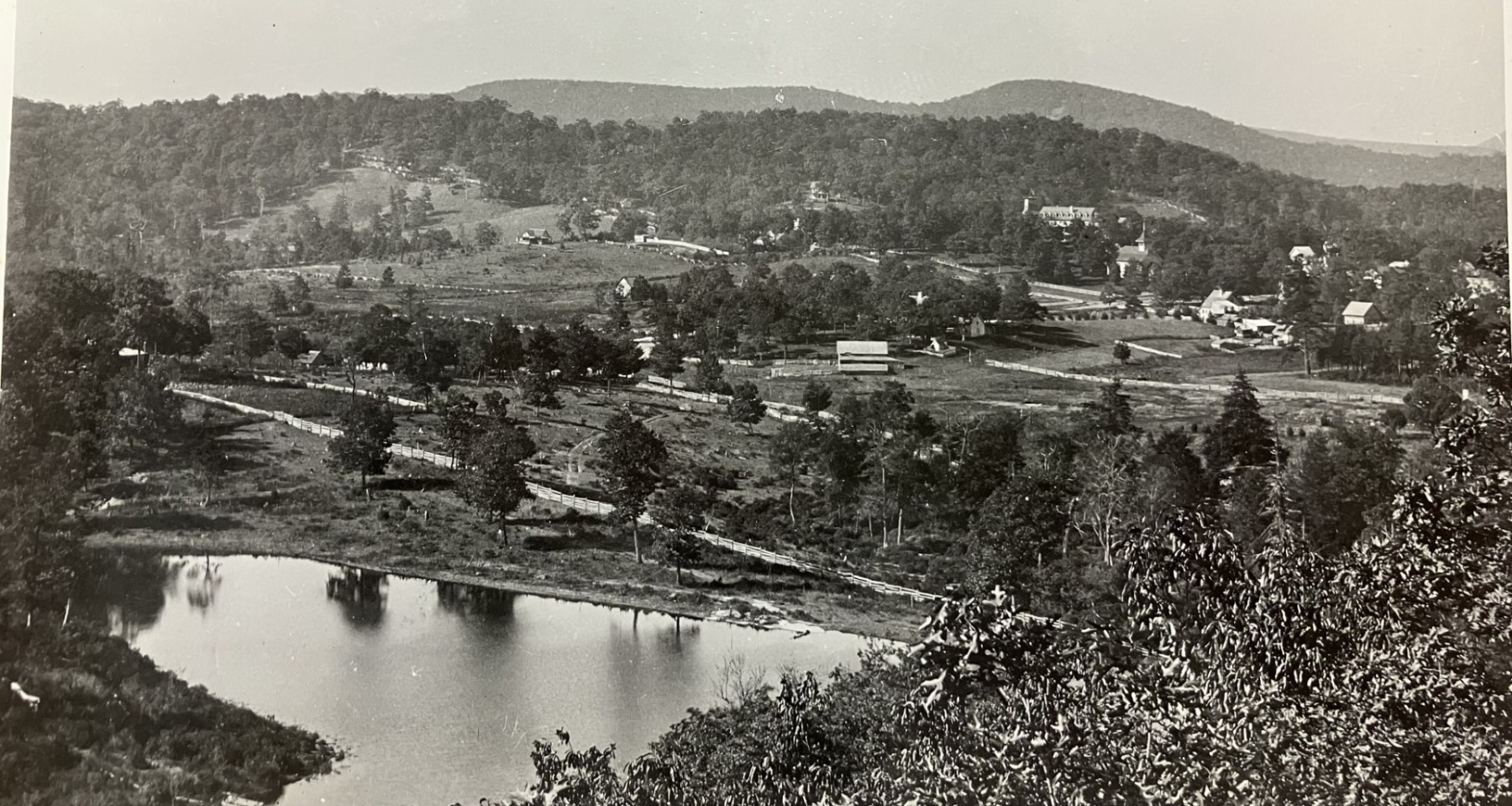
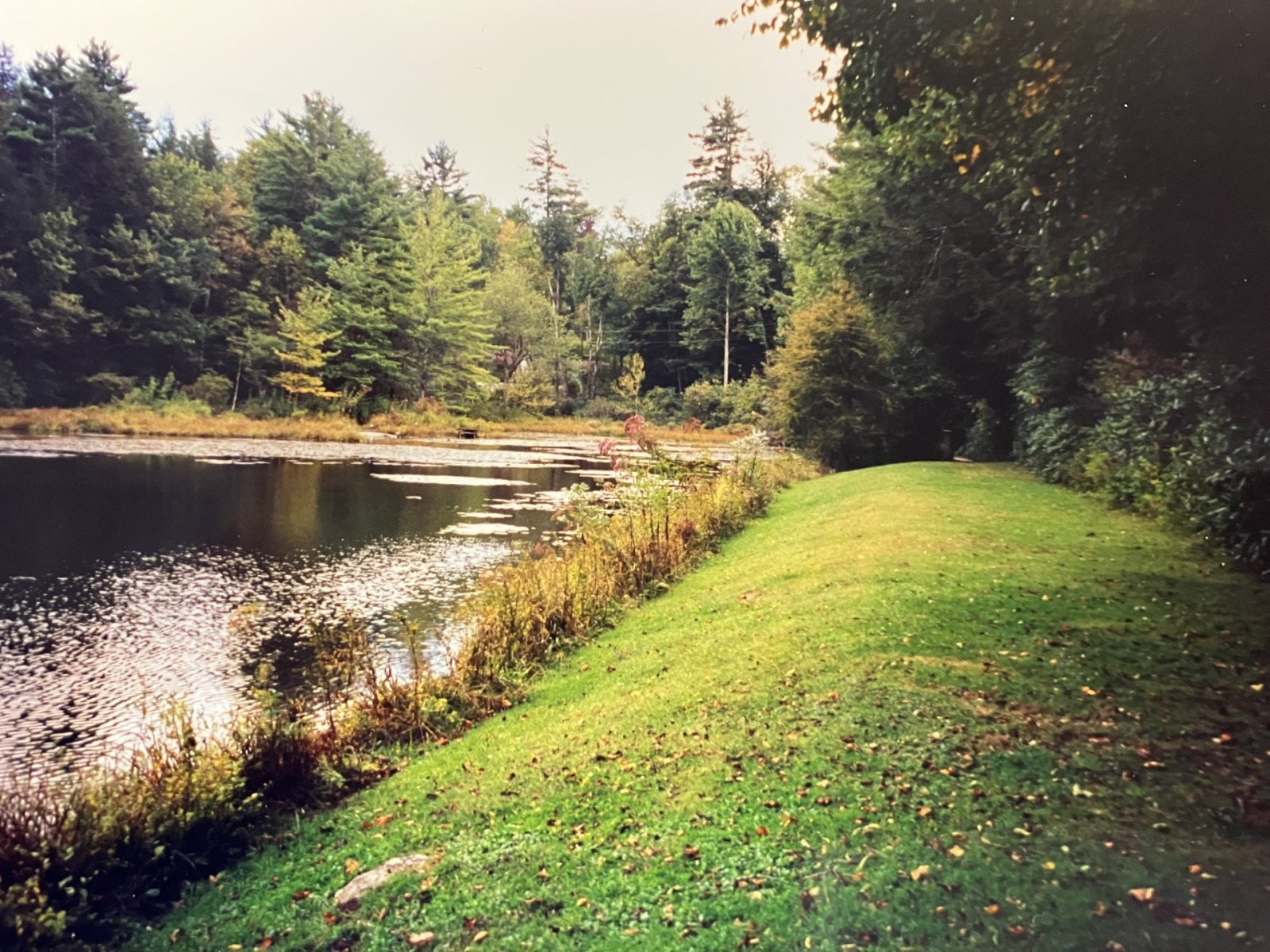
The Ravenels were actively shaping Highlands as a destination. They had been acquiring land since 1886, and by 1890 they built a carriage road to the top of Satulah. In 1893, they decided to create a lake by damming the water from four creeks—streams that still feed the lake today.
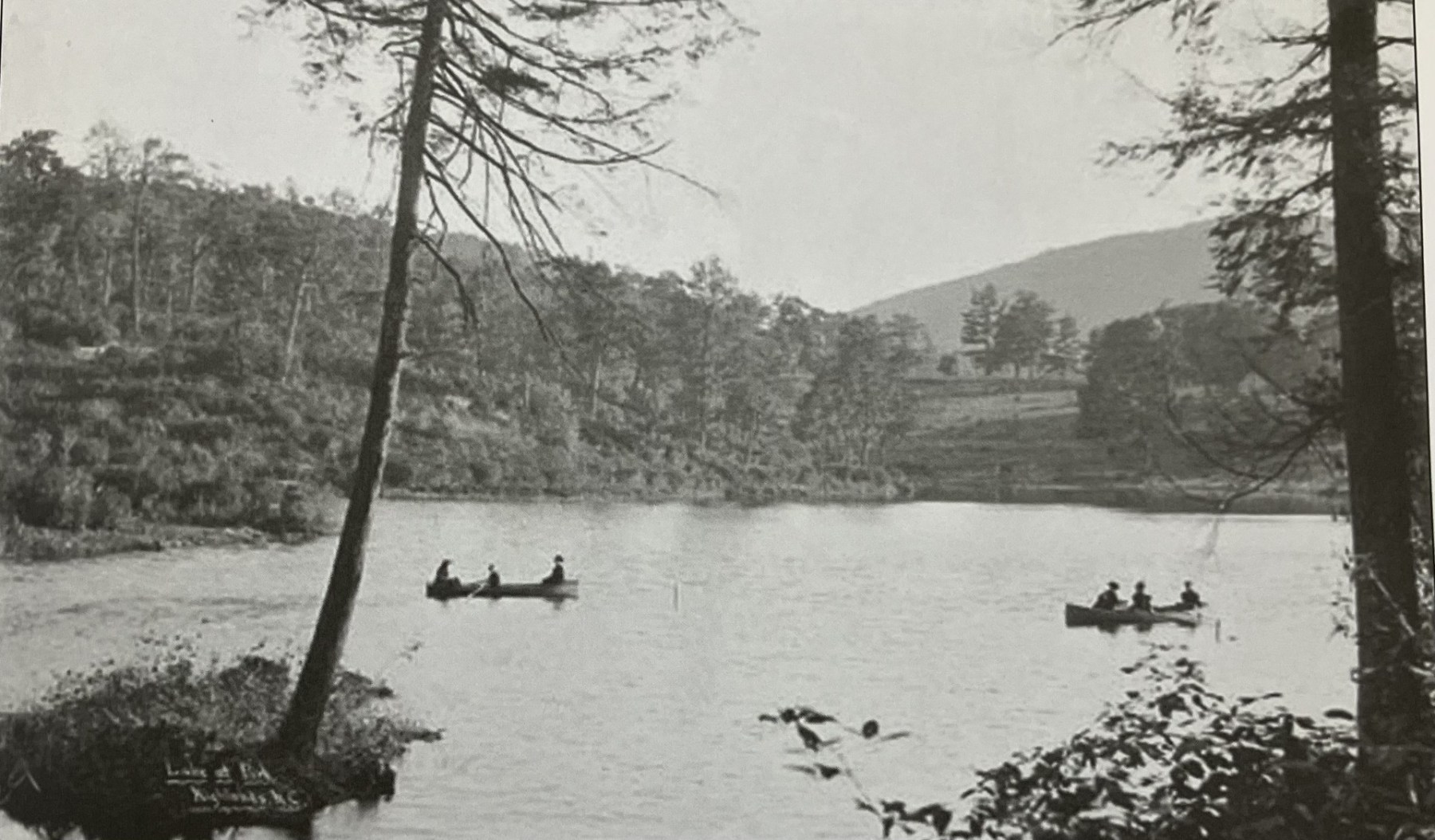
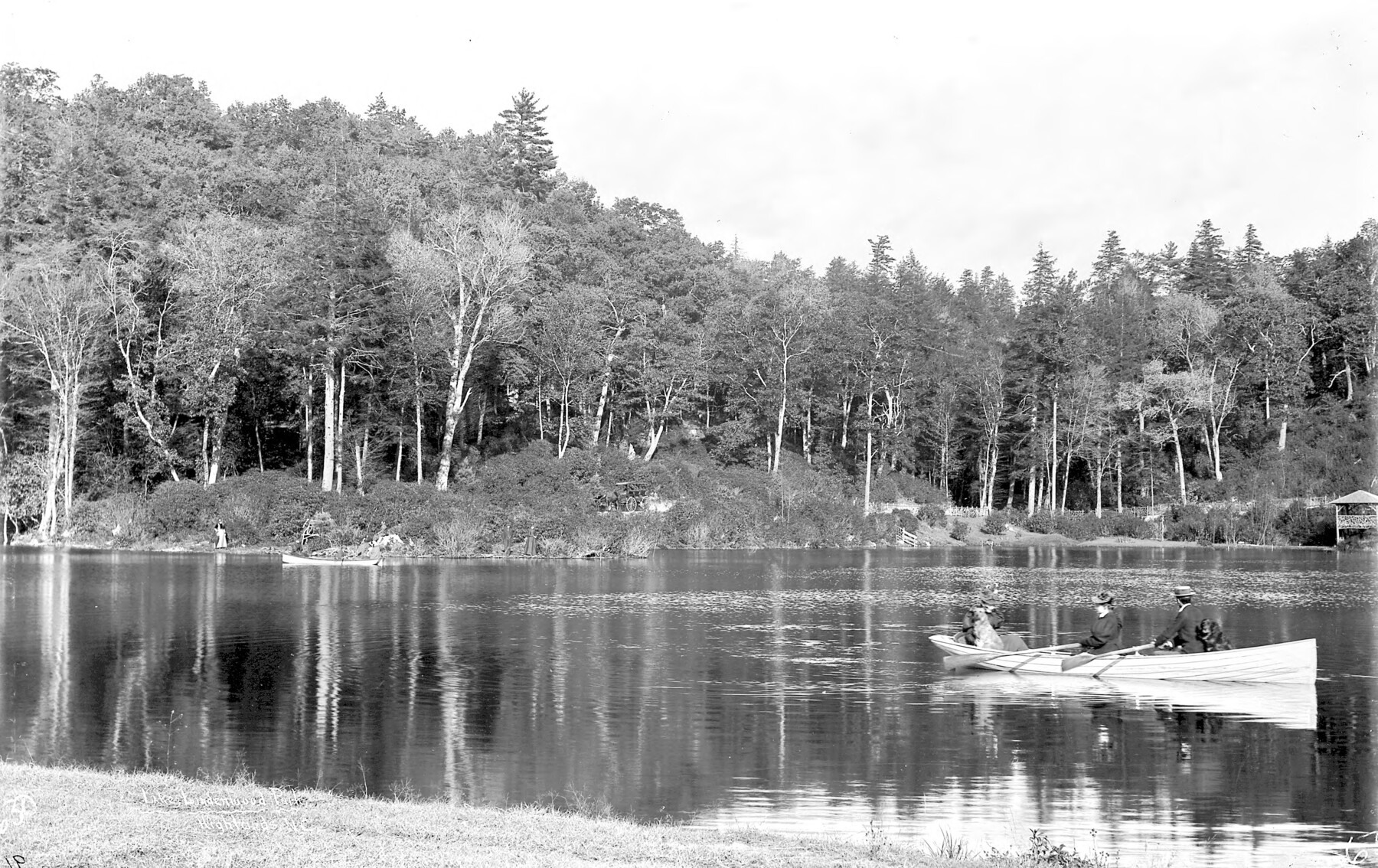
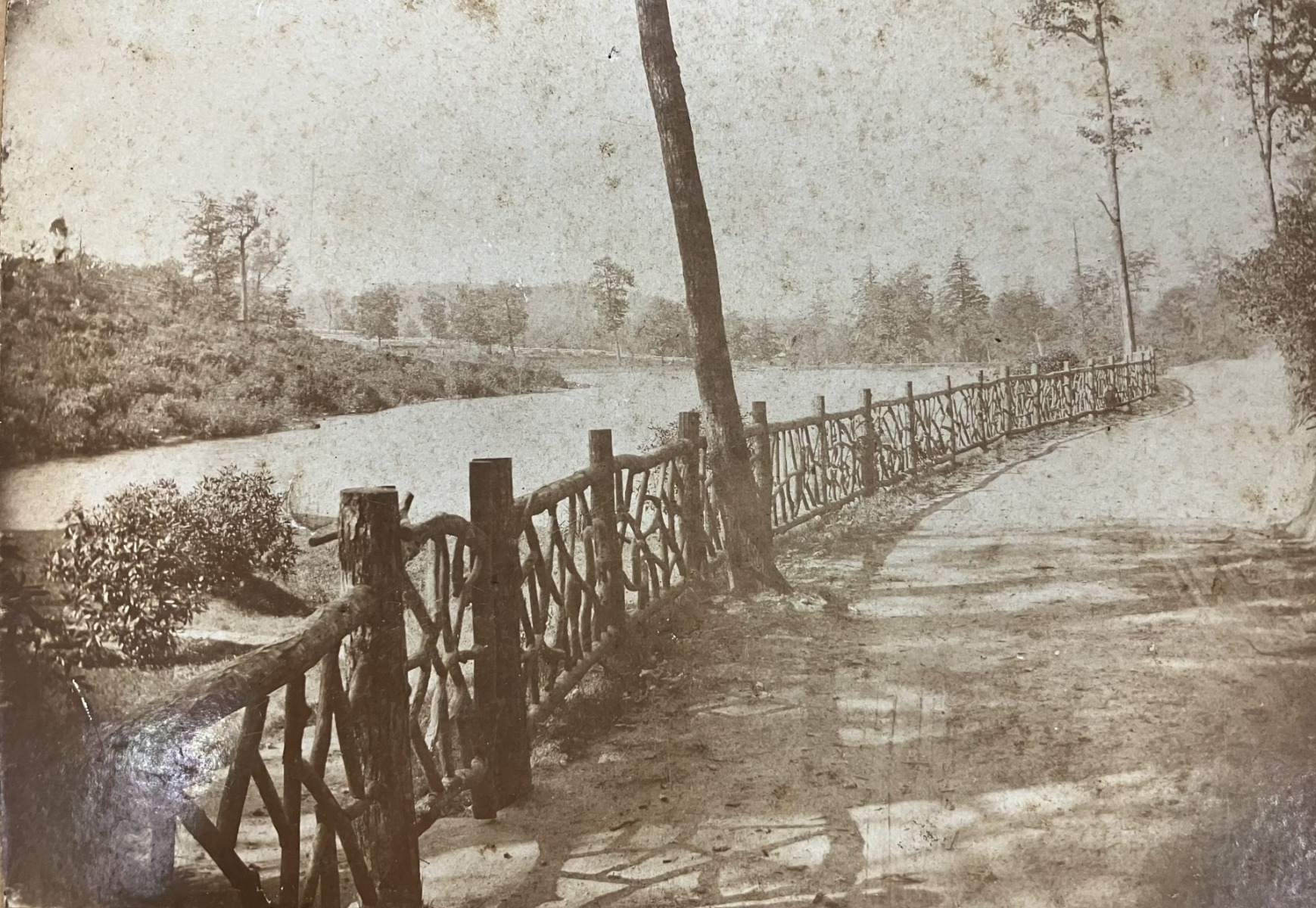
In 1895, a Franklin Press report described Lindenwood Park as a carefully cultivated landscape: plantings around the shoreline, water lilies, fish ponds, winding paths, smooth roads, and a boathouse with boats imported from Spring Lake, Michigan. Lindenwood Park, the article noted, was open to the public through the generosity of Samuel Prioleau Ravenel Jr. (1868–1940).
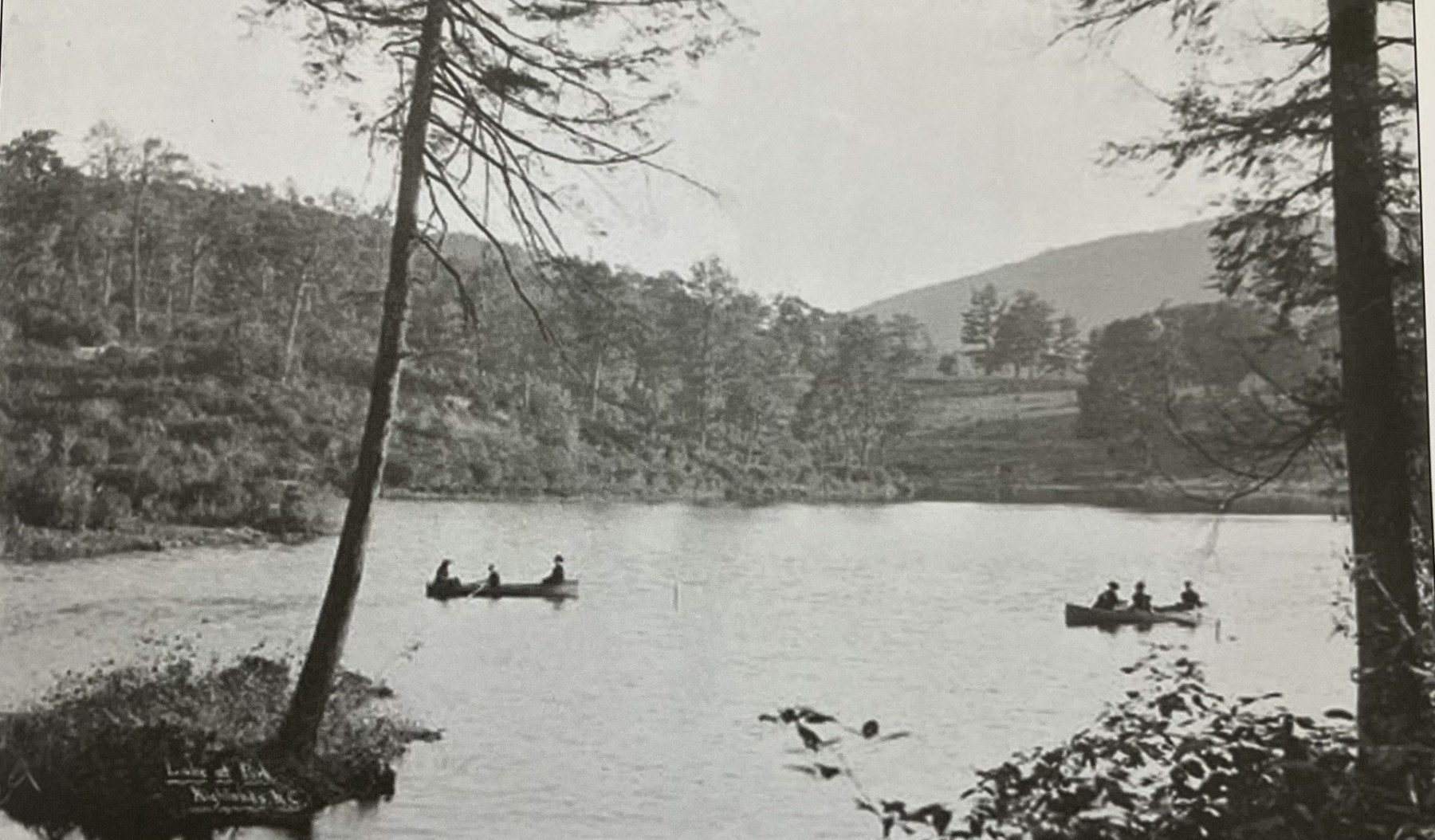
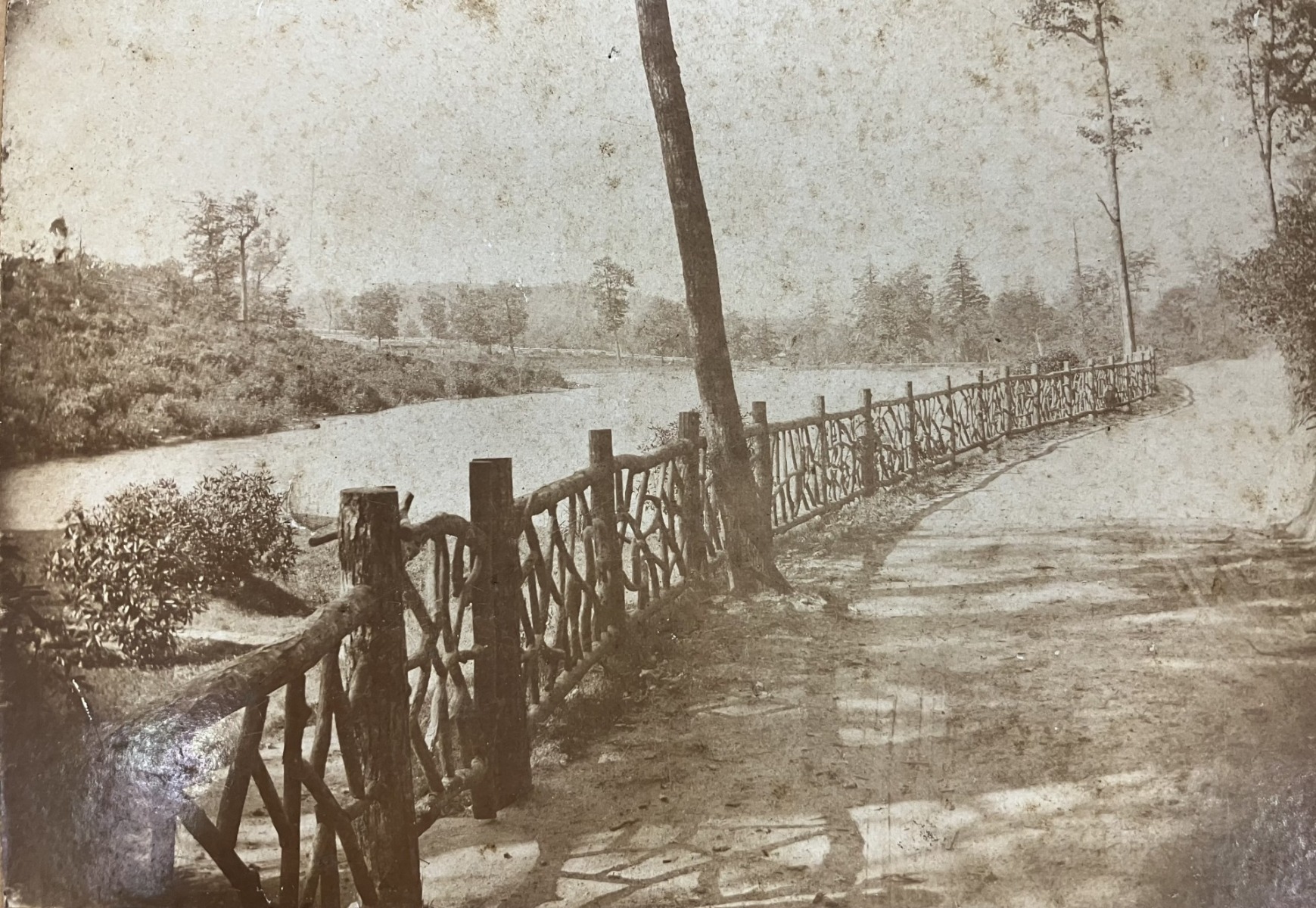
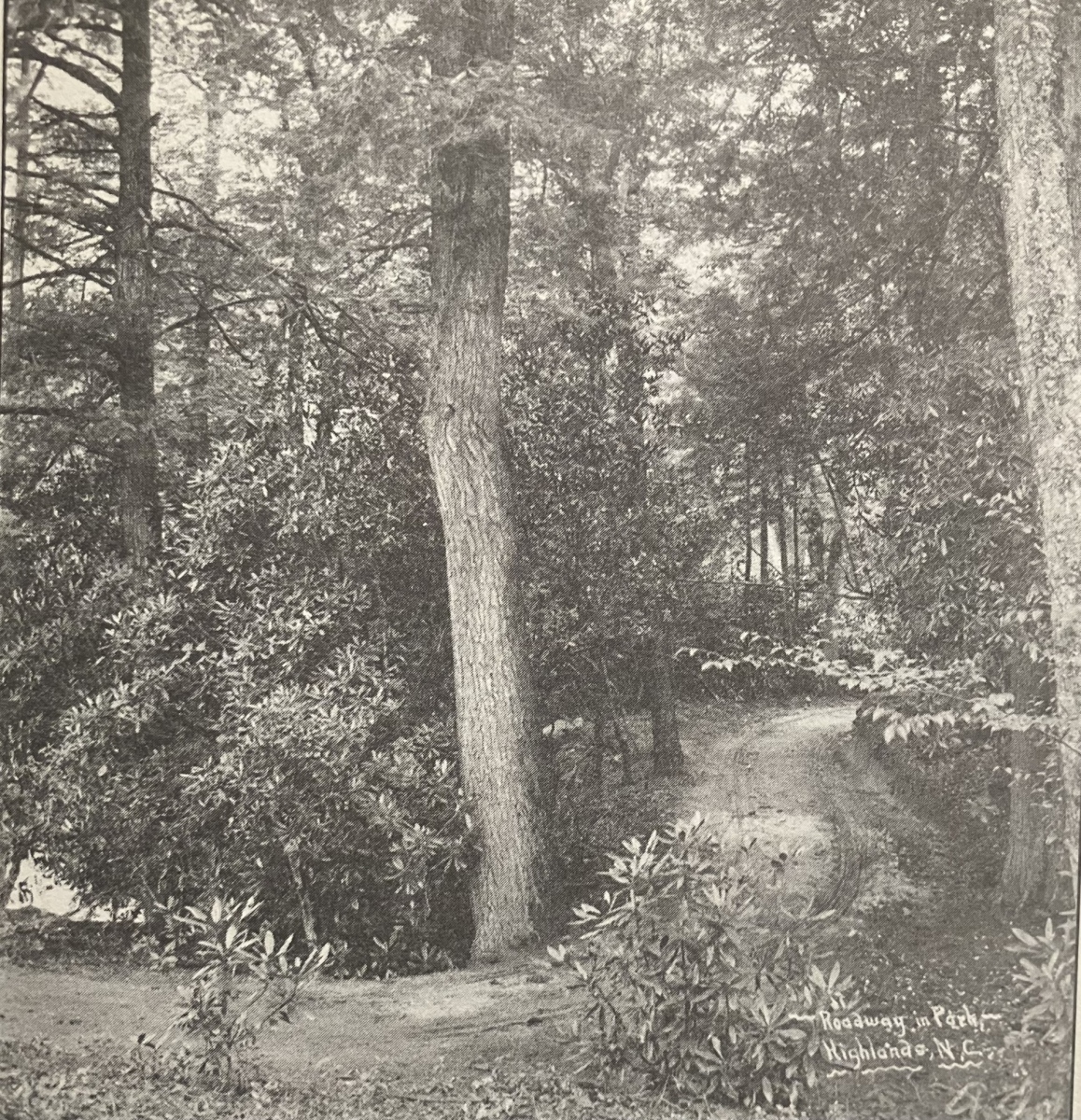
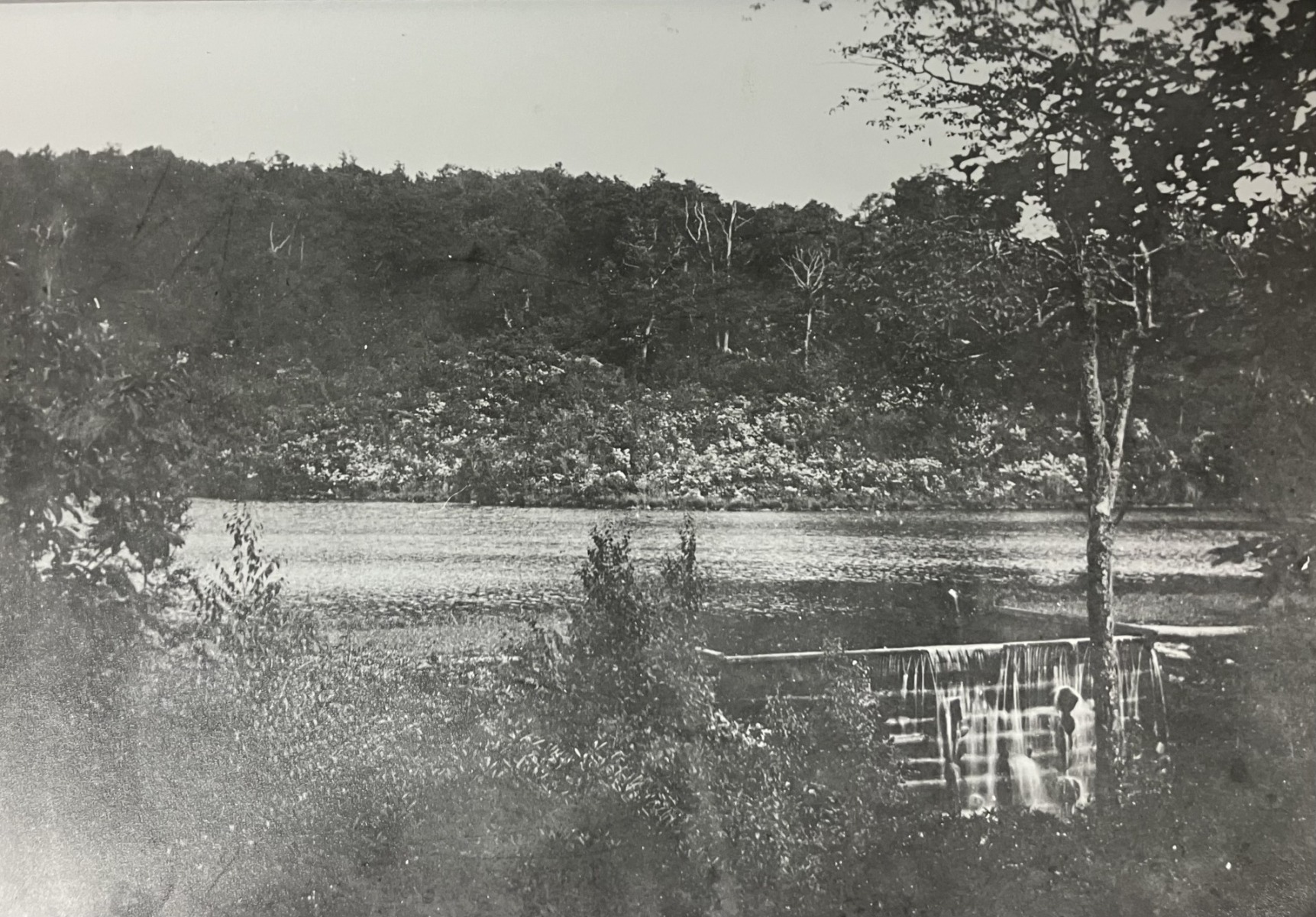
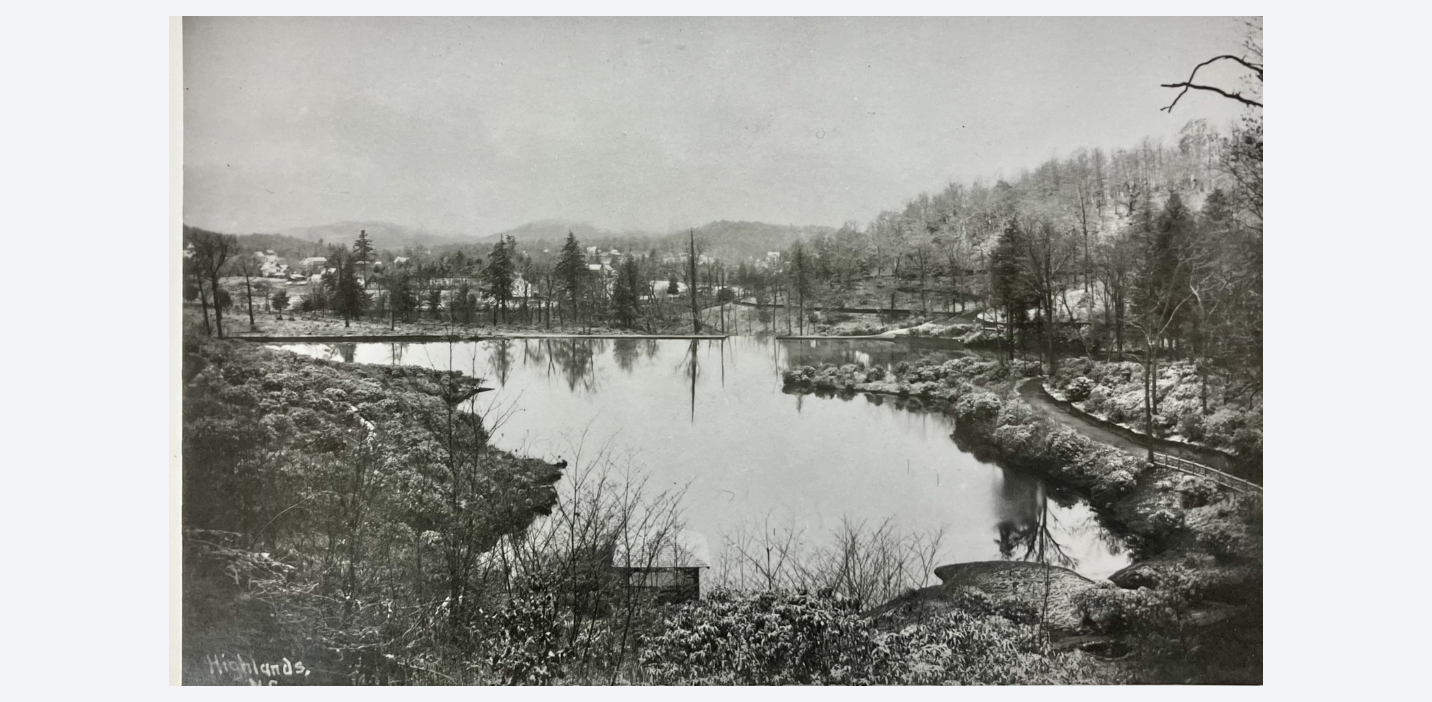
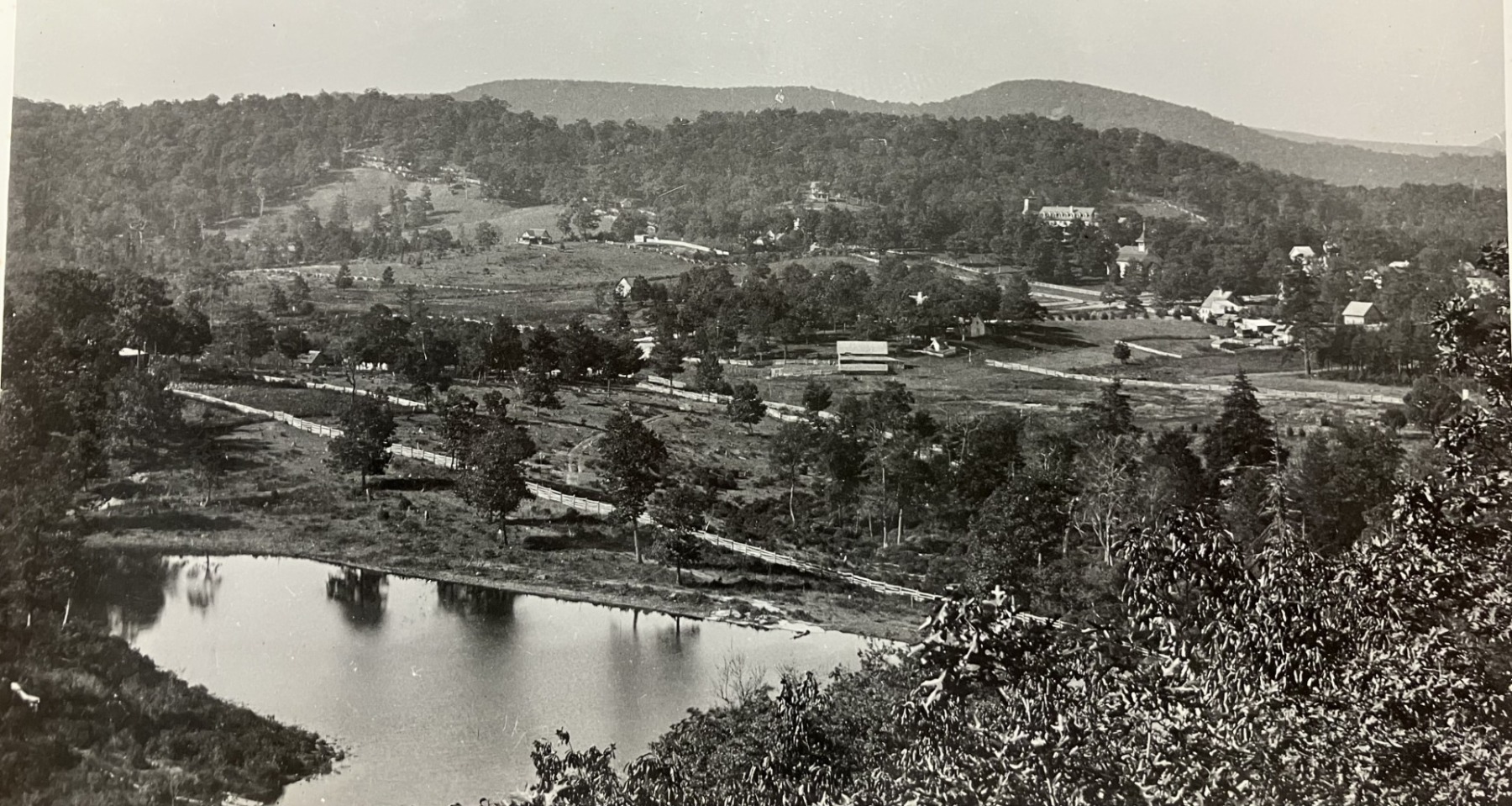
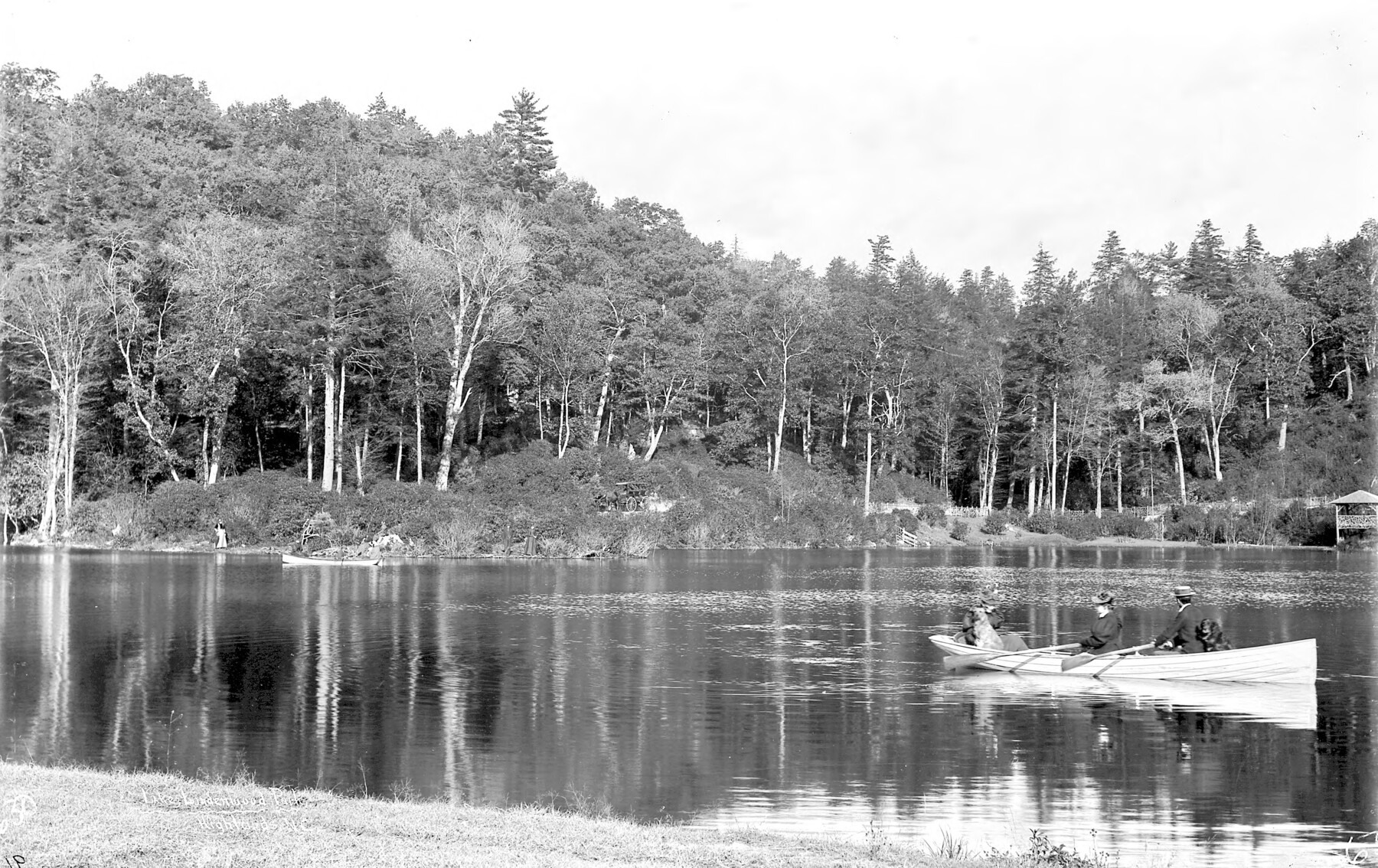
By the early 1920s, the lake’s future was shifting from parkland to planned development. Thomas Peden Anderson (1884–1935)—a banker and land developer born in Westminster, South Carolina—likely purchased the property around Lindenwood Lake in early 1924. He and his wife Minnie Pearl Hutchinson (1884–1964) had five children. Anderson later served as business manager of Oglethorpe University in Atlanta and moved to Florida in 1925.
On May 10, 1924, surveyor J. Q. (John Quincy) Pierson (1881–1956) completed Anderson’s detailed survey map of the Lindenwood Lake property. From this plat, lots were sold to many individuals—the beginnings of the long and complicated patchwork of ownership around the lake.
“The Most Imperative Need Was a Laboratory” (1930–1931)
The Board of Trustees incorporated the Highlands Museum and Biological Laboratory in 1930 and a vision quickly came into focus. At their first meeting on August 23, 1930, Trustees agreed that the most urgent need was a laboratory.
A September 26, 1930 letter between Trustees Clark Foreman and E. E. Reinke introduces the Andersons’ lake property as a possible solution. Mrs. Anderson, Foreman reported, suggested there might be a way to secure land for a laboratory site.
By 1931, the Trustees—Clark Foreman, Dr. Ivey Lewis, Dr. E. E.
Reinke, and Dr. L. R. Hesler—were searching for a location that was both affordable and scientifically ideal. Dr. Lewis felt strongly that the laboratory should be on a lake, because biological experimentation requires water. They determined that Frank Potts’ property on Lindenwood Lake offered the best site.
Potts wrote to Foreman on January 19, 1931, noting that property owners around the lake held swimming and fishing privileges, but that the Station could otherwise control the lake. He offered Lots 23 and 24 for $2,500.
The Highlands Maconian reported on April 8, 1931 that Lindenwood Lake had been selected as the experiment station site. The article noted that two
to three acres were being purchased for a building—and that Trustees were also securing title to a narrow strip around much of the shoreline, giving the Station virtual control of the lake.
On April 17, 1931, Albertina Staub—an insurance and real estate broker in Highlands, and secretary/treasurer for the Museum and Laboratory—wrote to E. E. Reinke emphasizing the urgency of closing the transaction. She described the consolidation of lots and lake rights into a single deed, warning that delay could jeopardize progress.
By June 1931, Clark Foreman was writing to Mayor William S. Davis to request city water and electricity, highlighting the notoriety and value the laboratory would bring to Highlands. The City agreed to help.
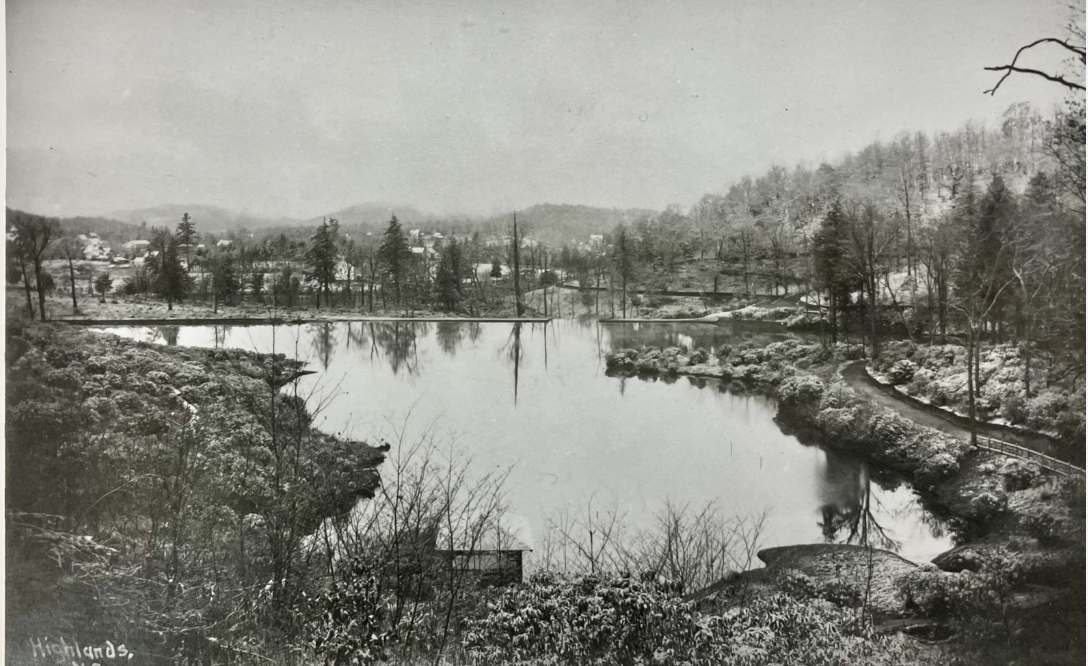
Lake with Samuel T. Weyman Memorial Building in background. c. 1931
Your content goes here. Edit or remove this text inline or in the module Content settings. You can also style every aspect of this content in the module Design settings and even apply custom CSS to this text in the module Advanced settings.
Your content goes here. Edit or remove this text inline or in the module Content settings. You can also style every aspect of this content in the module Design settings and even apply custom CSS to this text in the module Advanced settings.
Your content goes here. Edit or remove this text inline or in the module Content settings. You can also style every aspect of this content in the module Design settings and even apply custom CSS to this text in the module Advanced settings.
Your content goes here. Edit or remove this text inline or in the module Content settings. You can also style every aspect of this content in the module Design settings and even apply custom CSS to this text in the module Advanced settings.
Your content goes here. Edit or remove this text inline or in the module Content settings. You can also style every aspect of this content in the module Design settings and even apply custom CSS to this text in the module Advanced settings.
Your content goes here. Edit or remove this text inline or in the module Content settings. You can also style every aspect of this content in the module Design settings and even apply custom CSS to this text in the module Advanced settings.
Your content goes here. Edit or remove this text inline or in the module Content settings. You can also style every aspect of this content in the module Design settings and even apply custom CSS to this text in the module Advanced settings.
Your content goes here. Edit or remove this text inline or in the module Content settings. You can also style every aspect of this content in the module Design settings and even apply custom CSS to this text in the module Advanced settings.Your content goes here. Edit or remove this text inline or in the module Content settings. You can also style every aspect of this content in the module Design settings and even apply custom CSS to this text in the module Advanced settings.Your content goes here. Edit or remove this text inline or in the module Content settings. You can also style every aspect of this content in the module Design settings and even apply custom CSS to this text in the module Advanced settings.Your content goes here. Edit or remove this text inline or in the module Content settings. You can also style every aspect of this content in the module Design settings and even apply custom CSS to this text in the module Advanced settings.Your content goes here. Edit or remove this text inline or in the module Content settings. You can also style every aspect of this content in the module Design settings and even apply custom CSS to this text in the module Advanced settings.
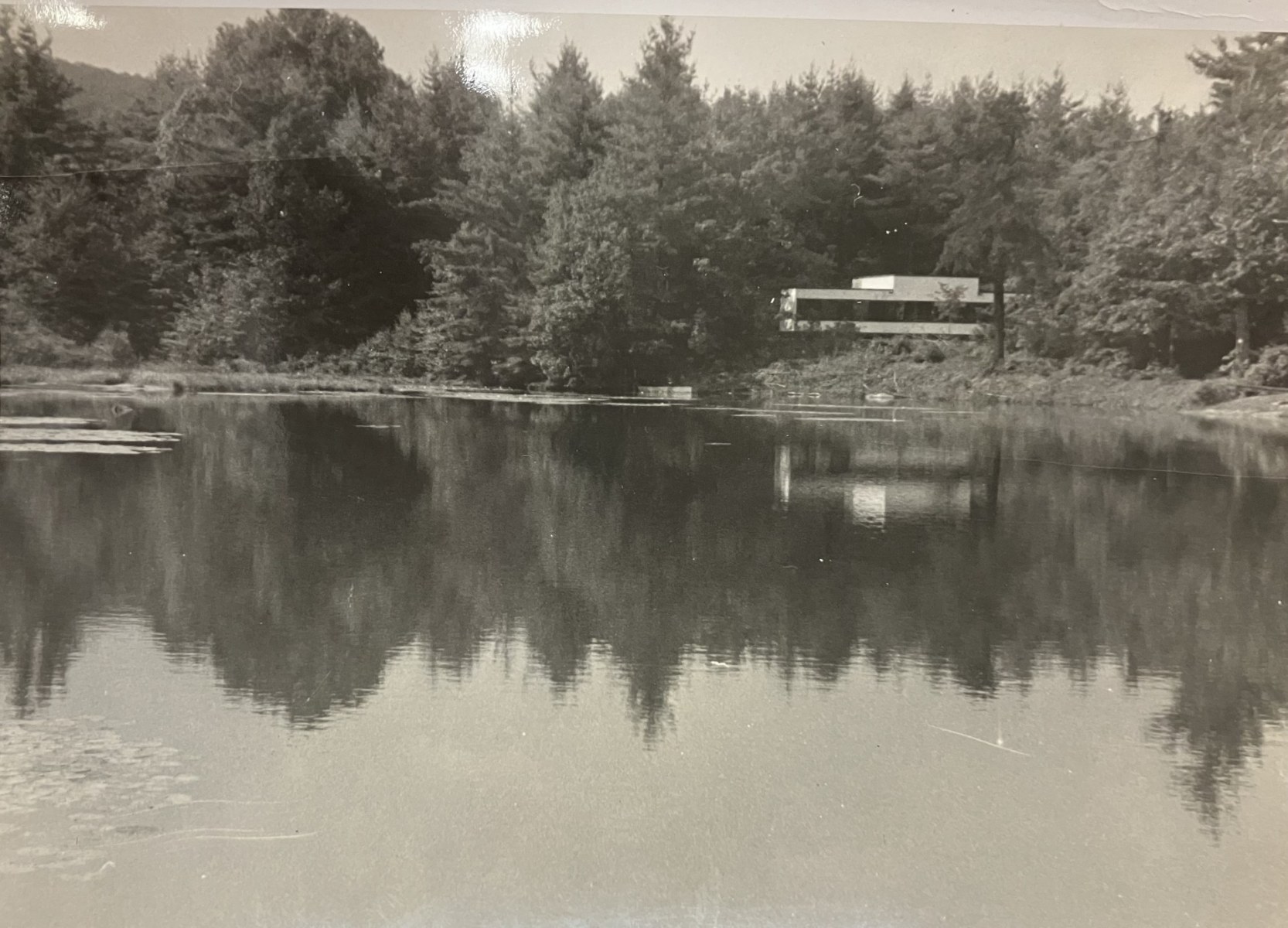
Lake with Renovated Weyman and Coker Laboratory Buildings in background August, 1961
“Lorem ipsum dolor sit amet, consectetur adipiscing elit, sed do eiusmod tempor incididunt ut labore et dolore magna aliqua. Ut enim ad minim veniam, quis nostrud exercitation ullamco laboris nisi ut aliquip ex ea commodo consequat. Duis aute irure dolor in reprehenderit in voluptate velit esse cillum dolore eu fugiat nulla pariatur. Excepteur sint occaecat cupidatat non proident, sunt in culpa qui officia deserunt mollit anim id est laborum.”
“Lorem ipsum dolor sit amet, consectetur adipiscing elit, sed do eiusmod tempor incididunt ut labore et dolore magna aliqua. Ut enim ad minim veniam, quis nostrud exercitation ullamco laboris nisi ut aliquip ex ea commodo consequat. Duis aute irure dolor in reprehenderit in voluptate velit esse cillum dolore eu fugiat nulla pariatur. Excepteur sint occaecat cupidatat non proident, sunt in culpa qui officia deserunt mollit anim id est laborum.””Lorem ipsum dolor sit amet, consectetur adipiscing elit, sed do eiusmod tempor incididunt ut labore et dolore magna aliqua. Ut enim ad minim veniam, quis nostrud exercitation ullamco laboris nisi ut aliquip ex ea commodo consequat. Duis aute irure dolor in reprehenderit in voluptate velit esse cillum dolore eu fugiat nulla pariatur. Excepteur sint occaecat cupidatat non proident, sunt in culpa qui officia deserunt mollit anim id est laborum.””Lorem ipsum dolor sit amet, consectetur adipiscing elit, sed do eiusmod tempor incididunt ut labore et dolore magna aliqua. Ut enim ad minim veniam, quis nostrud exercitation ullamco laboris nisi ut aliquip ex ea commodo consequat. Duis aute irure dolor in reprehenderit in voluptate velit esse cillum dolore eu fugiat nulla pariatur. Excepteur sint occaecat cupidatat non proident, sunt in culpa qui officia deserunt mollit anim id est laborum.”
Funding the First Footprint (May–August 1931)
A committee began raising funds to purchase land around the lake. Lindenwood Lake—about five acres—was purchased on May 7, 1931 for $1,500.
The Board’s August 1931 financial statement confirms the purchase payments associated with the lake property, including the first payment to Frank Potts, related expenses, and the second payment plus interest due in April 1932.
A New Name: Ravenel Lake (August 1931) … and Back Again (2005)
The Samuel T. Weyman Memorial Laboratory was built between June and July 1931 and dedicated on August 29 of that year. At the Station’s annual meeting that summer, Clark Foreman proposed renaming Lindenwood Lake as Ravenel Lake, recognizing the family whose earlier development of the lake helped shape the landscape that would later become the site of the laboratory.
Station director Dr. A. A. Reinke also noted the Ravenel name’s broader significance in the history of Southern biology. One of the family’s distant relatives, Henry William Ravenel, was a pioneering 19th-century botanist whose work documenting fungi and other cryptogams of the American South earned international recognition.
In 2005, the lake’s name was changed back to Lindenwood. While no Board minutes have been found explaining the decision, it is thought the change may have been made to avoid confusion with another Lake Ravenel nearby. The linden tree (Tilia heterophylla), also known as basswood, grows naturally in Highlands—though it is less abundant today.
What’s in a Name?
The Highlands Maconian reported on the name change on Sept 9, 1931, noting “Henry William Ravenel (1814-1887) was born in South Carolina. Self-taught, he devoted himself to botany with enthusiasm and success. He critically studied flowering plants, mosses, lichens, fungi, and algae and his knowledge of cryptograms flora of the Southern States was unsurpassed. He was Agricultural Editor of the Charleston Weekly News and Courier and botanist to the S. C. Department of Agriculture. Ravenel was best known for his Fungi Caroliniani Exsuicati in five volumes 1852-1856, each containing 100 meticulously prepared and labeled dried specimens of fungi found primarily in South Carolina.” With only 30 copies produced, the compendium was the first major effort to document the fungi of North America since the work of Lewis David von Schweinitz and formed the nucleus of what is now the National Fungus Collection. (Digitized versions of the volumes are available online.)
His name is also preserved as Raveneliaceae, rust, fungi, a genius of Uredinales and by many species of Cryptograms, and is one of the largest genera of the order Pucciniales with more than 323 species described and found worldwide.
Ravenel was ruined financially by the Civil War, but he continued his research and work to the end of his life.” The University of North Carolina gave him the degree of LL.D. in 1886.
The Dam: A Beautiful Lake, a Persistent Problem (1931–1942)
Soon after the Station acquired the lake, the dam began to demand attention.
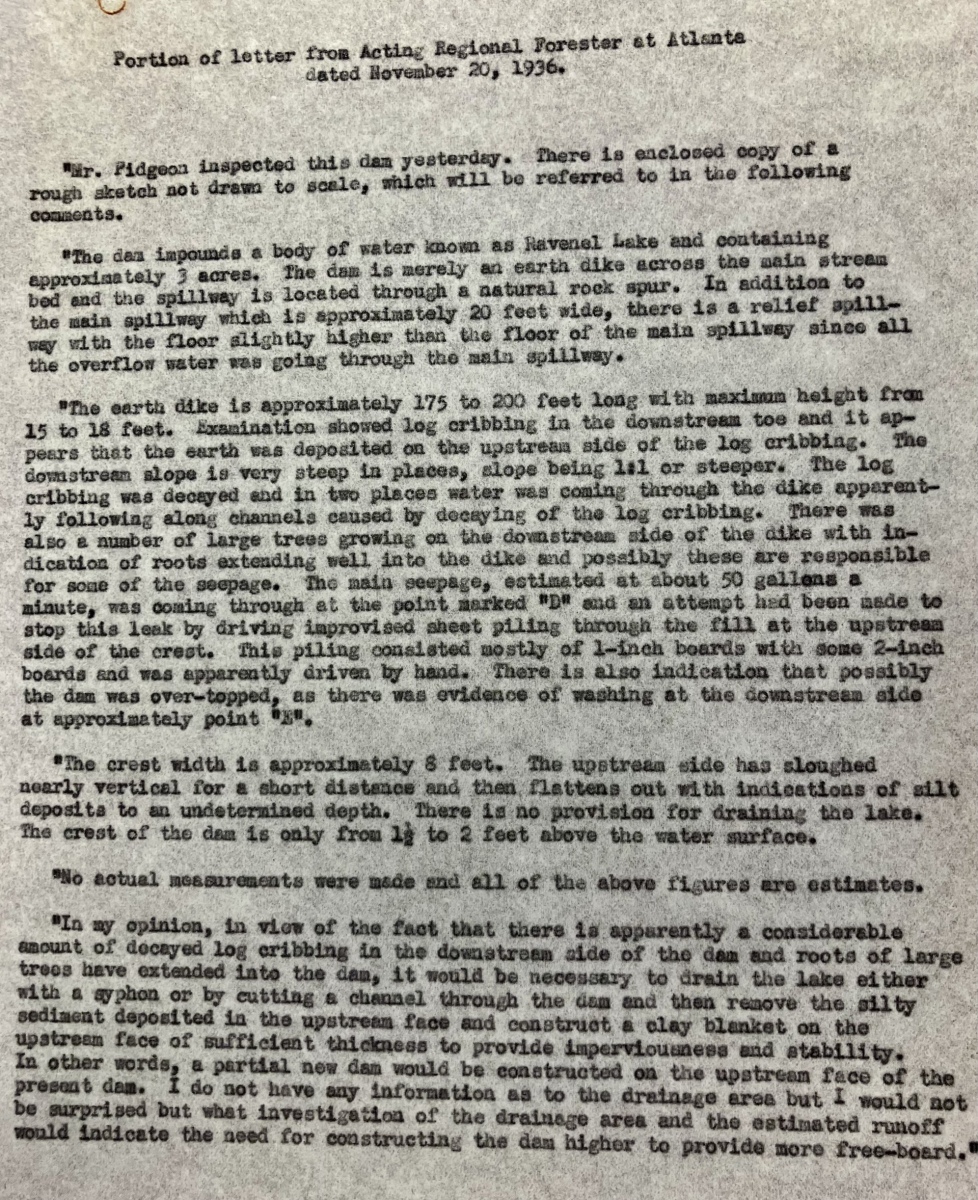
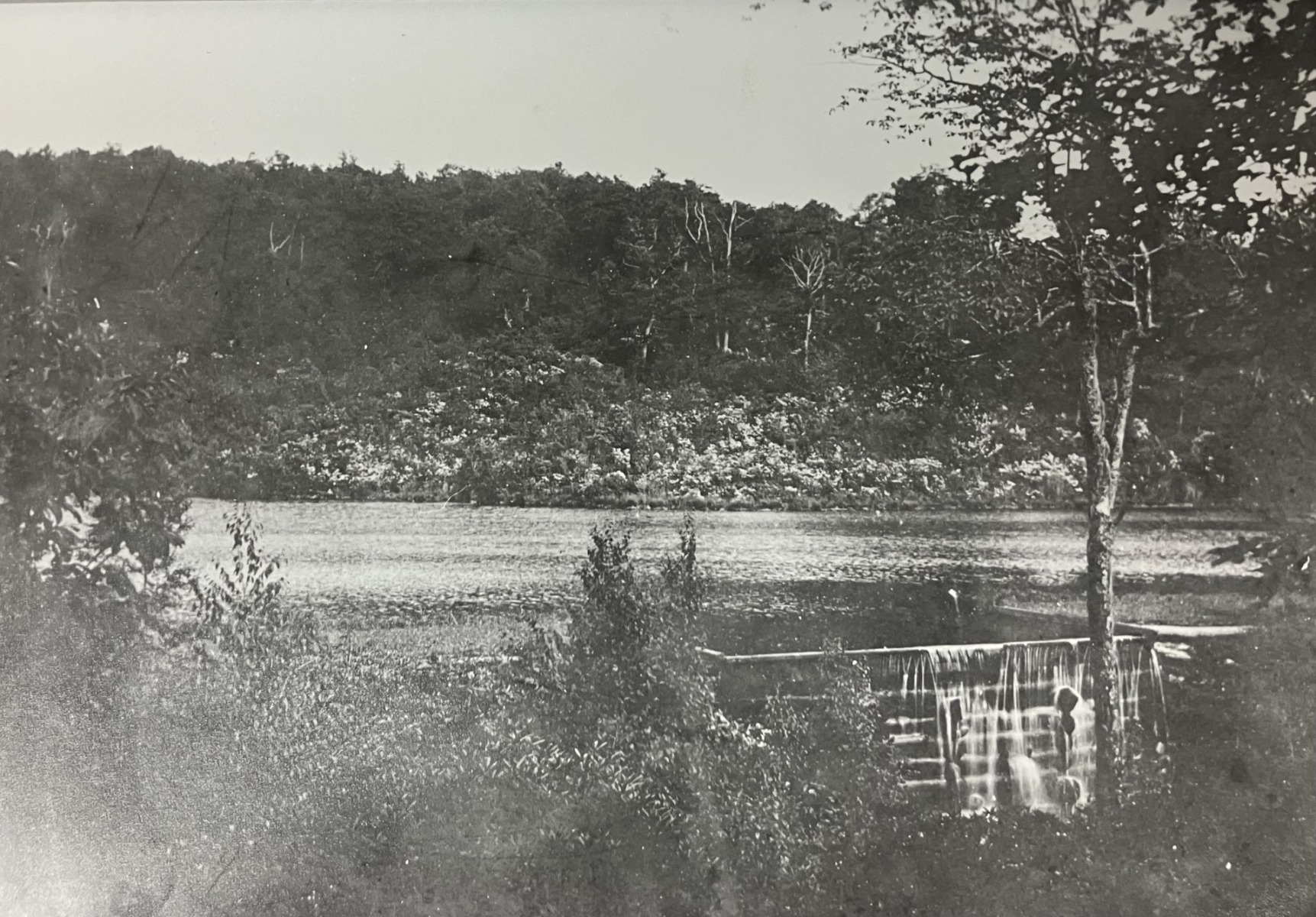
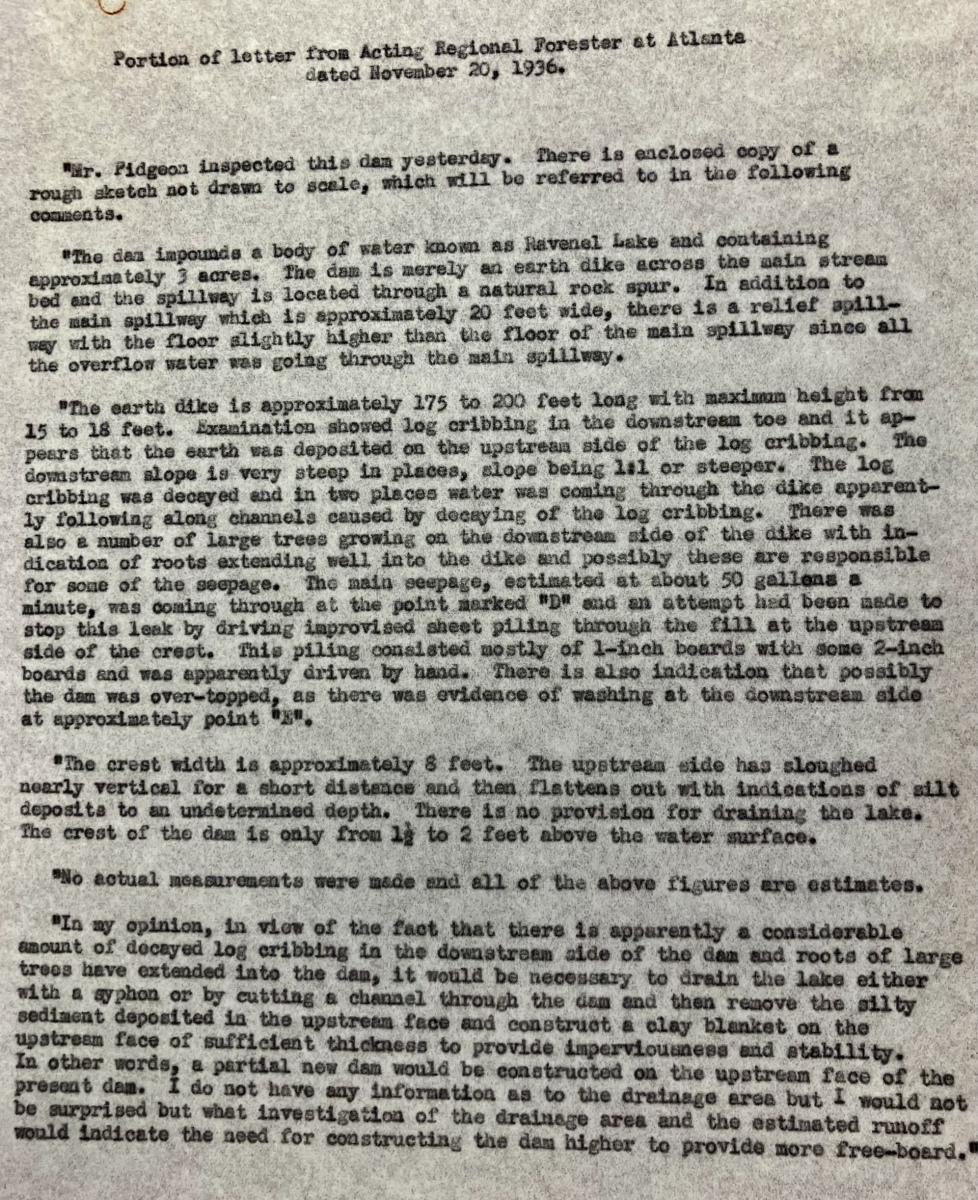
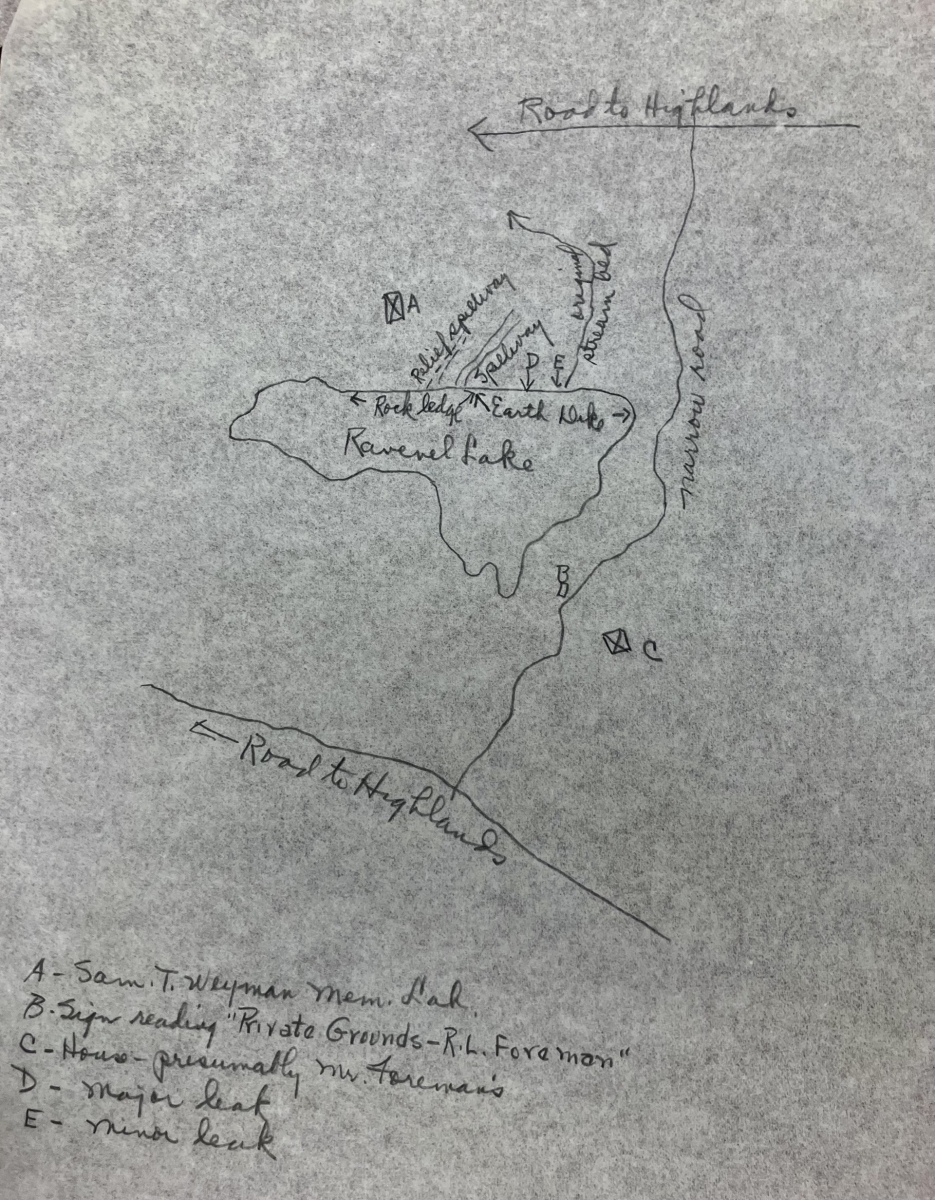
On December 17, 1931, Frank B. Cook submitted a small bill for labor on the dam after heavy rains produced “two or three very bad looking leaks.” In his letter, he wrote that he took the “bull by the horns” and acted immediately.
No major action appears
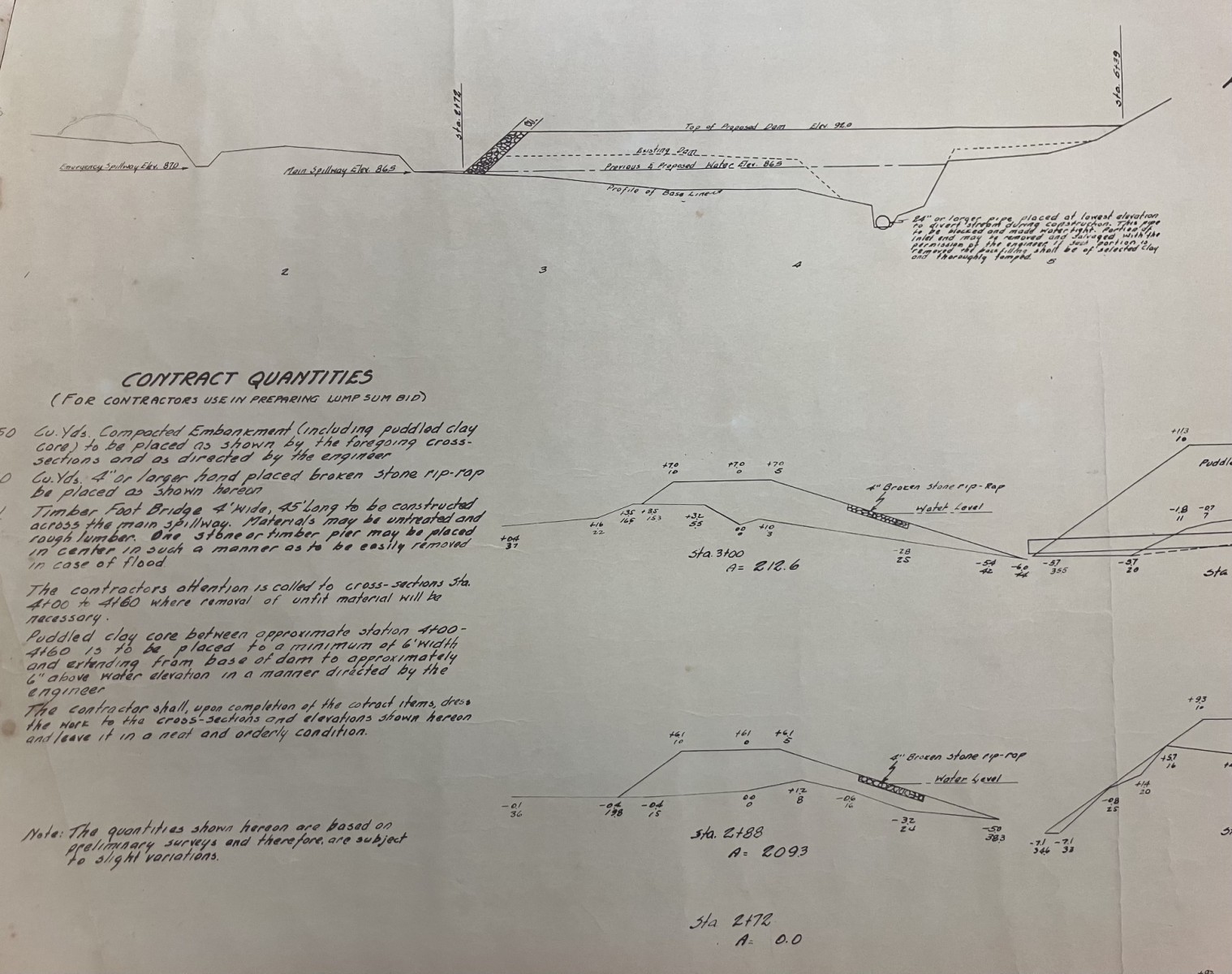
to have been taken until August 1940, when due to an unnamed inland hurricane the dam broke—sending a wall of water down Mill Creek and washing out the bridge over Highway 26 (Cashiers Road).
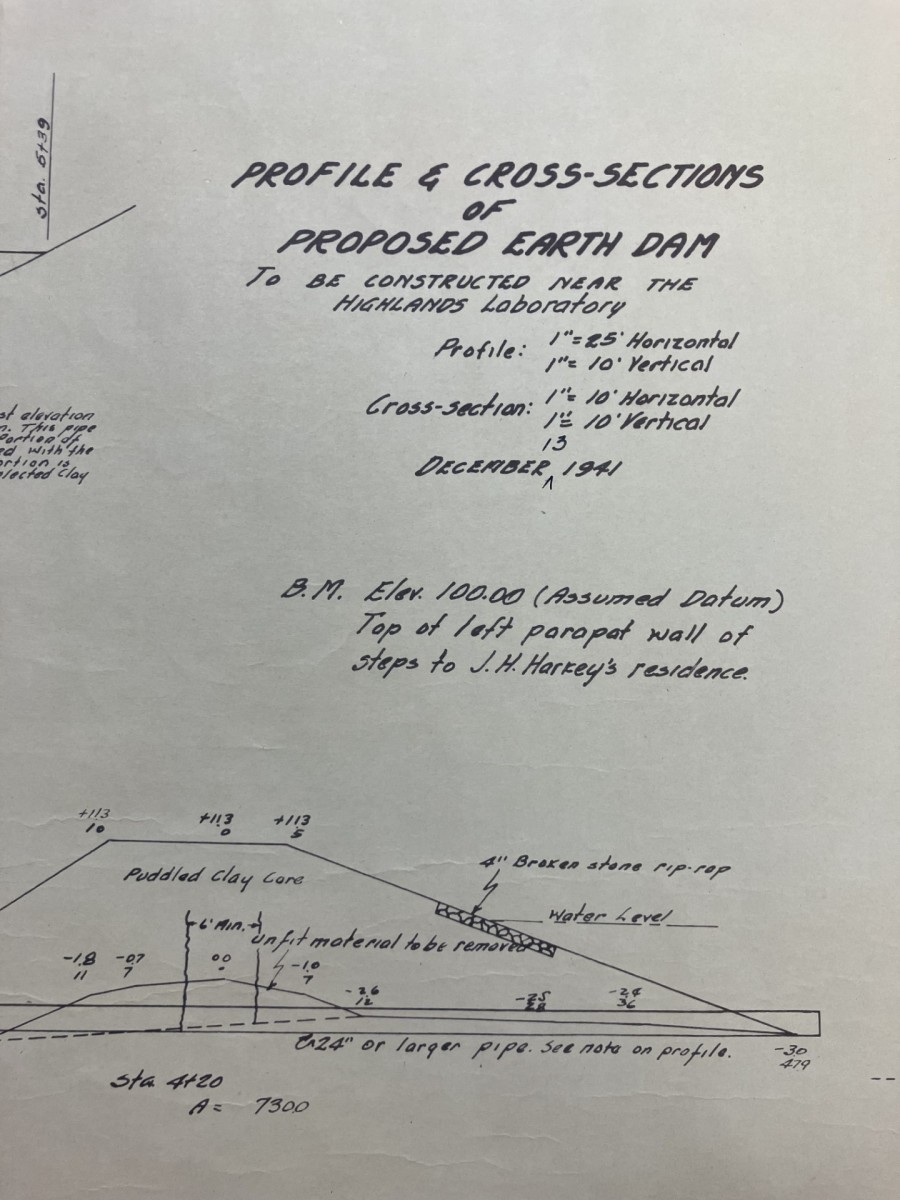
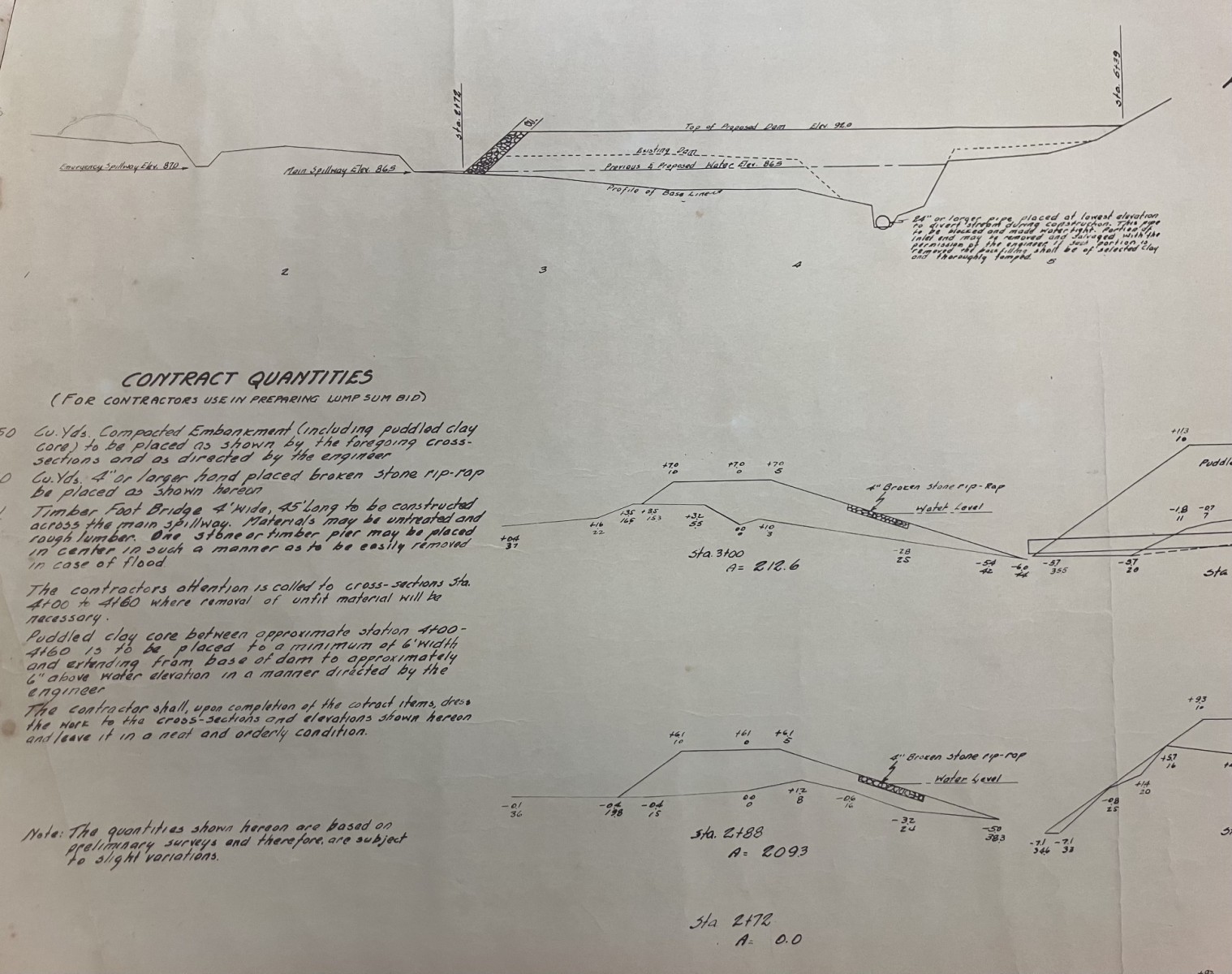
In the weeks that followed, W. C. Coker urged Board Chair William Lippincott to decide whether and how the dam should be replaced, granting a small group the authority to act. Coker consulted Duke Power, which recommended replacing planks along both sides of the earth dam—an
By February 1942, contractor J. H. Harkey had completed much of the reconstruction and requested partial payment. Trustees reported in August 1942 that the dam had been restored—six inches higher than before—at a cost of $3,304.29, with Coker paying half.
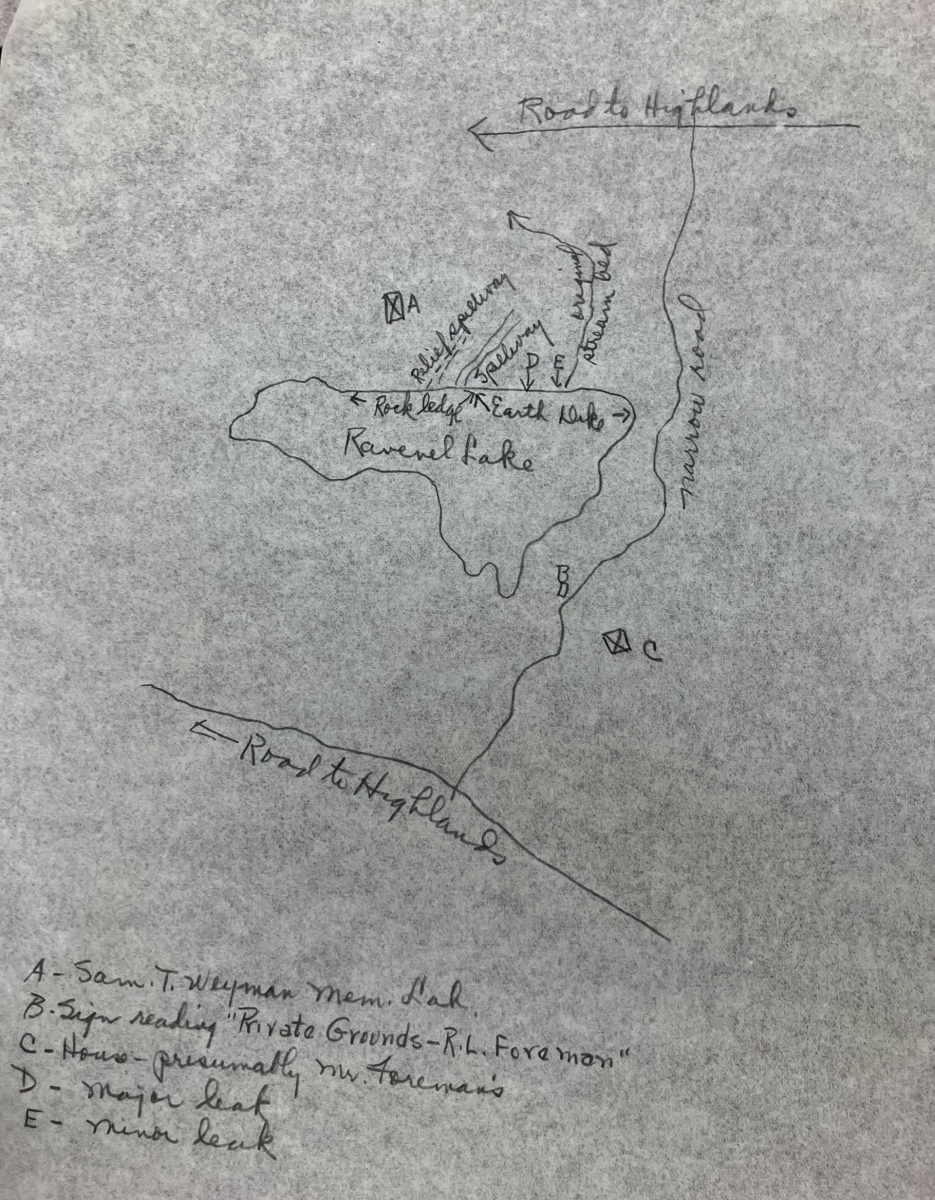
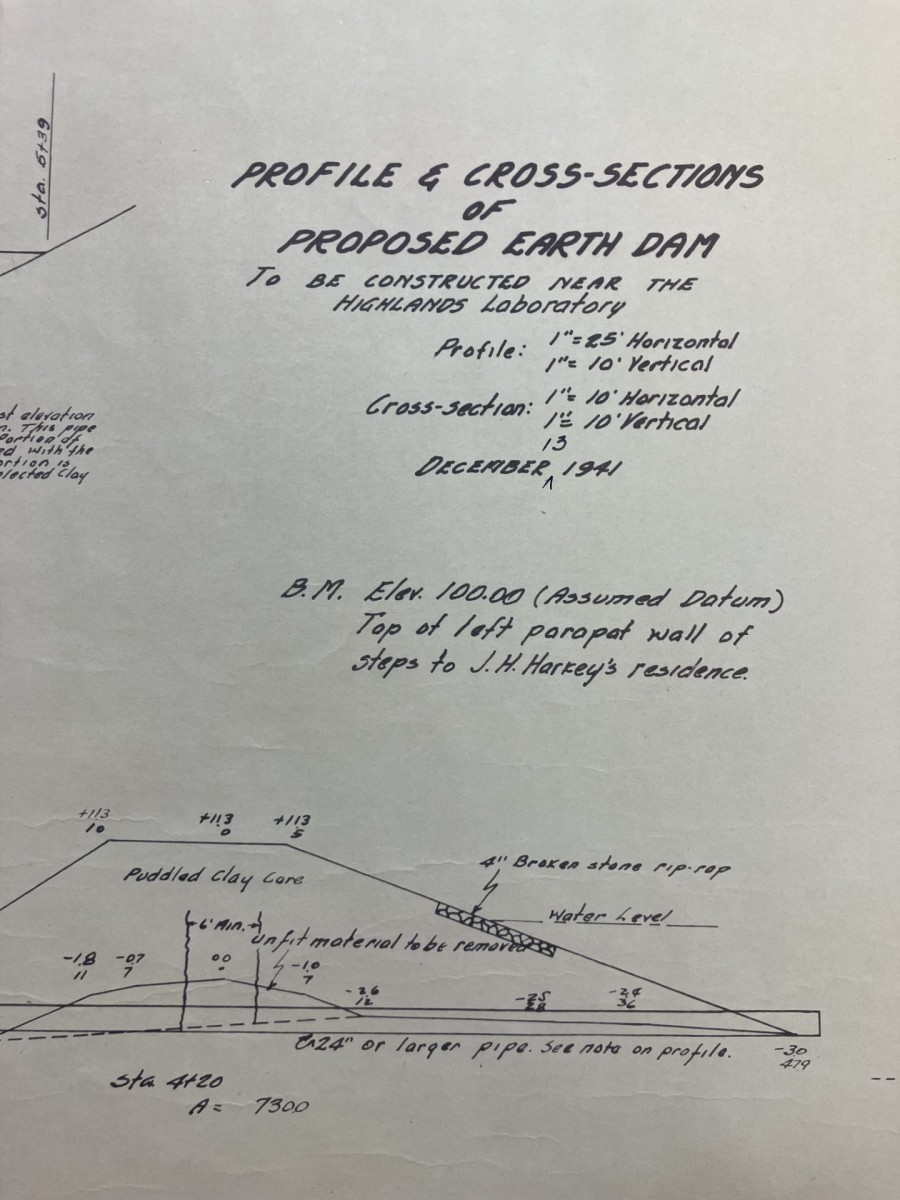
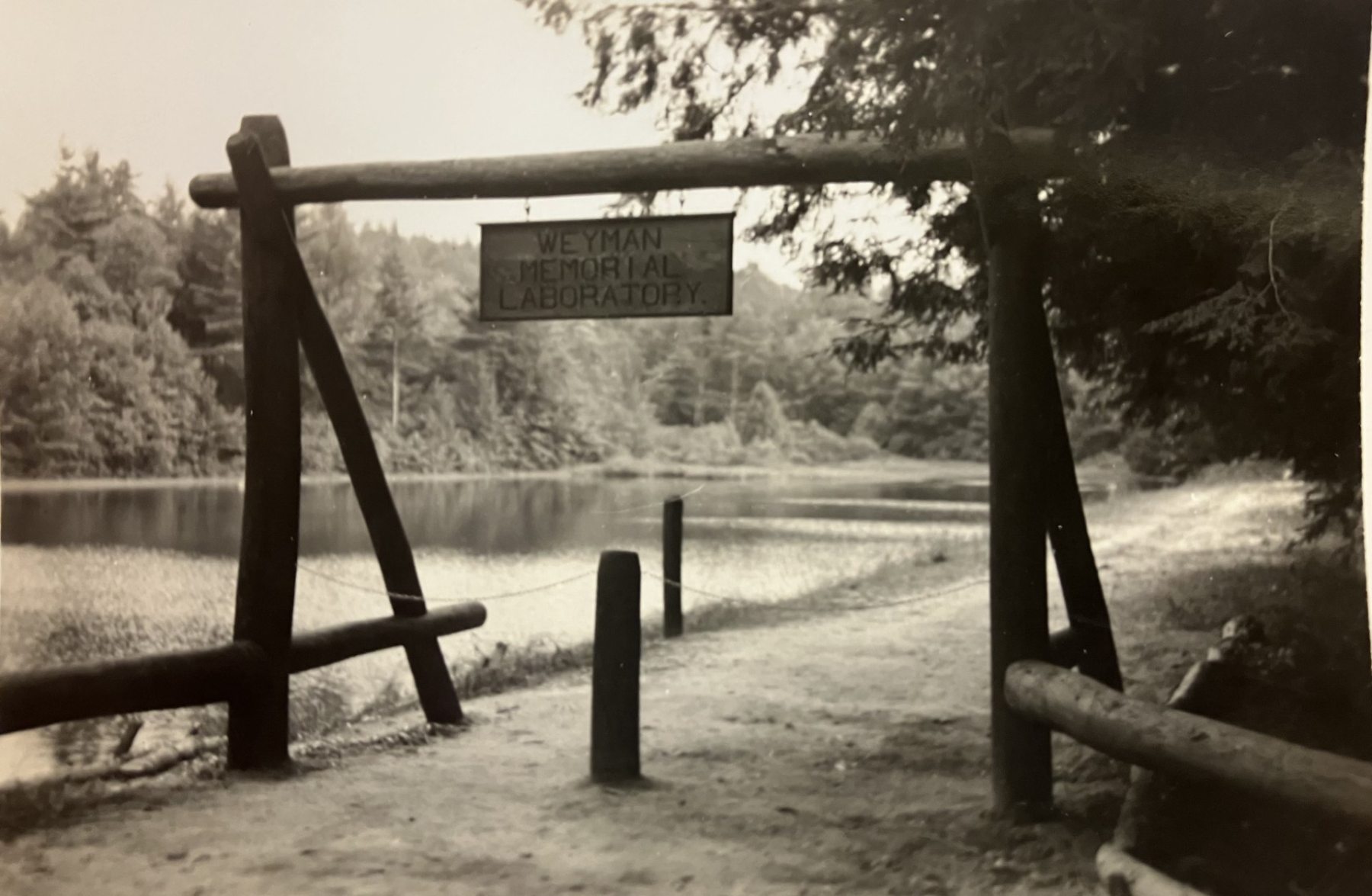
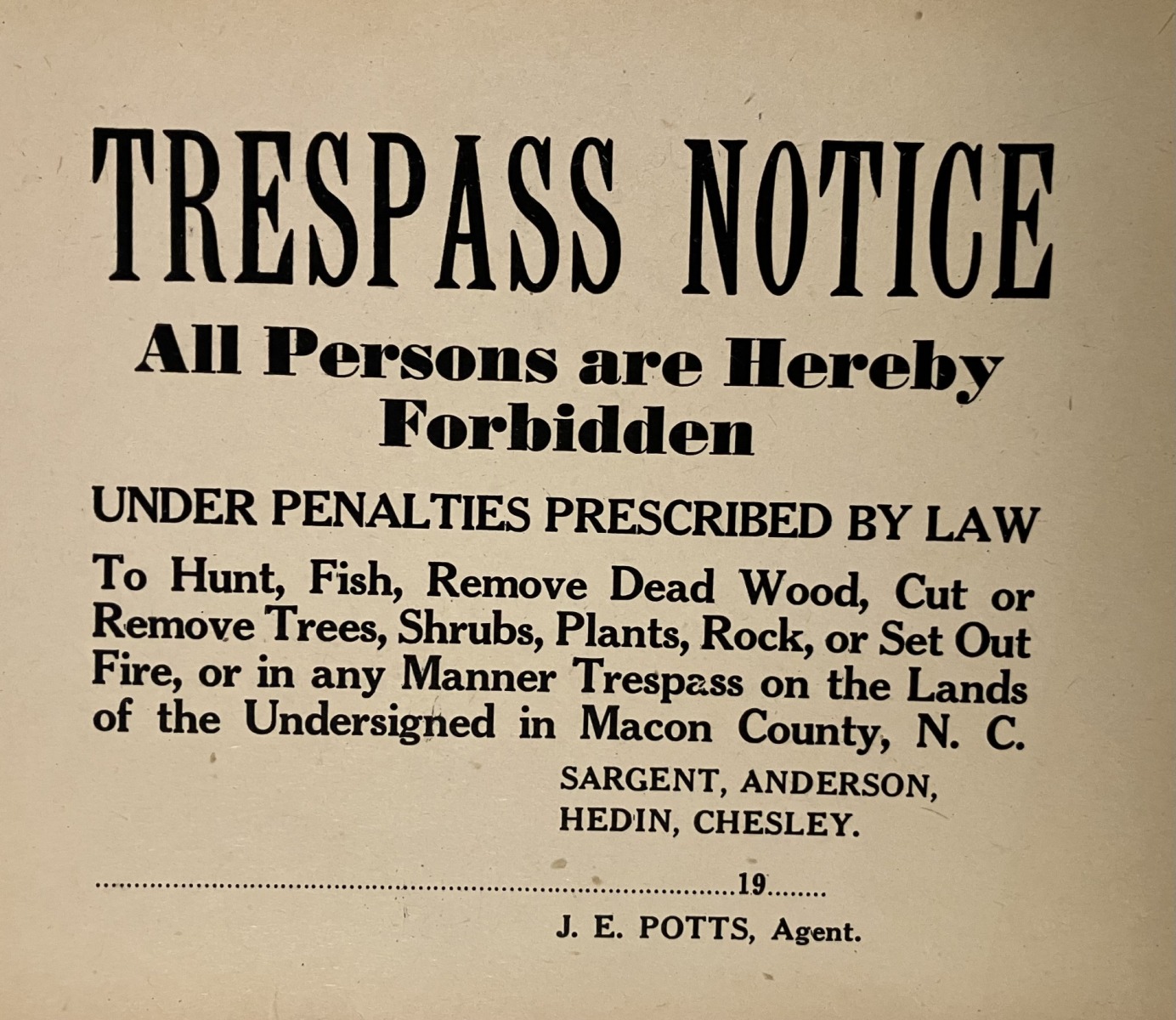
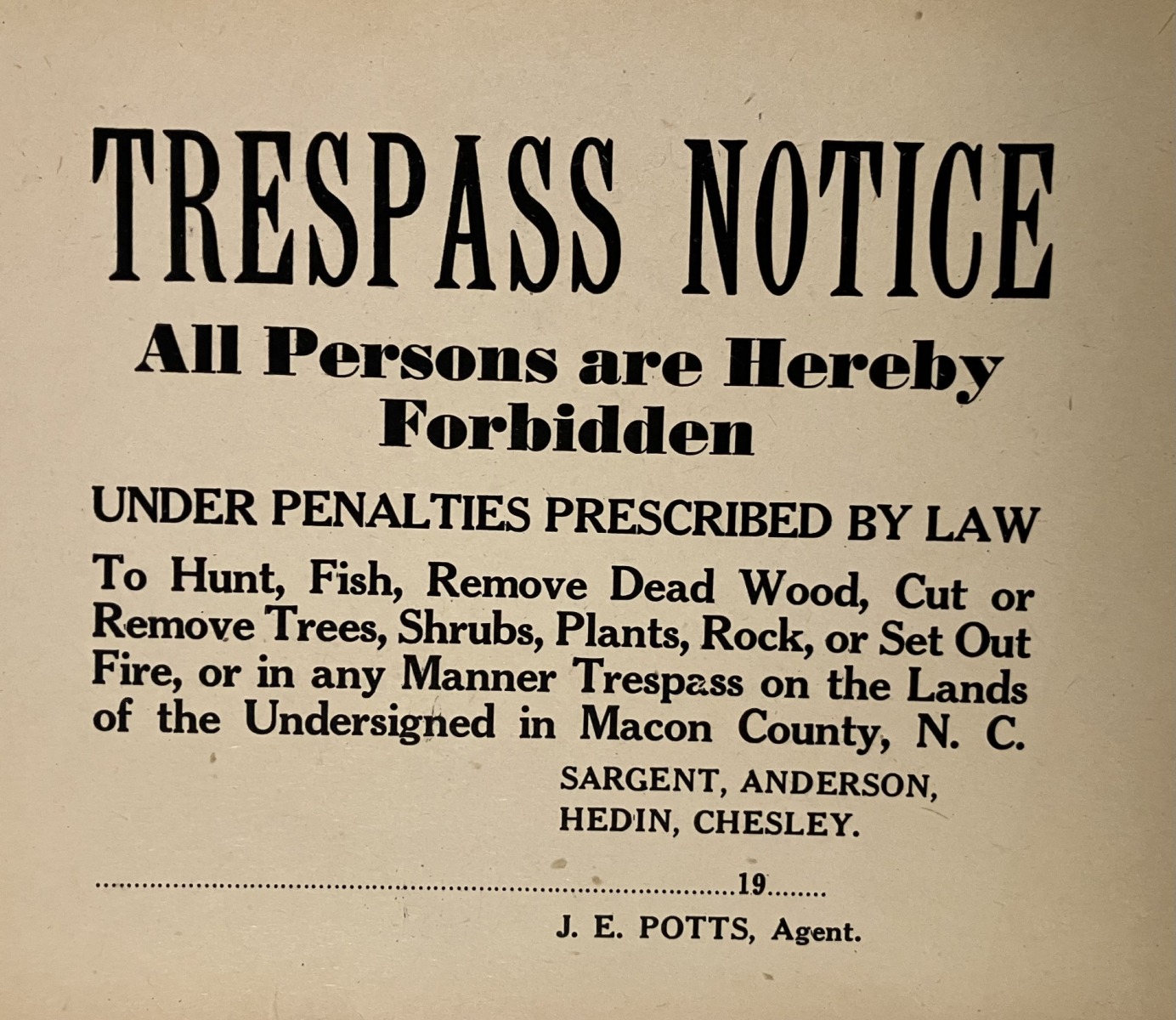
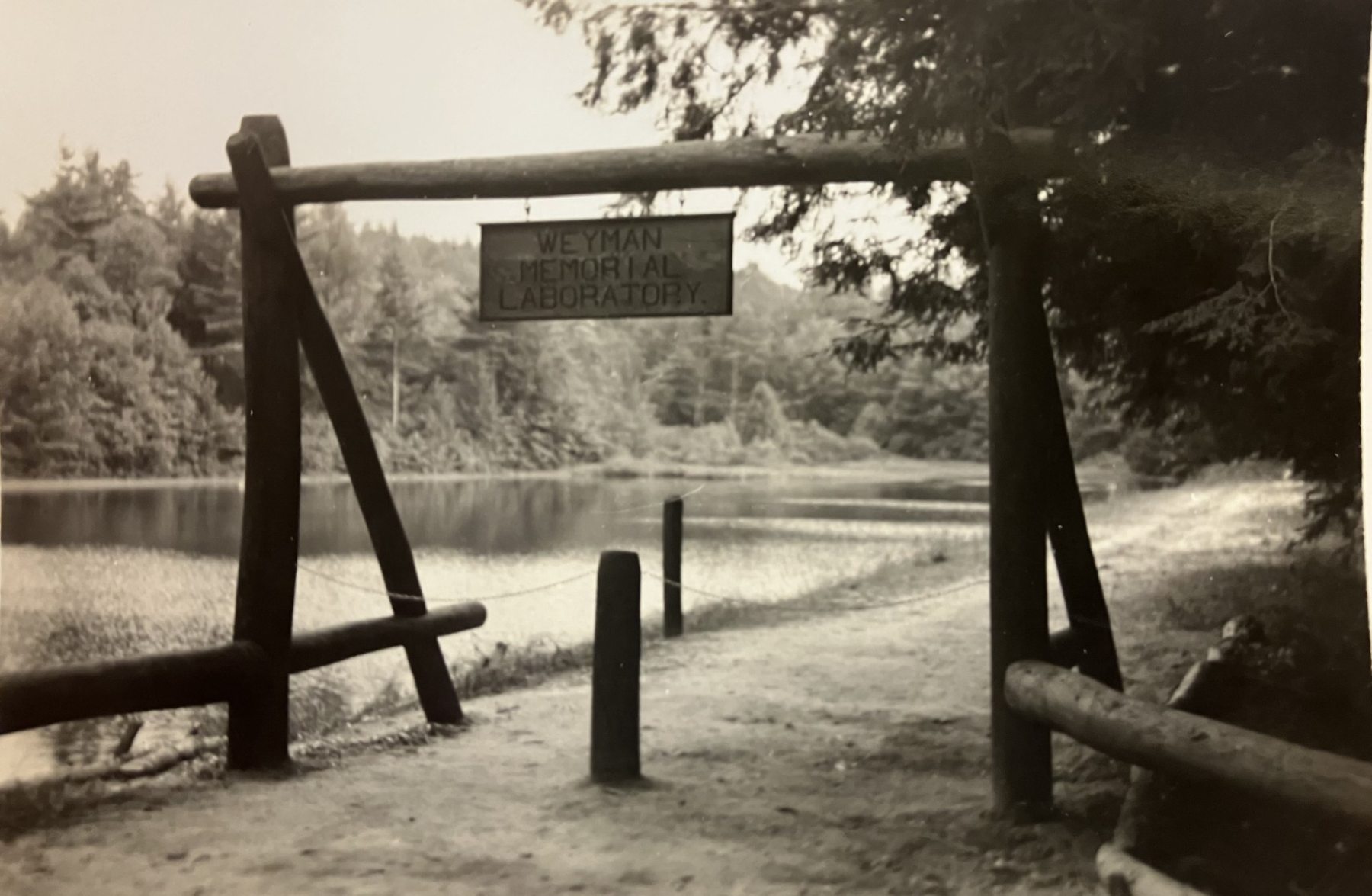
With repairs complete, the Station also moved to clarify boundaries and reduce trespassing. Trustees erected a gate designed by Museum Director Tom Fitz Patrick, marked by a sign reading “Weyman Memorial Laboratory.” Additional signs were placed at strategic points to prohibit unauthorized use.
Newspaper coverage in September 1942 emphasized that the rebuilt dam restored the lake not simply as a beauty spot, but as an experimental site for aquatic study.

Managing the Lake as a Research Resource (1942–1948)
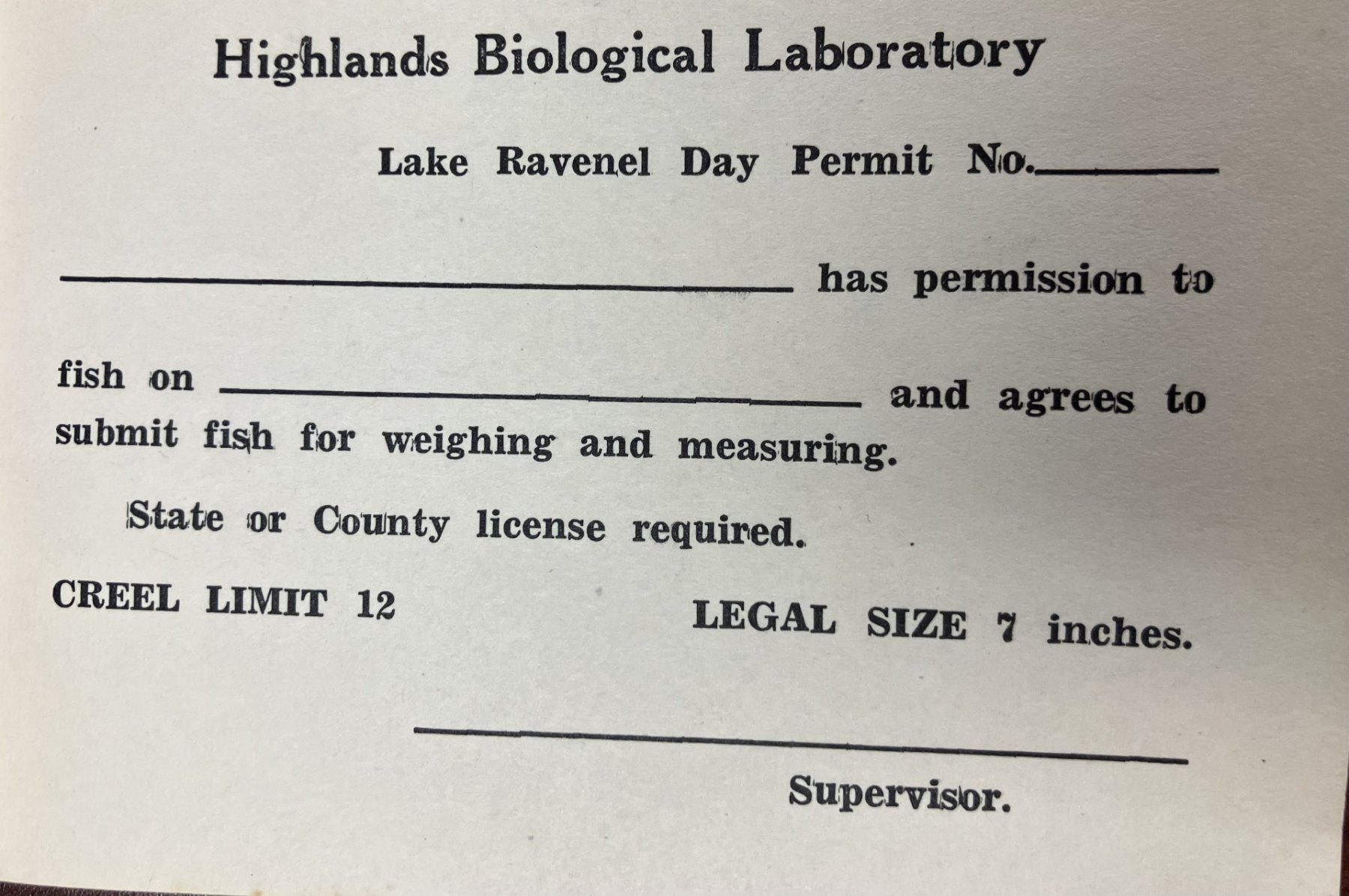
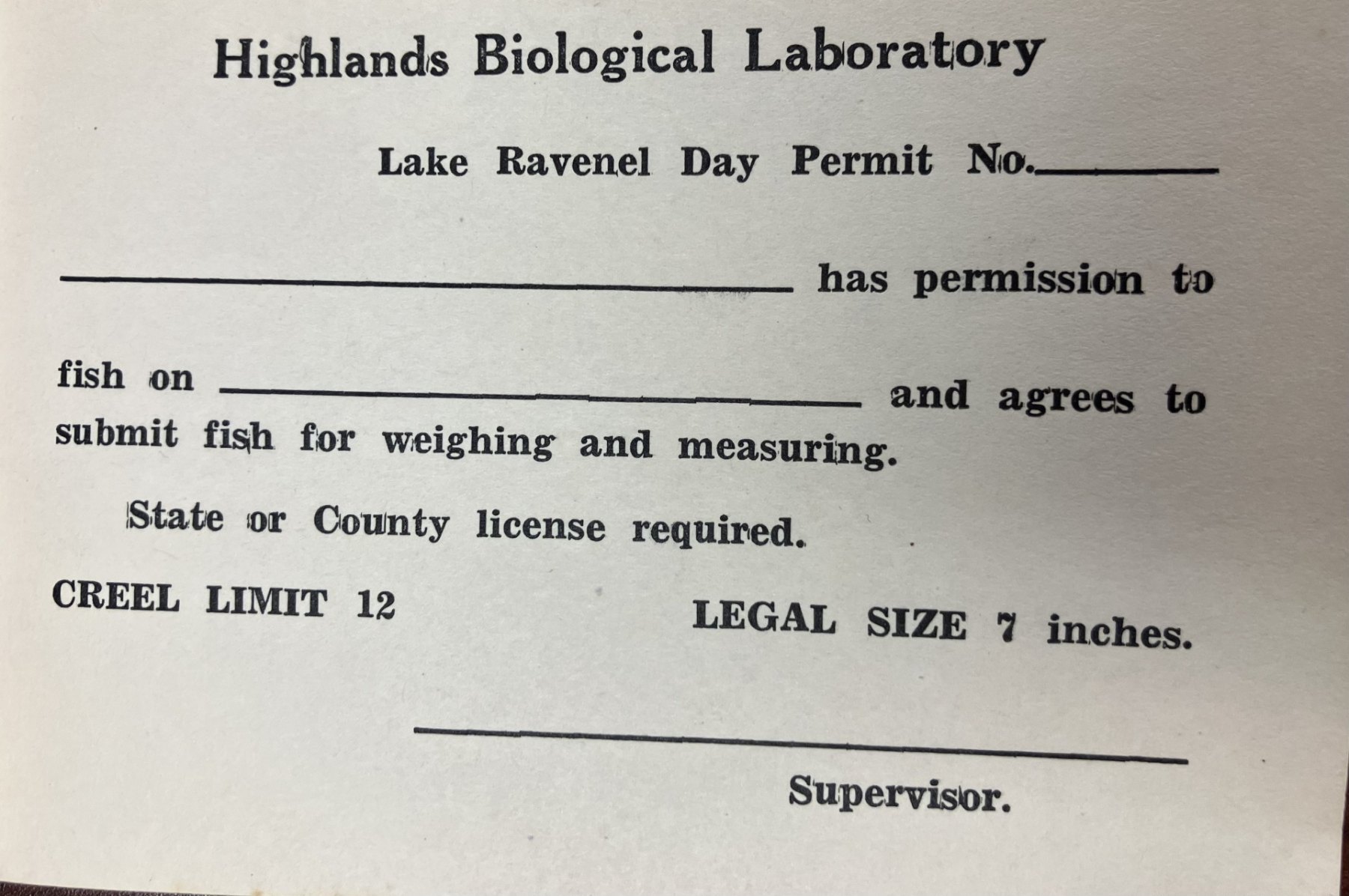
In August 1942, Trustees agreed to stock the lake with brook trout and adopted fishing regulations. A Lake Supervisor would determine fishing days and creel limits, and eligible fishing privileges were limited to defined groups associated with the Station and surrounding property ownership. The lake would be patrolled if funding could be raised.
By June 1944, Thelma Howell—Summer Director of HBS—served as Lake Supervisor and reported on a biological improvement program conducted in cooperation with the State of North Carolina.
That same year, creel reports recorded fish size classes and total harvest weight from issued permits (not including property owners who did not report).
In 1946, Trustees discussed swimming use and concluded that swimming should not be allowed, due to ongoing scientific work. In June 1947, Howell reported that an auxiliary spillway bridge was damaged when guests crowded into a small
In 1948, further maintenance continued; the spillway and dam were tested by flood conditions and were reported to have held.
Modern Repairs and Replacement (1988–1997)
Concerns resurfaced decades later. In 1988, Director Dr. Richard C. Bruce noted a leak that could reduce lake water levels and affect nearby property. Inspectors concluded the leak related to a drainage pipe opening and advised that repairs would be needed.
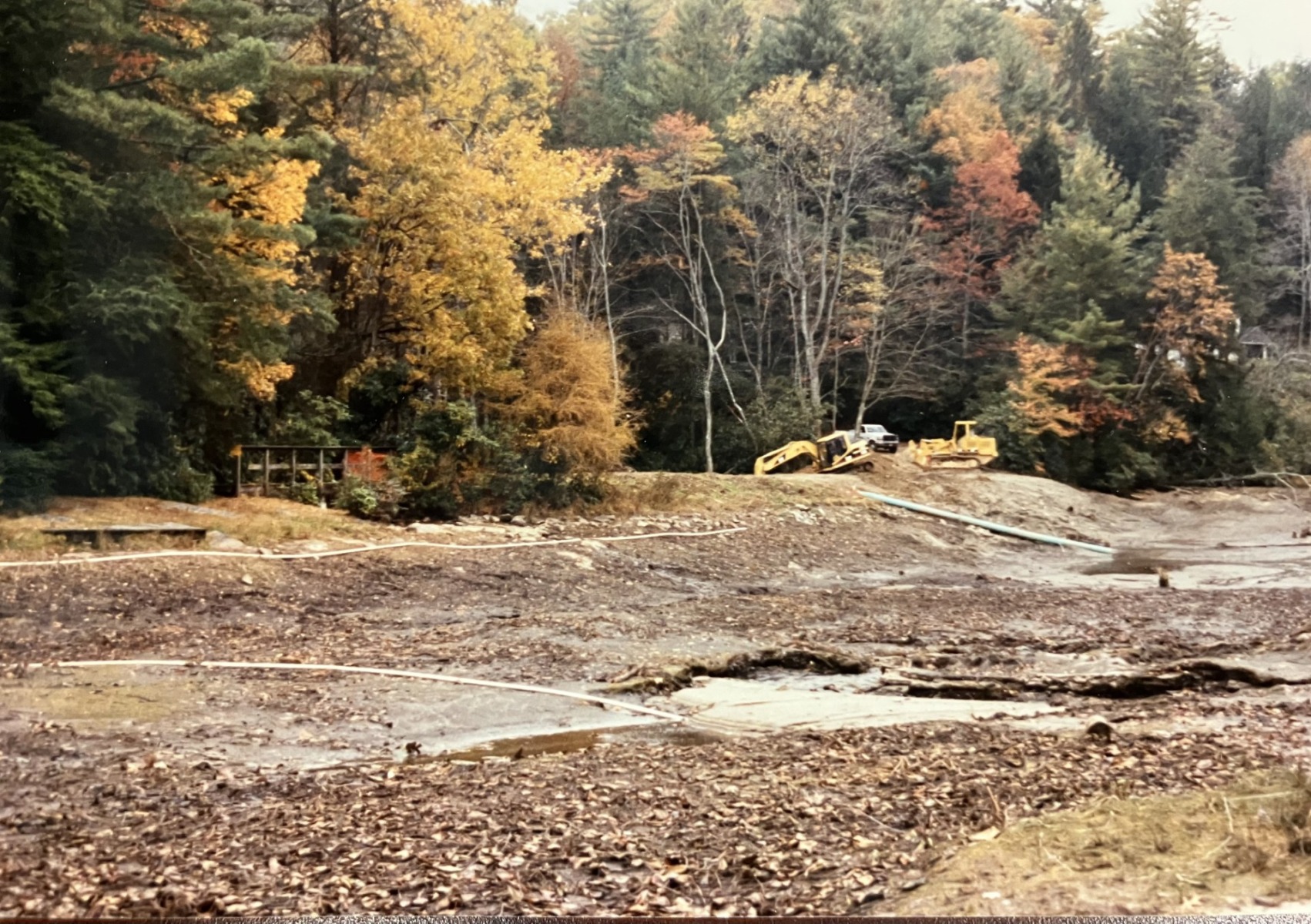
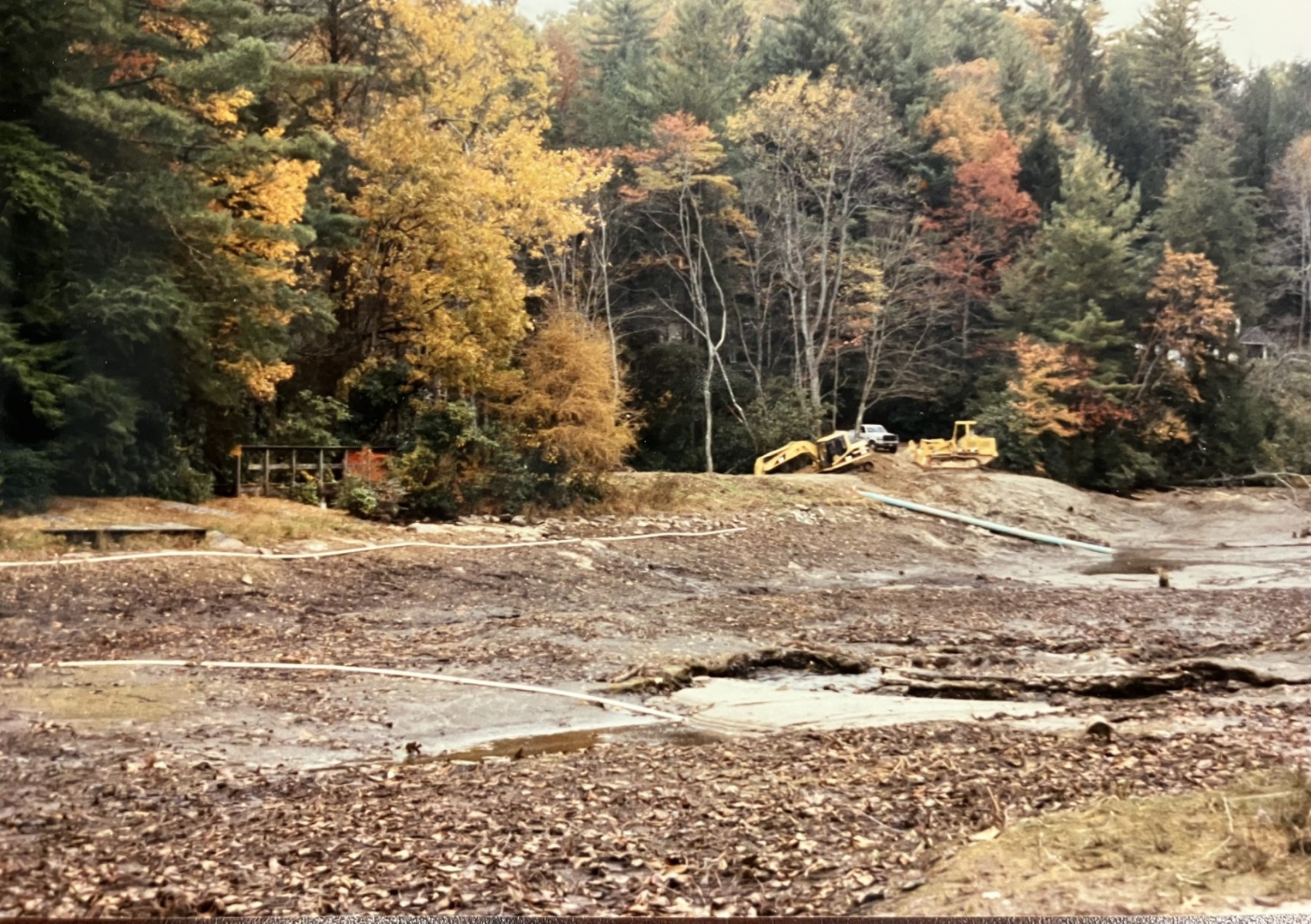
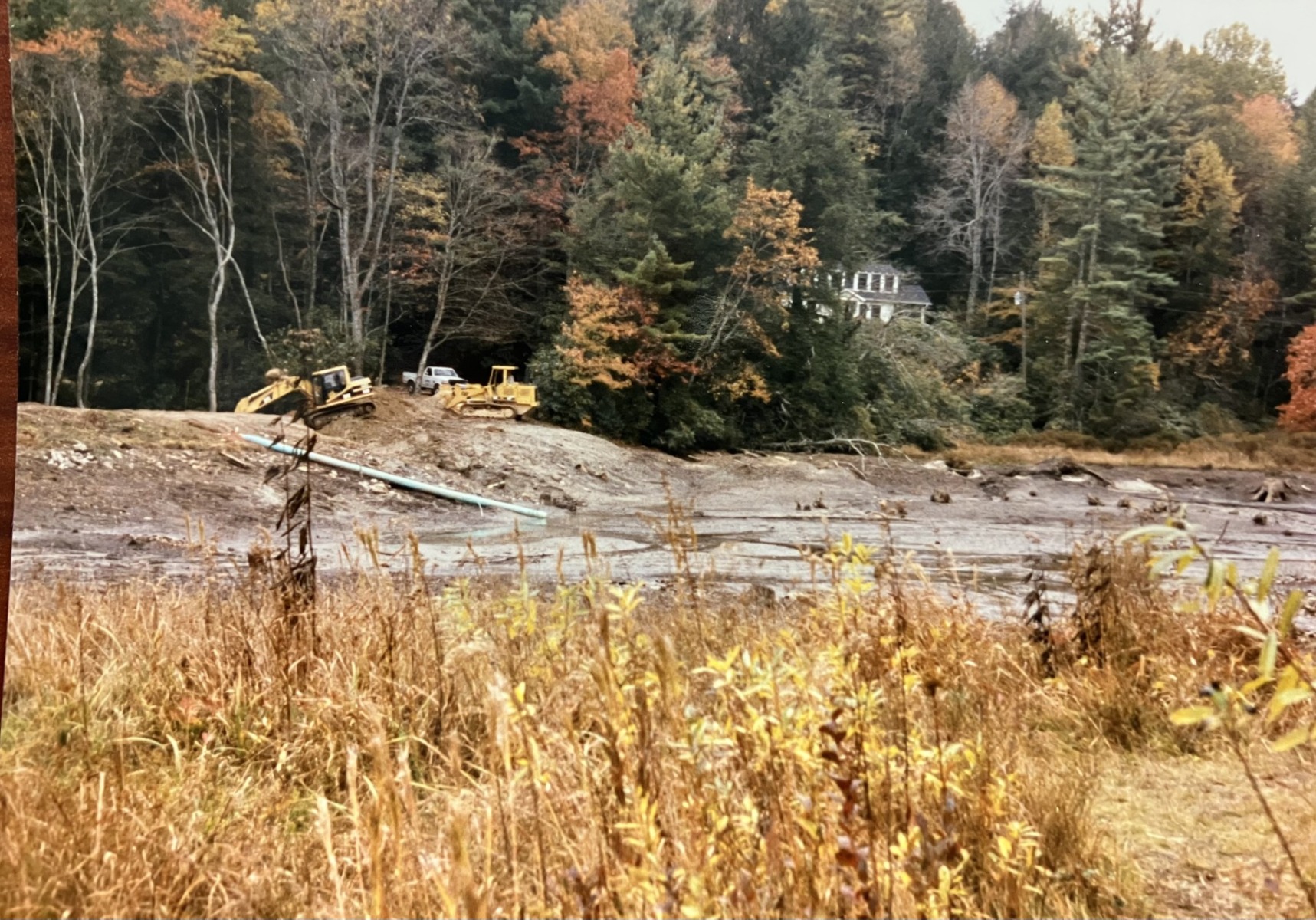
By late fall 1997, replacement became reality. The lake was drained; tall rhododendrons around the dam were removed; and the rebuilt structure was constructed to meet federal regulations.
The Lots: The Long Work of Assembling a Campus
The detailed ownership history of lots around the lake reflects decades of complex acquisition—and deep devotion to building a permanent home for science in Highlands. The compilation of titles and deeds is offered as accurately as possible based on historical documents and deed research, with the understanding that it is not a legal title record. Corrections are welcomed.
Not HBS
Lot 4
T. Peden Anderson to
1/27/1925 Town of Highlands for a park to
8/10/1961 HBS for Botanical Garden, 99 year lease
Lot 5
Not HBS
Lots 6, 7, 8, 9, 10, 11
Lots 6, 7, 8, 9, 10, and 11 – Present-day Location of the Nature Center
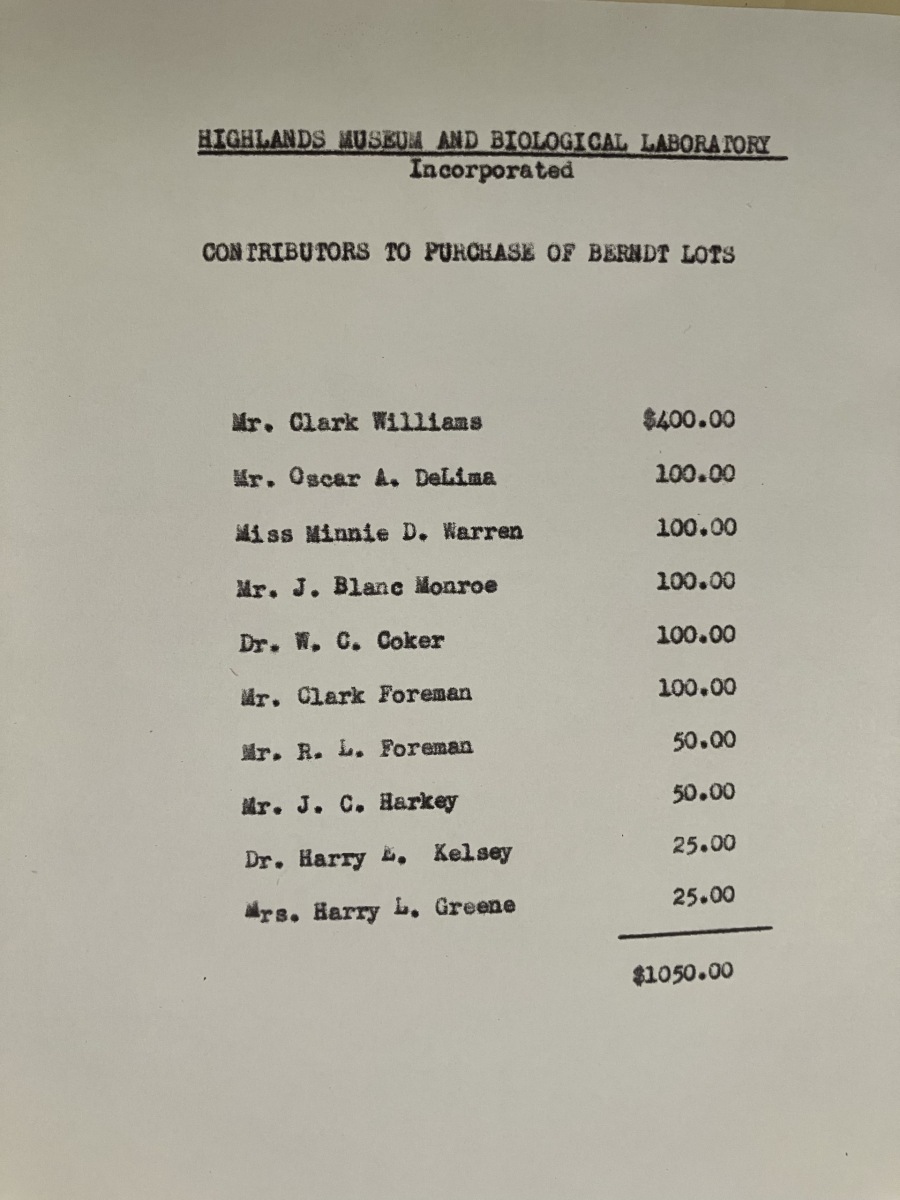
Originally conveyed from T. Peden Anderson and Pearl H. Anderson, these lots were transferred on September 1, 1925, to Julius E. E. Berndt and Susie M. Berndt. On December 15, 1936, the properties were acquired by Highlands Biological Station for $1,000.
Earlier correspondence reveals how this acquisition unfolded. On March 13, 1934, Albertina Staub wrote to E. E. Reinke:
“Mr. Berndt has authorized me to sell his Ravenel Lake lots at a more moderate price than they have ever before been offered. On account of the bathing, boating, and fishing rights in the lake, I did not offer them to ‘outsiders’ until those interested in the biological value of the lake had had a chance, so I wrote to Clark Foreman and Dr. Coker.”
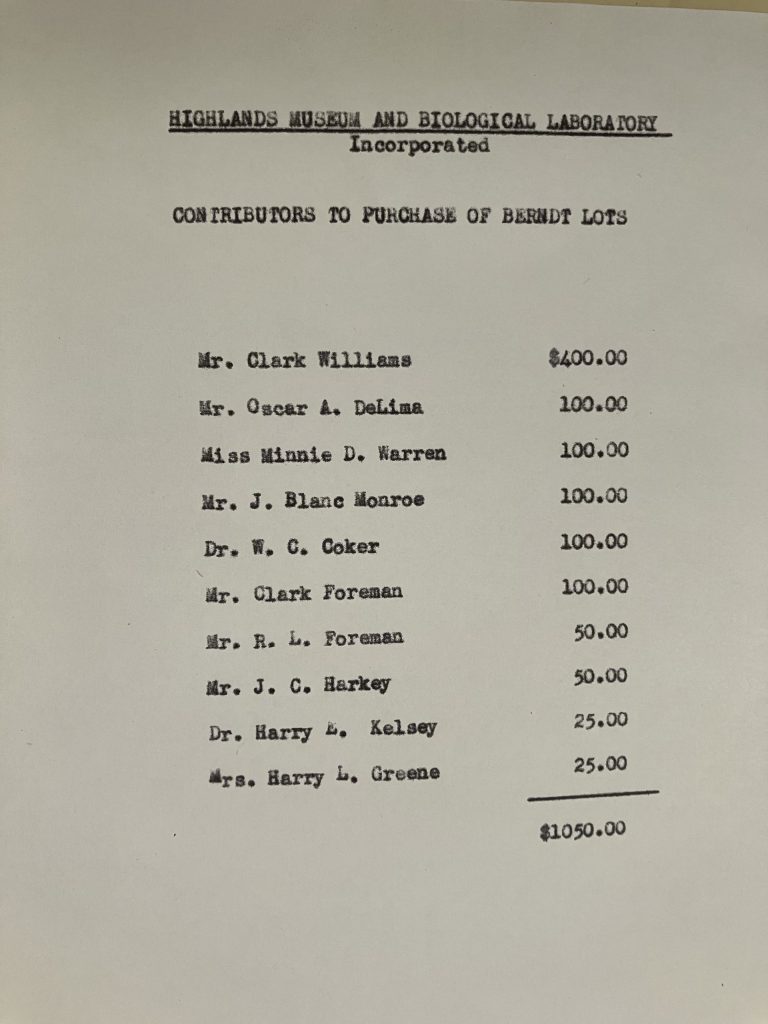
Recognizing the importance of securing these strategically located parcels, Clark Foreman offered to purchase Lots 6 through 11 in the interest of the Laboratory. To support the effort, funds were raised from ten contributors, totaling $1,050, to reimburse Foreman for the purchase.
Lot 12
Not HBS
Lot 13
Lots 13 and 14 – Effie Park Tract
Originally conveyed by T. Peden Anderson to Robert L. Foreman on June 3, 1924, ownership later passed to Clark and Mairi Foreman. On May 21, 1962, Clark and Mairi Foreman transferred the property to Highlands Biological Station.
The conveyance was made in memory of Clark Foreman’s mother, Effie Park Howell Foreman (1870–1943), with the expressed intention that the land “be preserved in its natural state.”
Lot 15
Lots 15–17 – Lower Lake Road Side of the Lake
All three lots were ultimately conveyed to Highlands Biological Station for the nominal sum of $1.00.
The early ownership history records a transfer from Samuel P. Ravenel and Marguerite A. Ravenel to Eleanor D. Speer, followed by Speer’s conveyance to Robert L. Foreman on August 5, 1919.
Lot 15
Originally conveyed by T. Peden Anderson, the property transferred on June 3, 1924, to Robert L. Foreman. Ownership later passed to Joan Foreman Klakow (1938– ) and her husband, Dietrich Krakow of Berlin, Germany, daughter of Clark Foreman. On May 24, 1962, the lot was conveyed to Highlands Biological Station.
Lot 16
Lots 15–17 – Lower Lake Road Side of the Lake
All three lots were ultimately conveyed to Highlands Biological Station for the nominal sum of $1.00.
The early ownership history records a transfer from Samuel P. Ravenel and Marguerite A. Ravenel to Eleanor D. Speer, followed by Speer’s conveyance to Robert L. Foreman on August 5, 1919.
Lot 16
Originally conveyed by T. Peden Anderson, the property was transferred on June 3, 1924, to Robert L. Foreman. On February 26, 1953, ownership passed to Shelagh Alexandra Foreman Wolf (1935– ) and Dr. David E. Wolf, daughter of Clark Foreman. The lot was subsequently conveyed to Highlands Biological Station on May 24, 1962.
Lot 17
Lots 15–17 – Lower Lake Road Side of the Lake
All three lots were ultimately conveyed to Highlands Biological Station for the nominal sum of $1.00.
The early ownership history records a transfer from Samuel P. Ravenel and Marguerite A. Ravenel to Eleanor D. Speer, followed by Speer’s conveyance to Robert L. Foreman on August 5, 1919.
Lot 17
Originally conveyed by T. Peden Anderson, the property was transferred on June 3, 1924, to Robert L. Foreman. Ownership later passed to Clark and Mairi Foreman, who conveyed the lot to Highlands Biological Station on May 21, 1962.
Trustees’ records from June 1962 reflect their appreciation:
“The Trustees recorded their gratitude to Mr. R. L. Foreman Jr. and Mr. Clark Foreman for their quiet and forceful negotiations in aiding the Station’s acquisition of Lots 13–17.”
Lot 18
Lot 18 Not HBS Property
Lot 19
Lot 19
On July 15, 1961, Robert and Rosalie Mason White of Malibu, California, donated the property to Highlands Biological Station. The lot had previously belonged to Robert White’s mother, Mrs. Pacidia White of Thomasville, Georgia.
Lot 20
Lot 20 Not HBS
Lot 21
Lot 21 – Pierson / Valentine Property
Lot 21 ultimately became part of the Pierson–Valentine property holdings associated with the Valentine House. The chain of ownership traces back to E. E. Ewing, who conveyed the property in 1881. In December 1936, ownership transferred to S. Porter Pierson, followed by conveyance on May 14, 1945, to J. Manson Valentine.
The property later passed to James P. Valentine, who conveyed the holdings on July 2, 1975. On June 26, 1981, Lot 21 was formally acquired by Highlands Biological Station under the State of North Carolina.
Gift of the Valentine House Property
The Valentine House property — which included Lot 21 and its photo studio — forms an important part of the Station’s campus history. Its ownership progression reflects the broader consolidation of lands supporting the Station’s growth and development.
Lot 22
Lot 22
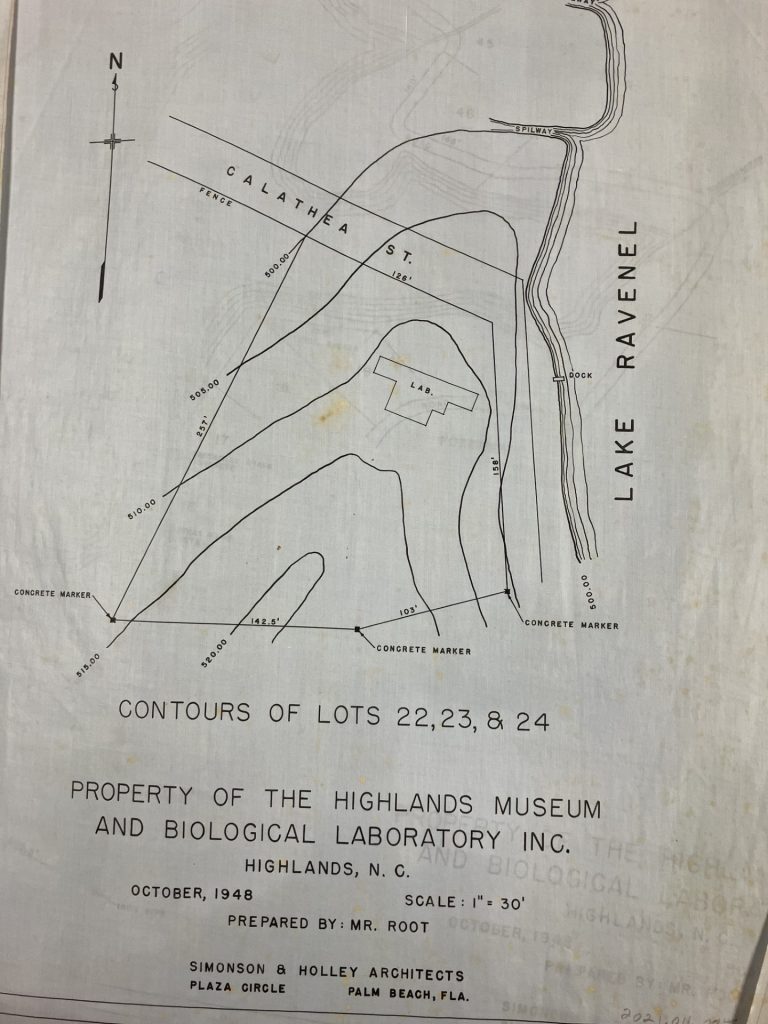
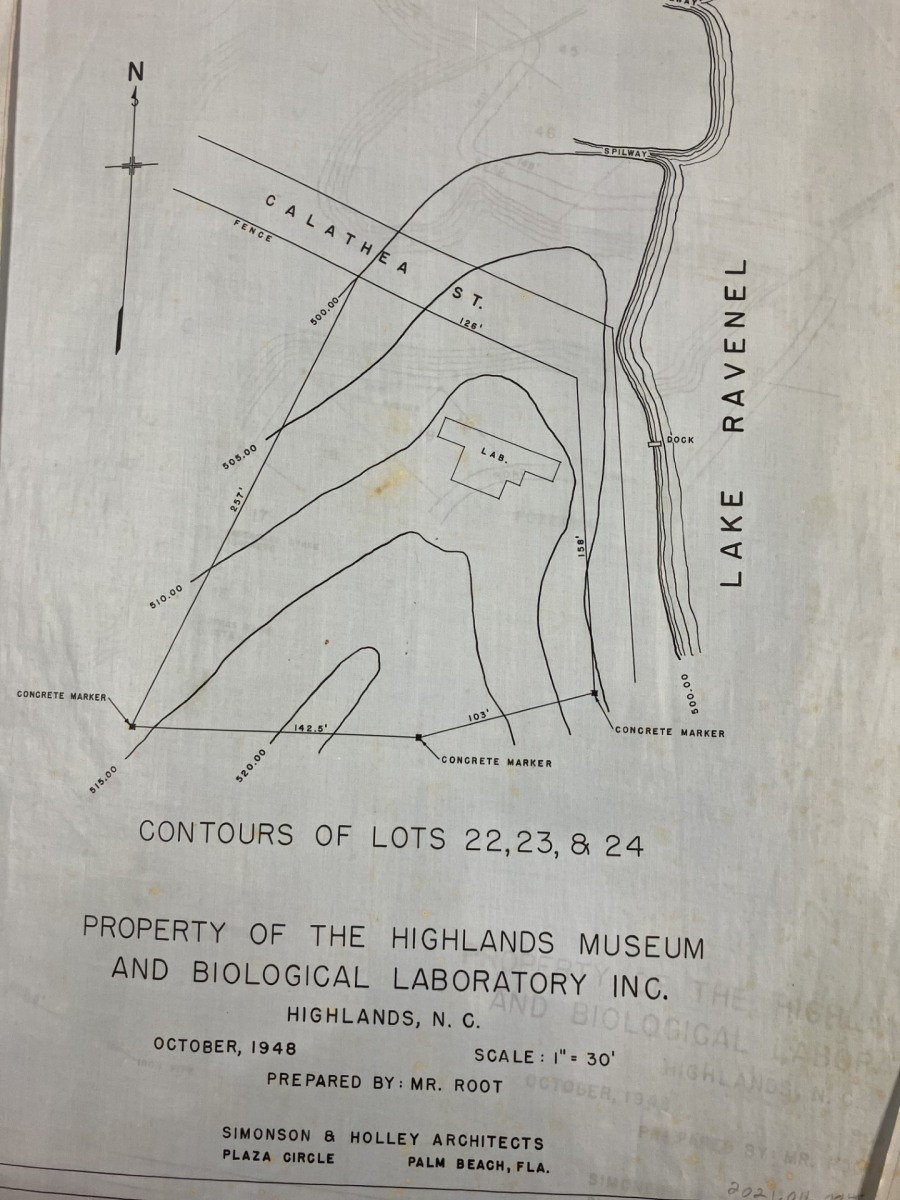
Originally conveyed by Fred D. Alexander and Lillian P. Alexander, the property was transferred on September 3, 1937, to W. C. Coker and Louise V. Coker. The Cokers subsequently donated the lot to Highlands Biological Station on October 22, 1937.
Lots 23 and 24
Lots 23 and 24 – Dam, Lake, and Lake Edge
Originally conveyed by T. Peden Anderson to Frank Potts, the properties — including the dam, lake, and adjoining lake edge — were transferred to Highlands Biological Station on April 10, 1931.
Lot 40
Lot 40 - Not HBS
Lot 41
Lot 41 - Not HBS
Lot 42
Lot 42 – Illges Property
The ownership history of Lot 42 reflects a long sequence of conveyances. On April 1, 1920, S. P. Ravenel and F. L. Ravenel conveyed the property to Jennette G. White and Rebecca S. White. The Whites subsequently sold the lot on April 2, 1924, to T. Peden Anderson and Pearl H. Anderson.
On September 1, 1925, the Andersons transferred the property to Julius E. E. Berndt and Susie M. Berndt, who later conveyed it on April 12, 1926, to James R. Sullivan and Mamie A. Sullivan. The Sullivans sold the lot on October 6, 1932, to Ruth Hull Lummus, followed by Lummus’s conveyance on December 28, 1937, to John P. Illges.
On November 21, 1950, Illges transferred fractional ownership of the property, conveying three-fifths (3/5) to Highlands Biological Station and two-fifths (2/5) to the Highlands Community Hospital. On January 19, 1956, Highlands Biological Station agreed to purchase the hospital’s interest for $3,600. The obligation was satisfied in full on May 31, 1958.
Lots 43-46
Lots 43-46 - Not HBS
Lots 47 and 48
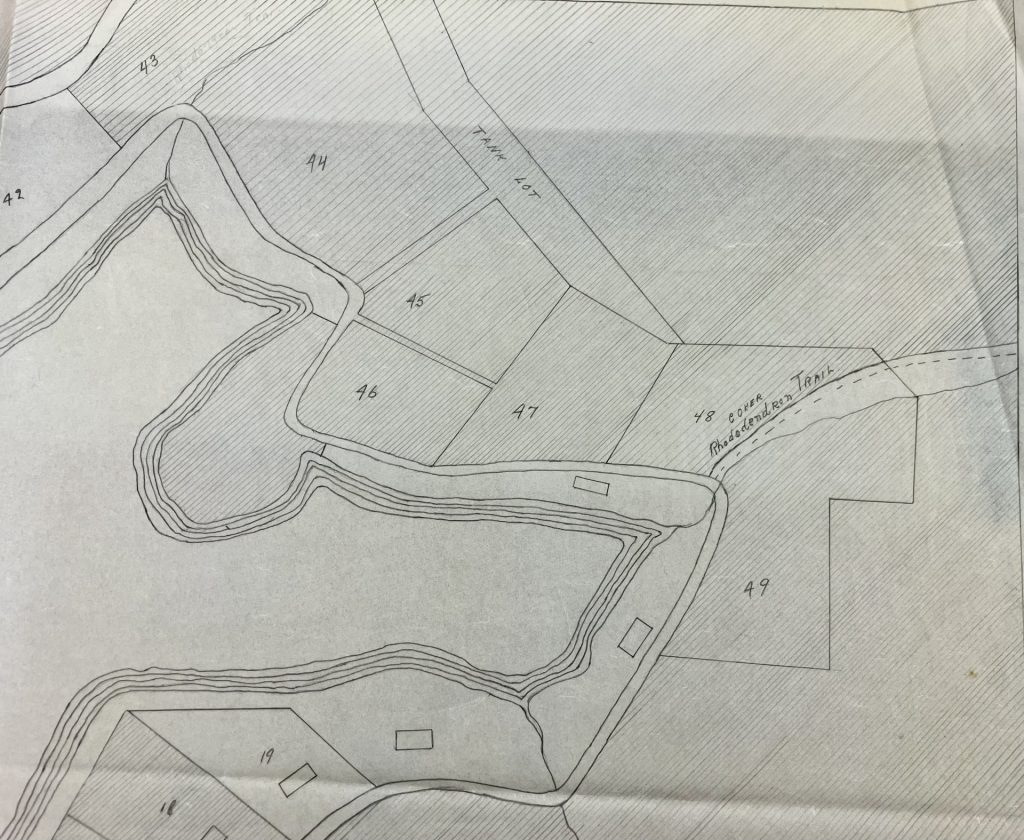
Lots 47 and 48
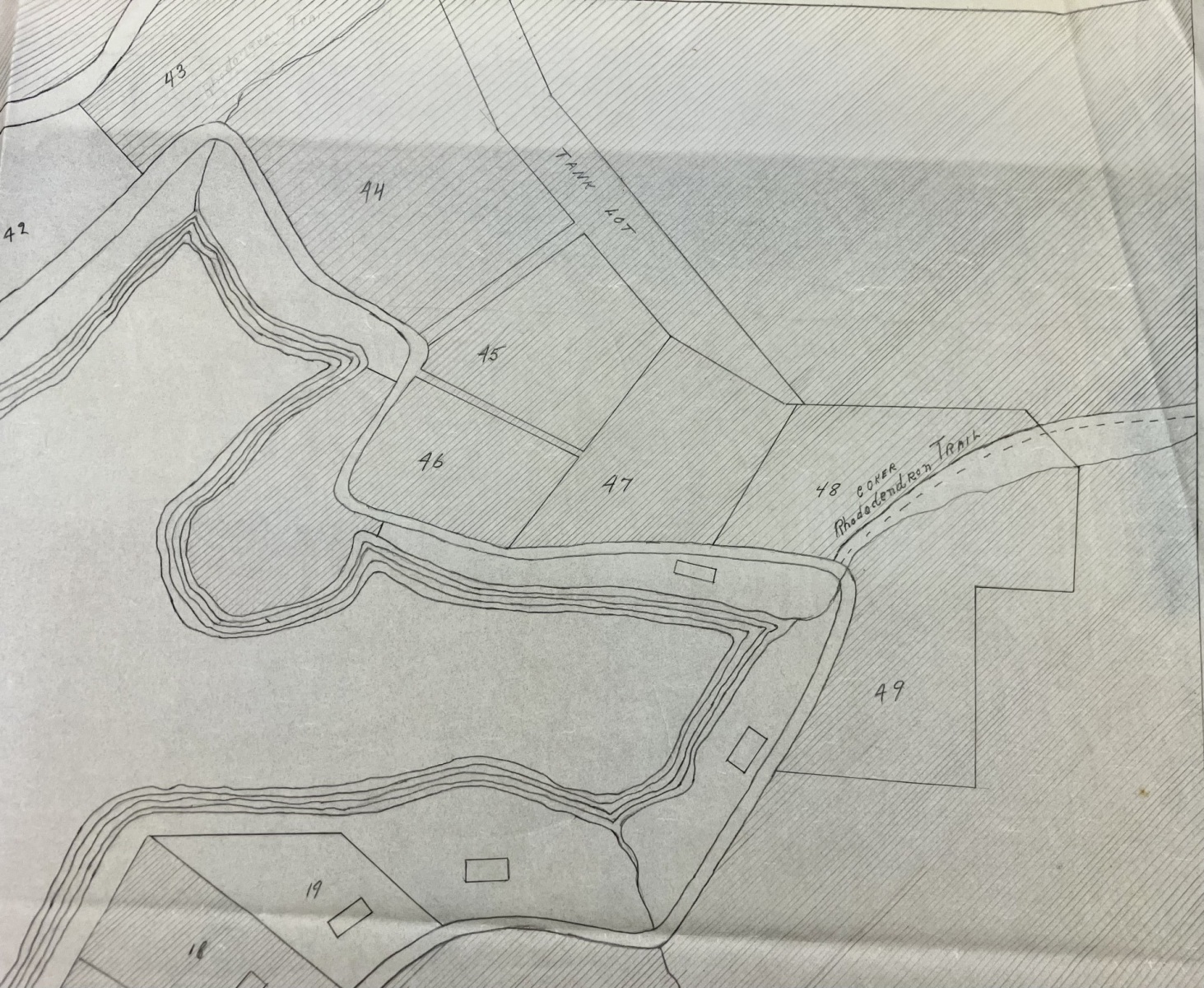
Originally conveyed by T. Peden Anderson, Lots 47 and 48 were transferred on August 8, 1931, to W. C. Coker and Louise V. Coker.
Portions of Lot 48 later became part of the Coker Rhododendron Trail. Additional sections of the Anderson property were likewise conveyed on August 8, 1931, to W. C. and Louise V. Coker and were subsequently transferred to Highlands Biological Station on June 14, 1954.
In 1975, a new trail was established along the eastern and northern margins of the lake, creating a physical connection between the Botanical Garden and the Rhododendron Trail.
Lot 49
Lot 49 - Not HBS
Explore the Gallery
Additional Resources