
Notes from the Archives · October 2026
The Mystery of the Misplacement of William Hamilton Gibson's Mycological Watercolors
How six of Gibson’s original watercolors came to the Highlands Biological Station, and their place in the history of American mycology.
Begin readingIn the Reinke Library Archives of the Highlands Biological Station are six watercolors of mushrooms painted by William Hamilton Gibson. They are originals for the color plates in his book, Our Edible Toadstools and Mushrooms and How to Distinguish Them, published by Harper & Brothers in 1895 with thirty colored plates and fifty-seven other illustrations. This is the story of how they came to the Highlands Biological Station, and of their place in the history of American mycology.
William Hamilton Gibson
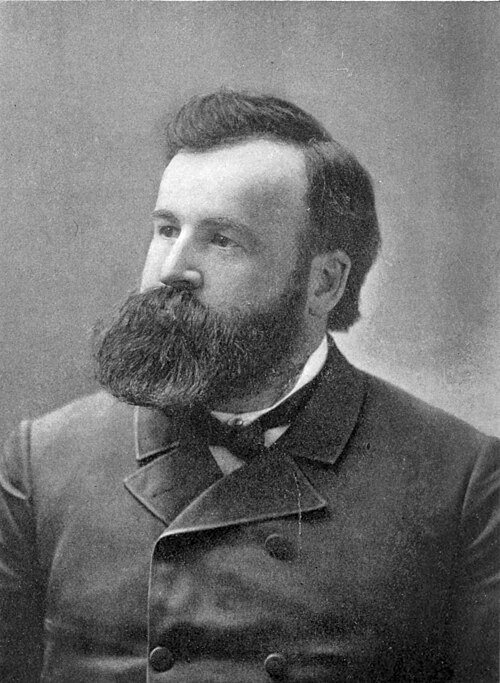
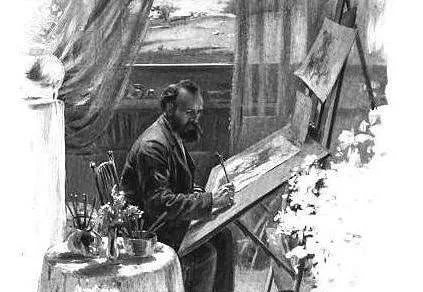
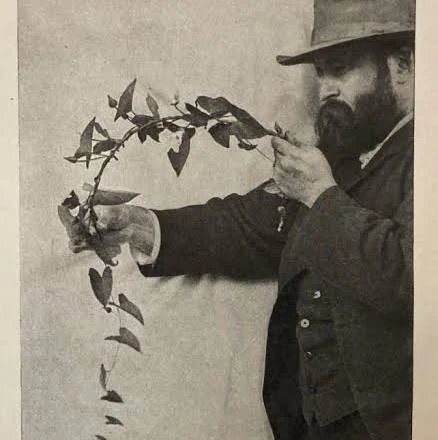
Gibson was one of nine children and grew up amid the pastoral beauty of Litchfield County, Connecticut. As a boy he sketched flowers and insects, and an early interest in botany and entomology followed. He studied art at the Brooklyn Polytechnic Institute in New York. When his father died in 1868, he went to work at the Home Life Insurance Company for a steady income, but office work was not his calling. He returned to art and devoted his life to the study of nature, depicting its beauty in both word and illustration. Largely self-taught as an artist, writer, and naturalist, he came to be known as one of America’s foremost nineteenth-century nature artists and writers.
Gibson became an expert illustrator for many periodicals. His most popular illustrations accompanied nature articles in Harper’s Weekly, Scribner’s Monthly, and Century, and their near-photographic, almost microscopic accuracy of detail reflects how well he knew his subjects. His artwork, mostly landscapes, includes watercolors, monochrome washes, and graphite drawings. It is held in private collections and in institutions such as the National Gallery of Art, the Brooklyn Museum, the Metropolitan Museum of Art, the LuEsther T. Mertz Library of the New York Botanical Garden, and the Highlands Biological Station.
Gibson married Emma L. Blanchard (1851–1930), and they had two sons, William Hamilton (1883–1956) and Dana Blanchard (1888–1911). He died of a stroke in Washington, Connecticut, at only forty-six, a year after Our Edible Toadstools and Mushrooms was published.
The Book: Our Edible Toadstools and Mushrooms and How to Distinguish Them
Our Edible Toadstools and Mushrooms and How to Distinguish Them is Gibson’s guide to the fungi, a pioneering work that joins scientific inquiry with a poetic reverence for nature. Now in the public domain, it has appeared in 25 different editions, in hardcover and paperback, from various publishers. The Highlands Biological Station owns a copy of the original 1895 edition: the same copy Ron Petersen found in an antique shop in 1961 and gave to the Station in 1986, as told below.
A 2021 reprint by Good Press describes the book this way:
“With detailed descriptions and vivid illustrations, Gibson categorizes edible fungi and provides insights into their habitats and seasonal patterns. The text exemplifies the late 19th-century movement toward naturalism, where an intersection of art and science reflects a growing societal appreciation for the natural world. His meticulous style not only informs but enchants, making complex identification processes accessible to both the layperson and the expert.”
“This book is a must-have for foragers, chefs, and nature enthusiasts alike, inviting them to unveil the mysteries of the mushroom kingdom. It has served as an excellent reference book and is also meant to educate the general public about safely gathering mushrooms while addressing the real dangers involved. It also includes recipes meant to showcase the flavors of the mushroom it covers, making it as much a culinary guide as an identification manual.”
The complete book is free online from Project Gutenberg as eBook #46514.
Open on Project GutenbergGibson’s Watercolor Plates
For the book, Harper & Brothers turned Gibson’s thirty watercolors into chromolithographic plates and reproduced fifty-seven other pen-and-ink illustrations. Once a publisher had its plates made, it was common practice to return the original art to the illustrator. Today, six of the original watercolors are held in the Reinke Archives of the Highlands Biological Station in Highlands, North Carolina. Another six, along with two of the book’s black-and-white illustrations, are in the LuEsther T. Mertz Library of the New York Botanical Garden.
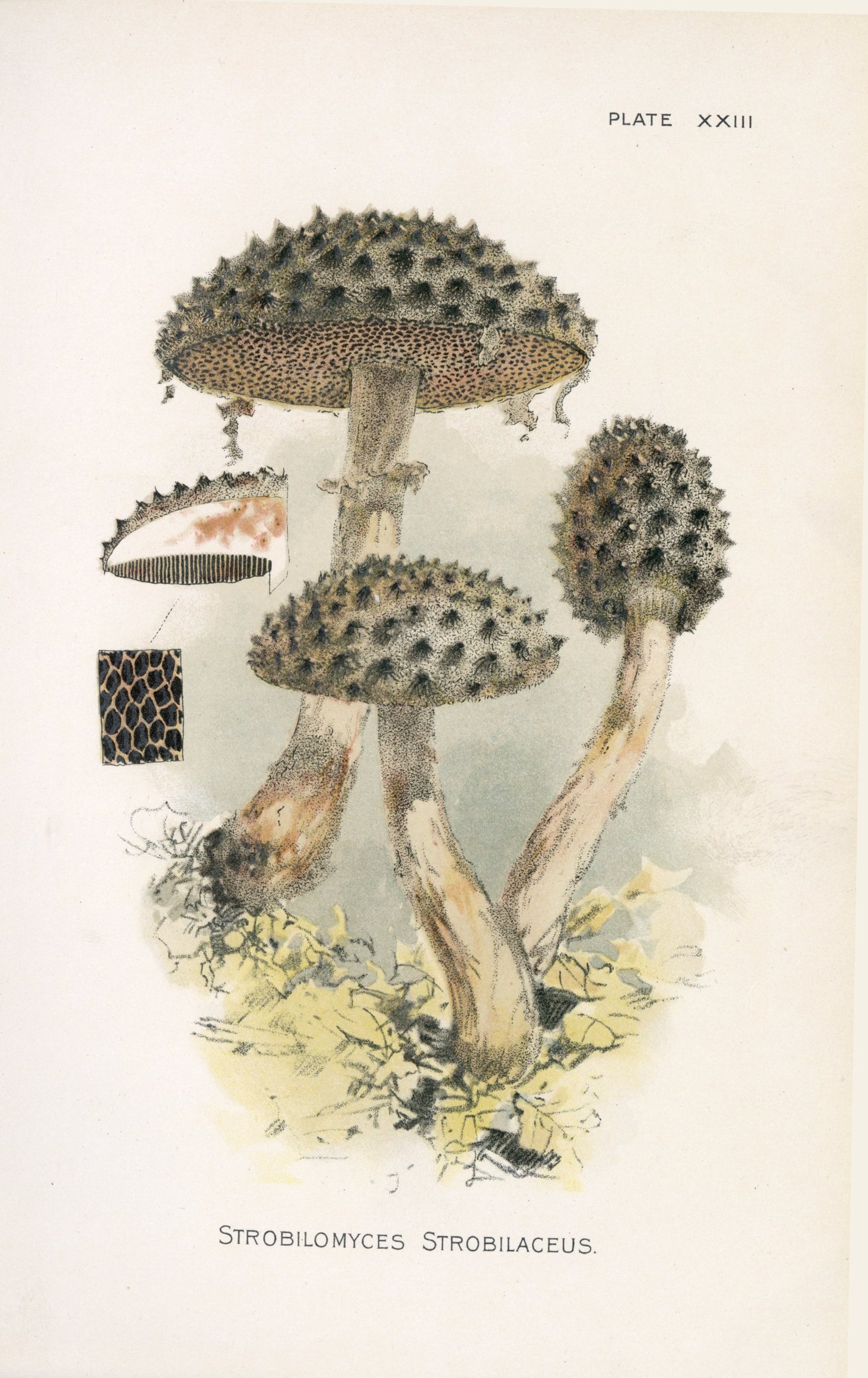
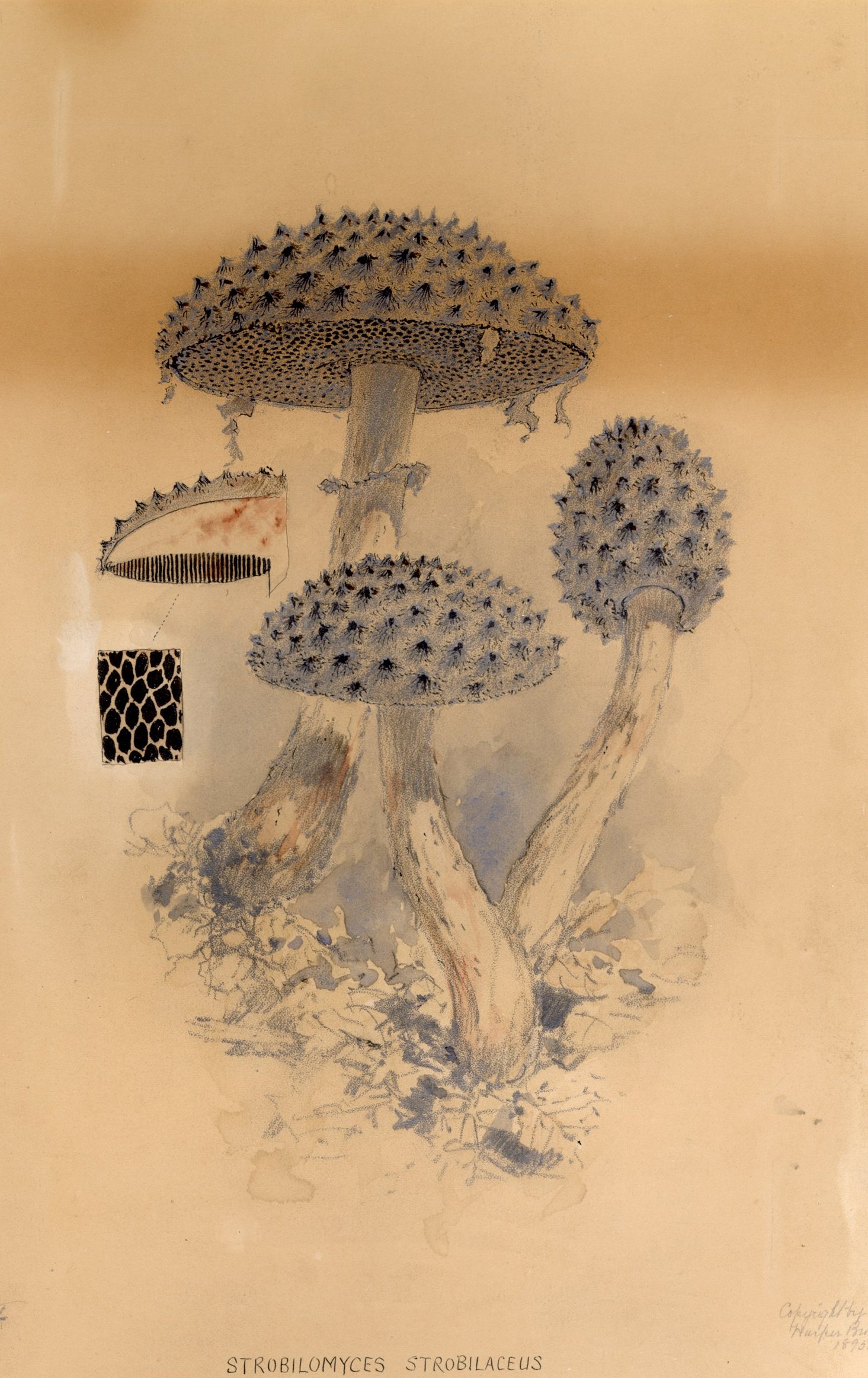
One painting, two lives
Drag across Plate XXIII, Strobilomyces strobilaceus. On one side is Gibson’s own watercolor from the Station’s collection; on the other, the same plate as Harper & Brothers printed it in 1895. The print swaps Gibson’s hand-lettered title for type, adds the plate number, and leaves out his monogram and penciled copyright line.
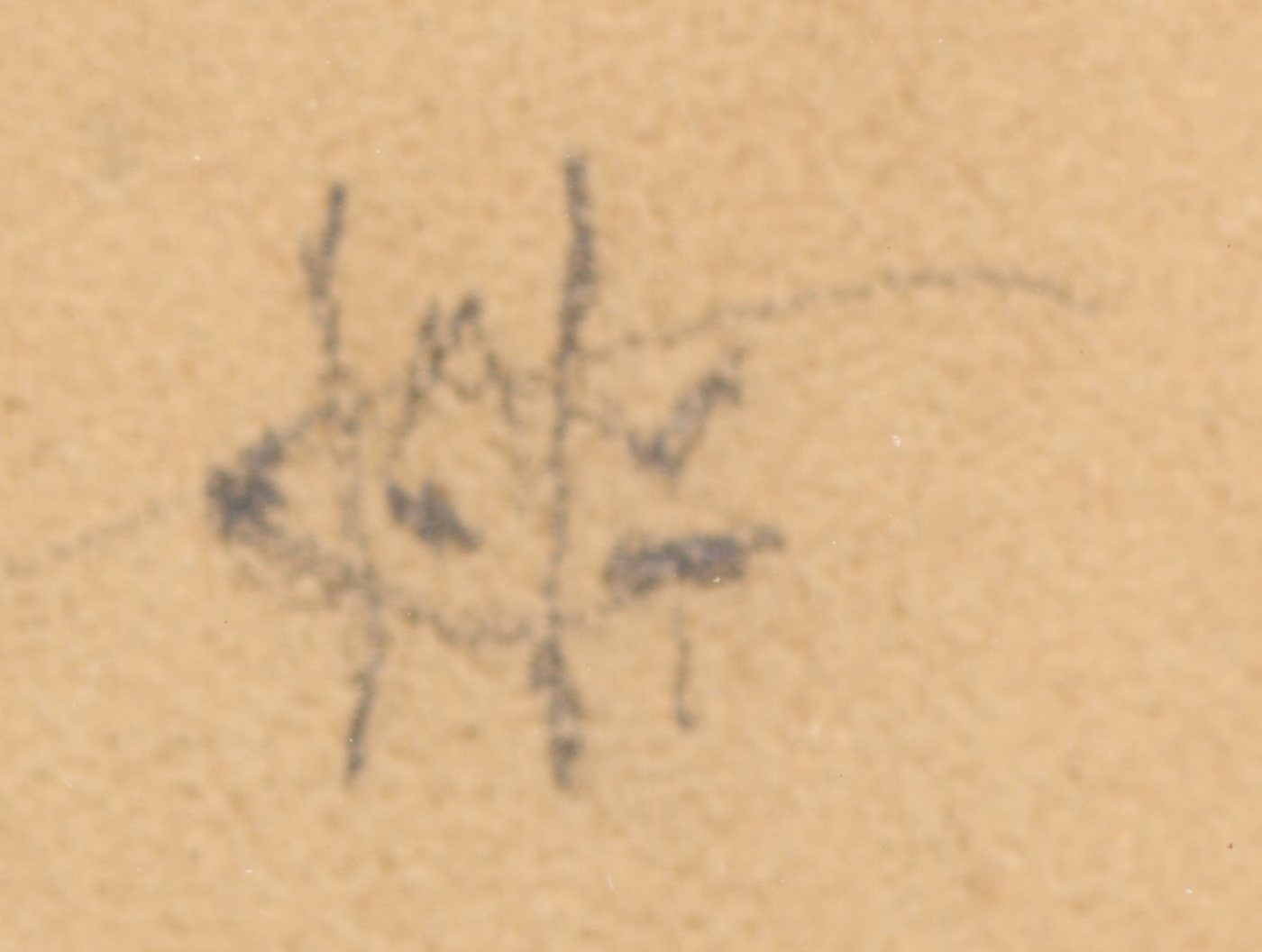
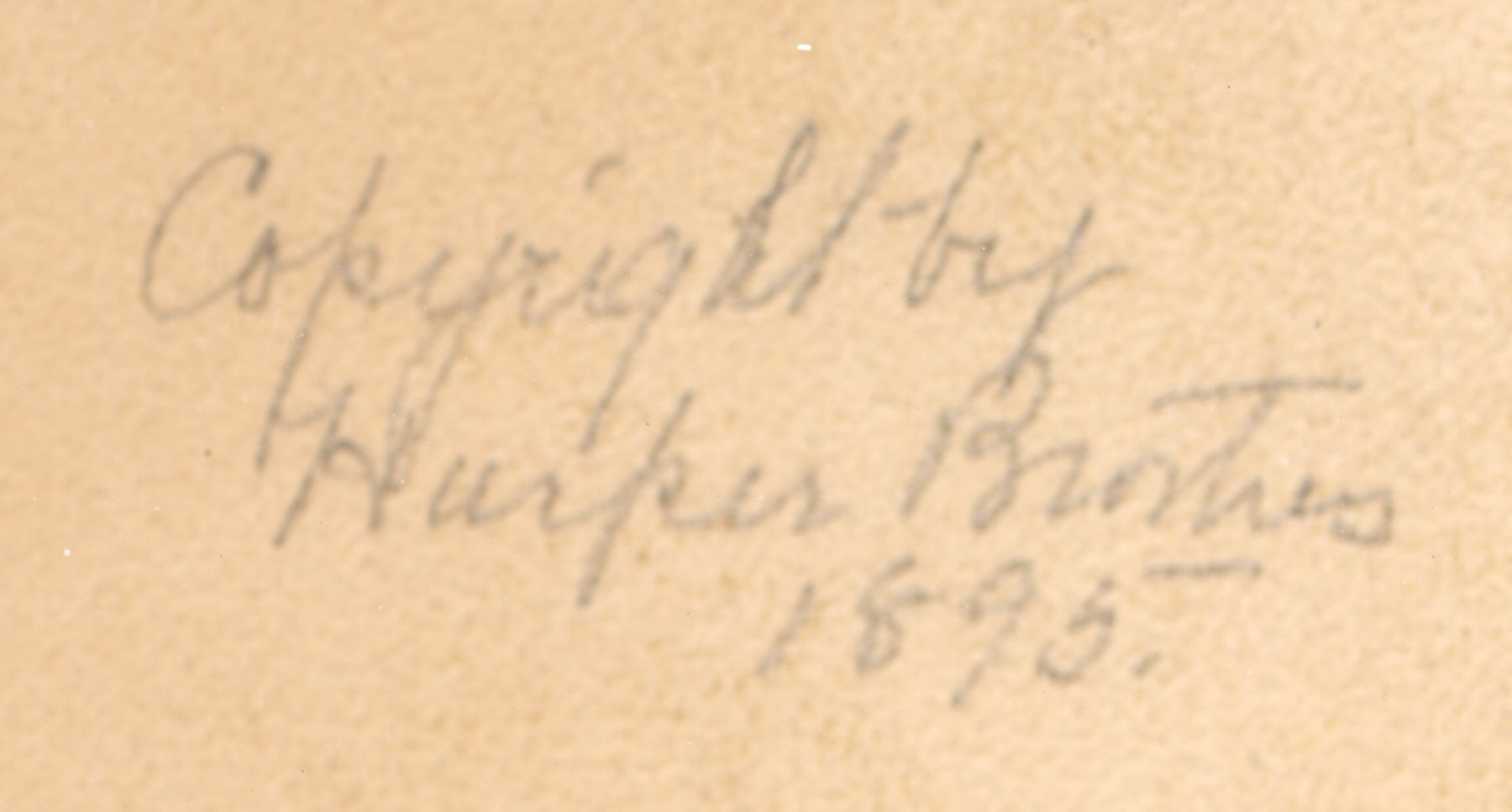
Look closer at the original for Plate XXIII and you will find two marks the printed plate leaves out: Gibson’s monogram in the lower left, and a penciled copyright line in the lower right.
Where are the originals today?
Gibson’s List of Plates; thirty of them were printed in color. Filter by where each original is known to be, and select any plate to learn more.
Showing all 38 plates.
View the ledger as a table
| Plate | Title, as printed in 1895 | Original held by |
|---|
From a Columbia Storeroom to Highlands
The story of the Highlands watercolors begins at Columbia University with Dr. Lindsay S. Olive (1917–1988), a professor of botany there from 1949 to 1968, and Ronald H. Petersen, who earned his Ph.D. under Olive at Columbia from 1957 to 1961. Both men later taught and did research at the Highlands Biological Station.
Petersen arrived at Columbia in January 1957 wanting to study the aquatic Hyphomycetes of the New York area, but he needed an uncontaminated place to work. Olive offered him the storeroom behind the blackboard as his “lab,” if he would clean it out. On top of an old cabinet in that storeroom, Petersen found a stack of grimy oak picture frames, each holding a watercolor of mushrooms. There were seven in all. Olive chose two, and Petersen kept five. Four years later, in 1961, Petersen came across an original edition of Gibson’s Our Edible Toadstools and Mushrooms in an antique shop. He bought it and made the connection: the paintings from the storeroom were Gibson’s originals for the book’s plates.
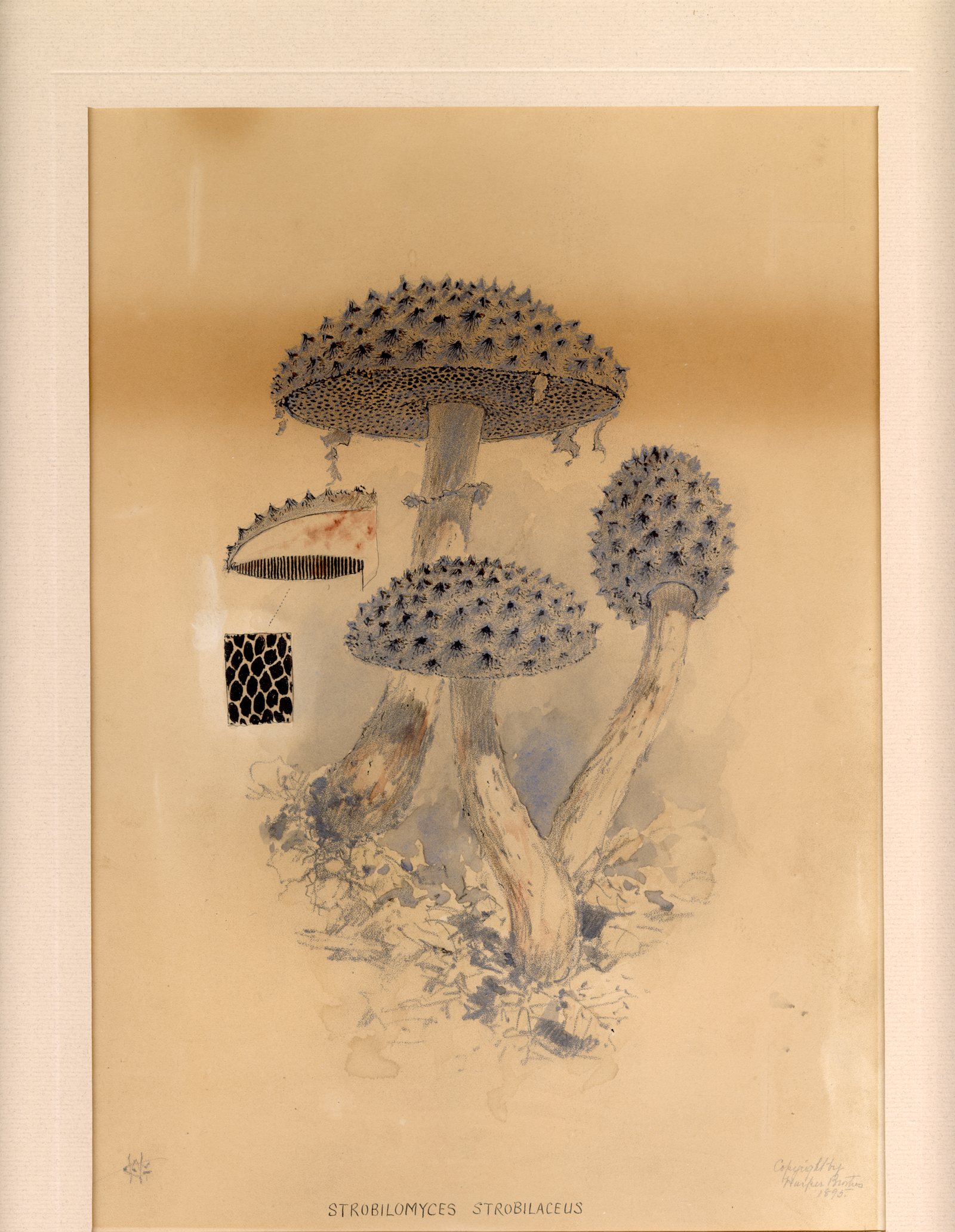
From one storeroom, seven journeys
Choose a plate to follow its path from the Columbia storeroom to where it rests today. Frames with an oak underline went with Dr. Olive; the rest with Dr. Petersen.
Dr. Olive: two frames · Dr. Petersen: five frames
Dr. Lindsay S. Olive
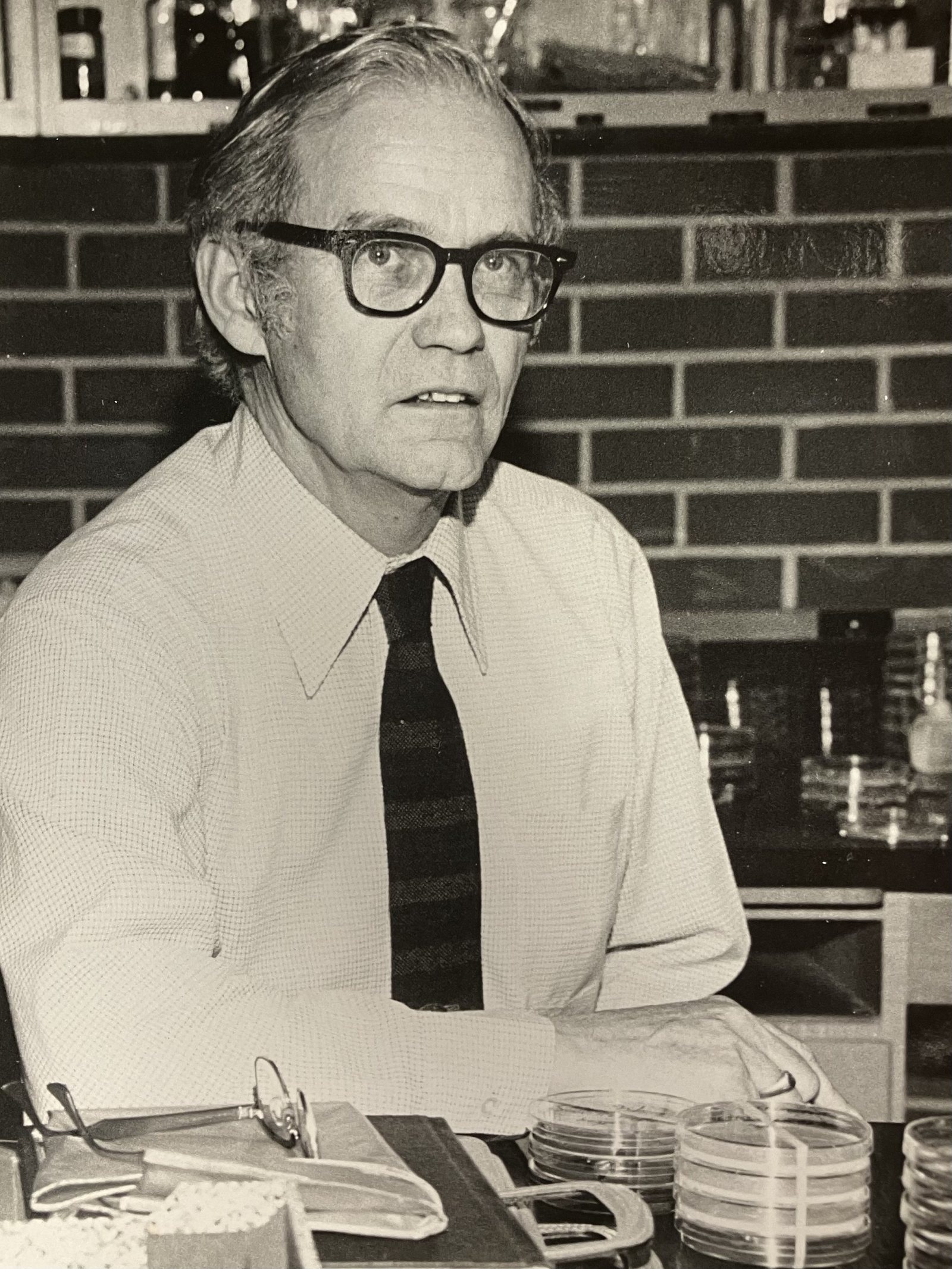
Olive left Columbia in 1968 to teach at the University of North Carolina at Chapel Hill. He already knew Highlands well. W. C. Coker had introduced him to the Station in 1938, when Olive was himself a student at Chapel Hill, and from then on he did summer research at HBS whenever he could. When he retired from UNC in 1982, he moved to Highlands permanently and gave his two watercolors to the Station. On June 7, 1986, Martina Wadewitz Haggard, an HBS trustee, wrote to Petersen that Pete Smith had “re-matted the two original mushroom paintings by W. Hamilton Gibson,” adding, “The original frames are being used.” She was no doubt referring to Olive’s gift.
“These are valuable!!”
June 7, 1986
Dear Ron, A quick note — This week’s rains and high humidity should produce some “beauties” in the mushroom department.
Incidentally, Pete Smith re-matted the two original mushroom paintings by W. Hamilton Gibson. The original frames are being used. Ron — these paintings should probably be insured and placed* somewhere where the public can see them. I suggest the new Library — a nice article could be written — also publicity for Station, and then placed in nature Museum at Station. These are valuable!!
I shall bring them back to Station weekend of annual meeting.
… Written in haste — regards, Martina
* for a short period of time.
Transcription, lightly abridged. Select the letter to read the original.Dr. Ronald H. Petersen
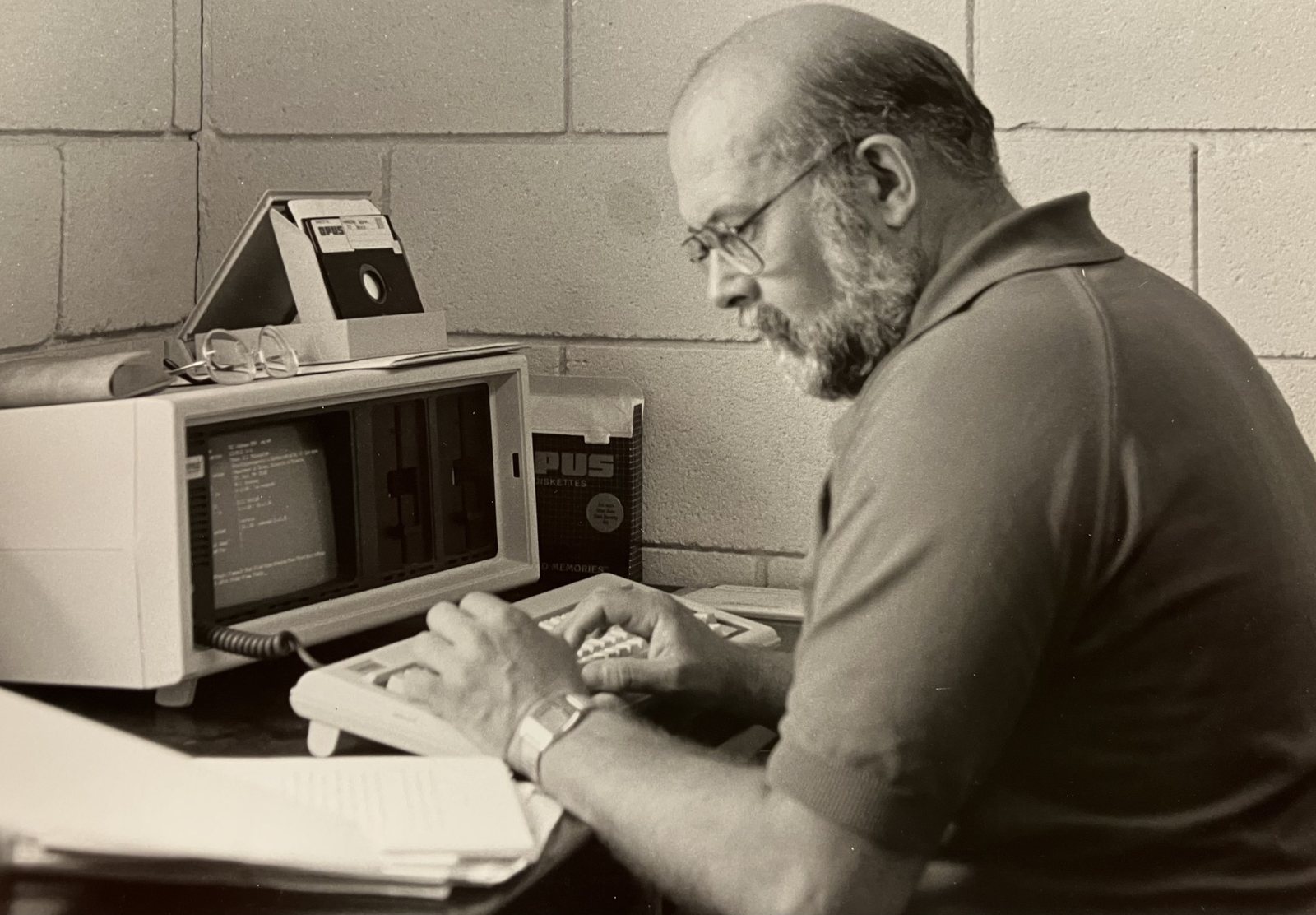
Dr. Ronald H. Petersen (b. 1934) is now Professor Emeritus of Ecology and Evolutionary Biology at the University of Tennessee. He received a B.A. in Plant Biology & Botany from Colgate University, an M.S. in Botany from Cornell University, and a Ph.D. from Columbia University. He was a Gertrude Burlingham Scholar at the New York Botanical Garden in the summers of 1959 and 1960, and the Mycological Society of America named him a Distinguished Mycologist in 2000. He has written many research papers and books.
Petersen first came to the Highlands Biological Station in the summer of 1959, as Olive’s graduate student, to study fungi. In 1961 he returned with Clark T. Rogerson of the New York Botanical Garden to collect fleshy fungi in the gorges of the Blue Ridge Escarpment. For more than a decade he spent his summers at the Station, teaching the “mushroom course,” doing research with his graduate students, and even hosting a “Mycology Week.” In the 1970s, as committee chair, he was instrumental in the transfer of HBS to the University of North Carolina system. He served on the Executive Committee from 1979 to 1981, helped found the Highlands Biological Foundation, and was its president from 1982 to 1986. Today Ron lives in Knoxville, where he continues to research mycological subjects and is writing his memoirs.
In 1986 Petersen gave four of his five watercolors to the Station, together with the original edition of Gibson’s book he had found in 1961. One of the four, Plate VIII, Marasmius oreades, had traveled on its own: Petersen had given it to his professor at the University of Tennessee, Dr. Lexemuel Ray Hesler, and it came back to Petersen when Hesler died. His fifth watercolor, Plate I, The Deadly “Amanita,” went to one of his early Ph.D. students and is now lost.
That same year, on June 24, 1986, Petersen wrote about the “original” cache of watercolors to Jake Page, Gibson’s great-grandson. Page replied on July 11, 1986, that he was grateful the watercolors had a good home.
The six Gibson watercolors at HBS
Plate XXIII is shown as Gibson’s original watercolor. The other five are shown as printed in the Station’s 1895 copy of the book. Select any plate to look closer.
How Did Gibson’s Watercolors Come to Columbia?
A paper attached to the back of two of the HBS watercolors begins to explain how Columbia acquired them in the first place. It reads:
“Fifty one illustrations, the originals by Mr. W. Hamilton Gibson for the plates of ‘Our Edible Toadstools and Mushrooms’, was presented to the Department of Botany 1897 by President Low.”
Attached to the back of two watercolors · Reinke Library ArchivesThe gift came the year after Gibson’s death. To understand it, it helps to know a little about President Low and about botany at Columbia in the 1890s.
Seth Low
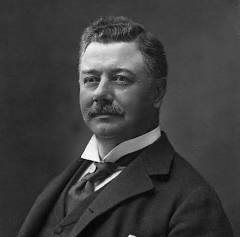
Seth Low (1850–1916) was an American municipal reformer, university builder, and philanthropist. As president of Columbia College from 1890 to 1901 (it was renamed Columbia University in 1896), he transformed a small college on a crowded city block into a large university with an impressive new campus on Morningside Heights. Low inherited an institution in the middle of a contentious identity crisis and moved quickly to settle it in favor of research and graduate education. He brought the College of Physicians and Surgeons, Barnard College, Teachers College, and other affiliates more closely into the university and reorganized the Law School. His restructuring of the faculties added a School of Pure Science in 1892, giving the natural sciences, botany among them, an institutional home of their own. His philanthropy included one million dollars for the Low Memorial Library on the new campus, given in 1895. In 1901 Low was elected the second mayor of the consolidated City of New York, and he left Columbia to take office in 1902.
Botany at Columbia: Britton and Underwood
Columbia was rapidly expanding its science departments under Low. Its botany program, led by Nathaniel Lord Britton, was busy building teaching collections: herbaria, reference libraries, and microscope collections. In 1892, the same year the School of Pure Science was created, Britton and his wife Elizabeth were driving the founding of the New York Botanical Garden, and the Garden soon became deeply intertwined with how botany was taught at Columbia. In 1895 Britton left Columbia to become the Garden’s first director. He brought much of Columbia’s herbarium and botanical library with him, and those collections became a founding resource for what is now one of the world’s premier collections of botanical literature and art.
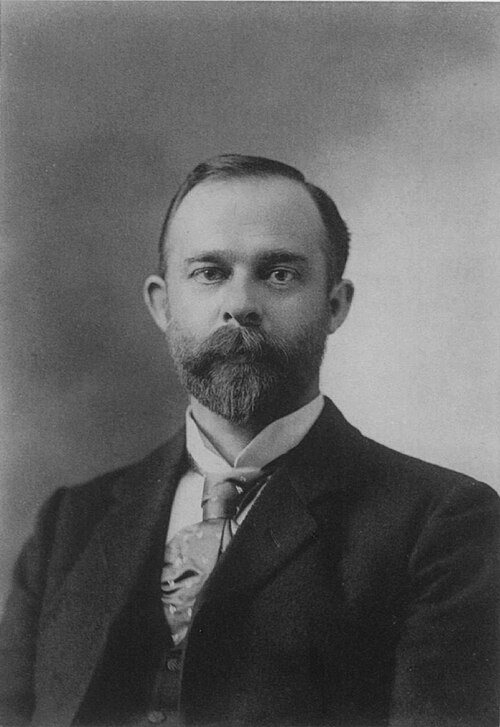
Britton’s departure left the botany department to a new leader. Lucien M. Underwood (1853–1907) became professor of botany and mycology at Columbia in 1896, the year Gibson died, and later joined the staff of the New York Botanical Garden in 1907. The Department of Botany that received the Gibson gift in 1897 was therefore Underwood’s. Underwood had earlier founded the herbarium at DePauw University in 1891, teaching students the structural mysteries of plants and fungi.
Gibson was known to many at Columbia and the Garden, and Underwood was among them. In historical reviews of American botanical science, Underwood’s texts and Gibson’s popular articles are often credited together with demystifying the world of fungi for the everyday citizen. They transformed what had been feared as dangerous “toadstools” into a respected, mainstream hobby of nature exploration.
In a review of recent publications in the first volume of the journal Torreya (Vol. 1, 1901, pp. 43–46), Underwood described the public interest in mushrooms and Gibson’s part in it:
“Some five years ago an extensive interest began to be displayed in this country toward the subject of edible fungi. It is probable that a part of this interest was stimulated through the influence of William Hamilton Gibson’s popular articles and illustrated work, and the interest was increased by the publication of special edition of the report of the State Botanist of New York for 1894 with numerous colored plates of edible and poisonous fungi. It was thought that the fad would soon die out, but, instead, the mycological clubs seem to be growing larger and the interest in their gatherings does not appear to show any signs of abating. It was further hoped that this widespread interest in this neglected group of plants would stimulate some to take up a scientific study of the fleshy fungi, but while a very few have made slight contributions, the many desiring entertainment rather than severe study, have contented themselves to remain mere mycophagists instead of taking mycology too seriously. To appeal to this latter class of readers, four works have recently appeared. That they all appeal to eye and stomach as well as brain is evidenced by their profuse illustration, their chapters on how to cook the delectable mushroom, as well as by their assumption of scientific or pseudo-scientific diagnoses.”
Four Theories
How the watercolors reached President Low in the first place is not recorded. There are four possibilities:
- Harper & Brothers
- Emma Gibson, widow
- President Seth Low
- Columbia, Dept. of Botany · 1897
Gibson’s widow, having received the original watercolors and illustrations back from Harper & Brothers, sold them to Low, who donated them to the university.
- Harper & Brothers
- President Seth Low
- Columbia, Dept. of Botany · 1897
Harper & Brothers, whose written copyright appears on most of the extant watercolors, sold them to Low, who again made the donation.
- W. Hamilton Gibson
- encouraged by the Brittons
- President Seth Low
- Columbia College Herbarium
- NYBG herbarium
Gibson himself, at the encouragement of the Brittons, sold the watercolors to Low to become part of the Columbia College Herbarium, which formed the core of the New York Botanical Garden’s herbarium. A cordial letter from Elizabeth Knight Britton (1858–1935) to Gibson, dated February 8, 1896, and now in the Garden’s Mertz Library, suggests a friendship. Gibson died that July.
- Lucien M. Underwood
- President Seth Low
- Columbia, Dept. of Botany · 1897
Underwood, who became professor of botany at Columbia in 1896 and also knew Gibson, was instrumental in bringing the watercolors to the department through Low.
No record confirms any of these theories.
The long way round
- 1850October 5William Hamilton Gibson is born in Litchfield County, Connecticut.
- 1890Seth Low becomes president of Columbia College.
- 1892Columbia creates its School of Pure Science. Nathaniel and Elizabeth Britton are driving the founding of the New York Botanical Garden.
- 1895Harper & Brothers publish Our Edible Toadstools and Mushrooms. Britton leaves Columbia to direct the Garden.
- 1896February 8Elizabeth Knight Britton writes a cordial letter to Gibson. Underwood becomes professor of botany and mycology at Columbia.
- 1896July 16Gibson dies in Washington, Connecticut, at forty-six.
- 1897Fifty-one of Gibson’s originals are presented to Columbia’s Department of Botany by President Low.
- 1901Underwood credits Gibson with stirring the public’s interest in edible fungi, in the first volume of Torreya.
- 1938W. C. Coker introduces a young Lindsay Olive to Highlands.
- 1957JanuaryClearing a storeroom at Columbia, Ron Petersen finds seven grimy oak frames on top of an old cabinet.
- 1961In an antique shop, Petersen finds an original edition of Gibson’s book and makes the connection.
- 1968Olive leaves Columbia for the University of North Carolina at Chapel Hill.
- 1982Olive retires to Highlands and gives his two watercolors to the Station.
- 1986June 7Martina Haggard writes that the two paintings have been re-matted in their original frames.
- 1986Petersen gives four watercolors and his original Gibson book to the Station, and writes to Gibson’s great-grandson, Jake Page.
- 2020Petersen tells the story in Fungi: “William Hamilton Gibson: A Case of Serendipity.”
The Columbia Gibson Works at the New York Botanical Garden
The Botanical Art Collection in the LuEsther T. Mertz Library of the New York Botanical Garden, one of the world’s premier collections of botanical literature, holds ten Gibson works that appear in Columbia’s accession records. Catalogued as Art 0117:1–10, they are six watercolor plates, black-and-white illustrations, and one item catalogued only as “Mushrooms,” whose medium is undetermined. The record gives no date for when the items were given or catalogued, so how and when they moved from Columbia to the Garden is still unknown.
The plates below are shown as printed in the 1895 edition of the book, not the Garden’s originals. Select a plate to look closer.
Perhaps Gibson’s vivid, detailed watercolors found a second life at Columbia as teaching aids, tacked up as instructional wall illustrations rather than filed away as fine art. That might explain how some of them ended up forgotten in a storeroom decades later.
The Mystery Continues
Of Gibson’s thirty original watercolors, six are at HBS and six are at the New York Botanical Garden. A seventh, Plate I, passed through Petersen’s hands before it was lost. Where are the other seventeen? Perhaps they were used in the classroom until they wore out and were thrown away. We will probably never know.
For the six in Highlands, it all began in that Columbia storeroom. As Ron Petersen recalled in his article “William Hamilton Gibson: A Case of Serendipity” (Fungi 12:4, Winter 2020):
“On the top of the ancient wooden cabinet were some old wooden frames so grimy as to be difficult to pry apart for inspection. Once pulled down, they were oak picture frames replete with hang wires. Each framed a water-colored illustration of some mushrooms, some half dozen in all.”
It turned out to be seven, just north of his half dozen. Thanks to Dr. Lindsay S. Olive and, particularly, Dr. Ronald H. Petersen, the HBS collection of six is cared for and appreciated. The LuEsther T. Mertz Library at the New York Botanical Garden will treasure what it holds all the more.
Our thanks to Stephen Sinon, William B. O’Connor Curator of Special Collections, Research and Archives in the LuEsther T. Mertz Library of The New York Botanical Garden, for his help locating and researching the Garden’s Gibson material for this story.
For Further Reading
- Our Edible Toadstools and Mushrooms and How to Distinguish ThemWilliam Hamilton Gibson. Harper & Brothers, 1895. The complete book is free online from Project Gutenberg, eBook #46514.
- William Hamilton Gibson: Artist, Naturalist, AuthorJohn Coleman Adams. Zinc Read, 2024; first published 1901.
- “William Hamilton Gibson: A Case of Serendipity”Ronald H. Petersen. Fungi 12:4, Winter 2020.
- “Dr. Lindsay Shepherd Olive: A Life in Mycology and Conservation”Holly Compton Shields. Notes from the Archives, Highlands Biological Station Online Newsletter, November 2025.