Notes from the Archives·August 2026
What’s in a Name?
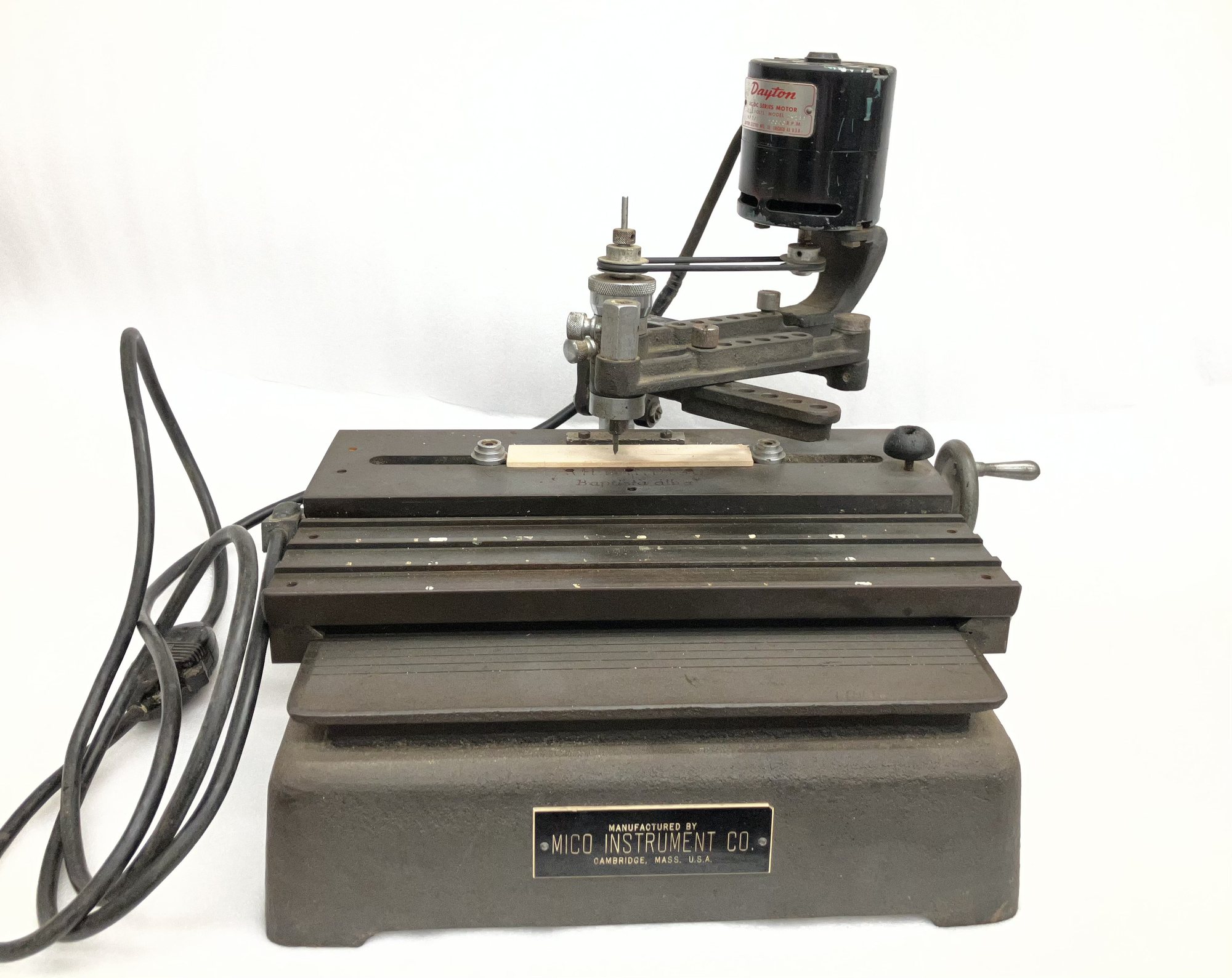
The purchase of a Mico Standard Engraver with Pantograph and Motor explains the importance.
A plant label is a small thing. It carries a common name and a scientific one. Yet placing a label beside every specimen in a botanical garden is an act of identification and permanence. In the autumn of 1966, the committee charged with developing the Highlands Botanical Gardens decided it should have the means to produce those labels itself.
A brief history
The Highlands Botanical Gardens
The Highlands Botanical Gardens were first proposed by Ralph Sargent, President of the Board of Trustees, in 1945. He called for an arboretum — “a living display of southern mountain plants.” But it was not until 1962 that the gardens came into being, with the Town of Highlands leasing a tract of land to the Station for ninety-nine years. The Foreman family then donated contiguous land, now known as Effie Park, for Effie Park Howell Foreman, mother of HBS founder Clark Foreman.
The original garden committee included Martina W. Haggard, Ralph Sargent, Henry Wright, and Judge George Janvier of New Orleans. Their plan was to showcase native plants in their natural habitat. Today this “garden of gardens” — from a Moss Garden to a Bog Garden to an Old Growth Forest — is overseen by a staff horticulturalist, Canty Worley, and an enthusiastic volunteer gardening group.
Plans were made for establishing local mountain plants in their proper habitats. In time, the garden would become a third element at the station, along with the Laboratory and Museum; both its educational value and its beauty would bring its lasting popularity.Martina Wadewitz Haggard, history of the gardens, 1999
The search
The labeling of the native plants
One of the tasks faced by the original committee was the labeling of the plants in the gardens. A plant label had to include not only the common name of the plant but also its scientific name, and then the label had to be attached to some type of stake. The HBS Reinke Archives provide defining information about the committee’s search for these labels, the stakes, and their ultimate purchase.
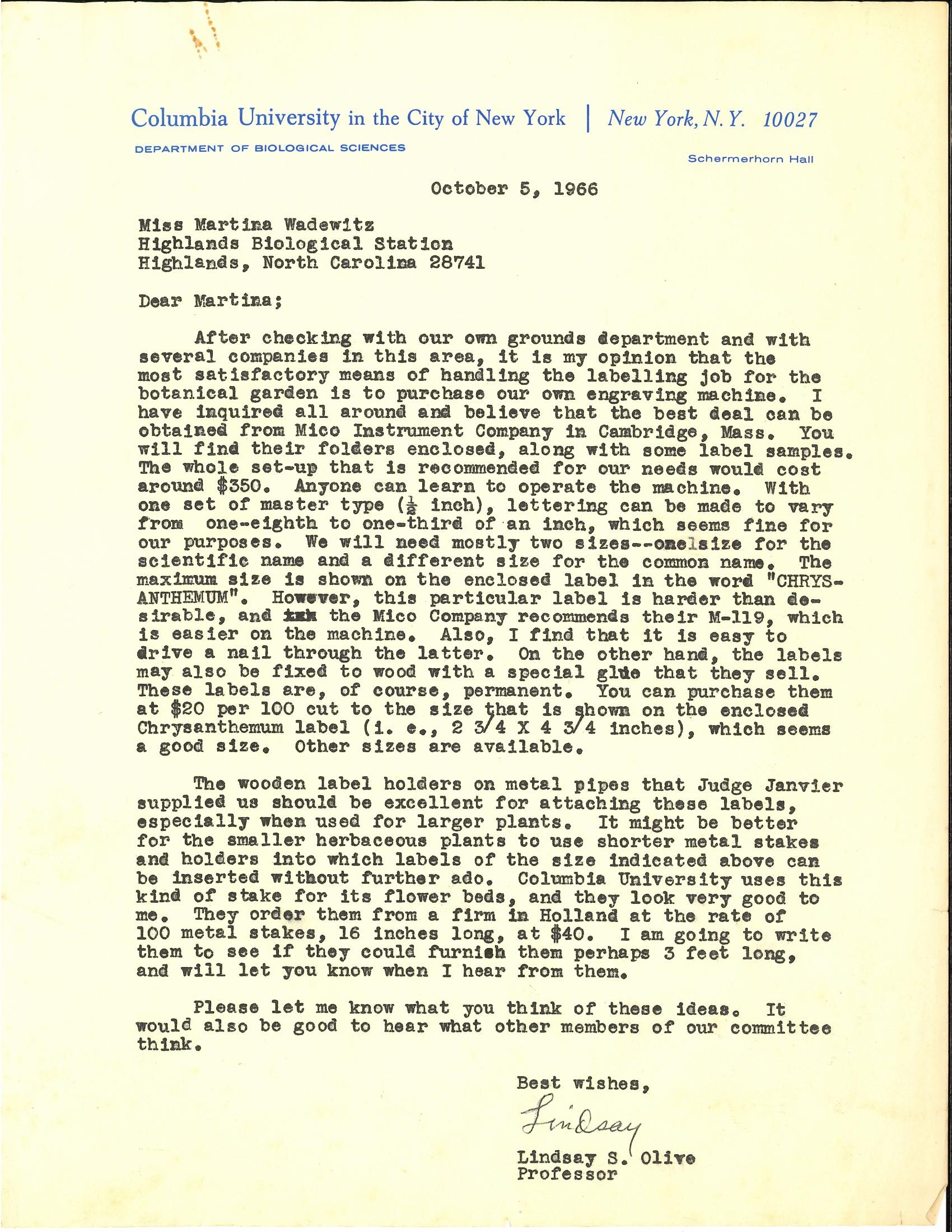
A letter of September 22, 1965, reveals Martina Wadewitz (Haggard), as co-chairman of the Botanical Garden Committee, writing to two companies to inquire about permanent labels. Fortunately, in September of 1966, Margaret Cannon Clarkson gave a $3,000 donation to the Botanical Gardens in memory of William C. Coker. This donation, as well as one from Rose Monroe (Mrs. Raburn) in 1964, enabled the committee to move forward on their pursuit of plant labels.
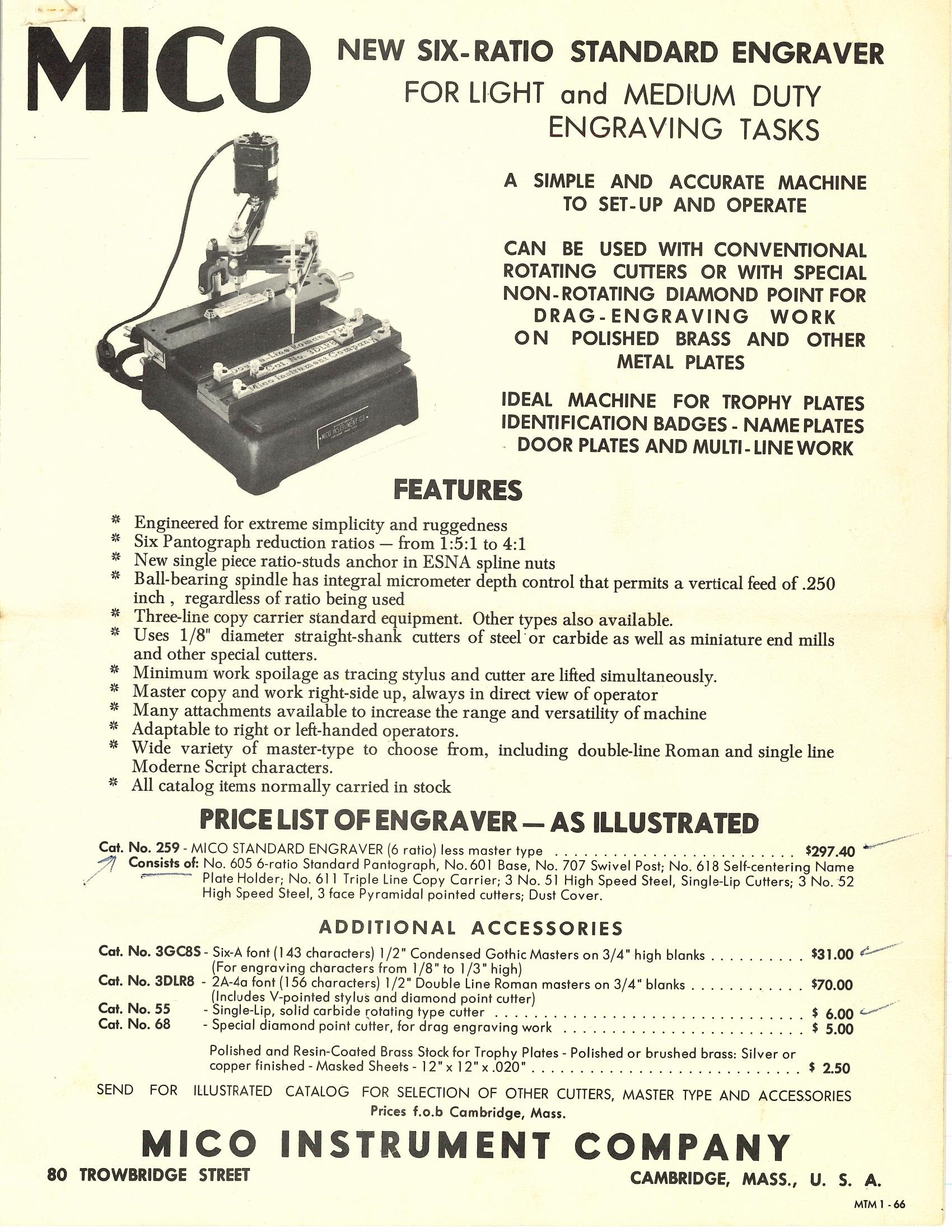
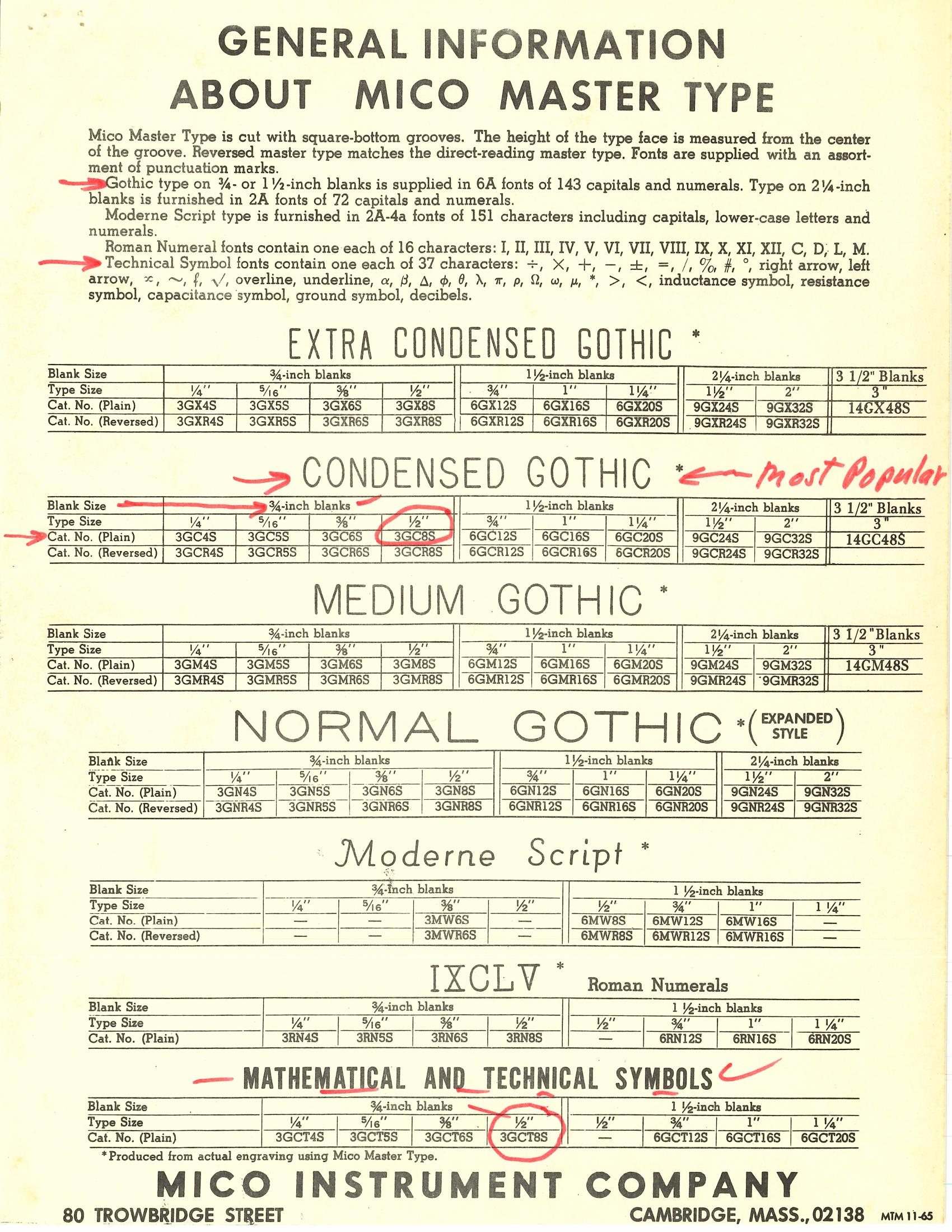
After some investigation, on September 29, 1966, Dr. Lindsay S. Olive — Professor of Biology at Columbia University, who had joined the committee in 1965 — called the Mico Instrument Company in Cambridge, Massachusetts to inquire about the Mico Engraver. A bulletin and price list were sent to Dr. Olive.
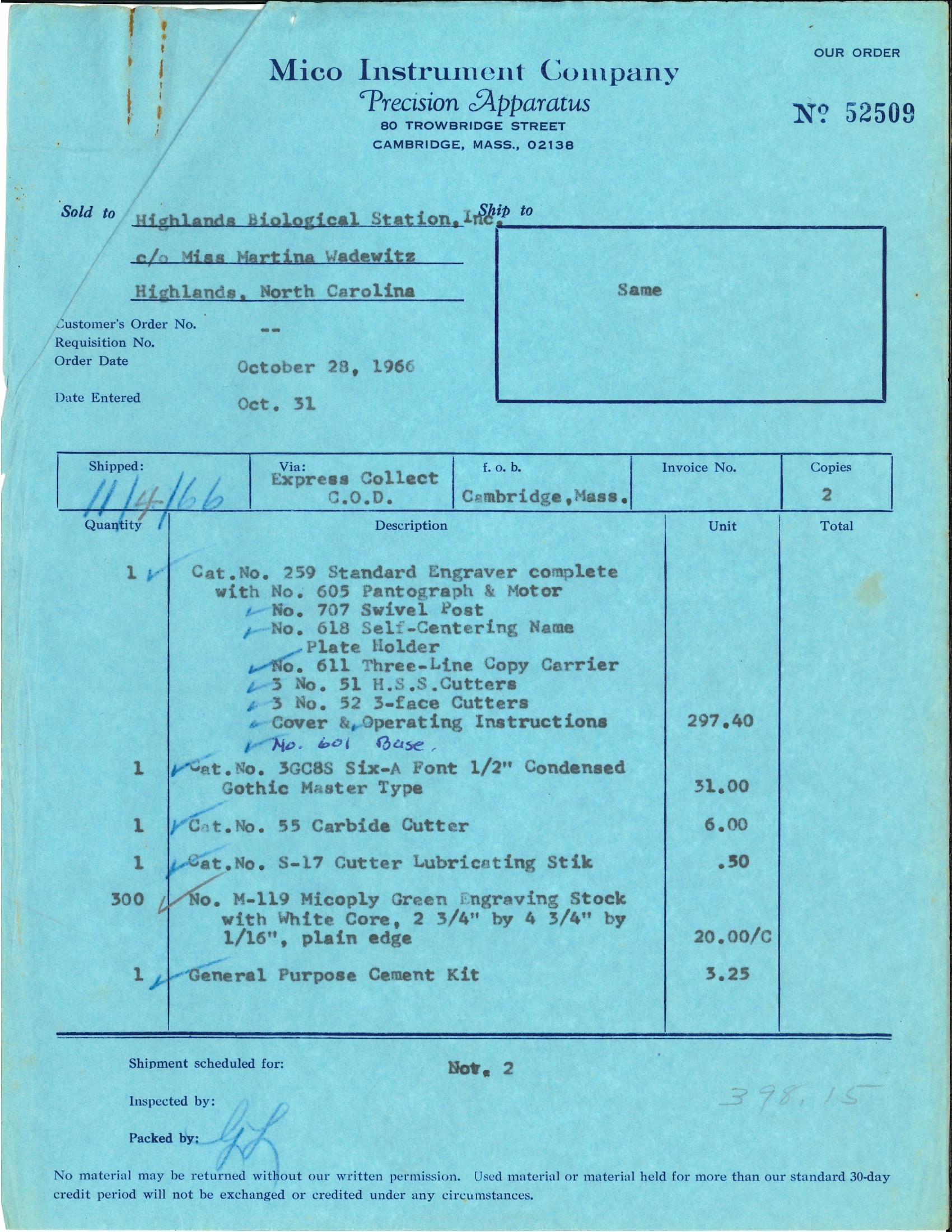
Order No. 52509
What it cost
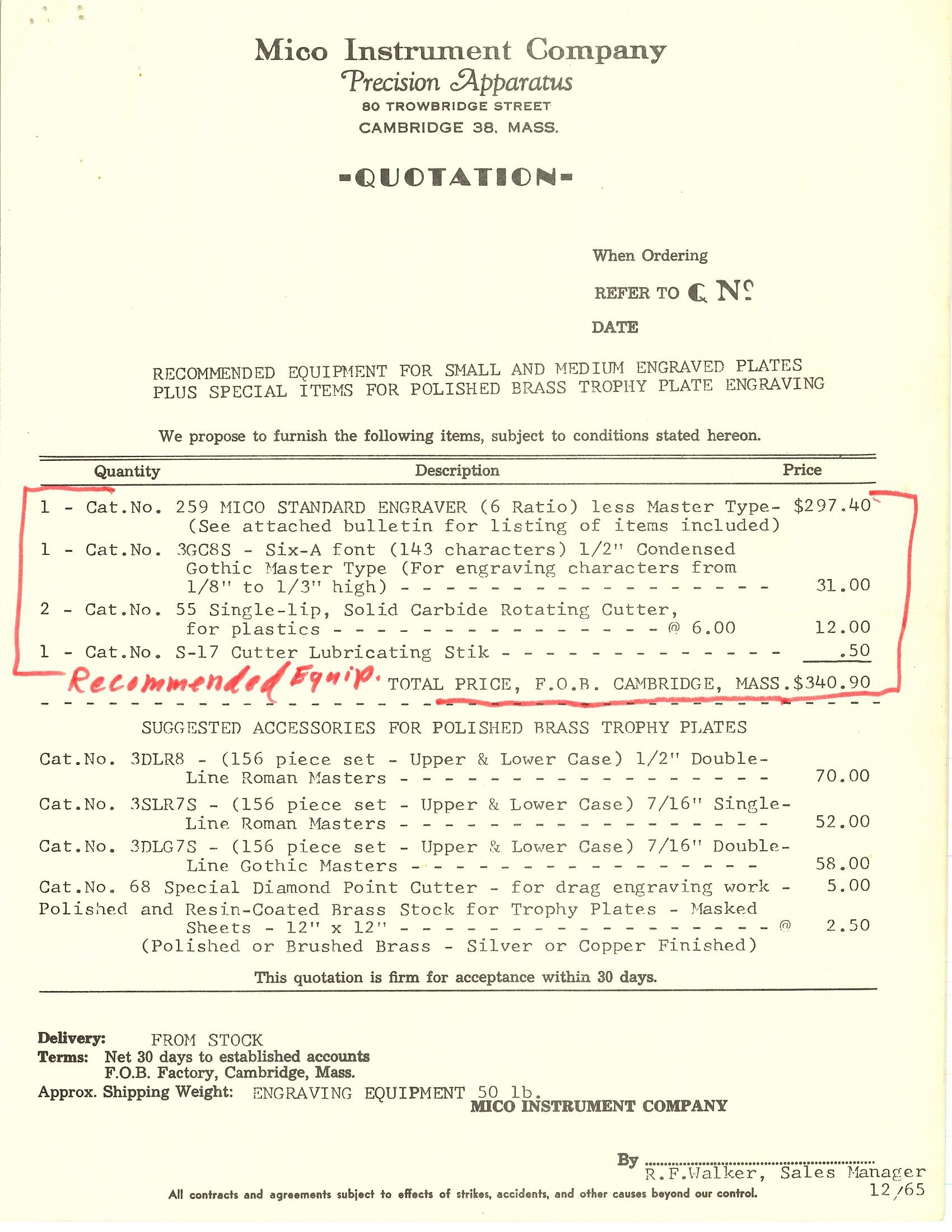
| Cat. No. 259 Standard Engraver, complete with No. 605 Pantograph & Motor No. 601 Base · No. 707 Swivel Post · No. 618 Self-Centering Name Plate Holder · No. 611 Three-Line Copy Carrier · 3 No. 51 H.S.S. Cutters · 3 No. 52 3-Face Cutters · cover and operating instructions | 297.40 |
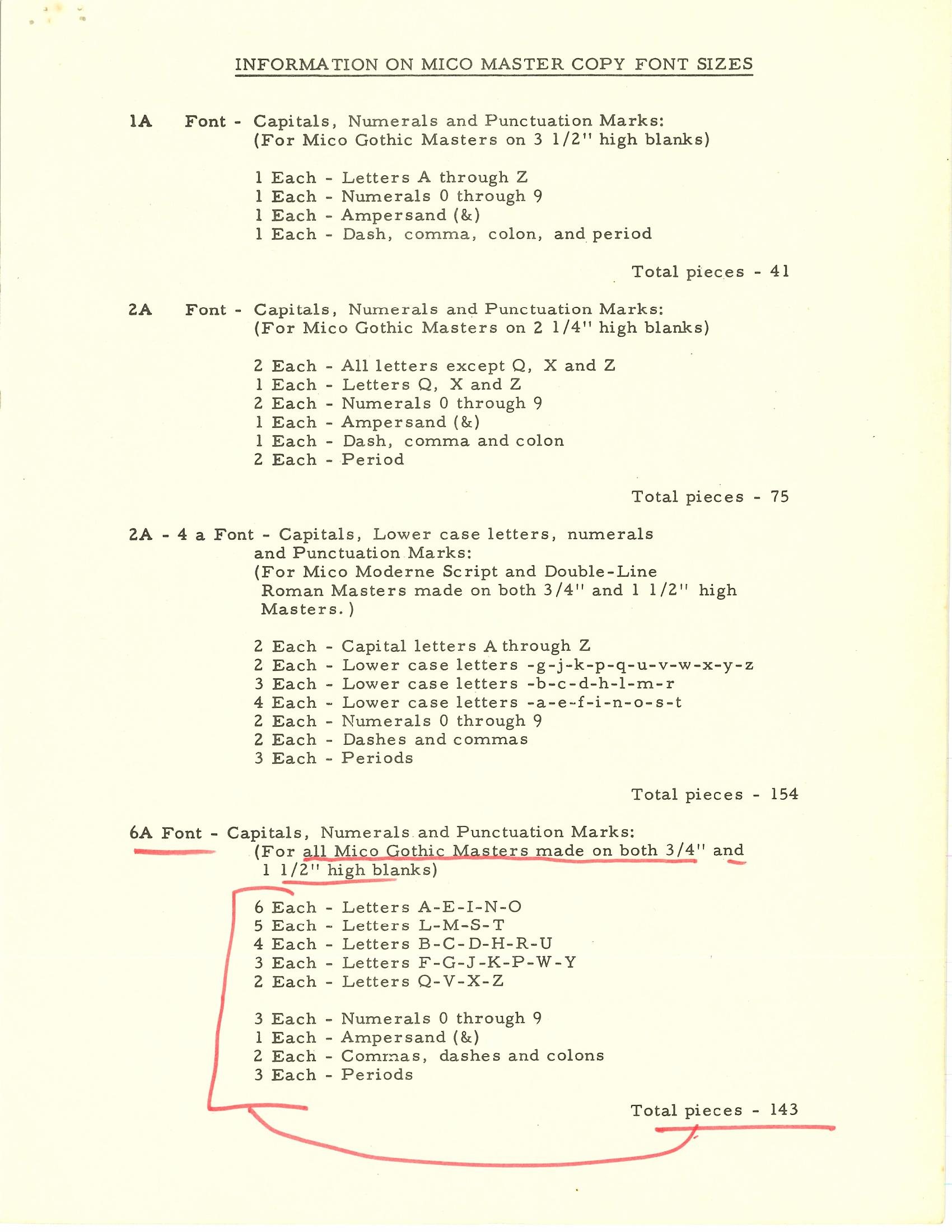
| Cat. No. 3GC8S Six-A Font, ½″ Condensed Gothic Master Type 143 characters | 31.00 |
| Cat. No. 55 Carbide Cutter | 6.00 |
| Cat. No. S-17 Cutter Lubricating Stik | 0.50 |
| 300 × No. M-119 Micoply Green Engraving Stock with White Core 2¾″ × 4¾″ × 1/16″, plain edge · at $20.00 per hundred | 60.00 |
| General Purpose Cement Kit | 3.25 |
| Total | $398.15 |
Sold to Highlands Biological Station, Inc., c/o Miss Martina Wadewitz. Ordered October 28, entered October 31, shipped November 4, 1966, express collect, C.O.D., f.o.b. Cambridge, Mass.
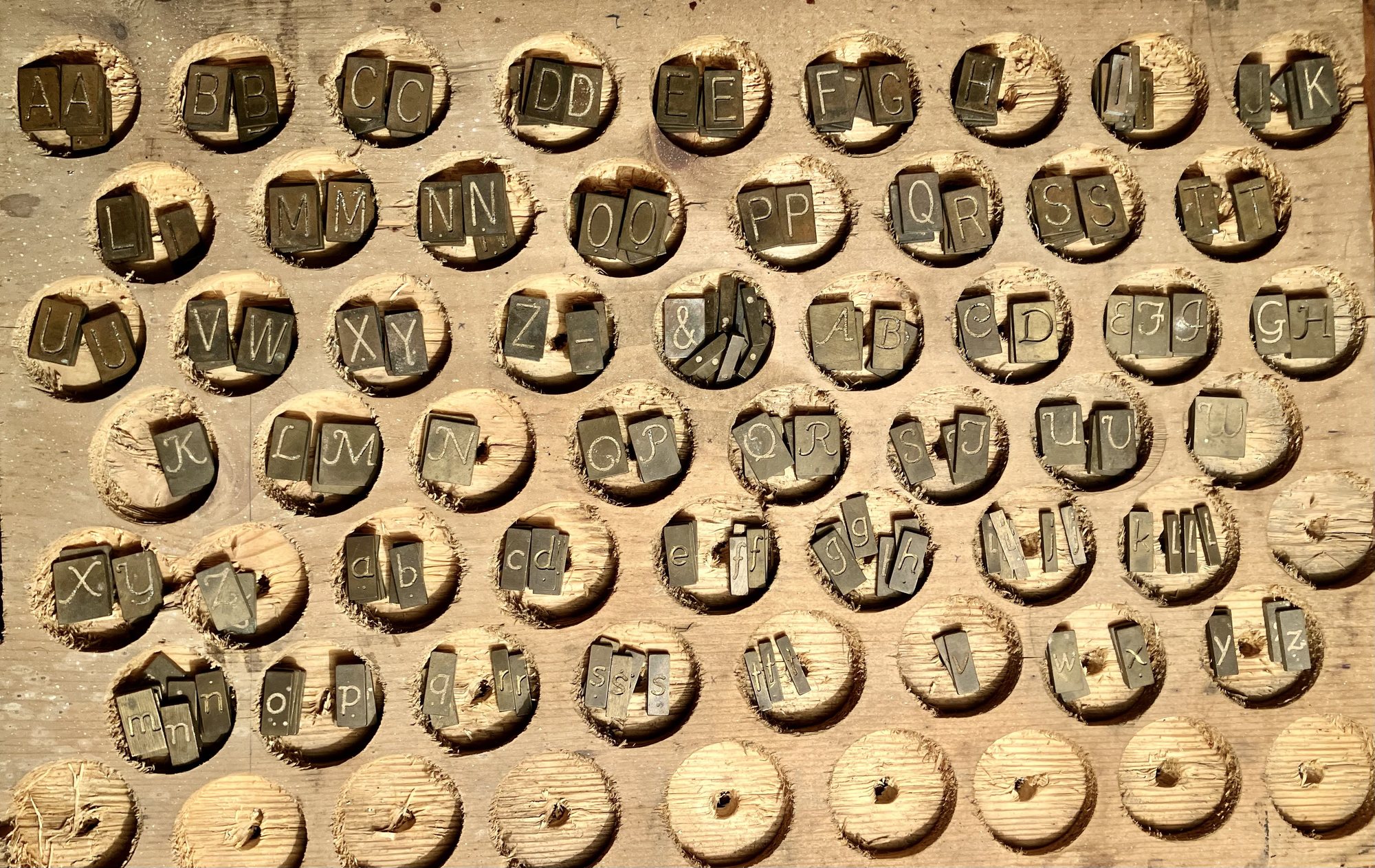
The invoice from the Mico Instrument Company of Cambridge, Massachusetts, dated October 28, 1966, provides us with the cost of the machine at $297.40, plus the letters in half-inch Condensed Gothic master type at $31.00, a rotating cutter with lubricating stick, and finally Micoply engraving stock with a green surface at $20 per 100 — three hundred were ordered — and a cement kit for applying it to the stake. The final total was $398.15.
The maker
The Mico Instrument Company
The Mico Instrument Company made measurement instrumentation, electrical apparatus, engraving tools, and microtomes. The company was founded in 1936 by Melville Eastham, born in 1885, as a successor to the Mann Instrument Company. Their specialized devices were used by university researchers and scientific institutions.
The Mico Standard Engraver, complete with Pantograph and Motor, was manufactured as a bench-top mechanical pantograph machine, designed for precision engraving, milling, and drilling of small parts, nameplates, and panels. These classic machines are manual 2D and 3D precision pantographs. The operator guides a stylus over a master template — or “copy” — and a mechanical linkage proportionally scales the motion to a rotating cutter in the spindle.
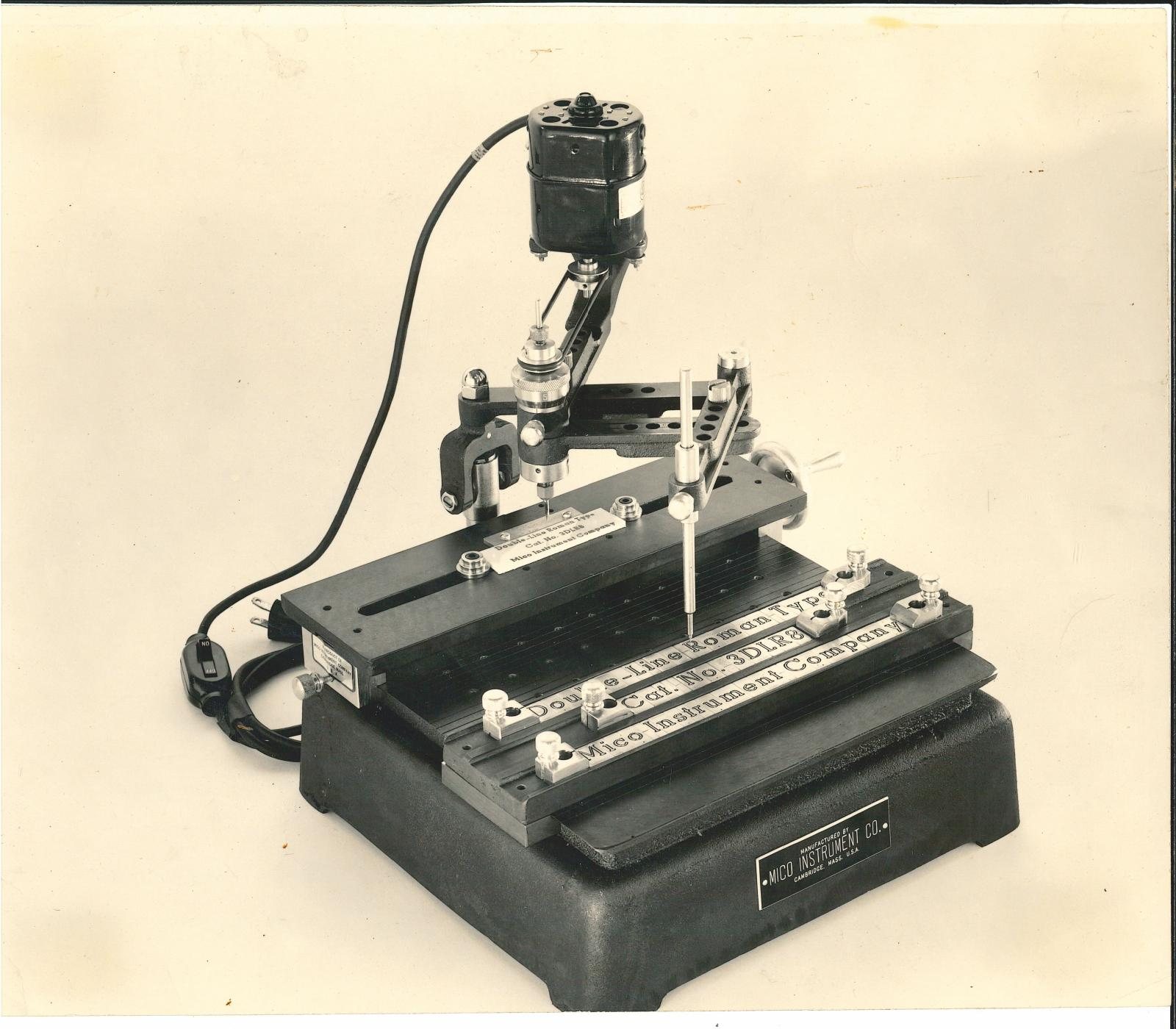
One motion, two scales. Whatever the hand does at left, the cutter repeats at right, smaller and exactly proportional. Mico’s own chart gives the arithmetic: a half-inch master copy at ratio point C, 2:1, yields a quarter-inch letter — which is how a font of 143 characters became every name in the gardens.
Scaling capabilities
Adjustable pantograph arms allow operators to trace a master template and reduce the scale onto a smaller, final workpiece.
Six ratios · 1.5:1 to 4:1
Heavy-duty construction
Built with rigid cast iron or steel frames designed to maintain high tolerances, making them favored by instrument makers, watchmakers, and tool-and-die shops.
80 Trowbridge St., Cambridge, Mass.
Manual spindle
The cutter head is typically driven by a belt and electric motor, enabling the use of small engraving bits or end mills to cut intricate features, text, or shapes.
1/16 H.P. · 10,000 rpm · neoprene belt
No. M-119 Micoply
Green surface, white core
The stock the Station bought was laminated: a green surface over a white core, two and three-quarter inches by four and three-quarters. The cutter simply had to break the surface, and the letter came up white. Olive had recommended two sizes on each label — one for the scientific name, a different one for the common name. The Mico Engraver continued in use at the Station until at least August of 1995, when an invoice through Western Carolina University, by then owner of HBS, notes the order of 200 labels in white from Mico Instruments.
A reconstruction at the M-119 proportions, not a scan. Switch the stock to see the change the 1995 invoice records.
Below the name
The stakes
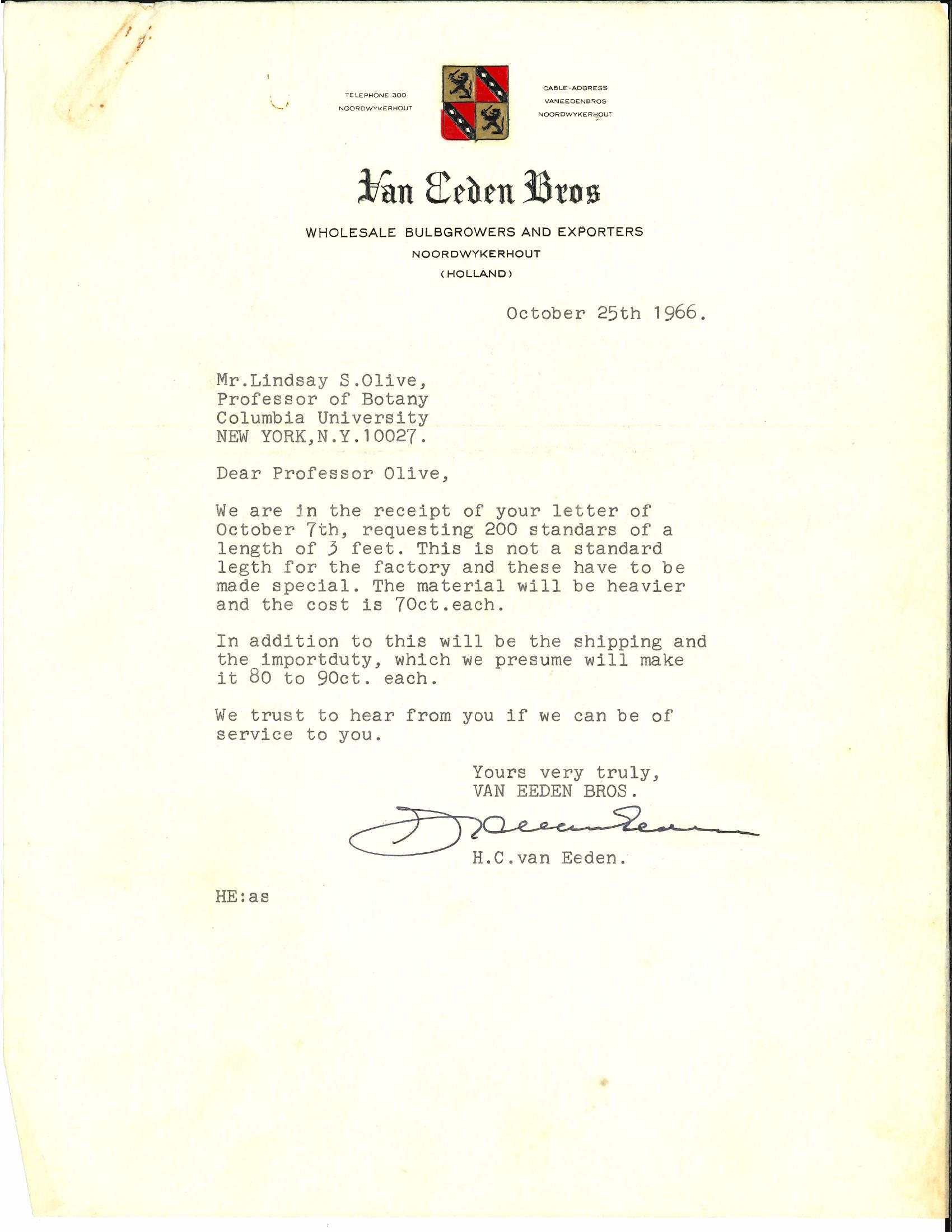
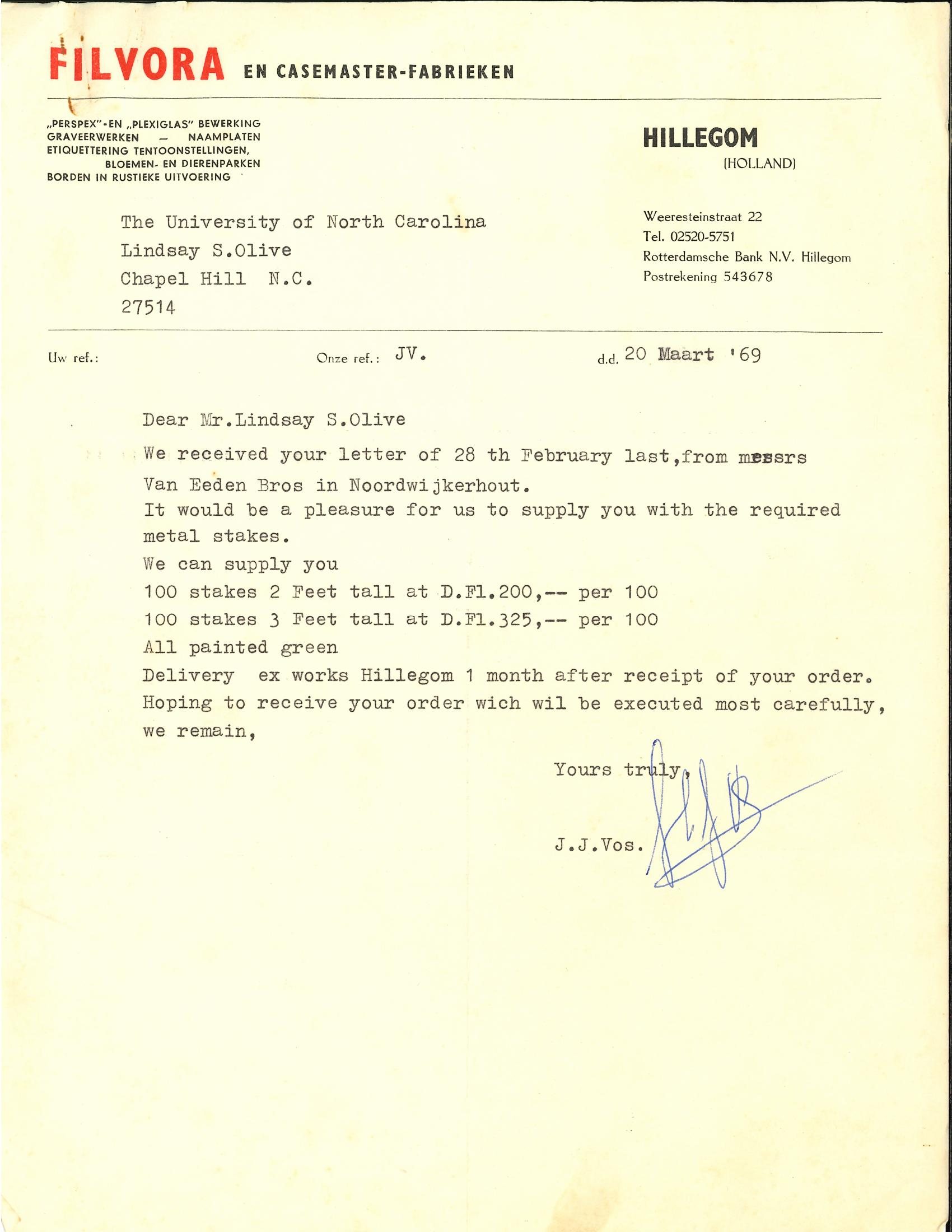
Judge George Janvier on the committee took it upon himself to make stakes out of pipe and wood, as noted in letters in October and November of 1965. The committee was pleased with his stakes, but for smaller plants Dr. Lindsay Olive suggested taller metal stakes, sought in 1966 from Van Eeden Brothers and in 1969 from Filvora, both in Holland.
The gardens in the 2000s
After the pantograph
At some point around the year 2000, the Station stopped using the Mico Engraver and began ordering plant labels from an engraving company in Franklin, NC. In August of 2020 a Botanical Garden and Grounds Planning and Advisory Committee was established by the Station. Committee members included Jim Costa, Jason Love, Paul Manos, Kathy Mathews, Lisa Armstrong, Bryding Adams, Lynda Anderson, Margie Bauer, Ken Conover (Chair), Helen Regnery, Liz Sargent, Dollie Swanson, and Glenda Zahner.
But by 2023 the Highlands Botanical Garden Committee had become very aware of the need for new signage, particularly wayfinding and plant labeling, to help visitors in the gardens. Equinox, an Asheville environmental planning and design company, had been engaged in April of 2022 to aid in this process of wayfinding signage. By June of 2025, the new wayfinding signage was installed, having been purchased through a grant from the North Carolina Science Museums Grant Program, administered by the North Carolina Museum of Natural Sciences and funded by the American Rescue Plan Act.
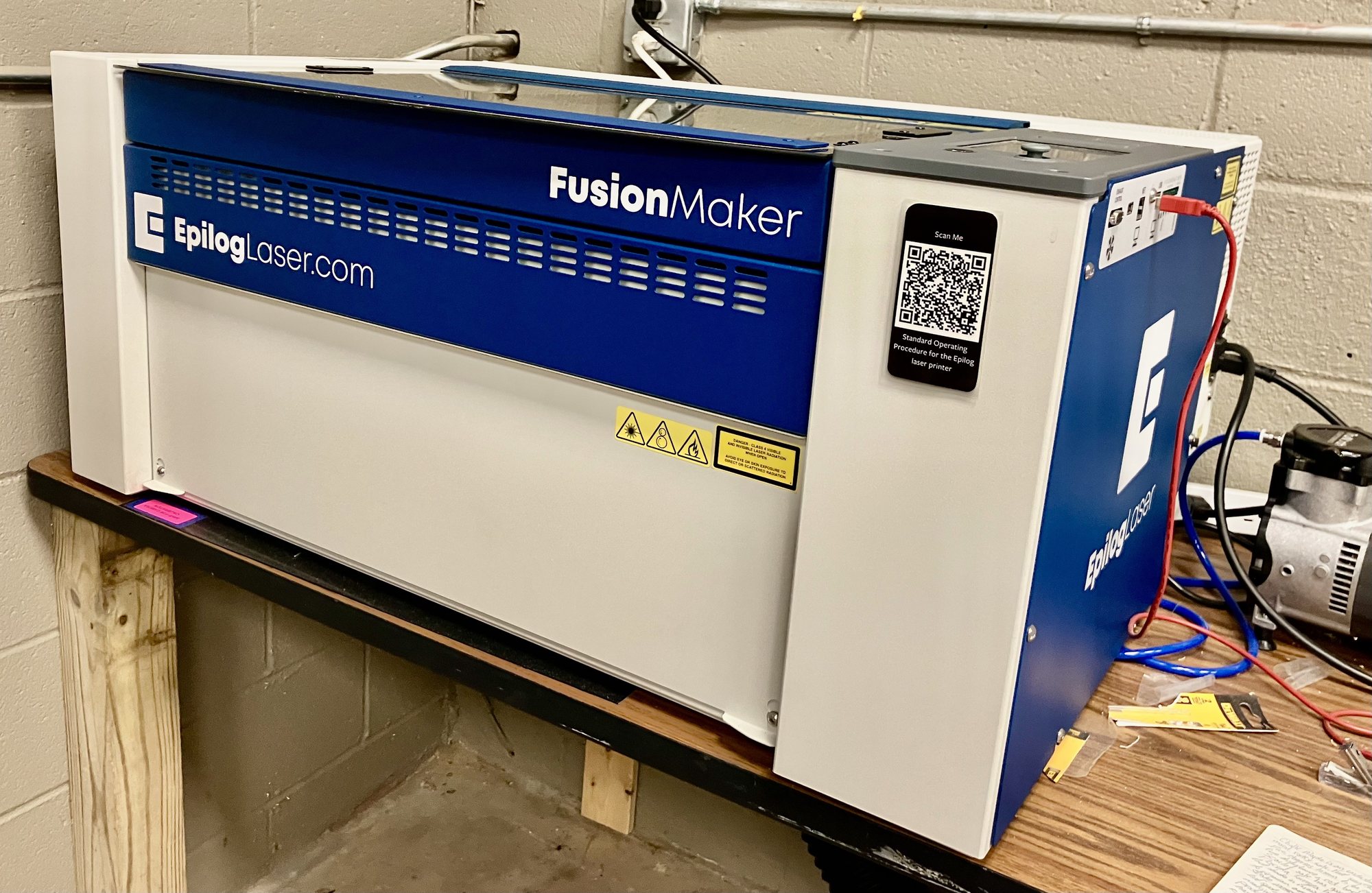
Then finally in 2022 the HBS Garden Committee purchased their own engraver, an Epilog Laser Engraver, Fusion Maker 12, which could engrave text and artwork including QR codes. This machine is our primary source for plant labels today.
The film · Plate 7
Epilog Fusion Maker 12 · Highlands, N.C.
The same task, sixty years on
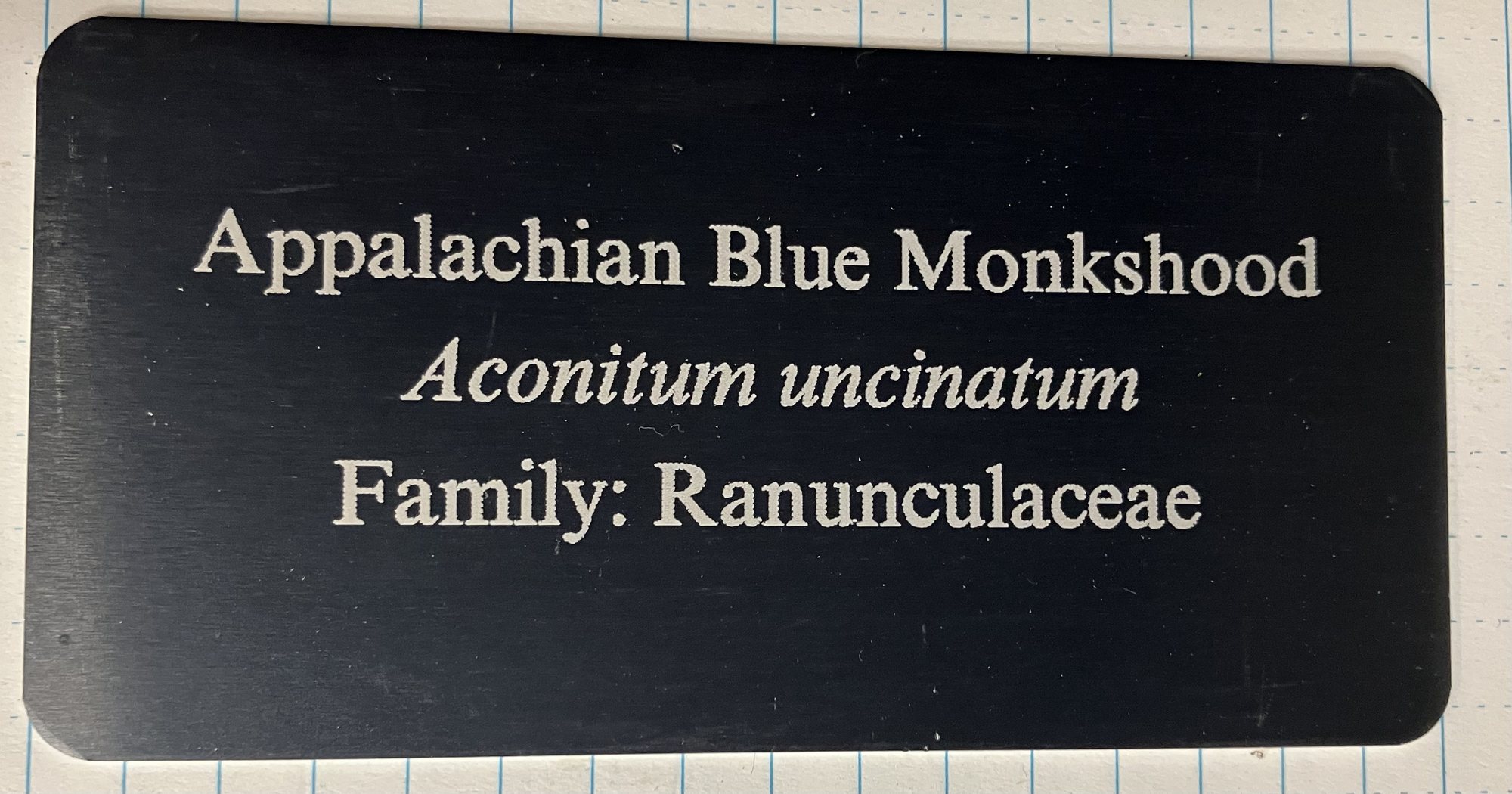
The stylus and the master type are gone. The arithmetic of a common name above a scientific name is not.
Cutting a label
Appalachian Blue Monkshood
0:23 · silent
The Epilog Fusion Maker 12 cutting a label in the same shop that once held the pantograph. Where a 1966 operator guided a stylus across a half-inch master copy, the beam now takes its path straight from the file — but the plate that comes off the bed carries the same two lines of type.
- Machine
- Fusion Maker 12
- Acquired
- 2022
- Predecessor
- 1966 · $398.15
- Runtime
- 0:23
- Film
- Canty Worley &
Botanical Gardens Team
Bryding Adams
Notes from the Archives · HBS Reinke Archives
Bryding Adams serves on the Botanical Garden and Grounds Planning and Advisory Committee.
In appreciation of Mike McMahan, Facilities Manager at the HBS, for saving this machine and its documentation as a part of our garden history.
References
- For an in-depth history of the Highlands Botanical Gardens see James T. Costa’s book, Highlands Botanical Gardens: A Naturalist Guide, featuring the photographs of Ralph M. Sargent, published in 2012 to celebrate the 50th Anniversary of the gardens.
- See Notes from the Archives, June 2025, “Margaret Louise Cannon Carr Howell Clarkson” by Bryding Adams.
- See Notes from the Archives, November 2025, “Dr. Lindsay Shepherd Olive: A Life in Mycology and Conservation” by Holly Compton Shields.
Eighty years, in ticks
- 1945Ralph Sargent proposes an arboretum — “a living display of southern mountain plants.”
- 1962The Town of Highlands leases a tract to the Station for ninety-nine years. The gardens come into being.
- 1964A gift from Rose Monroe (Mrs. Raburn) reaches the gardens.
- Sept. 22, 1965Martina Wadewitz writes to two companies to inquire about permanent labels.
- Oct.–Nov. 1965Judge George Janvier makes stakes out of pipe and wood.
- Sept. 1966Margaret Cannon Clarkson gives $3,000 in memory of William C. Coker. Dr. Lindsay Olive telephones the Mico Instrument Company.
- Oct. 5, 1966Olive writes to Martina: buy the machine.
- Oct. 25, 1966Van Eeden Bros quote three-foot metal standards at 70 cents each.
- Nov. 4, 1966Order No. 52509 ships from Cambridge. $398.15.
- Mar. 20, 1969Filvora of Hillegom quotes stakes in two lengths, all painted green.
- Aug. 1995Two hundred labels in white, ordered from Mico through Western Carolina University.
- c. 2000The engraver goes quiet. Labels are ordered from an engraving company in Franklin, NC.
- 2022The Garden Committee purchases an Epilog Laser Engraver, Fusion Maker 12.
- June 2025New wayfinding signage installed, funded through the American Rescue Plan Act.