
A Plant Hidden by Water
In the waters of the Little River system, a young researcher is chasing the quiet life of a nearly unknown species.
Subject Kral's water plantain · Sagittaria secundifolia — threatened aquatic plantAt first glance, it does not announce itself. Beneath the surface of a flowing river — anchored to stone, shaped by current — Kral's water plantain (Sagittaria secundifolia) lives almost entirely out of sight. Only on rare occasions does it rise above the waterline, sending up an inflorescence of small white flowers: brief, understated, and easy to miss. It is, in many ways, a plant defined by absence — of visibility, of abundance, of understanding.
“It's only known for six populations in the world. Most of them are in the Little River system and its tributaries. And there's very little research on it — especially when it comes to its life history, how it grows, what causes it to flower, or how it reproduces.”
Jake Thompson, Grant-in-Aid researcher
For Thompson, that absence is precisely the draw.
I'm all about a rare plant.
In the labReconstructing a Life in Motion
What is known about Kral's water plantain is as much about where it lives as how it lives: shallow, rocky riverbeds; shifting light; water that moves constantly around it. To study it, Thompson has had to build a world. Inside the Highlands Biological Station Aquatics Lab, “living stream tanks” hum quietly — controlled environments outfitted with timed lighting, carefully placed stones, and circulating water meant to mimic the plant's native habitat. Here, small segments of the plant — propagules with several nodes — are observed as they grow, extend, and, hopefully, attempt something more ambitious.
“The goal is to understand how it allocates energy”
— whether toward asexual reproduction through rhizomes, or, more rarely, toward flowering and seed production. That last piece remains the great unknown. While the plant readily reproduces asexually, its sexual reproduction — the production of viable seeds — has largely escaped scientific understanding. If seeds are produced and viable, they could offer something invaluable: genetic diversity, and with it, resilience.
A puzzleA Study in Contradictions
Members of the genus Sagittaria are typically associated with sunlight — plants that thrive in open, bright conditions. But Thompson has observed something unusual.
“Some of the populations are flowering under a bridge — about 90 percent shade.”
Others, just meters away, bloom in full sun. The contradiction is more than a curiosity — it is a question. This summer, Thompson will test these conditions directly, splitting his experimental tanks between shaded and full-light environments. If the plant does well under both, it could reshape assumptions about its ecological needs — and how best to protect it.
On the riverFieldwork and Fragility
Beyond the lab, the work returns to the river. Throughout the summer, Thompson will monitor wild populations during their narrow flowering and fruiting windows — watching for blooms, tracking pollination, and, if conditions allow, collecting seeds for germination trials. The stakes are not abstract. One of the known populations lies along a Department of Transportation right-of-way — an environment shaped by runoff, roadside disturbance, and the constant risk of change. Even with careful management, its future is uncertain. The hope is that research can offer an alternative.
“If we understand how it grows and reproduces, we may be able to establish new populations on protected land.”
The long viewThe Quiet Work of Knowing
There is no dramatic reveal in this kind of research. No single breakthrough that transforms uncertainty into clarity. Instead, there is accumulation: of observations, of small experiments, of moments when a plant does something unexpected. For a species that has remained largely unknown, even these small insights matter. Because in the end, conservation begins not with intervention, but with understanding. And for Kral's water plantain, understanding is only just beginning.
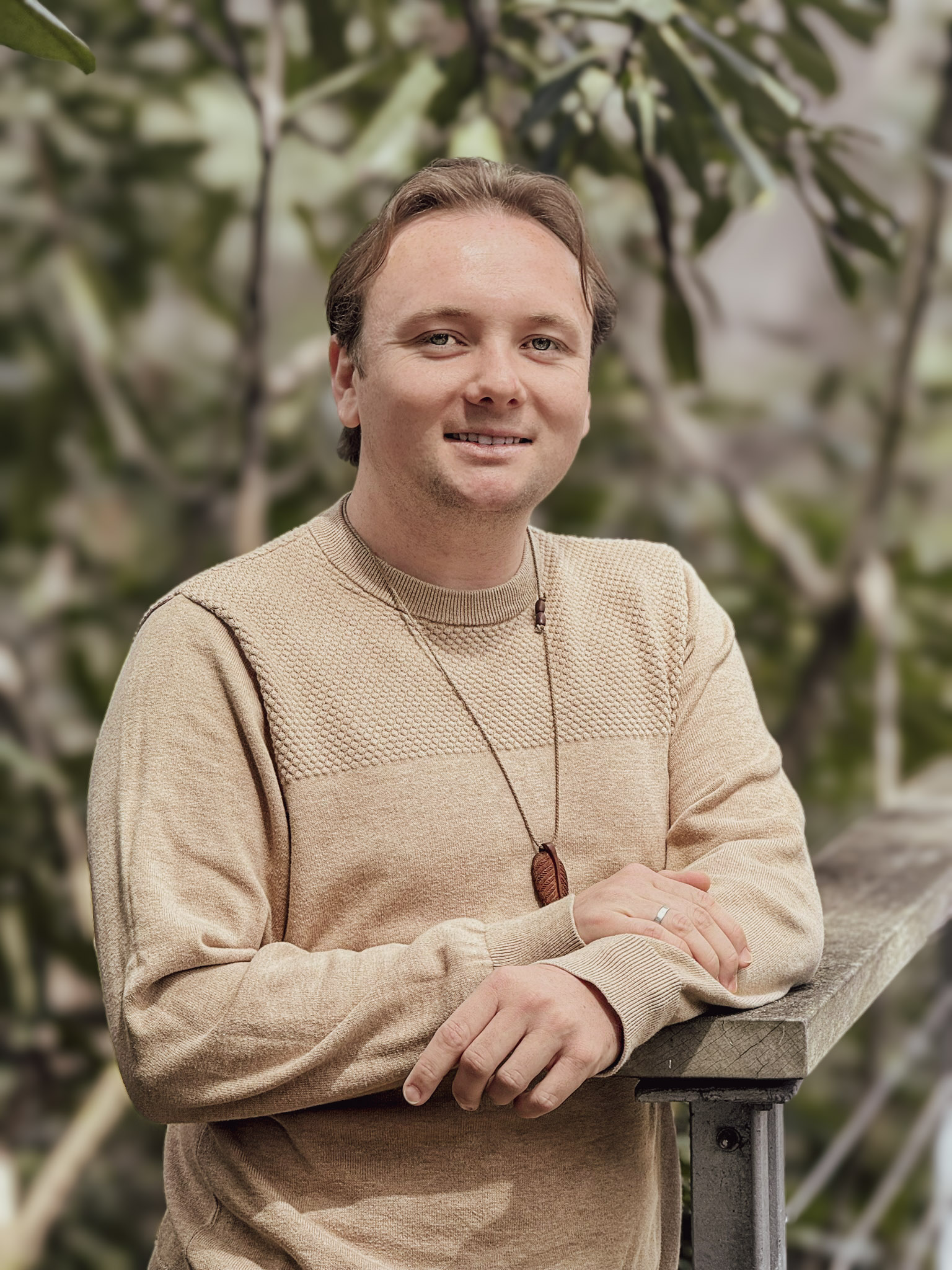
Jake Thompson
2026 Grant-in-Aid recipient · M.S. student, Western Carolina UniversityJake studies the propagation, growth, and reproduction of Kral's water plantain (Sagittaria secundifolia), a threatened aquatic plant known from only six populations worldwide. His work combines living stream tanks in the HBS Aquatics Lab with fieldwork in the Little River system, aimed at understanding — and ultimately conserving — a species that rarely reveals itself. Grant-in-Aid funding is made possible through endowed scholarships administered by the Highlands Biological Foundation.
Keep exploring
More from the field
This story is part of Notes from the Field — researcher spotlights, current research, and discoveries from Highlands Biological Station.