

- This event has passed.
Amphibian Diversity & Biogeography Workshop
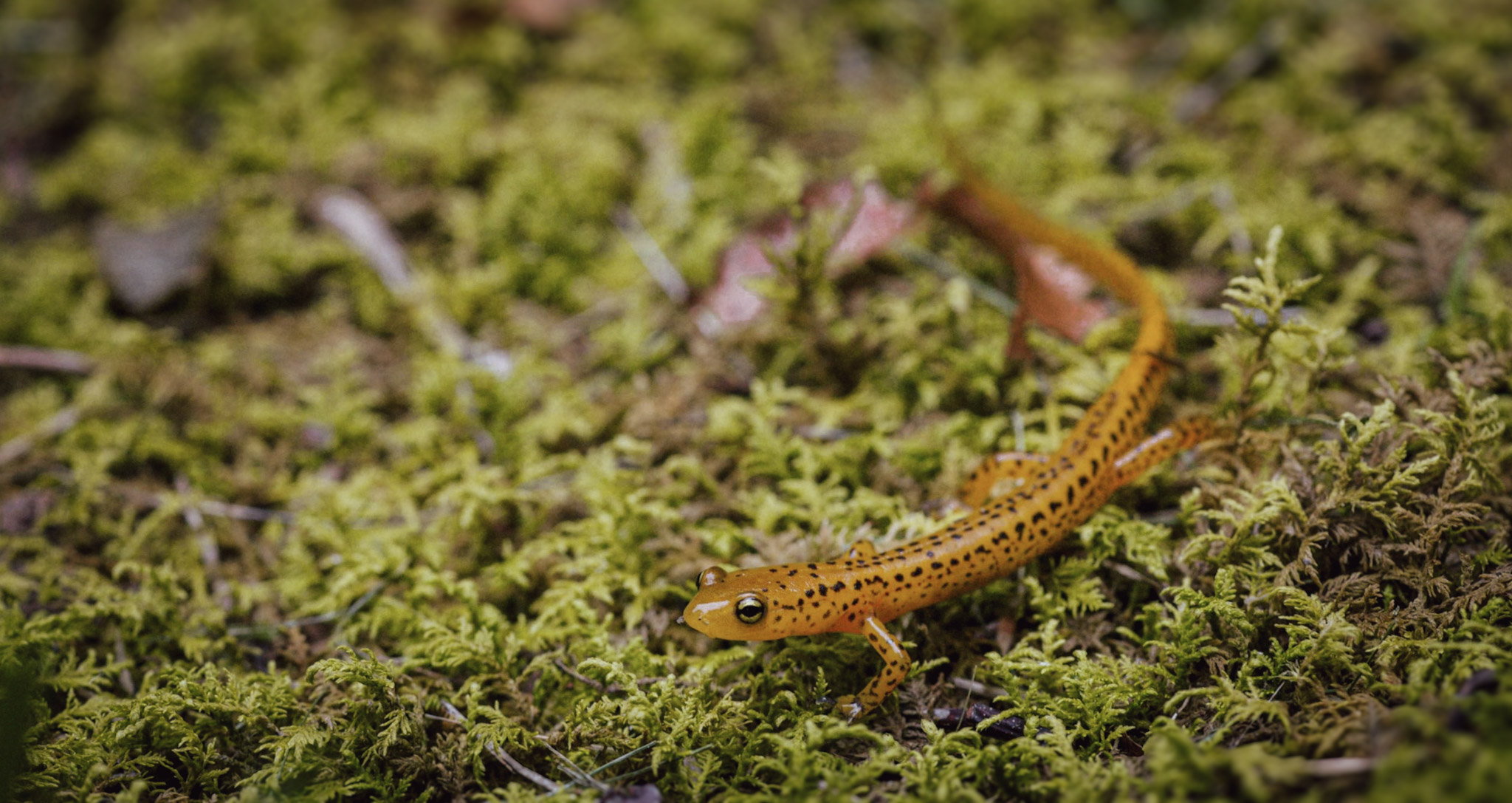
Amphibian Diversity & Biogeography Workshop
June 15–16, 2026 | 9:00 AM – 5:00 PM Daily
Instructor: Patrick Brannon
The Southern Appalachian Mountains are home to one of the greatest concentrations of salamander diversity in the world. This two-day workshop introduces participants to the remarkable amphibian species of the region while exploring the ecological and biogeographical patterns that shape their distribution.
Through a combination of lectures, field exploration, and hands-on activities, participants will learn to identify frogs and salamanders, investigate their habitats, and examine the environmental factors that contribute to the extraordinary diversity found in these mountains.
Day One: Highlands Biological Station
The first day will take place at Highlands Biological Station and will focus on foundational knowledge and field observation.
Participants will:
• Learn to identify frog species by both sight and sound
• Explore the biology and life history of salamanders
• Discuss why the Southern Appalachians support such exceptional salamander diversity
• Search for stream and terrestrial salamanders on the Station grounds
• Investigate microhabitat use and local stream communities
Activities will include a frog lecture and call-identification lab, field searches for frogs and salamanders, and a hands-on stream communities lab examining habitat relationships.
Lunch: Participants should bring their own lunch.
Day Two: Standing Indian Campground Field Trip
On the second day, participants will travel to Standing Indian Campground, located west of Franklin near the Appalachian Trail. Transportation will be provided via an HBS van.
During this field-based exploration, participants will examine the ecological gradients and microhabitats that influence amphibian distributions across the landscape.
Activities may include:
• Studying coarse woody debris and its role in salamander habitat and decomposition processes
• Examining microhabitats and distributional gradients of terrestrial salamanders
• Observing differences in species assemblages across the landscape
• Discussing mimicry and hybridization in regional salamander populations
• Hiking moderate trails to observe amphibians in their natural habitats
Participants will visit the Wasilik Poplar Trail to observe salamander diversity and potential hybrid populations while discussing the biogeographical forces that shape amphibian communities.
The day will conclude with a return to Highlands Biological Station by approximately 5:00 PM.
Physical Requirements
Participants should be in good physical condition for moderate hiking on uneven forest trails.
Please Bring
• Weather-appropriate outdoor clothing and sturdy footwear
• A sack lunch for both days
• A water bottle
• Field notebook and pencil (recommended)
Recent Comments