Taxonomy and Natural History of Southern Appalachian Mayflies, Stoneflies, and Caddisflies
4 Credit Hours
S1: June 21–July 2, S2: July 6–17, 2026
Instructors: Session 1: Dr. John Morse, Clemson University & Dr. Alexander Orfinger, Dalton State College. Session 2: Dr. John Morse, Clemson University & Dr. Kelly Murray-Stoker, Emory University
Cost: $1,000.00
This immersive, two-week course provides a comprehensive introduction to the natural history, evolution, and taxonomy of the three major aquatic insect orders used in freshwater bioassessment: mayflies (Ephemeroptera), stoneflies (Plecoptera), and caddisflies (Trichoptera). Through a combination of several field excursions to Appalachian mountain streams and focused laboratory identification sessions, students will develop the skills needed to recognize EPT larvae—typically to at least genus—and adults to family level.
Course topics include systematics, morphology, behavioral and physiological adaptations for freshwater life, and the ecological roles of EPT taxa in stream ecosystems. Fieldwork emphasizes diverse collecting techniques across multiple stream orders, while laboratory sessions provide structured practice with diagnostic characters and curated identification resources. Throughout the course, students engage with the principles that make EPT taxa foundational to ecological monitoring, water-quality assessment, and aquatic biodiversity research.
Ideal for students in ecology, entomology, environmental science, or freshwater biology, this course offers the rare opportunity to build taxonomic expertise through intensive hands-on training in one of the most biodiverse regions of the Southern Appalachians.
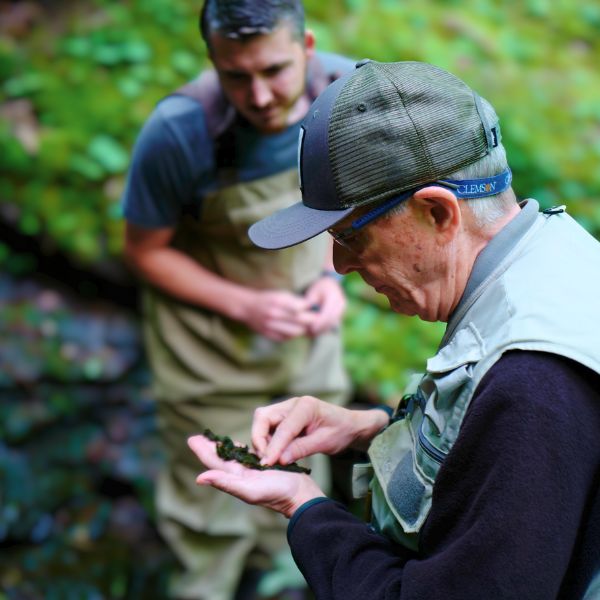
Dr. John Morse
Sessions 1 & 2
Dr. John Morse’s principal focus centers on aquatic insect taxonomic and functional diversity and their role in assessing ecological conditions in streams, with a particular emphasis on regional and global caddisfly (Trichoptera) systematics, taxonomy, and biogeography. He has served on the faculty of Clemson University since 1974 in a range of teaching, research, outreach, and collection-management roles associated with the Clemson University Arthropod Collection.
Dr. Morse has taught regularly at the Highlands Biological Station since 1989 and has provided courses and workshops at numerous venues across the United States and internationally, especially throughout Asia. His research program, conducted with his students, focuses on the use of macroinvertebrates to assess water quality in streams of the Southern Appalachian Mountains and surrounding regions.
jmorse@clemson.edu
Dr. Alexander Orfinger
Session 1
Dr. Alex Orfinger completed BS and MS degrees in biology at the University of Central Florida, earning his PhD in entomology at the University of Florida in 2023. He is currently an Assistant Professor of Biology at Dalton State College in Georgia, USA. Dr. Orfinger’s research largely centers on caddisfly (Trichoptera) systematics, though he has broad interests in natural history, taxonomy, ecology, evolutionary biology, and invasion biology of a wide range of taxa, but especially aquatic insects and fishes. In his free time, Dr. Orfinger enjoys hiking, fishing, watching and playing soccer and football, and spending time with his wife and two pups.
aorfinger@daltonstate.edu
Dr. Kelly Murray-Stoker
Session 2
Dr. Kelly Murray-Stoker is an assistant professor of Biology at Oxford College of Emory University. She received a B.S. in Ecology and a B.S.E.S. in Entomology from the University of Georgia. She also received an M.S. in Entomology from the University of Georgia, and she received a PhD in Ecology and Evolutionary Biology from the University of Toronto. Her research focuses on community ecology of freshwater habitats and biodiversity patterns of aquatic insects, especially caddisflies (Trichoptera).
kmmurr5@emory.edu