
Notes from the FieldHighlands Botanical Garden & Nature Center
Native Plant Profiles
Discover the woody flora, wildflowers, and vines of the Highlands Plateau — a global biodiversity hotspot in the southern Blue Ridge.
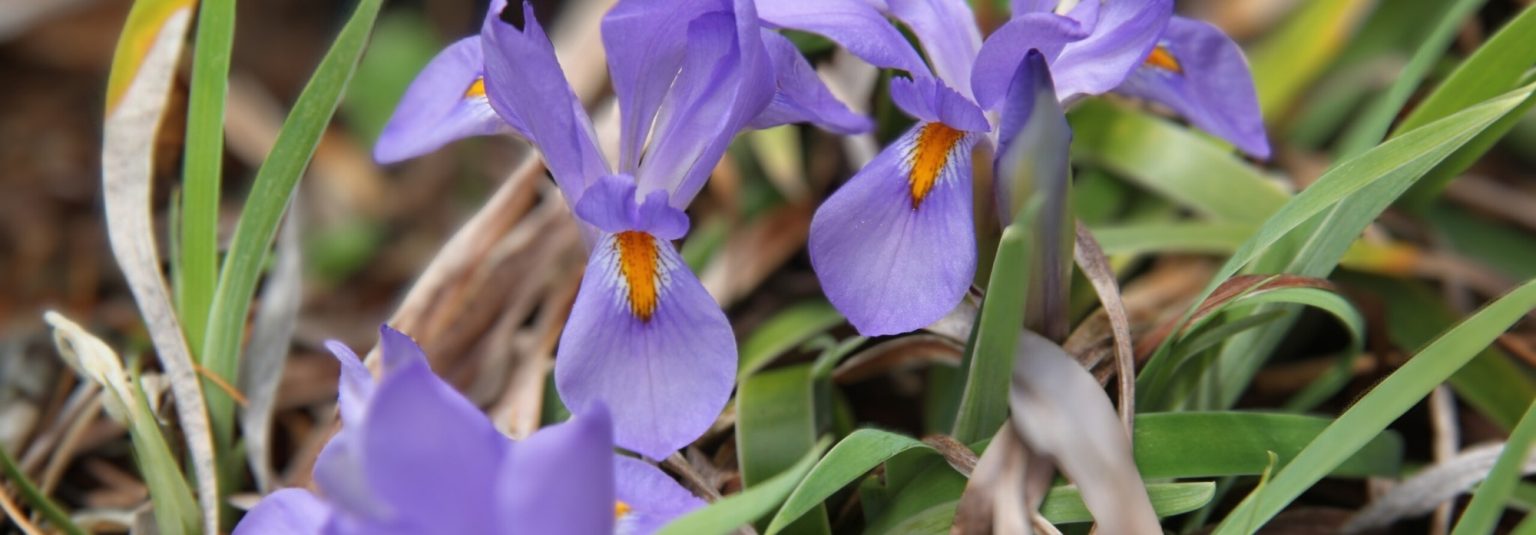
Dwarf crested iris
The flowering year
When they bloom
Each arc is one plant’s flowering period, read from the bloom chart on its profile. Drag the hand around the year, or press play. Select an arc to jump to that plant.
Bloom times on the plateau shift from year to year with the weather; the charts give the usual window.
Plant finder
Find a plant
 Appalachian TurtleheadChelone lyonii
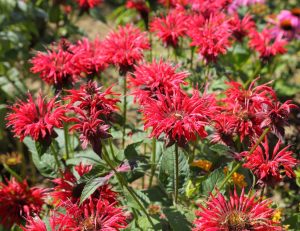 Bee BalmMonarda didyma
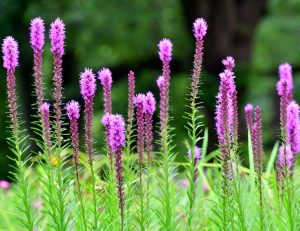 Blazing StarLiatris spicata
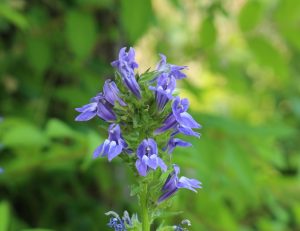 Blue LobeliaLobelia siphilitica
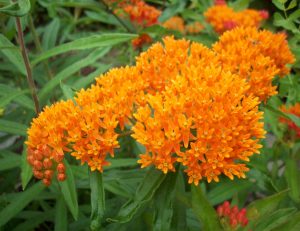 Butterfly MilkweedAsclepias tuberosa
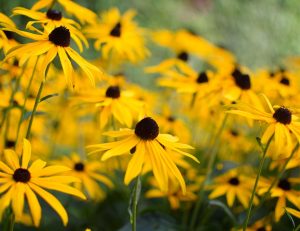 Cutleaf ConeflowerRudbeckia laciniata
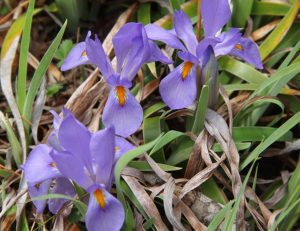 Dwarf Crested IrisIris cristata
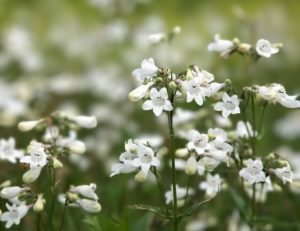 Foxglove BeardtonguePenstemon digitalis
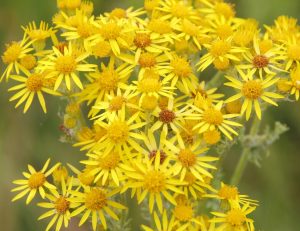 Golden RagwortPackera aurea
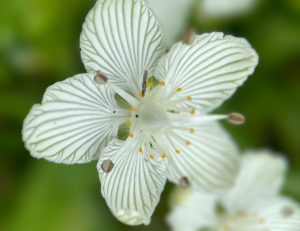 Grass-of-ParnassusParnassia asarifolia
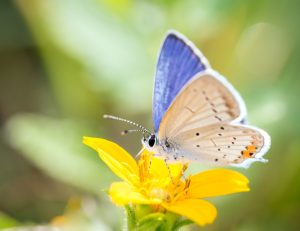 Green and GoldChrysogonum virginianum
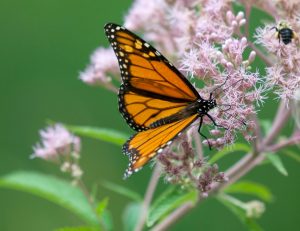 Hollowstem Joe-Pye WeedEutrochium fistulosum
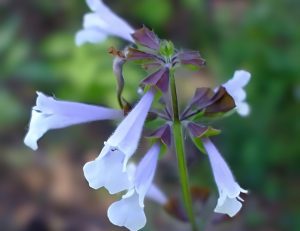 Lyre-leaf Sage ‘Purple Knockout’Salvia lyrata ‘Purple Knockout’
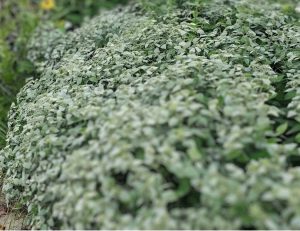 Mountain MintPycnanthemum muticum
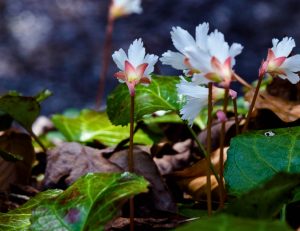 Oconee BellShortia galacifolia
 PickerelweedPontederia cordata
 Pitcher PlantSarracenia purpurea var. montana
 Rattlesnake MasterEryngium yuccifolium var. yuccifolium
 Robin’s PlantainErigeron pulchellus var. pulchellus
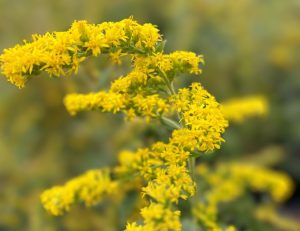 Rough GoldenrodSolidago rugosa ‘Fireworks’
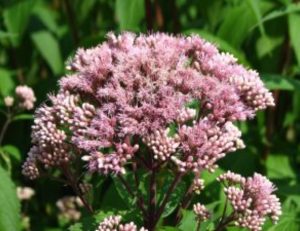 Spotted Joe-Pye WeedEutrochium maculatum var. maculatum
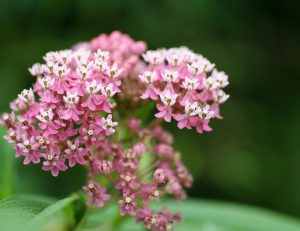 Swamp MilkweedAsclepias incarnata
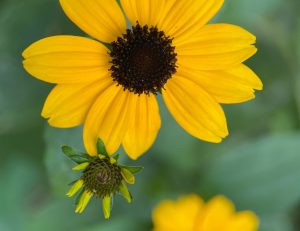 Three-Leaved ConeflowerRudbeckia triloba
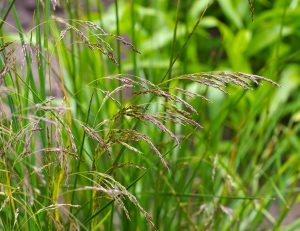 Tufted HairgrassDeschampsia cespitosa ssp. glauca
Highlands Botanical Garden & Nature Center
Native Plant Profiles
No profiles match.
Plantaginaceae · Plantain Family
Appalachian Turtlehead
Chelone lyonii
Rosy-pink, turtle-shaped blooms and glossy foliage thriving in moist, partly shaded habitats of the southern Appalachians.
Primarily a turtlehead of higher elevations in the southern mountains, this pink-flowered species has been a hit in the horticultural community since its introduction by the Scottish-American horticulturist John Lyon in the early 19th century. Lyon followed in the footsteps of Bartram and Michaux, hunting plants extensively in the southern Appalachians from 1807 to 1809, including our area. Silas McDowell (1795-1879), the farmer and horticultural writer commemorated by a historical marker on the Cullasaja Road, assisted Lyon in collecting plants on Grandfather Mountain. The turtlehead that bears Lyon’s name was collected by him somewhere in our region, but he does not record the locality, simply noting in his 1812 catalog: “Chelone, sp. nova (beautiful).” Lyon’s entry indicates he knew his find was a Turtlehead, but a “species nova” or “new species” as yet unnamed. His friend Frederick Traugott Pursh (1774-1820) later named this species in Lyon’s honor.
The genus name Chelone is derived from the Greek word for turtle, but is this because the flowers resemble the domed carapace of turtles, or the head of a turtle gape-mouthed? I suppose they resemble both at different times, depending on whether the flower is fully open. See p. 30 of A Naturalists Guide for Cuthbert’s Turtlehead, found in the wetland zone.
Range map: Weakley, A.S. 2020. Flora of the southeastern United States. University of North Carolina Herbarium, North Carolina Botanical Garden.
Lamiaceae · Mint Family
Bee Balm
Monarda didyma
Showy native perennial with vibrant red tubular flowers that attract hummingbirds and pollinators in moist, sunny habitats.
Crimson bee balm, indicated by its red color, is an unfortunate misnomer of a common name as this species is rarely visited by bees at all. Most insects are incapable of seeing the color red and as such Monarda didyma is primarily visited by hummingbirds. Other bee balms are sometimes visited by bees, but the flowers tend to be too long for their short tongues, and butterflies are the more important insect pollinators. The genus Monarda commemorates Nicolás Bautista Monardes (1493-1588), a Spanish physician and botanist. Monardes was one of the earliest herbalists to celebrate the new botanical discoveries of the Americas in such works as Joyfvll Nevves out of the Newe Founde Worlde (1577).
Crimson bee balm is a tall plant of moist woodlands, thriving in light gaps along woodland creeks and seepage slopes. It belongs to a group of 20 North American species, 4 of which are found in our region. It is the only Monarda with bright red flowers, however, and so is unmistakable (though it hybridizes with M. fistulosa, producing purple to magenta flowers). Sniff the flowers and you will be hard pressed to detect any odor. Fragrant flowers are for attracting insects, but this species attracts hummingbirds, which like most birds have no sense of smell. The foliage has a scent, however: the other common name "Oswego tea" stems from its popular use for tea. Like the related wild bergamots, M. didyma leaves have a pungent minty flavor.
Asteraceae · Composite Family
Blazing Star
Liatris spicata
Tall spikes of feathery purple flowers that bloom top to bottom, attracting pollinators in sunny meadows and prairies.
Liatris spicata is a tall growing (3-5’), striking native perennial. Commonly called “dense blazing star” or “marsh blazing star”, it is a terrific addition to any home landscape. The range of L. spicata is vast, encompassing the Eastern US and into Arkansas and Missouri. The flowers attract a significant variety of butterflies including: Monarchs, tiger swallowtail, spicebush swallowtail, and grey hairstreak.
Range map: Weakley, A.S. 2020. Flora of the southeastern United States. University of North Carolina Herbarium, North Carolina Botanical Garden.
Campanulaceae · Bluebell Family
Blue Lobelia
Lobelia siphilitica
Bold native wildflower with vibrant blue tubular blooms brightening moist meadows and streambanks from late summer into fall.
Great Blue Lobelia is indeed great and blue — a robust perennial reaching as tall as 4 feet, with a conspicuous raceme or “spike” of blue flowers. Note that the flowers are lipped, and the underside of the corolla tube is white-striped. Great blue lobelia is a gynodioecious plant, in which female-only and hermaphrodite individuals coexist in natural populations. The frequency of female plants ranges from 0 to nearly 70% among populations. In hermaphrodites, note that the anthers are fused into a small green melon-shaped sac suspended between the upper two flower lobes. Inspect this with a hand lens: the pollen within the sac is extruded at the tip where a white frill of minute hairs can be seen. Like the closely related Cardinal Flower (p. 18), Great blue lobelia thrives in rich moist soils in mixed sun and shade. They make for a striking display planted together in the garden.
The specific epithet siphilitica was given by Linnaeus in 1753, from specimens collected in Virginia. As the name suggests, syphilis was among the maladies that Native Americans treated with this plant. This particular medicinal use must have figured prominently in the lore of the time for Linnaeus to have so named it. Brought by Europeans to the New World, this fatal disease was indeed spreading like wildfire by the 18th century.
Apocynaceae · Dogbane Family
Butterfly Milkweed
Asclepias tuberosa
Vibrant native milkweed with bright orange blooms that attract butterflies, thriving in dry sunny meadows and prairies.
Butterflyweed is the only orange-flowered milkweed in the mountain region. It is a species of open, sunny spots. This species lacks the milky sap of most milkweeds, but it still contains the cardiac glycosides that make milkweeds poisonous. There is a long folk tradition of using milkweed in small doses in a variety of medicinal applications, inspiring Linnaeus to name the genus for Asclepius, the Greek god of healing. These chemicals are feeding deterrents to most herbivores, but a number of insects have independently evolved means of detoxifying them and so are able to specialize on milkweeds, even turning the plant’s defense into their own by sequestering the glycosides. Insects and other animals that are capable of this trick often advertise their unpalatability with bright, contrasting colors — aposematic coloration. Interestingly, several of these milkweed specialists have converged on the same warning color palette of orange, black, and white. The most famous of these is the Monarch Butterfly (Danaus plexippus), but in our area you can also easily find Milkweed Tiger Moth caterpillars (Euchaetes egle), Milkweed Bugs (Oncopeltus fasciatus), and Milkweed Beetles (Tetraopes tetraophthalmus).
Another interesting feature of milkweed biology is its mode of pollination. Like orchids, they deliver their pollen in tiny packets called pollinia, gluing these to the legs or proboscis of insects. Look closely at the intricate flower structure: the corolla consists of 5 reflexed petals, at the base of each of which is an odd stamen modified into a tube-like structure, termed a hood, each with an inward-projecting horn. Collectively the hoods make a crown-like structure called the corona. If you look carefully you can see a tiny dark oval-shaped glandular structure between the hoods. This gland forms the top of a slit-like opening between the anthers, within which the paired pollinia are hidden. Unsuspecting insects probing at the nectar-producing gland insert a leg or proboscis into the slit, where the pollinia become attached.
Range map: Weakley, A.S. 2020. Flora of the southeastern United States. University of North Carolina Herbarium, North Carolina Botanical Garden.
Asteraceae · Sunflower Family
Cutleaf Coneflower
Rudbeckia laciniata
Tall native wildflower with deeply lobed leaves and bright yellow daisy-like blooms lighting up moist meadows in late summer.
Cutleaf Coneflower is a common summertime sight on the Highlands Plateau, its brilliant yellow daisy-like flowers bringing splashes of color to roadsides and wood margins. The genus name Rudbeckia, which includes Black-eyed Susans, was chosen by Linnaeus to honor his mentors Olof Rudbeck the younger (1660-1740) and Olof Rudbeck the elder (1630-1702), both botanists at Uppsala University. The species name laciniata, Latin for “jagged” or “cut,” is a reference to the deeply cut and sharp-lobed leaves.
While the flowers of this species understandably get all the attention, it’s well worth inspecting the leaves too. If you’re lucky you might find one or more spiny black caterpillars of the Silvery Checkerspot butterfly, Chlosyne nycteis (Family Nymphalidae, the Brush-Footed Butterflies), contentedly chewing away. If you’re even luckier, you might find a little treehopper family hidden on the underside of a leaf. In our area two species in particular, Enchenopa binotata (the Two-Marked Treehopper, with two yellow spots on its back) and Entylia bactriana (the Notched Treehopper), lay their eggs in a cluster in the midrib of Cutleaf Coneflower leaves. This causes the leaf to droop at the point where the eggs are inserted, forming a snug canopy over the little treehopper family. You can often find both treehopper parents with their young in early summer, and you might even spot ants in the mix. These are friends, not foes: like aphids, treehoppers secrete sweet droplets of honeydew as they feed on plant sap. Ants, knowing a good thing when they find it, aggressively protect the treehoppers from predators so that they can tend them, like little insectan cows, for the sugary honeydew.
Iridaceae · Iris Family
Dwarf Crested Iris
Iris cristata
Low-growing native with delicate violet-blue blooms and golden crests, often carpeting the forest floor in early spring.
Hundreds of Iris species are found throughout the north-temperate zone, presenting such an astonishing range of hues that Linnaeus was inspired to name them after the Greek goddess of rainbows. Peter Collinson is credited with introducing this particular Iris to England in 1756, although undoubtedly through the offices of John Bartram. Tellingly, the celebrated botanical artist Georg Dionysius Ehret (1708-1770) labeled his painting of Dwarf crested iris the “Pittsburg Iris from P. Collinson,” dated May 24, 1767 — a Pennsylvania connection that suggests Bartram collected it.
Iris flowers have a remarkably intricate structure with parts in threes: three showy sepals and petals, three modified pistils with petal-like arms, each of which arch over the sepals and hide the three stamens. The flower is iconic, especially as the stylized fleur-de-lis (though this translates as “flower of the lily”). The flowers are lilac or lavender with gold “crests” on the sepals — hence cristata, crested. These develop into capsules of small seeds with a corkscrew-like filament, an elaiosome that is prized by ants.
Range map: Weakley, A.S. 2020. Flora of the southeastern United States. University of North Carolina Herbarium, North Carolina Botanical Garden.
Plantaginaceae
Foxglove Beardtongue
Penstemon digitalis
Graceful native perennial with tall spikes of tubular white flowers attracting pollinators in sunny meadows and open woodlands.
Penstemon digitalis, commonly called “foxglove” or “beard tongue” is a white flowering native perennial. The flowers themselves are tubular shaped, which attract pollinators with long proboscis including, bumble bees (Bombus sp.), miner bees (Andrena sp.), and leaf-cutting bees (Megachilidae sp.). While hummingbirds typically prefer vibrant colored tubular flowers, you might also spot one or two small winged visitors. Bloom color can also be tinged purple or pink in some cases.
Asteraceae · Sunflower Family
Golden Ragwort
Packera aurea
Cheerful native groundcover with clusters of bright yellow spring flowers thriving in moist woodlands and along streambanks.
Golden ragwort is one of about 64 species in the genus Packera, named in honor of Canadian botanist John G. Packer. For many years all ragworts were placed in the large genus Senecio, though even in the 19th century Asa Gray recognized that the North American species were rather different from Senecio elsewhere in the world, dubbing them the “aureoid” or golden senecios. Modern genetic analysis bears Gray out.
Packera aurea is aureoid indeed with its brilliant yellow cluster of daisy-like flowers. It thrives in moist, shady conditions, and can spread rapidly. Note its distinctive leaves: the basal ones are large and oval, but those of the flowering stem are alternate and lacy-cut. You won’t see many insects nibbling on them, however: like many Packera and Senecio, this species is packed full of toxic pyrrolizidine alkaloids. While this plant has a long history of medicinal use, it is best avoided as these potent alkaloids can cause serious liver damage.
Grass-of-Parnassus
Parnassia asarifolia
Delicate native wildflower with striking white veined petals, found in wet boggy areas of the southern Appalachians.
Asteraceae · Composite Family
Green and Gold
Chrysogonum virginianum
Chrysogonum virginianum otherwise known as “Green and Gold” or “Goldenstar” is a native low growing perennial. As a member of the Asteraceae family, the flowers are daisy-like and emerge bright yellow in early summer and persist until early fall.
Asteraceae · Sunflower Family
Hollowstem Joe-Pye Weed
Eutrochium fistulosum
Towering native perennial with clusters of fragrant pink-purple flowers attracting pollinators in moist meadows and woodland edges.
A signal to all that the dog days of summer are upon us is when the first flowering Joe-Pye weed is spotted. It’s hard to miss, as this plant can reach 7 feet in height and are topped by a broad, dome-shaped panicle of pinkish flowers. The flowers are good nectar and pollen producers, and are usually swarming with all sorts of insects — butterflies, beetles, wasps, flies. This hardy perennial is a lover of moist soils in open, sunny spots.
Look closely at the leaf whorls and you will notice that each one is offset slightly relative to the ones above and below — a growth strategy that minimizes leaf shading and maximizes photosynthesis. Unlike the solid stems of most Joe-Pye Weeds, this species is readily identified by its hollow stem. Joe-Pye Weeds putatively take their name from a 19th century traveling medicine man, who promoted use of the roots of the plant to induce sweating in typhus fever. Historically, the leaves have been used by Indigenous Americans to brew a diuretic tea.
Range map: Weakley, A.S. 2020. Flora of the southeastern United States. University of North Carolina Herbarium, North Carolina Botanical Garden.
Lamiaceae · Mint Family
Lyre-leaf Sage ‘Purple Knockout’
Salvia lyrata ‘Purple Knockout’
This cultivated variety of the standard species, Salvia lyrata, offers a unique departure for the landscape. As the cultivar name would suggest Salvia lyrata ‘Purple Knockout’ has stark deep purple foliage at its basal rosette. However, like the straight species, this cultivar produces soft purple flowers in spring that persist until mid-summer. The tubular flowers of Salvia often are attractive to insects with long proboscis, in particular bees.
The range of the straight species extends from Florida to Maine and stretches into parts of Texas and Nebraska. In its native habitat, it can be found in open woodland areas and is tolerant of wet soils.
Lamiaceae · Mint Family
Mountain Mint
Pycnanthemum muticum
Fragrant native perennial with soft silvery bracts and pale pink flowers, beloved by pollinators in sunny meadows.
Pycnanthemum muticum is a member of the Lamiaceae family and is commonly referred to as “Mountain Mint”. As the common name infers, this plant has a strong spearmint fragrance that offers an added level of sensory experience. Being in the Mint Family, the stems of this herbaceous perennial are square and are a good indicator of many other plants in the Lamiaceae family. Clustered inflorescences are another distinct ID feature that delineate this species from other Mint relatives.
In its native range this plant finds itself in sandy soils, bogs, moist meadows and fields, and wet forest types. Being dubbed “Mountain Mint” doesn’t limit its distribution, as this plant is found from Mississippi to Missouri and through to Massachusetts.
Flowers are often white or a pale purple color and emerge in summer, persisting through until early fall. Insects species of all kinds will flock to this plant due to the flowers high nectar content, in particular butterflies and bumble bees (Bombus sp.)
Apart from flowers, the bracts of “Mountain Mint”, which sub-tend the flower heads, emerge earlier in the growing season. These bracts are silvery and have a slight pubescence which only further add to the sensory offerings.
Oconee Bell
Shortia galacifolia
Rare and delicate native wildflower with nodding white bell-shaped blooms and glossy evergreen foliage in shaded Appalachian forests.
Pontederiaceae
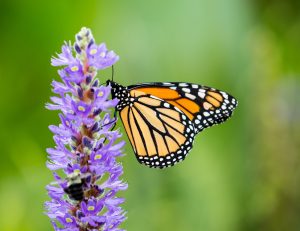
Pickerelweed
Pontederia cordata
Pontederia cordata, or “Pickerelweed” is a wetland perennial from the Pontederiaceae family. Distribution for this species stretches all the way into parts of South America and into parts of Nova Scotia. In its native habitat, find it on shores, in marshes, and swamps typically in clusters.
As a wetland species, this plant is best grown on the shores of ponds, lakes, etc… Inflorescences emerge as spikes and persist consistently from mid-summer to fall. Flowers are a vibrant purple, with some plants known to have white flowers. Leaves are wide (up to 5”) and glossy with a pronounced midvein but is also present a wide degree of variability.
This species spreads rhizomatously and is known to thrive rapidly in the proper growing conditions. Pontederia cordata has also been used in certain constructed wetlands as a means to manage runoff from industrial sites.
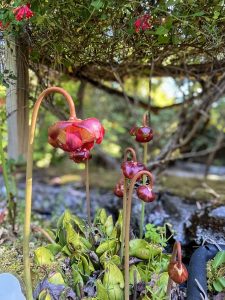
Pitcher Plant
Sarracenia purpurea var. montana
Fascinating native carnivorous plant with deep red pitcher-shaped leaves that trap insects, thriving in nutrient-poor boggy habitats.
Apiaceae · Carrot Family
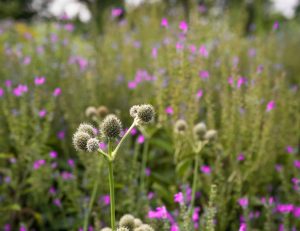
Rattlesnake Master
Eryngium yuccifolium var. yuccifolium
A plant with striking architecture and an equally interesting common name, in this case, Rattlesnake master falls into both. This herbaceous perennial enjoys full sun and is one of the more ubiquitous Eryngium species. The leaves are thin with rough margins which resemble that of another plant, Yucca sp. which resulted in the botanical epithet yuccifolium. The range for this particular species stretches throughout the Eastern US and into the Midwest.
The Meskwaki Nation of Indigenous Americans were one of the first groups to introduce alternative uses for Eryngium yuccifolium. It is said that its roots and sap were used to prevent rattlesnake bites and the flowers were used in ceremonies.
The set of pollinators for this species are abundant. Contrary to most plants in the carrot family (Apiaceae), Rattlesnake master has spherical flower heads which are attractive to a variety of bees, beetles, and other insects.
Asteraceae · Composite Family
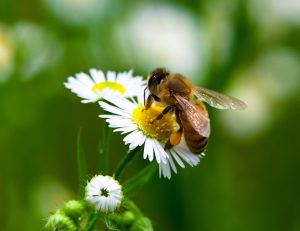
Robin’s Plantain
Erigeron pulchellus var. pulchellus
Erigeron pulchellus, commonly known as “Robin’s plantain” or “Rose Petty”, is a Daisy Family member and a widespread plant. The genus Erigeron is also referred to as the “Fleabane” genus.
Being a member of the Asteraceae family, the flowers of E. pulchellus are daisy-like with central pronounced yellow ray flowers and smaller disk flowers on the periphery. The petals are thin and soft pink in color, deepening slightly as the growing season progresses. The flowers themselves emerge in branching clumps, from a basal rosette, in mid-spring lasting for several weeks.
Native sites commonly associated with “Robin’s plantain” include moist slopes, fields, woods, and stream banks. The pillowy flowers often can be seen from your car, dotting the roadsides.
Historically this plant was used by the Cherokee Nation as a means to treat colds, gout and other kidney related ailments.
This plant spreads readily in the landscape via stolons and offers an early season forage for bees and other pollinators.
Asteraceae
Rough Goldenrod
Solidago rugosa ‘Fireworks’
Sturdy native perennial with coarse leaves and vibrant yellow flower clusters lighting up late-summer meadows with pollinator activity.
Solidago rugosa, commonly known as “Rough goldenrod” is a bright yellow flowering herbaceous perennial that dots gardens, fields, landscapes, and roadsides throughout the Eastern US. ‘Fireworks’ is a popular cultivar, introduced in the early 2000’s by plantsmen Ken Moore, and is an alternative the straight species. Its distinctive feature being the blooms, rather than the typical compact blooms of S. rugosa ‘Fireworks’ has elongated plumes which, when in flower, mirror that of shooting fireworks, showering the landscape with yellow.
Cultivar or not, this species can be aggressive at times in the landscape and should be monitored as seeding is common. This plant however is attractive to pollinators due to its bright yellow blooms, bees in particular.
Asteraceae · Composite Family
Spotted Joe-Pye Weed
Eutrochium maculatum var. maculatum
Commonly known as “Joe-Pye-Weed”, Eutrochium maculatum var. maculatum is a staple herbaceous perennial. The flowers, pinkish color, emerge in late summer and persist until mid-fall signaling that the dog-days of summer have arrived.
The distribution is wide across the Eastern and Midwestern United States and locally can be found in disturbed wetlands, moist grasslands and meadows. Reaching a height of 7’ in some cases this plant towers high above others in landscape. Its whorled leaves are a distinctive vegetative feature in addition to the purple spotted stems.
It attracts a wide variety of pollinators like bees, butterflies, moths, and beetles. A most notable frequent visitor is the Tiger Swallowtail (Papilio glaucus).
Apocynaceae · Dogbane Family
Swamp Milkweed
Asclepias incarnata
Graceful native perennial with fragrant pink flowers attracting butterflies, thriving in moist soils along streams and wetlands.
Asclepias incarnata is a relative of the more recognized "Butterfly Milkweed." Distinguished by its bright clumps of pink blooms that emerge in summer, "Swamp Milkweed" is an equally attractive perennial for both humans and insects. As the common name would suggest, swamp milkweed are primarily found in swampy, moist bottomland areas throughout the Eastern and Midwestern United States. Given its native range, it’s tolerable of wet soils and areas with poor drainage. One notable feature of the flowers aside from their soft pink color is their subtle fragrance.
While not as commonly thought of, A. incarnata is still an excellent nectar source for Monarch butterfly larvae. Another insect commonly seen benefitting from this plant are the Tussock moth caterpillars.
Asteraceae
Three-Leaved Coneflower
Rudbeckia triloba
Bushy native biennial with masses of small bright yellow flowers and dark centers, thriving in sunny meadows and garden edges.
Rudbeckia triloba is an herbaceous flowering biennial in the Daisy family. Its common name, “Three leaved coneflower” is apt due to the rounded leaf projections often seen in 3’s. Being a biennial, R. triloba has a shorter life cycle than other Rudbeckia species, it also flowers in its second year of growth.
The flowers are more diminutive than other species in the genus as well, but are sweet and still attract a multitude of pollinators. Another positive attribute is the plants ability to withstand drought and poor-quality soils.
Poaceae · Grass Family
Tufted Hairgrass
Deschampsia cespitosa ssp. glauca
Graceful native bunchgrass with fine arching blades and airy golden flower panicles, thriving in moist meadows and open woodlands.
This perennial, cool-season grass is commonly called “Tufted Hairgrass”. Its distribution is widespread throughout the United States, however, in North Carolina, D. cespitosa is at the southernmost end of its range and as such, is a rarer species in-situ.
Habitats are predominately rock outcrops (mafic, dolomitic, calciferous), fens, meadows, and stream banks. Being that this plant is from the grass family (Poaceae), the inflorescences are less pronounced than one might typically envision, but still significant. Wispy panicles, with small florets emerge in mid-summer, reaching heights between 30 and 50 cm.
As with all native perennial species, “Tufted Hairgrass” can be beneficial to our fauna and insect species even during dormant months. Once D. cespitosa has produced an inflorescence, the grass can be left to overwinter, providing shelter and habitat during the cold months. When the signs of spring begin to present themselves, in late-March to April, it can be cut back and primed for a new flush of growth.
Field checklist
Trees & Shrubs of the Highlands Plateau
- Allegheny Chinkapin (Castanea pumila)
- Alternate-leaf Dogwood (Cornus alternifolia)
- American Basswood (Tilia americana)
- American Beech (Fagus grandifolia)
- American Chestnut (Castanea dentata)
- American Elm (Ulmus americana)
- American Holly (Ilex opaca)
- American Hornbeam (Carpinus caroliniana)
- American Plum (Prunus americana)
- Arrowwood (Viburnum dentatum)
- Bayleaf Willow (Salix pentandra)
- Bitternut Hickory (Carya cordiformis)
- Black Cherry (Prunus serotina)
- Black Locust (Robinia pseudoacacia)
- Black Oak (Quercus velutina)
- Black Walnut (Juglans nigra)
- Black Willow (Salix nigra)
- Blackgum (Nyssa sylvatica)
- Butternut (Juglans cinerea)
- Catawba Rhododendron (Rhododendron catawbiense)
- Carolina Hemlock (Tsuga caroliniana)
- Carolina Silverbell (Halesia carolina)
- Chestnut Oak (Quercus montana)
- Chickasaw Plum (Prunus angustifolia)
- Chokecherry (Prunus virginiana)
- Clammy Locust (Robinia viscosa)
- Cucumber-tree (Magnolia acuminata)
- Devil's Walkingstick (Aralia spinosa)
- Eastern Hemlock (Tsuga canadensis)
- Eastern Redcedar (Juniperus virginiana)
- Flowering Dogwood (Cornus florida)
- Fraser Magnolia (Magnolia fraseri)
- Hawthorn (Crataegus punctata)
- Hophornbeam (Ostrya virginiana)
- Horse-sugar (Symplocos tinctoria)
- Honey-locust (Gleditsia triacanthos)
- Mockernut Hickory (Carya tomentosa)
- Mountain Ash (Sorbus americana)
- Mountain Camellia (Stewartia ovata)
- Mountain Laurel (Kalmia latifolia)
- Mountain Maple (Acer spicatum)
- Mountain Winterberry (Ilex montana)
- Northern Red Oak (Quercus rubra)
- Persimmon (Diospyros virginiana)
- Pignut Hickory (Carya glabra)
- Pin Cherry (Prunus pensylvanica)
- Pitch Pine (Pinus rigida)
- Post Oak (Quercus stellata)
- Red Maple (Acer rubrum)
- Redbud (Cercis canadensis)
- River Birch (Betula nigra)
- Rosebay Rhododendron (Rhododendron maximum)
- Sassafras (Sassafras albidum)
- Scarlet Oak (Quercus coccinea)
- Shagbark Hickory (Carya tomentosa)
- Shortleaf Pine (Pinus echinata)
- Silver Maple (Acer saccharinum)
- Slippery Elm (Ulmus rubra)
- Smooth Sumac (Rhus glabra)
- Sourwood (Oxydendrum arboreum)
- Southern Red Oak (Quercus falcata)
- Staghorn Sumac (Rhus typhina)
- Striped Maple (Acer pensylvanicum)
- Sugar Maple (Acer saccharum)
- Sweet Birch (Betula lenta)
- Sweet Pepperbush (Clethra acuminata)
- Sycamore (Platanus occidentalis)
- Table Mountain Pine (Pinus pungens)
- Tulip-poplar (Liriodendron tulipifera)
- Umbrella Magnolia (Magnolia tripetala)
- Virginia Pine (Pinus virginiana)
- White Ash (Fraxinus americana)
- White Oak (Quercus alba)
- White Pine (Pinus strobus)
- Wild Crabapple (Malus angustifolia)
- Witch-hazel (Hamamelis virginiana)
- Winged Sumac (Rhus copallina)
- Yellow Birch (Betula alleghaniensis)
- Yellow Buckeye (Aesculus flava)
- Maple-leaved Viburnum (Viburnum acerifolium)
- American Elder (Sambucus canadensis)
- Arrowwood (Viburnum dentatum)
- Beaked Hazelnut (Corylus cornuta)
- Black Alder (Ilex verticillata)
- Black Chokeberry (Aronia melanocarpa)
- Blackhaw (Viburnum prunifolium)
- Blue Ridge St. John's Wort (Hypericum buckleyi)
- Bristly Locust (Robinia hispida)
- Buckberry (Gaylussacia ursina)
- Buckleya (Buckleya distichophylla)
- Buffalo Nut (Pyrularia pubera)
- Bush-Honeysuckle (Diervilla sessilifolia)
- Bush Hypericum (Hypericum densiflorum)
- Buttonbush (Cephalanthus occidentalis)
- Calycanthus (Sweetshrub) (Calycanthus floridus)
- Carolina Buckthorn (Rhamnus caroliniana)
- Carolina Rhododendron (Rhododendron minus)
- Deerberry (Vaccinium stamineum)
- Dog-hobble (Leucothoe fontanesiana)
- Flame Azalea (Rhododendron calendulaceum)
- Fringe Tree (Chionanthus virginicus)
- Granite Dome Locust (Robinia hartwigii)
- Ground Juniper (Juniperus communis)
- Male-berry (Lyonia ligustrina)
- Maple-leaved Viburnum (Viburnum acerifolium)
- Meadow-sweet (Spiraea alba)
- Minnie-bush (Menziesia pilosa)
- Mountain Honeysuckle (Lonicera dioica)
- New Jersey Tea (Ceanothus americanus)
- Ninebark (Physocarpus opulifolius)
- Pinxter-Flower (Rhododendron periclymenoides)
- Prickly Gooseberry (Ribes cynosbati)
- Red Chokeberry (Aronia arbutifolia)
- Redtwig Leucothoe (Leucothoe recurva)
- Sand-myrtle (Leiophyllum buxifolium)
- Scentless Mock-orange (Philadelphus inodorus)
- Sheep Laurel (Kalmia angustifolia)
- Silverleaf Hydrangea (Hydrangea radiata)
- Smooth Azalea (Rhododendron arborescens)
- Strawberry-bush (Euonymus americanus)
- Swamp Azalea (Rhododendron viscosum)
- Swamp Rose (Rosa palustris)
- Sweet-fern (Comptonia peregrina)
- Upland Highbush Blueberry (Vaccinium simulatum)
- Upland Low Blueberry (Vaccinium pallidum)
- Wild Hydrangea (Hydrangea arborescens)
- Wild Rose (Rosa carolina)
- Yellowroot (Xanthorhiza simplicissima)
- Bristly Greenbrier (Smilax hispida)
- Common Catbrier (Smilax rotundifolia)
- Dutchman's Pipe (Aristolochia macrophylla)
- Fox Grape (Vitis labrusca)
- Leather-flower (Clematis viorna)
- Poison-ivy (Toxicodendron radicans)
- Sawbrier (Smilax glauca)
- Summer Grape (Vitis aestivalis)
- Virginia Creeper (Parthenocissus quinquefolia)
- Virgin's-bower (Clematis virginiana)
Non-native exotic species have been documented in and around the Highlands Botanical Gardens and Nature Center. Some, such as English Ivy and Kudzu, are considered invasive and may outcompete native flora.
- Bayleaf Willow (Salix pentandra)
- Bridal Wreath Spirea (Spiraea japonica)
- Common Apple (Malus sylvestris)
- Common Barberry (Berberis vulgaris)
- Common Lilac (Syringa vulgaris)
- Common Peach (Prunus persica)
- English Boxwood (Buxus sempervirens)
- English Ivy (Hedera helix)
- European Privet (Ligustrum vulgare)
- Japanese Quince (Chaenomeles lagenaria)
- Kudzu (Pueraria lobata)
- Multiflora Rose (Rosa multiflora)
- Norway Spruce (Picea abies)
- Oriental Bittersweet (Celastrus orbiculatus)
- Oriental Forsythia (Forsythia spp.)
- Paulownia (Paulownia tomentosa)
- Snowball (Viburnum opulus)
- Tree-of-Heaven (Ailanthus altissima)
- Weeping Willow (Salix babylonica)
- White Poplar (Populus alba)
- Wisteria (Wisteria frutescens)
Nothing on the checklist matches that search.
More from the gardens
Through Our Eyes
Sixteen stops through the gardens, month by month, in photographs by Station staff.
Notes from the Field · VolunteersA Garden is a Verb
A Wednesday morning in the Butterfly Garden with the people who tend it.
Botanical GardenGarden ResourcesTrailsSupport HBS
Part of the Highlands Plateau Greenway & North Carolina Birding Trail. Notes from the Field is published by Highlands Biological Station, a center of Western Carolina University.