
Summer Courses Grasses of the Southern Appalachians
Summer 2027 · Field course · Plants
Grasses of the Southern Appalachians
with Dr. Paul McKenzie, Retired U.S. Fish and Wildlife Service, Endangered Species Biologist
Registration opens January 8, 10 a.m. ET
The course
Discover the diversity of grasses in the Southeastern Appalachians through hands-on identification, laboratory study, and field exploration. Learn to distinguish grasses from sedges and rushes, recognize important floral characteristics, and confidently use dichotomous keys to identify species in the field and laboratory.
The main objective of this class is to introduce students to characteristics of the habit of grasses with special emphasis of learning a detailed analysis of the grass flower and variations in floral morphology. Students will receive classroom instruction that will provide an analysis of differences between grasses, sedges, and rushes and illustrations and photographs of grass terminology. Students will receive and color copy of the power point presentation provided by the instructor. Considerable time will be spent on keying out grasses using different dichotomous keys. Field trips will occur at local areas to review grass morphology discussed in class. Due to the paucity of grasses in areas surrounding Highlands, NC the first week of May, the instructor has collected, pressed, and stored over 200 species at the Highlands Biological Station Herbarium. An open book final exam will be required for students taking the class for credit.
The week
- The course combines lectures, field observations, and laboratory identification throughout the week. A specific day-by-day itinerary has not been provided, but the primary areas of study include:
- Introduction to Grass Identification: Learn to distinguish grasses from sedges and rushes and become familiar with the structures and terminology used in grass identification.
- Grass Morphology & Classification: Examine the anatomy of grass flowers and the morphological characteristics separating major grass tribes found in the Southeastern Appalachians.
- Laboratory Identification: Practice using dichotomous keys with fresh and pressed specimens, working in pairs to develop identification skills and recognize diagnostic characteristics.
- Field Exploration & Application: Observe grasses in their natural habitats and apply classroom concepts to identify specimens encountered in the field.
- Identification Practice & Review: Continue working with collected and prepared specimens, strengthen proficiency with identification keys, and apply newly developed skills to unfamiliar species.
- Students taking the course for academic credit will complete an open-book examination.
The first day starts at 9:00 a.m. on Monday, August 9, in Teaching Lab (Room 117).
Download the syllabus (PDF, 64 KB)
Your instructor
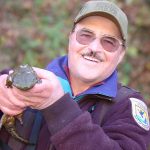
Paul M. McKenzie, Ph.D.
U.S. Fish and Wildlife Service, retired but now Volunteer and Independent Contractor
Retired Endangered Species Coordinator (28 years) responsible for implementation of all aspects and sections of the Endangered Species Act. Lead responsibility, in part, on federally listed plants, bats, fish, Hine's Emerald Dragonfly, Tumbling Creek Cavesnail, birds. Over 30-40 years teaching experience on birds, grasses, sedges, and Odonates. Networked with numerous individuals in Federal, State, and private sector. Active scientific writer with > 120 publications in peer-reviewed literature. Discovered a species of grass thought to be extinct (Aristida chaseae) in southwestern Puerto Rico. Described a new grass (Aristida correlliae) and a new hybrid sedge (Schoenoplectiella x magrathii) to science. Hobbies include morel and deer hunting, fishing, and nature photography. Ordained minister at United Community Cathedral, Columbia, MO.
Who it's for
This course is designed for students, botanists, naturalists, field biologists, and anyone interested in developing their grass identification skills.
No prerequisites are required, although previous experience using dichotomous keys in a plant identification course will be helpful.
Participants will work collaboratively in the laboratory, with opportunities for beginners to learn alongside more experienced students.
What to bring
Required materials:
Hand lens: A 10×–16× hand lens for examining grass floral structures.
Required textbook: First Book of Grasses by Agnes Chase.
Highly recommended reference:
Plant Identification Terminology: An Illustrated Glossary, Second Edition, by James G. Harris and Melinda Woolf Harris. This illustrated reference is especially helpful for understanding the specialized terminology used in botanical identification keys.
Optional specimens: Participants are encouraged to bring dried or fresh grass specimens from their home regions for identification and study.
Instructional materials provided: Students will receive a copy of the instructor's presentation materials. Additional dried and pressed specimens will be available for laboratory examination.
Costs, and help with them
| Course fee | $500 |
|---|---|
| Member institutionsStudents from member colleges and universities pay this rate. | $400 |
| On-campus housingOptional. Add it when you register, $300 for 1 week. | $300 a week |
| Academic credit feeOptional. The amount depends on the university and how you enroll. | $25 to $55 |
Highlands Biological Station Scholarship
Open to students in any course taking that course for academic credit.
Up to $300. For students taking the course for academic credit.
Apply when you register.
John E. Fairey / SABS Biological Field Station Scholarship
For students in botany courses.
Apply with Southern Appalachian Botanical Society by April 19: their application (opens in a new tab).
Questions, answered
Before you register
Who can take courses at the Highlands Biological Station?
Our accredited summer field courses are open to undergraduate and graduate students, professionals, and anyone with a strong interest in natural history, field biology, or environmental science. Many participants attend for academic credit, while others come for professional development or personal enrichment.
Do I need prior experience or specific coursework to enroll?
Some courses recommend or require certain prerequisites, while others are open to all backgrounds. Check the individual course descriptions for details. If you’re unsure whether a course fits your background, feel free to reach out to our staff. We’re happy to help you find the right fit.
How do I choose the right course for my goals?
Consider your academic or professional interests, field experience, and schedule. Review each course description carefully to see which aligns best with your focus area. You can also contact us directly for guidance if you’d like help deciding.
When and how can I register for a course?
Registration opens in early January. Choose your course on this page and complete the online registration form. Register early to secure your spot. Registration closes three weeks before each course begins or when the course fills.
When a course is full you can join its waitlist at no cost. If a seat opens we email you right away and hold it while you complete your registration.
Each course must reach a minimum number of students to run; if a course is canceled by HBS due to low enrollment, you’ll receive a full refund. Once you have registered and paid, we’ll email you a confirmation and next steps.
Academic credit and financial aid
Can I receive academic credit for my course?
Yes. You must request academic credit at the time of registration; requests can’t be made retroactively.
- UNC–Chapel Hill: Undergraduate students can earn credit for one- or two-week courses.
- Western Carolina University: Undergraduate and graduate students can earn credit for one- or two-week courses.
- Once you have received confirmation of your registration, please send a copy of your unofficial transcript to svickery@wcu.edu.
- One-week courses earn 2 credit hours; two-week courses earn 4 credit hours.
After registration, you’ll receive instructions for completing the credit process. On transcripts, courses appear as:
- UNC–CH: BIOL 459 Field Biology
- WCU: BIOL 493/593 Special Topics (includes the course’s specific title)
Does HBS offer financial assistance or scholarships?
Yes! Limited financial assistance is available for students taking courses for credit. Awards are made on a first-come, first-served basis and do not cover the full cost of the course.
To apply, register for your course, then use the scholarship link on your registration page. You will be asked for:
- Statement of Need (about 250 words describing your financial situation and goals)
- Letter of Recommendation from a faculty member or advisor. Give us their email and we send them a link.
- Unofficial Transcript
Are there other scholarships available?
Yes. Students may also apply for:
- John E. Fairey / Southern Appalachian Botanical Society Biological Field Station Scholarship (for botany-focused courses; deadline April 25)
- Highlands Plateau Audubon Society Scholarship (for Biology and Conservation of Birds; covers $1,000 of fees; rolling deadline)
Payments and refunds
How do I pay for my course, and what is the refund policy if I need to cancel?
You pay for your course and housing (if requested) at the time of registration. If you receive a scholarship or financial assistance, that amount will be refunded to you once your award is processed.
Refund policy
- Academic credit fees are non-refundable.
- Housing fees are fully refundable unless you cancel within 30 days of the course start date.
- Course tuition:
- Cancel 45 or more days before the start: full refund minus a $75 fee
- Cancel 30 to 45 days before the start: full refund minus a $150 fee
- Cancel less than 30 days before the start: no refund
Travel and preparation
What should I know about traveling to Highlands?
Plan ahead. Highlands is a remote mountain town with limited transportation options. Visit our Getting Here page for driving directions and travel details.
- Cell service can be unreliable on mountain roads, so download or print directions before you come.
- Highlands has a grocery store and restaurants, but prices are higher than surrounding areas; consider shopping before you arrive.
- Parking is available on campus near housing areas.
What is the weather like in Highlands during the summer?
Highlands sits at 4,100 feet, so even summer days are cool compared to most of the Southeast. Expect daytime highs in the 70s °F and cool, misty evenings in the 50s °F. Afternoon rain showers are common, so pack layers, rain gear, and sturdy footwear.
What should I bring for my course?
You’ll receive a packing list before arrival, but essentials typically include:
- Field gear (boots, rain jacket, hat, insect repellent)
- Notebook and writing supplies
- Reusable water bottle and lunch container
- Bedding and towels (if staying on campus)
- Flashlight or headlamp for night work
- Personal items and medications
On-campus living
What are the housing options like?
Our on-site housing is dormitory-style: simple, comfortable, and designed for field station living.
- Expect to share a room with 2–3 students.
- Common areas are cleaned twice weekly; bedrooms are self-maintained.
- A full kitchen is available for meal prep (no meal plan provided).
- Alcohol is allowed only inside residences or dining spaces; underage drinking is prohibited.
- Pets are not permitted (service animals only).
Housing assignments are sent about two weeks before your course begins, along with a packing list and access codes. Check-in starts Sunday at 1 PM before your course; check-out is by noon Saturday after it ends.
What amenities are available?
- Free Wi-Fi in main buildings (limited in some residences)
- On-site laundry facilities
- Free parking near housing
- Access to the Highlands Botanical Gardens and Nature Center
Can I arrive early or stay late?
Check-in and checkout times are fixed due to housing turnover, but you can contact us in advance if you need to discuss special arrangements.
How do I receive mail or packages while at HBS?
Use this address format:
Highlands Biological Station
Attn: [Your Name]
265 N. 6th Street
Highlands, NC 28741
Mail is checked Monday–Friday. We’ll notify you by email when something arrives. If mail comes after you’ve left, you’ll be responsible for return postage.
Campus life and community
What’s a typical day like during a course?
Expect immersive, hands-on learning. Days often begin early and include a mix of lectures, lab work, and field excursions. Classes frequently extend into the evening for night surveys or data collection, followed by independent study or group discussions.
Can I visit the Botanical Gardens or Nature Center during my stay?
Absolutely! Students are encouraged to explore the Highlands Botanical Gardens and visit the Nature Center. Both are just steps from campus and open daily.
Are restaurants or shops nearby?
Yes. Downtown Highlands is a short walk or drive from campus and offers restaurants, cafés, and small shops. Keep in mind that hours can vary seasonally, especially in winter.
After your course
How do I request a transcript or certificate?
If you earned academic credit, transcripts are available through UNC–Chapel Hill or Western Carolina University depending on your registration. For non-credit participants, HBS can issue a certificate of completion upon request.
How can I stay involved with HBS after my course?
Stay connected! Follow us on social media, sign up for our newsletter, or reach out to us directly at hbs@wcu.edu
Who should I contact if I have additional questions?
We’re happy to help! Email us anytime at hbs@wcu.edu or call (828) 526-2602.
Still have a question?
Call us at 828-526-2602 or write to svickery@wcu.edu.