
Learn · Field Season 2027
Courses & workshops
One or two weeks in the field with a working scientist, or a day or two with a specialist. The southern Blue Ridge is the classroom.
May – AugustAcademic credit availableHousing on campusRegistration opens early January
The 2027 season
Where things stand
Registration for 2026 has closed, and the next season is already taking shape. Here’s the road to summer 2027.
Summer 2026
Registration closed
Early winter
2027 lineup announced
Early January
Registration opens
May – August 2027
Field season
01 · Field courses
Field courses
One to two weeks in the field with a working scientist, and academic credit at the end of it.
Our field courses go deep. Students spend full days collecting, keying, measuring and thinking alongside instructors who have built careers on the biology of these mountains, then spend the evenings back in the lab with what they found.
Courses are designed for undergraduates, graduate students and serious naturalists who want the credential as well as the experience. Housing is available on campus.
- Length
- One or two weeks
- Credit
- 2 or 4 credit hours
- Season
- May through August
- Registration
- Opens early January
Last season
The 2026 field courses
A look at what we teach. The 2027 lineup will be announced this winter.
- Grasses of the Southern Appalachians
- Introduction to the Vascular Flora of the Blue Ridge
- Identification and Conservation of Wetland Plants
- Biology of Plethodontid Salamanders
- Biology and Identification of True Sedges: Interpreting Carex
- Rock Outcrop and Cliff Ecology
- Comparative Temperate/Tropical Ecology & Biogeography
- Biology and Conservation of Birds
- Southern Appalachian Mayflies, Stoneflies, and Caddisflies
- Biology of Southern Appalachian Mammals
- Conservation Biology in the Southern Appalachians
- Spiders of the Southern Appalachians
- Macrofungi of the Blue Ridge
Hover or tap a course to see who teaches it.
One week Two weeks Study abroad
02 · Workshops
Workshops
One to three days, no prerequisites and no credit required: just expert instruction and the pleasure of learning something new.
Workshops are the short course in every good sense: a compressed, hands-on introduction led by someone who knows the subject well. Come for a day and leave seeing the mountains differently. They fill quickly, and they’re the easiest way to spend real time with a specialist in the field.
- Length
- One to three days
- For
- Lifelong learners
- Season
- May through August
- Registration
- Opens early January
The kind of workshop we offer
Plants
Botany Bootcamp
Short lectures and hands-on work introducing the remarkable plant diversity of the Highlands Plateau.
Birds
Beginning Bird Identification
Song, silhouette and habit: three ways to know a bird before the binoculars come up.
Art & observation
Nature Journaling in the Gardens
Drawing and writing as tools for looking harder, taught among the collections.
03 · Study abroad
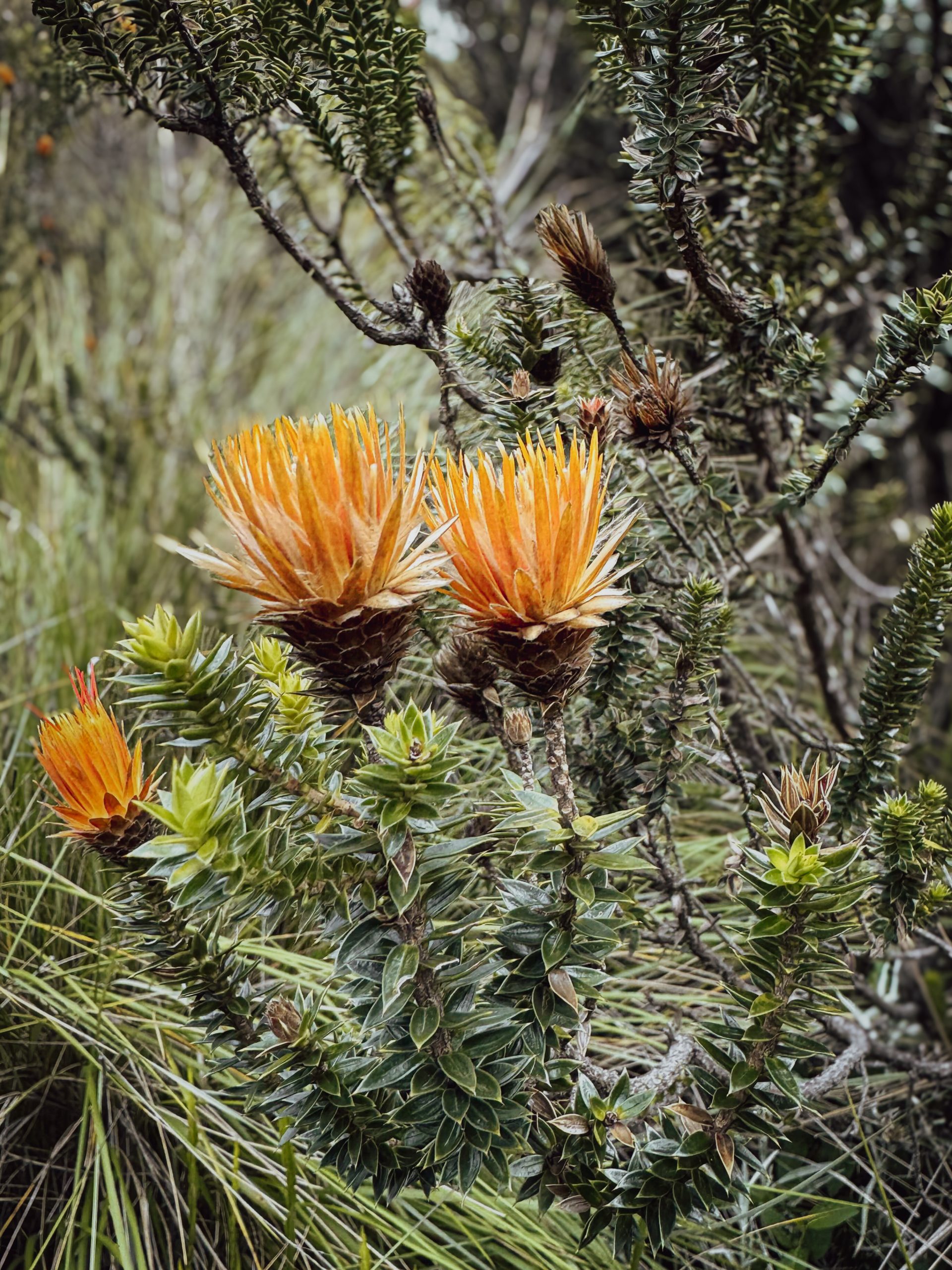
From the Blue Ridge to the Andes
Comparative Temperate/Tropical Ecology & Biogeography begins with a week in Highlands and continues at Wildsumaco Biological Station in Ecuador, comparing two mountain systems side by side. In 2026 it ran June 8–14 in Highlands and June 15–26 in Ecuador, taught by Dr. Jim Costa and Travis Knowles.
Space is limited and applicants are considered first come, first served.
costa@wcu.edu · 828-787-1712
04 · Credit & fees
Credit & fees
Rates below are from the 2026 season.
| Item | Standard | Member institutions |
|---|---|---|
| One-week course · 2 credit hours | $500 | $400 |
| Two-week course · 4 credit hours | $1,000 | $800 |
| On-campus housing | $300 per week | |
| Credit through UNC-Chapel Hill | $55 registration fee (undergraduates) | |
| Credit through Western Carolina University | $65 application fee (undergraduate and graduate) | |
Undergraduates can earn credit through UNC-Chapel Hill; undergraduate and graduate students can earn credit through Western Carolina University. Request credit when you register, and send transcripts to svickery@wcu.edu.
Teachers can earn Continuing Education Units, and courses count toward the NC Environmental Education Certification Program at no extra cost.
Is your college a member institution? Its students pay the lower rate.
What would a course cost?
Estimated total$800
Based on 2026 rates. 2027 rates will be posted with the new lineup. Scholarships can cover part or all of a course.
05 · Scholarships
Help with costs
Several scholarships can cover part or all of a course. Most ask for a short statement of need (about 250 words), a letter of recommendation and an unofficial transcript.
All courses
Highlands Biological Foundation scholarships
Awarded first come, first served.
Botany courses
John E. Fairey / SABS Biological Field Station Scholarship
From the Southern Appalachian Botanical Society. 2026 Deadline April 25.
Birds course
Highlands Plateau Audubon Society Scholarship
Covers the $1,000 course fee for Biology and Conservation of Birds. Limited number available.
06 · Housing
Stay on campus
Most students live on campus for the length of their course, a short walk from downtown Highlands.
- $300 per week (2026 rate)
- Shared dormitory rooms, two or three students each
- Kitchen, free Wi-Fi, laundry and free parking
- Common areas cleaned twice a week; you keep your room tidy
- Check in Sunday at 1 PM before your course; check out at noon the Saturday after it ends
- Alcohol only in residences and dining areas; no underage drinking
- No pets; service animals only
Mail during your course
Address it like this
Attn: Your Name
265 N. 6th Street
Highlands, NC 28741
07 · Questions
Common questions
Who can take a course?
Undergraduate and graduate students, professionals, and anyone with a serious interest in natural history and field biology.
Are there prerequisites?
They vary by course; check each course description. Workshops have no prerequisites.
When does registration open and close?
Registration opens in early January and closes three weeks before each course begins, or sooner if the course fills.
What is the refund policy?
- Academic credit fees are non-refundable.
- Housing fees are fully refundable unless you cancel within 30 days of the start date.
- Course tuition: cancel 45 or more days ahead for a full refund minus $75; 30–45 days ahead for a full refund minus $150; less than 30 days, no refund.
What’s the weather like?
Daytime highs are usually in the 70s °F and evenings in the 50s, with afternoon rain common.
What should I pack?
Boots, a rain jacket, a hat, insect repellent, a notebook, a water bottle and a lunch container, plus bedding, towels, a flashlight or headlamp, and personal items and medications.
What’s a typical day like?
Early starts and a mix of lectures, labs and field trips, with some evenings running late for surveys or data collection.
What’s nearby?
Downtown Highlands is within walking distance, with restaurants, cafés and shops.
In the meantime
Still happening at HBS
Questions about courses or workshops? Email hbs@wcu.edu or call 828.526.2602.