
Notes from the Archives·September 2026
A Stranger No More
George Masa photographed the Smokies into a national park, mapped its trails with an odometer he built from a bicycle wheel, and changed his own name four times. Two of his photographs, and one extraordinary map, are held at the Highlands Biological Station.
From now until August 2027, Highlands Biological Station, in partnership with Hunter Library of WCU, is holding an exhibit of select Masa works in the Coker Laboratory on the HBS campus.
In 2025 the Mountain Heritage Center at Western Carolina University organized the exhibit “A Stranger No More: George Masa and His Art.” The exhibit reintroduces the life of George Masa to a new generation who unknowingly benefit from his photography and conservation efforts. Guest curated by Masa experts Paul Bonesteel and Janet McCue, the exhibition features the Alice and Bill Hart Masa Collection — WCU alumni — given to the WCU Hunter Library Special and Digital Collections in 2024, with the addition of two of Masa’s photographs of the Highlands Biological Station.
In the early twentieth century, activists used the photographs of George Masa to save much of the landscape of western North Carolina. Masa, though unrecognized and forgotten until now, had an impactful voice in the protection of the Great Smoky Mountains.
Early years
The man who kept changing his name
He was born in Tokyo in 1885 and died in Asheville in 1933. In between he answered to four names, each one marking a place he had left behind.
Tokyo, Japan · 1885
Shoji Takahashi
The name he was born with. He was adopted and raised by an Endo family in Shizuoka. As a boy he struggled with his adoptive family, preferring to hike and play baseball with friends.
Masa moves east
New Orleans, then Asheville
In January of 1915 he left the west coast on a self-described “adventure,” spending six months in New Orleans before coming to Asheville, North Carolina as George Masa Iizuka. There he worked in the laundry at the Grove Park Inn and as a valet. He changed his name to simply George Masa in 1919.
Masa photographed guests at the Grove Park and sold prints as a side business. He then worked in the Herbert Pelton photography studio until 1925, opening his own studio thereafter. His work was used by the Chamber of Commerce to promote the area.
Masa and the Great Smoky Mountains
Every stream, mountain, and valley
With the growth of his business, Masa spent more time in the backcountry of the Smoky Mountains, often with Horace Kephart, a journalist and nature enthusiast who had already written two books on the Smokies. Kephart had a goal of turning the area into a national park. He and Masa worked closely on this effort, recording every stream, mountain, and valley within the park boundary. They drew sketches, made photographs, and measured distances and trails. Masa even made his own odometer with a bicycle wheel.
In 1929, with the Great Depression, Asheville closed banks and Masa lost his savings. Despite this setback, the two men continued mapping and photographing the southern portion of the park and the Appalachian Trail.
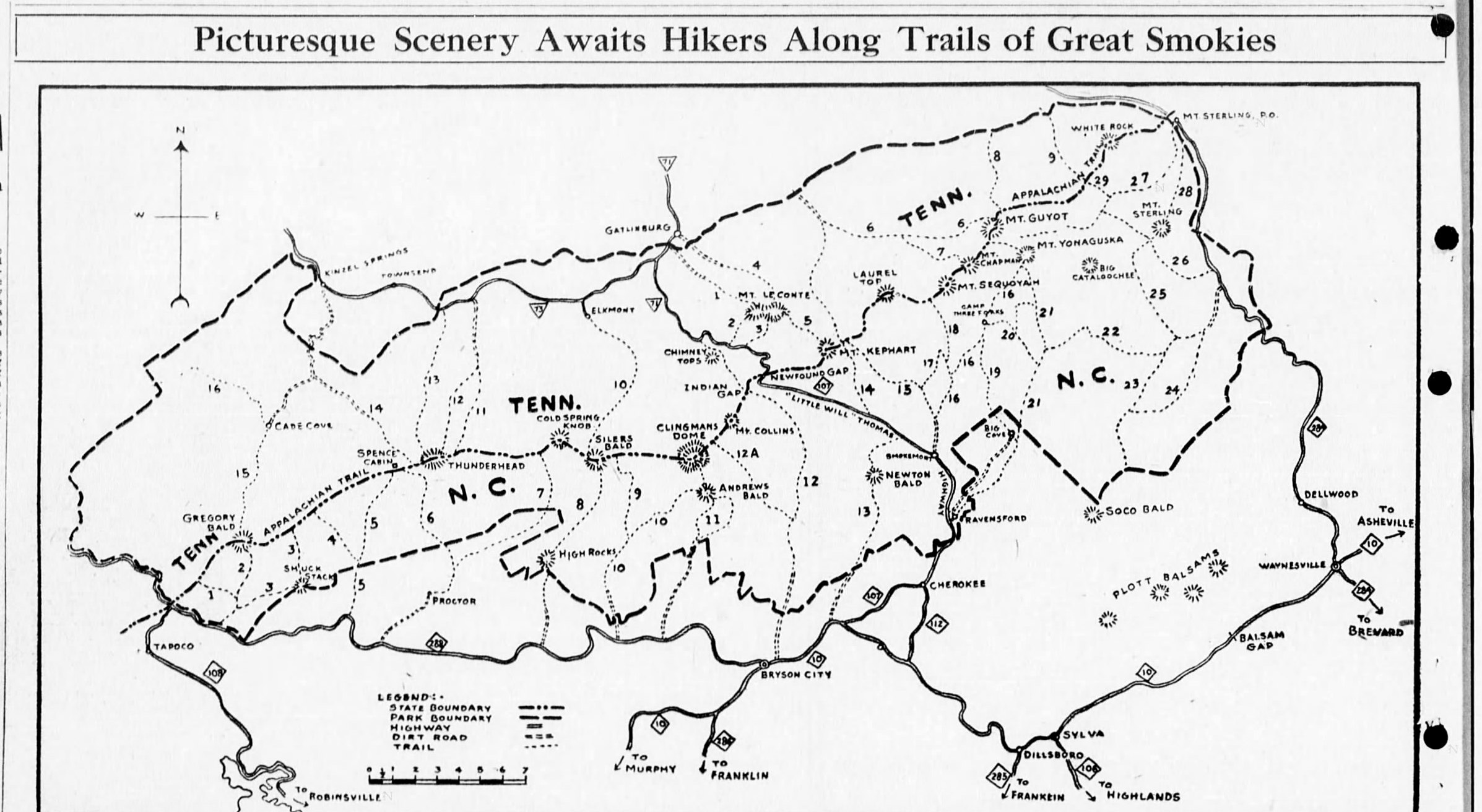
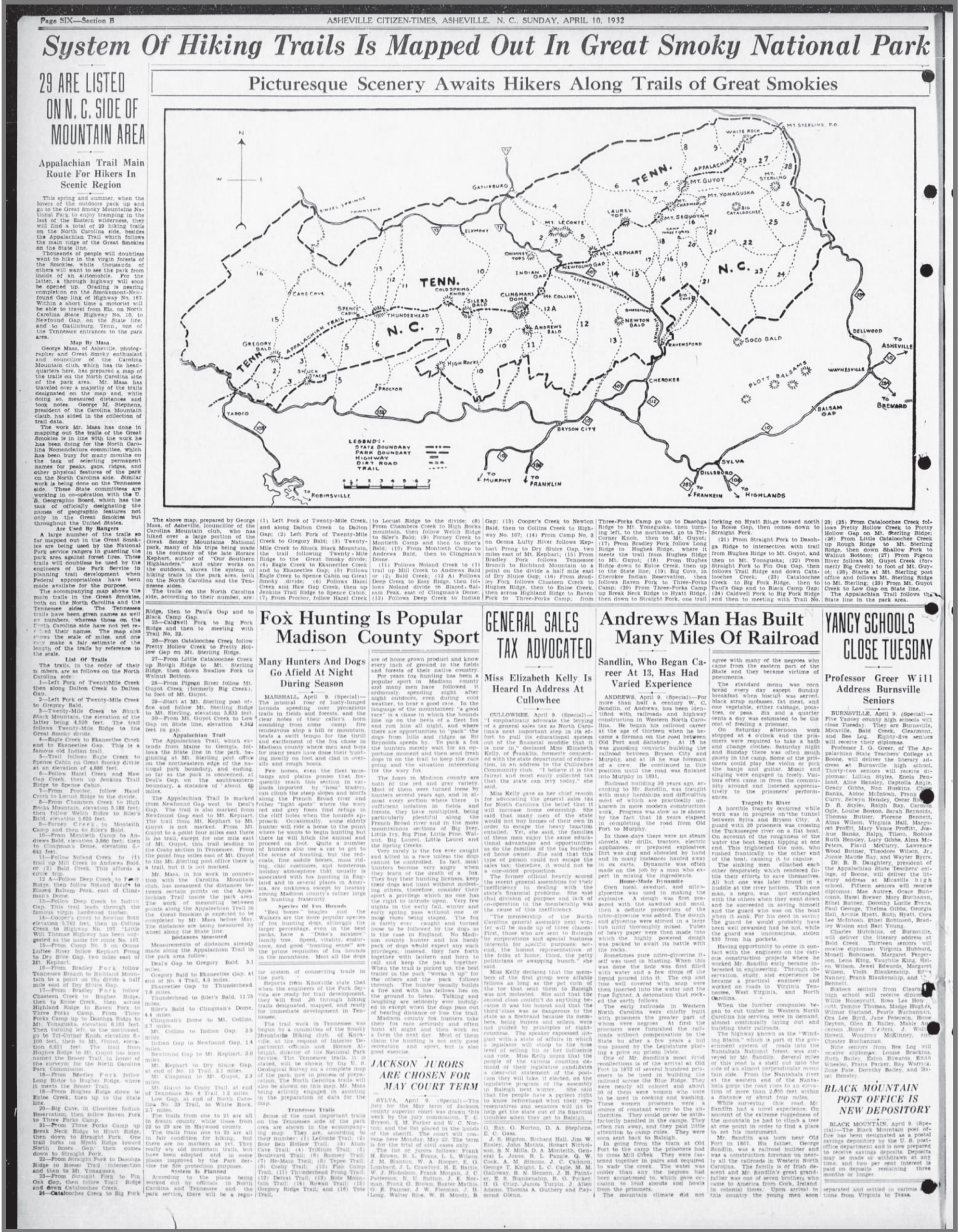
With this information, Masa created a map of the hiking trails in the Great Smoky Mountains National Park for the Carolina Mountain Club, as seen in the Sunday, April 10, 1932 edition of the Asheville Citizen-Times. The accompanying story, “System of Hiking Trails Is Mapped Out In Great Smoky National Park,” notes “a total of 29 hiking trails on the North Carolina side, besides the Appalachian Trail on the state line. George Masa has prepared a map of the trails on the North Carolina side of the park area. The Nomenclature committee (of the Carolina Mountain Club) has been selecting permanent names for peaks, gaps, ridges, and other physical features on the North Carolina side. The Tennessee and North Carolina trails will be shown by the U. S. Geological Survey on a complete (topographical) map of the park.”
One of a kind
The fold-out map, opened
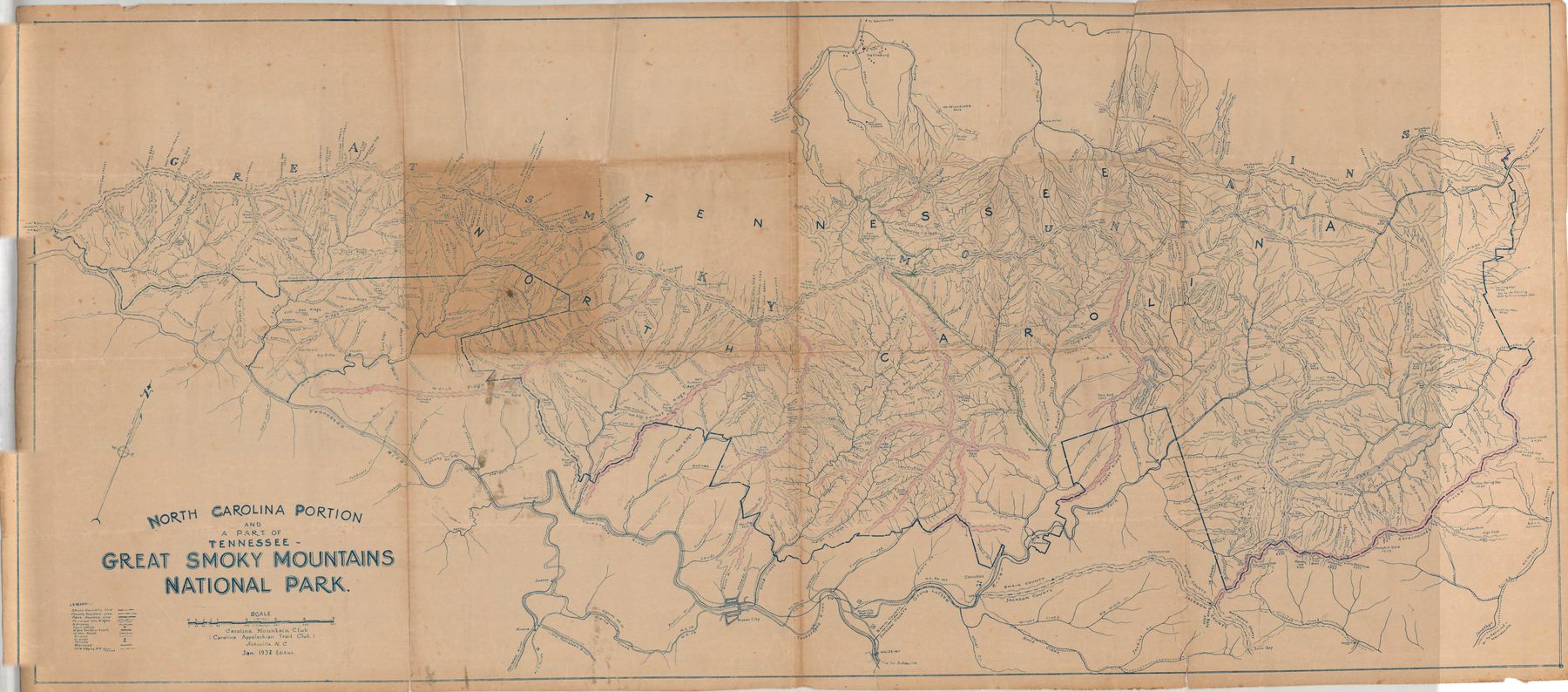
In 1926 the Smoky Mountains Hiking Club started an annual handbook with a monthly schedule of their hikes. By 1932 the handbook had a fold-out map built from the information Masa prepared. The Reinke Archives at the Highlands Biological Station is fortunate to own one of these fold-out topographical maps created by Masa’s mapping. It is reproduced below at full resolution — drag to travel it, and zoom in until the creek names come up.
Drag to explore
scroll or pinch to zoom
“North Carolina Portion and a Part of Tennessee, Great Smoky Mountains National Park, Carolina Mountain Club (Carolina Appalachian Trail Club), Asheville, NC.” January 1932 edition. 54 × 23.5 in. HBS Reinke Archives.
Five million dollars
What the photographs did
Masa leveraged the connections at the Grove Park Inn and sent his photographs of the proposed park land to first lady Grace Coolidge and also to John D. Rockefeller Jr. After seeing Masa’s photographs, Rockefeller donated five million dollars to help purchase the lands for what would become the Great Smoky Mountains National Park.
The park might have never happened without the Rockefeller donation.Janet McCue, biographer of Masa
Masa and Highlands
A hundred large-format shots
In 1929 Frank Cook, owner of the Highlands Inn, hired George Masa to photograph the Highlands environs; he spent several weeks in Highlands. The result was about 100 large-format shots of local homes, street scenes, and waterfalls. He stayed at the Highlands Inn, and being a perfectionist, he refused to take certain photographs until the light was exactly right. The Highlands Historical Society owns the majority of these photographs, and they are on display there today.
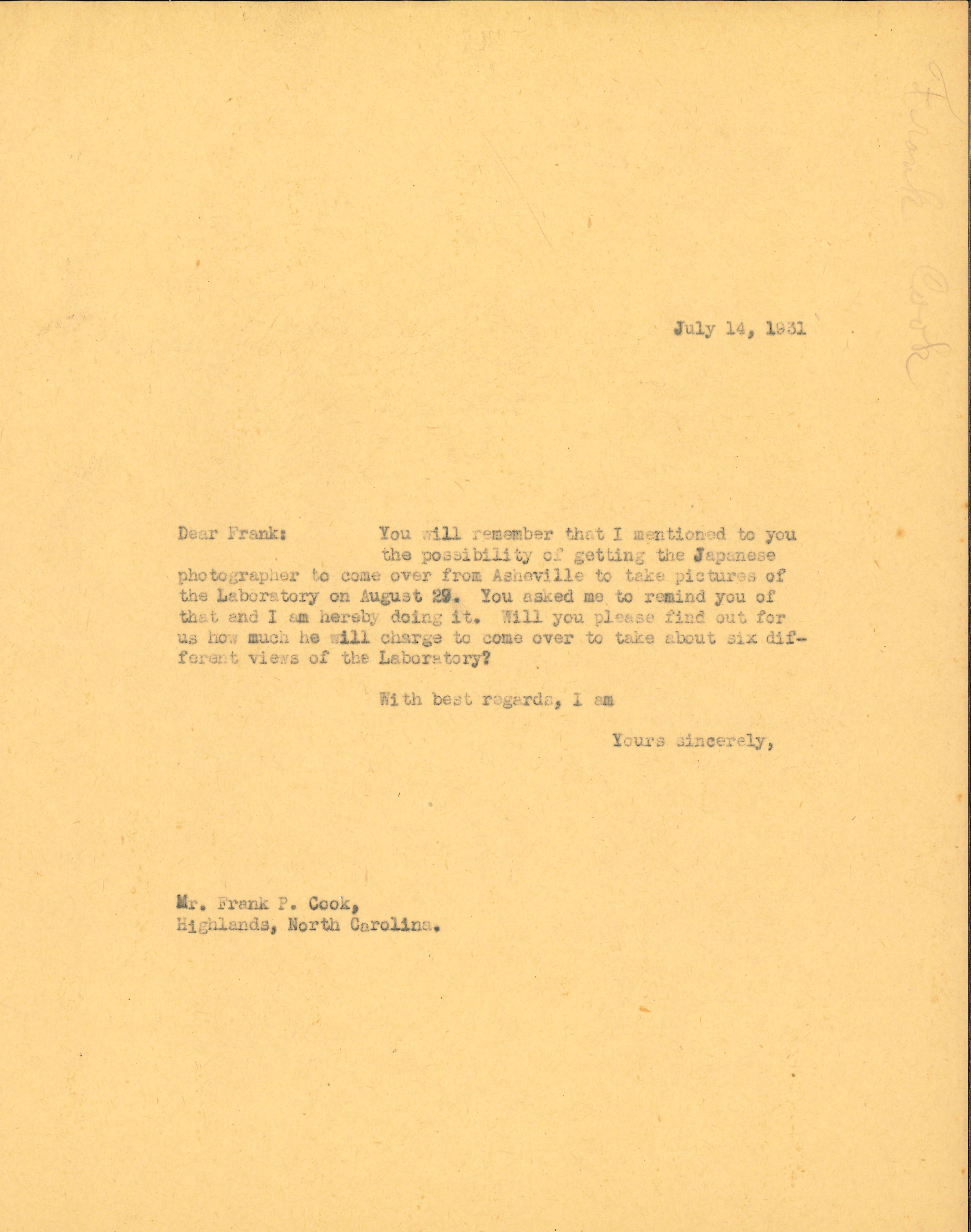
On July 14, 1931, Clark Foreman, one of the founders of the Highlands Museum and Laboratory, wrote to Frank Cook: “You will remember that I mentioned to you the possibility of getting the Japanese photographer to come over from Asheville to take pictures of the Laboratory on August 29. Will you please find out for us how much he will charge to come over to take about six different views of the Laboratory?”
Masa and the Samuel T. Weyman Laboratory
Five photographs, three of them lost
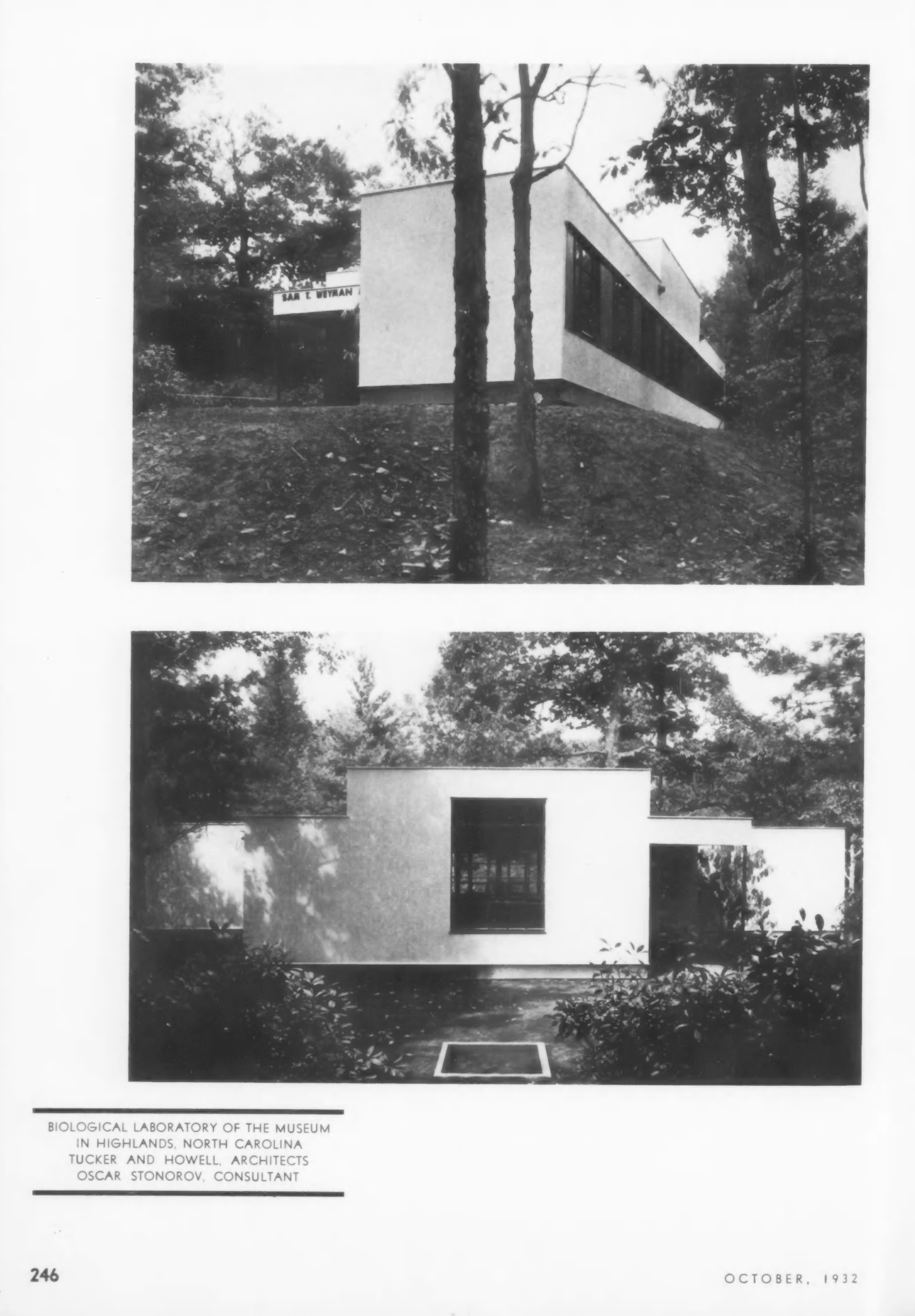
So Cook invited Masa back in August of 1931 for the opening of the Samuel T. Weyman Memorial Laboratory. Five photographs are known. The original of the interior is owned by the Reinke Archives at HBS. The interior shows the dedication of the Weyman Laboratory on August 29, 1931. Thanks to the guest book of the event, the names of many of the people in the photograph are known today.
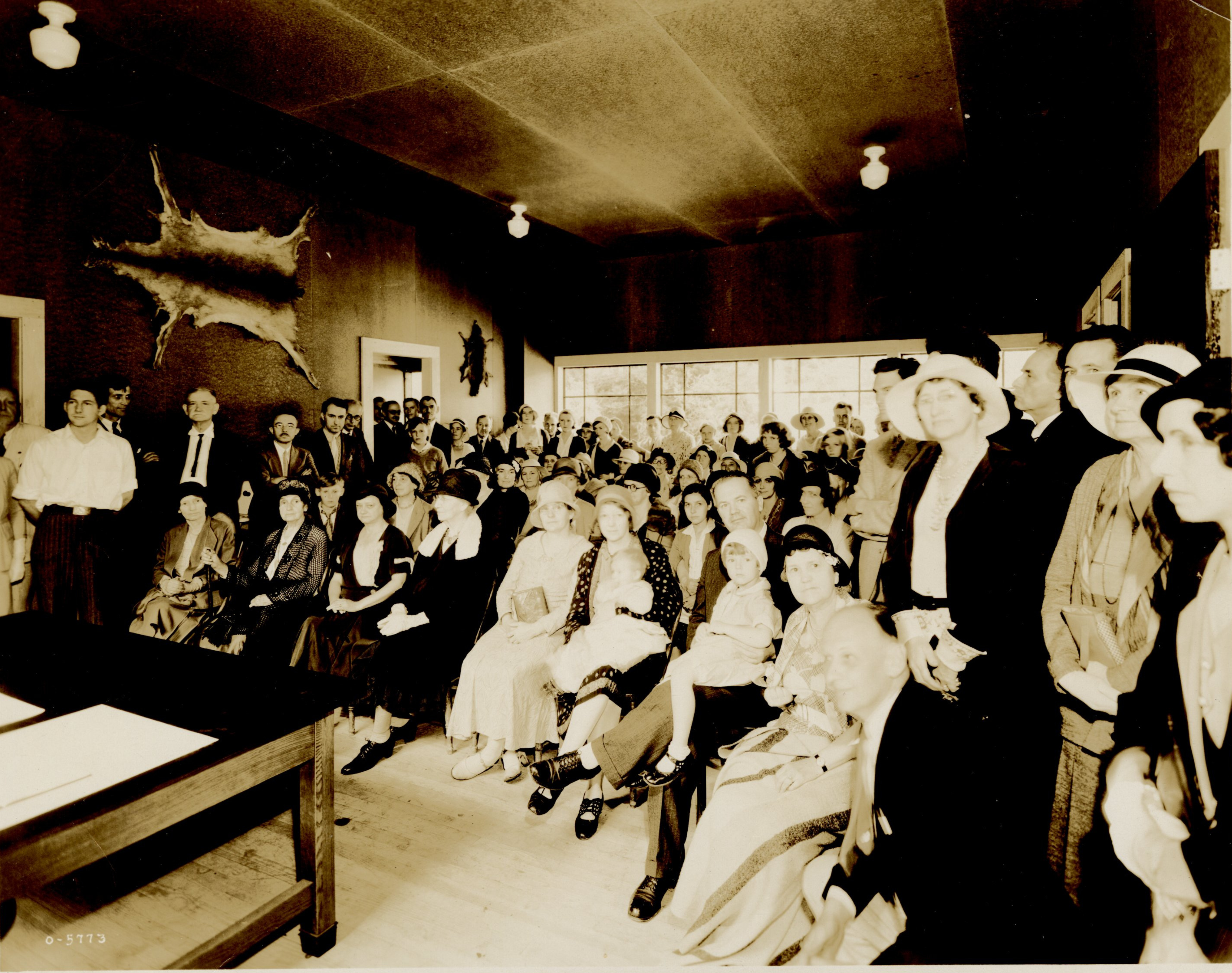
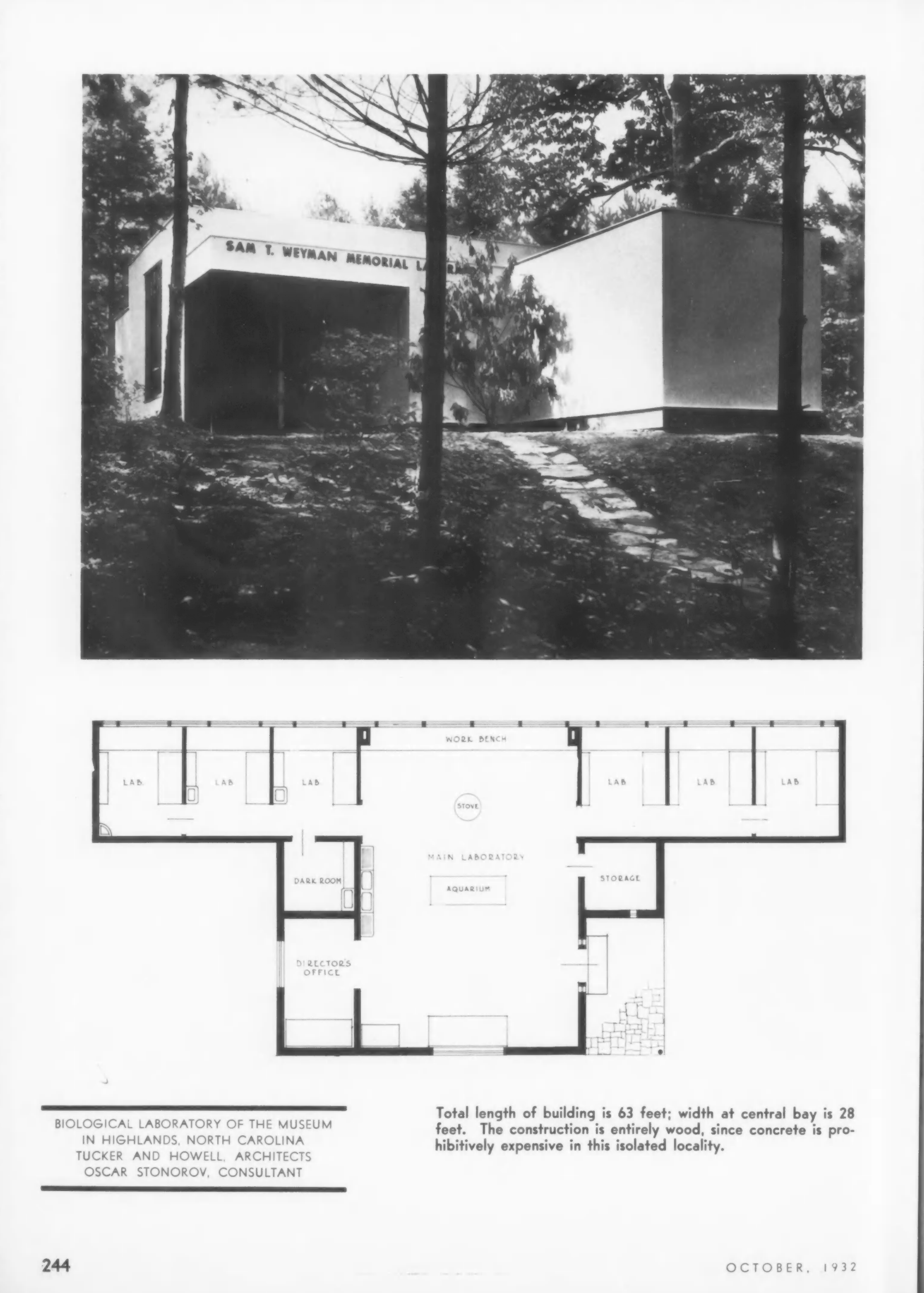
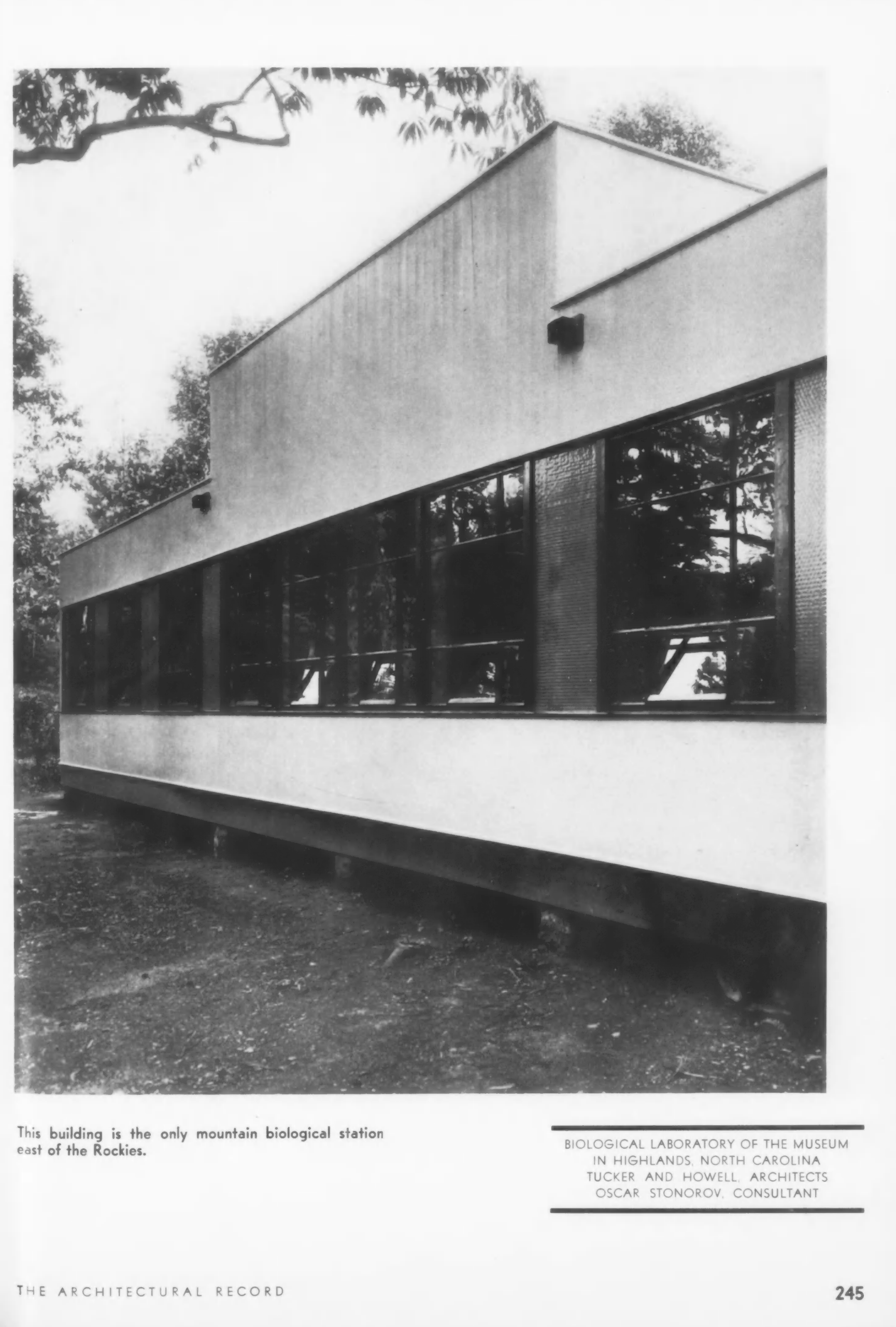
Four more photographs were taken by Masa of the exterior. One original is now owned by the Museum of Modern Art in New York, but the originals of the other three are lost. All four were used for publicity of the new Highlands Museum and Laboratory, as well as in The Architectural Record, when in October of 1932 the Weyman Building won a national architectural award for its design.
The building was credited to Tucker & Howell of Atlanta — McKendree Augustus Tucker and Albert Comer Howell Jr. — with Oscar Stonorov as consultant.
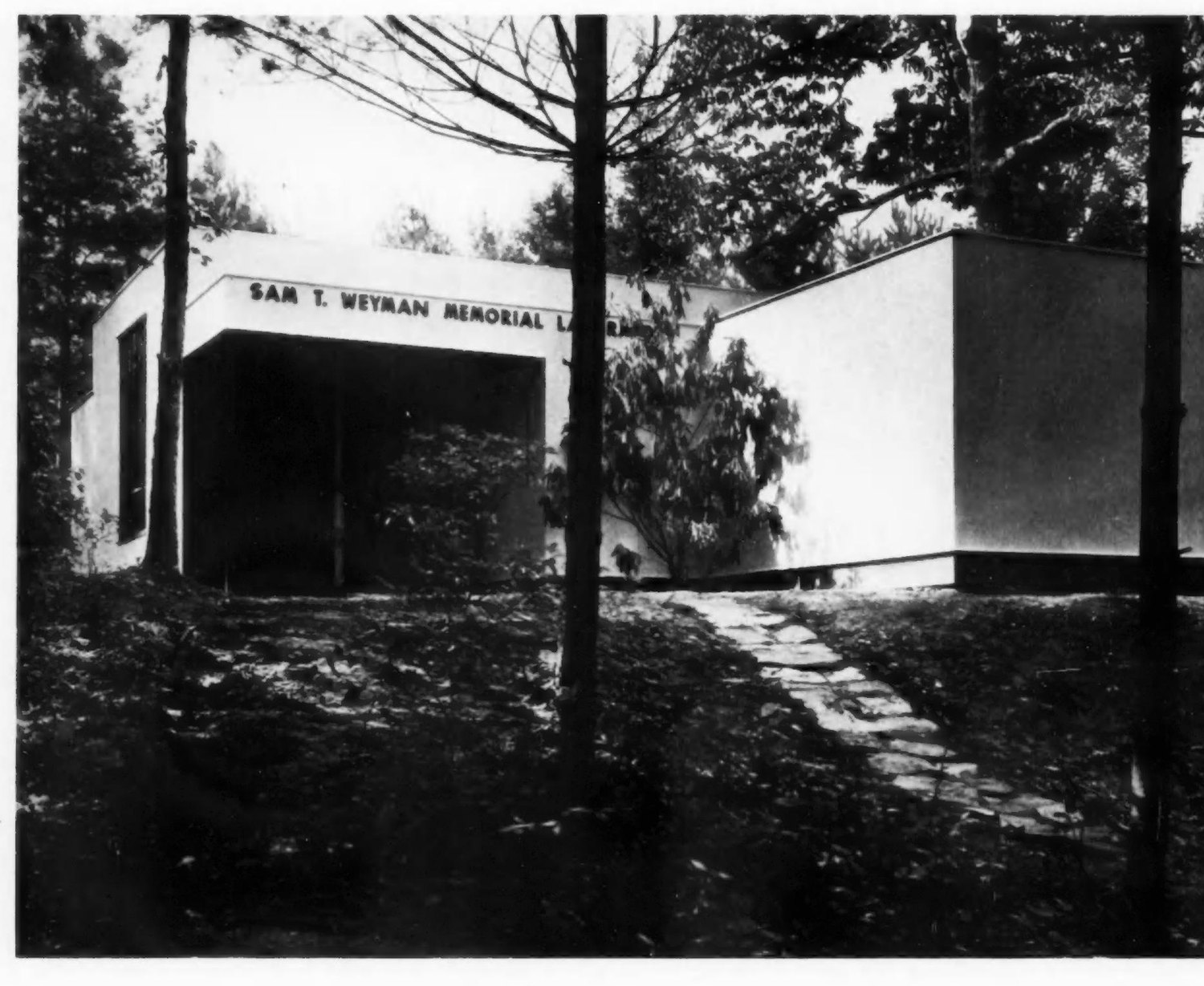
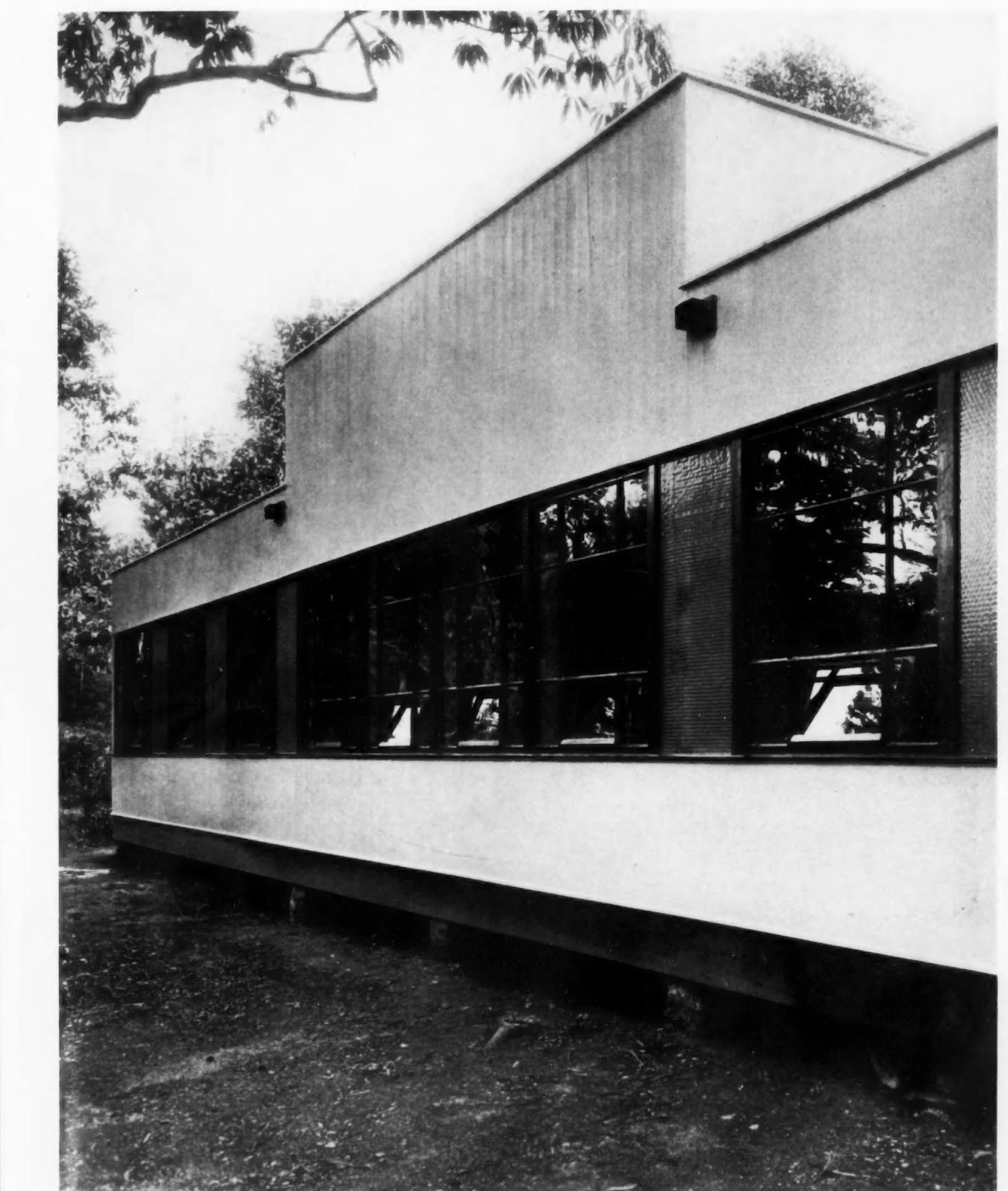
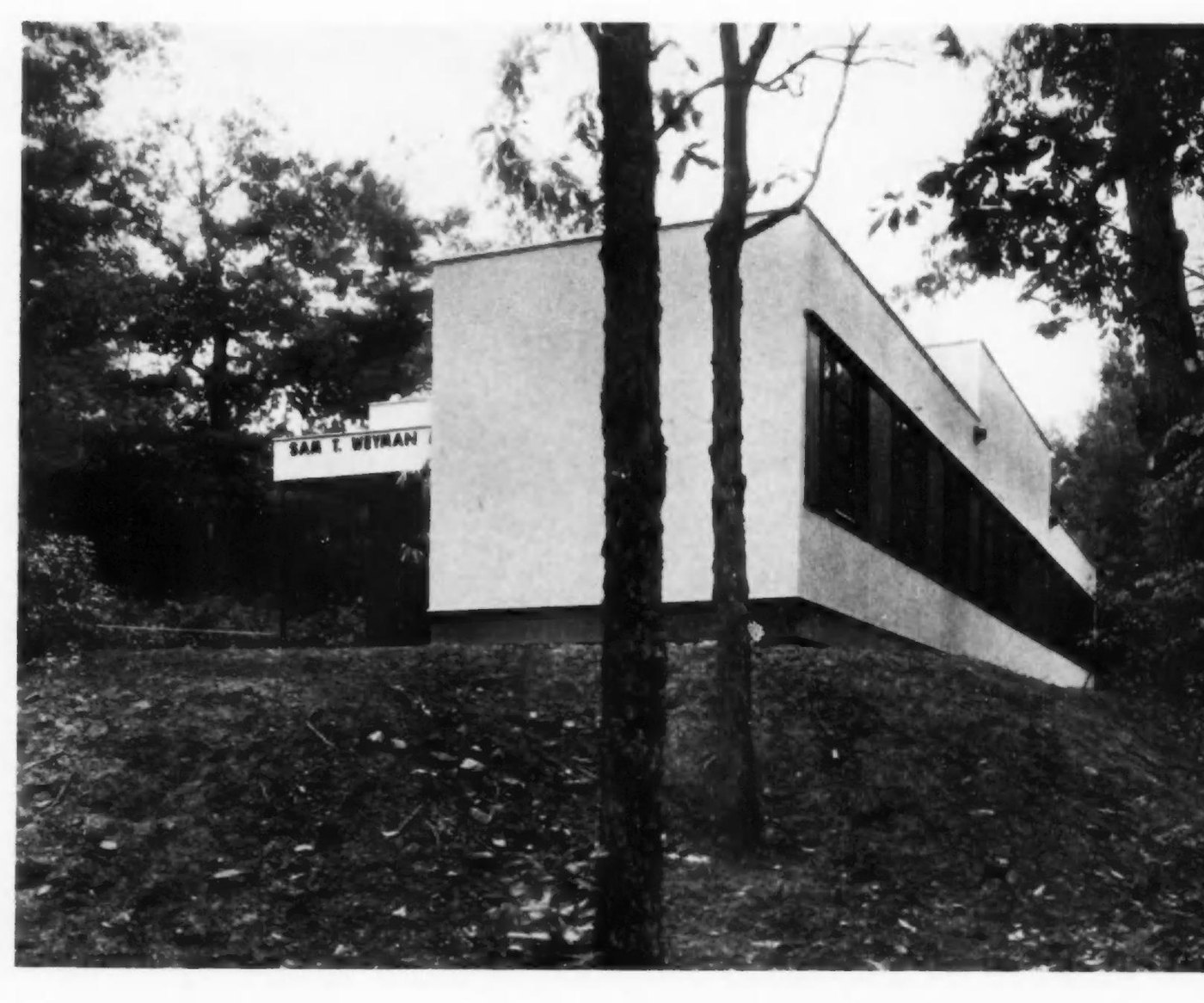
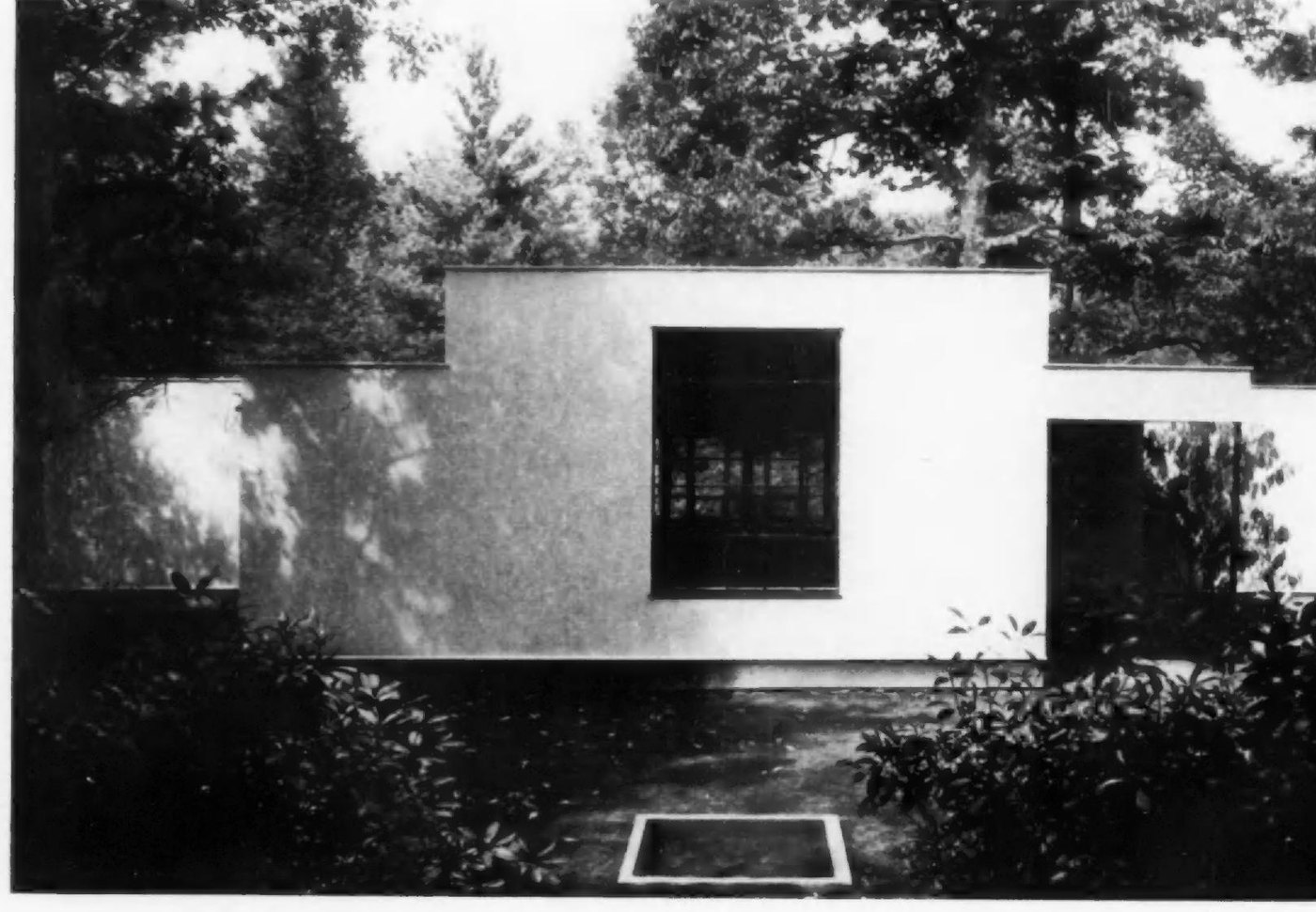
This building is the only mountain biological station east of the Rockies.The Architectural Record, October 1932
The building Masa photographed
Sixty-three feet of laboratory
The Architectural Record printed the plan alongside Masa’s photographs. The total length of the building is 63 feet; the width at the central bay is 28 feet. The construction is entirely wood, since concrete was prohibitively expensive in this isolated locality.
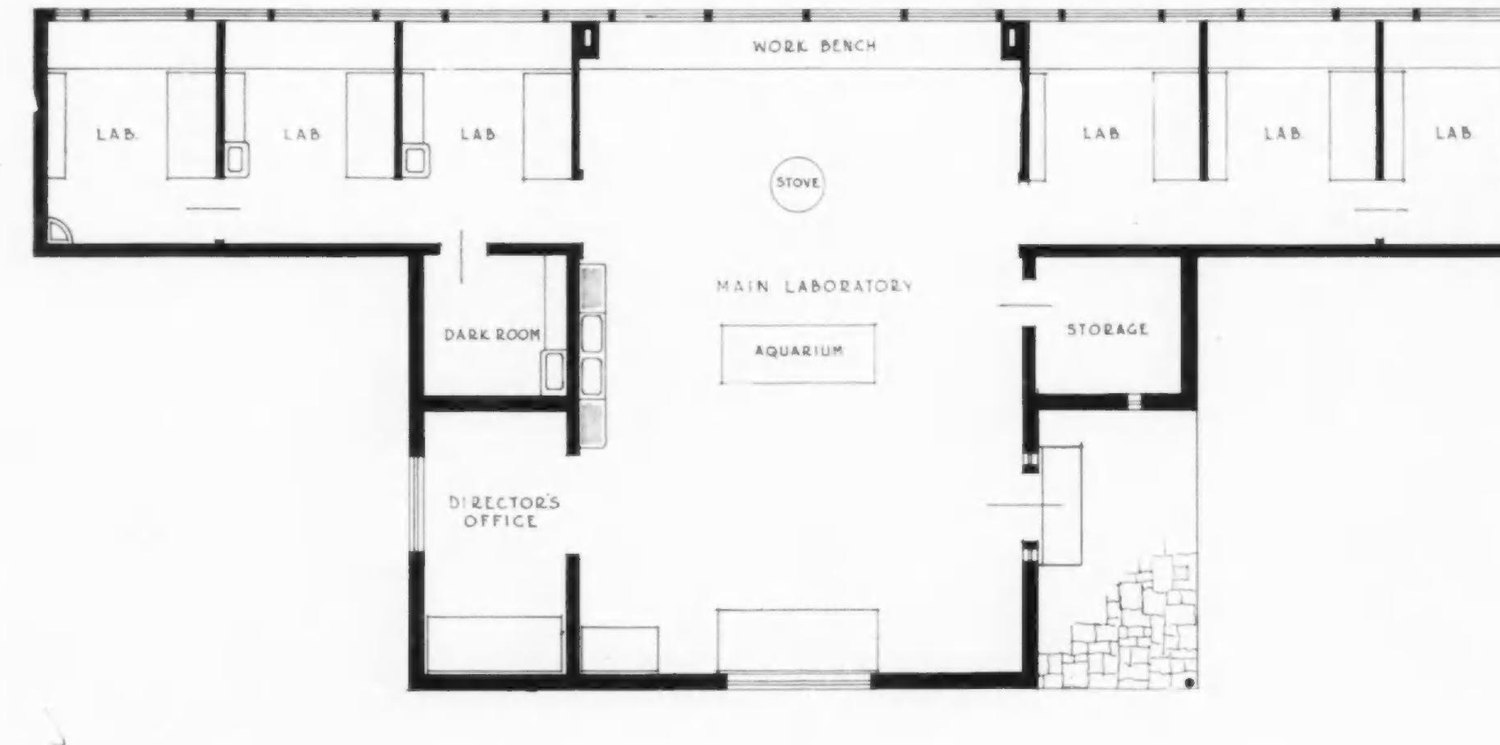
The plan
Select a marker to read the room. Total length 63 feet; width at the central bay 28 feet; construction entirely wood.
Plan as printed in The Architectural Record, October 1932, p. 244.
Forty-eight years
- 1885Born in Tokyo as Shoji Takahashi; raised by an Endo family in Shizuoka.
- 1906Arrives in the United States as Shoji Endo. Seattle, then Portland.
- Jan. 1915Leaves the west coast on a self-described adventure. Six months in New Orleans.
- 1915Reaches Asheville as George Masa Iizuka. Laundry and valet work at the Grove Park Inn.
- 1919Becomes, simply, George Masa.
- 1925The Herbert Pelton studio closes and George Masa opens his own.
- 1929Asheville's banks close and his savings go. Frank Cook hires him to photograph Highlands.
- Aug. 29, 1931Photographs the dedication of the Samuel T. Weyman Memorial Laboratory.
- Jan. 1932The Carolina Mountain Club fold-out map, built from his survey, is printed.
- Apr. 10, 1932His trail map runs in the Sunday Asheville Citizen-Times.
- Oct. 1932His Weyman photographs appear in The Architectural Record.
- June 21, 1933Dies of tuberculosis in Asheville.
Legacy
A stranger no more
George Masa died of tuberculosis on June 21, 1933. His legacy helped to convince the nation of the value of conserving and visiting the Great Smoky Mountains.
Bryding Adams
Notes from the Archives · HBS Reinke Archives
Through the research of Paul Bonesteel and Janet McCue we now know many of the details of Masa’s life and work. The author is most appreciative of their tireless effort to celebrate Masa’s legacy.
For more information
- Paul Bonesteel and Janet McCue, George Masa: A Life Reimagined (2024), and the film The Mystery of George Masa.
- “Step Back in Time: Interactive Masa Photograph of the Sam T. Weyman Laboratory Dedication,” Notes from the Archives, April 2025: the interactive dedication photograph.
- “Samuel T. Weyman Building” by Cora Bauman, Notes from the Archives, December 2024: read the building's history.
- “System of Hiking Trails Is Mapped Out In Great Smoky National Park,” Asheville Citizen-Times, April 10, 1932: read the clipping on Newspapers.com.