
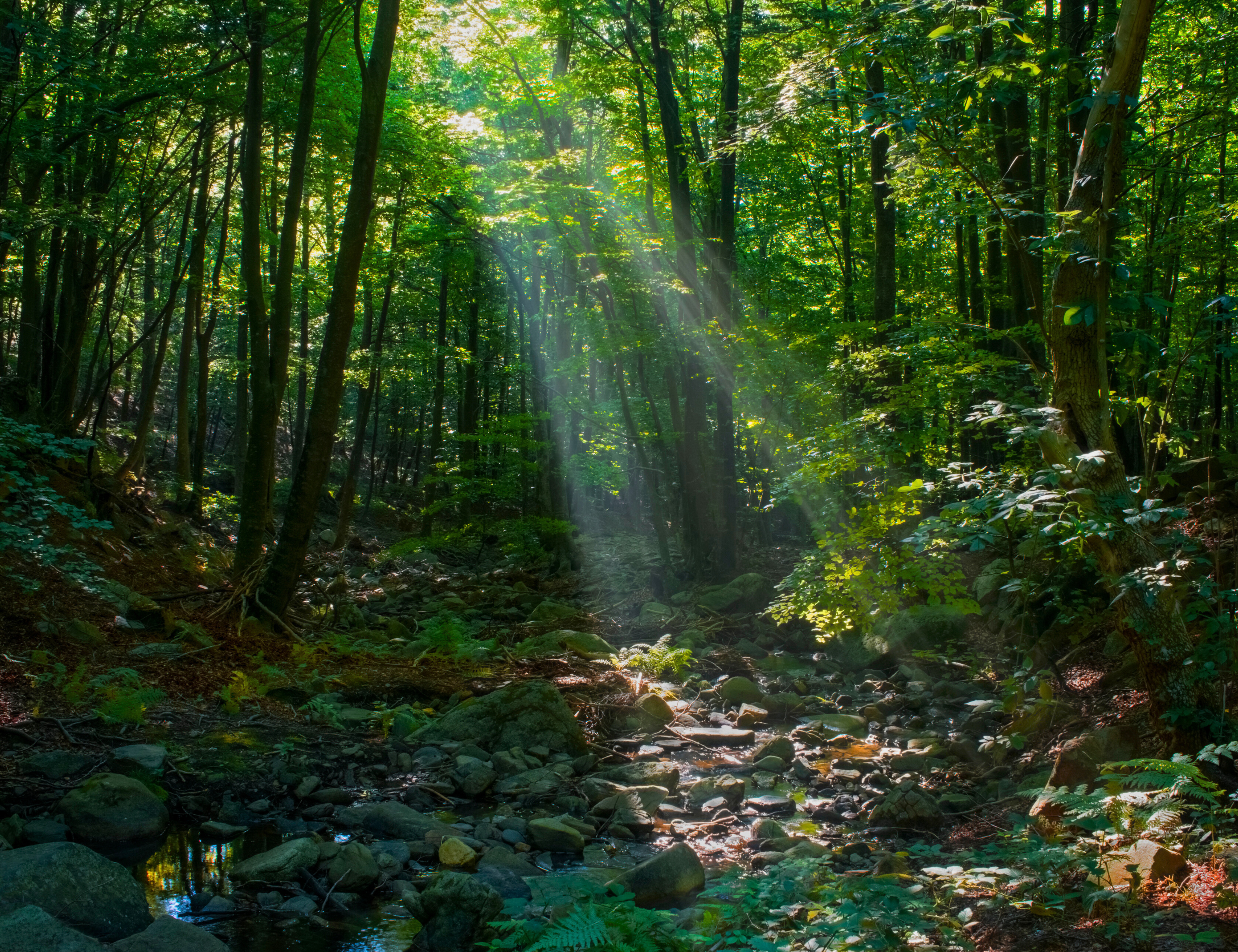
Summer Courses Forest Ecosystems of the Southern Appalachians
Summer 2027 · Field course · Ecology and conservation
Forest Ecosystems of the Southern Appalachians
with Dr. Stephanie (Steph) Jeffries, North Carolina State University; Dr. Alan Weakley, University of North Carolina at Chapel Hill; Dr. Julie Tuttle, Ecologist/Biogeographer
Registration opens January 8, 10 a.m. ET
The course
Learn to read the forested landscapes of the Southern Appalachians through an immersive exploration of their natural communities, ecological processes, and environmental history. Through extended field excursions, collaborative discussions, and careful observation, students will discover the relationships that shape one of North America's most biologically diverse mountain regions.
This course explores the patterns and processes that shape forest ecosystems throughout the Southern Appalachian Mountains, with an emphasis on vegetation and natural communities.
Students will investigate biogeography, paleoecology, vegetation classification, environmental gradients, succession, community dynamics, biodiversity, and the ecological relationships between vegetation and its surrounding environment. Discussions will also address the historical and contemporary disturbances threatening these ecosystems.
Rather than following a traditional lecture-based format, the course is structured as an immersive field experience. Students will travel to a variety of ecological communities, participate in discussions led by instructors, and examine concepts where they can be observed firsthand.
Two multi-day excursions away from Highlands Biological Station will provide opportunities to explore ecosystems throughout the region. Students will maintain personal field journals, participate in collaborative exercises, and develop their own understanding of Southern Appalachian forest ecology through observation, reflection, and discussion.
The weeks
- Week One
- Monday — Introduction & Whiteside Mountain: Introductory lectures on Southern Appalachian forest ecosystems, followed by a field excursion to Whiteside Mountain.
- Tuesday — Great Smoky Mountains: High-Elevation Systems: Travel to Great Smoky Mountains National Park to explore regional ecological patterns and high-elevation forest communities. Overnight away from HBS.
- Wednesday — Forest Disturbance & Elevation Gradients: Continue exploring the Smokies, with an emphasis on the impacts of the 2016 wildfires, low-elevation communities, and vegetation changes along elevation gradients. Overnight away from HBS.
- Thursday — Foothills Parkway & Old-Growth Forests: Field excursions to Foothills Parkway and Joyce Kilmer Memorial Forest to explore forest composition, ecological history, and natural communities.
- Friday — Satulah Mountain & Dulaney Bog: Investigate contrasting upland and wetland ecosystems through field excursions to Satulah Mountain and Dulaney Bog.
- Saturday — Buck Creek & Dry Falls: Continue examining Southern Appalachian vegetation, habitats, and ecological patterns during visits to Buck Creek and Dry Falls.
- Sunday — Rest DayTime for rest, laundry, and personal activities.
- Week Two
- Monday — Roan MassifExtended field excursion exploring the distinctive ecosystems of the Roan Massif. Overnight away from HBS.
- Tuesday — Balsam Mountains & Blue Ridge Parkway: Explore mountain forest communities along the Blue Ridge Parkway between Asheville and Balsam Gap.
- Wednesday — Panthertown Valley: Field exploration of Panthertown Valley, examining its diverse habitats, forest communities, and ecological characteristics.
- Thursday — Scaly Mountain & Course Review: Final field excursion to Scaly Mountain, followed by course synthesis, discussions, and study time.
- Friday — Final Examination & Wrap-Up: Final examination, course evaluations, and conclusion of the course by noon.
The first day starts at 9:00 a.m. on Monday, July 12, in Bruce: Biodiversity Downstairs.
Download the syllabus (PDF, 105 KB)
Your instructors
Dr. Stephanie (Steph) Jeffries
North Carolina State University
Dr. Alan Weakley
University of North Carolina at Chapel Hill
Dr. Julie Tuttle
Ecologist/Biogeographer
Who it's for
This course is well suited to students, naturalists, and others interested in forest ecology, plant communities, biogeography, conservation, and the natural history of the Southern Appalachians.
Participants should be comfortable spending extended periods outdoors, traveling between field sites, and participating in moderately strenuous hikes of several miles. Some excursions involve off-trail travel, variable weather conditions, and overnight stays away from Highlands Biological Station.
Students taking the course for academic credit will be evaluated through participation, field exercises, a personal field notebook, and a final examination.
What to bring
Essential field equipment:
Waterproof field notebook with at least 80 pages, preferably a surveyor-style notebook.
Two or three reliable pencils for field observations.
Comfortable, sturdy hiking boots suitable for extended hikes.
Additional shoes or rubber boots suitable for wet environments.
Reliable rain jacket and rain pants.
Warm layers, including a fleece or sweater for high-elevation excursions.
Lightweight day pack for carrying field supplies.
Water bottles with a combined capacity of at least two quarts.
Packed lunches, snacks, and food for personal meals.
For overnight field trips:
Small overnight bag.
Sleeping bag and sleeping pad.
Pillow, towel, and personal toiletries.
Any necessary medications and personal supplies.
Funds for additional off-campus lodging and meals.
Optional items: Binoculars, camera, field guides, sunscreen, hat, sunglasses, and colored pencils for field notes.
Suggested reading:
Exploring Southern Appalachian Forests by Jeffries and Wentworth.
Wildflowers and Plant Communities of the Southern Appalachian Mountains and Piedmont by Timothy Spira.
There are no required textbooks for this course.
Costs, and help with them
| Course fee | $1,000 |
|---|---|
| Member institutionsStudents from member colleges and universities pay this rate. | $800 |
| On-campus housingOptional. Add it when you register, $600 for 2 weeks. | $300 a week |
| Academic credit feeOptional. The amount depends on the university and how you enroll. | $25 to $55 |
Highlands Biological Station Scholarship
Open to students in any course taking that course for academic credit.
Up to $300. For students taking the course for academic credit.
Apply when you register.
Questions, answered
Before you register
Who can take courses at the Highlands Biological Station?
Our accredited summer field courses are open to undergraduate and graduate students, professionals, and anyone with a strong interest in natural history, field biology, or environmental science. Many participants attend for academic credit, while others come for professional development or personal enrichment.
Do I need prior experience or specific coursework to enroll?
Some courses recommend or require certain prerequisites, while others are open to all backgrounds. Check the individual course descriptions for details. If you’re unsure whether a course fits your background, feel free to reach out to our staff. We’re happy to help you find the right fit.
How do I choose the right course for my goals?
Consider your academic or professional interests, field experience, and schedule. Review each course description carefully to see which aligns best with your focus area. You can also contact us directly for guidance if you’d like help deciding.
When and how can I register for a course?
Registration opens in early January. Choose your course on this page and complete the online registration form. Register early to secure your spot. Registration closes three weeks before each course begins or when the course fills.
When a course is full you can join its waitlist at no cost. If a seat opens we email you right away and hold it while you complete your registration.
Each course must reach a minimum number of students to run; if a course is canceled by HBS due to low enrollment, you’ll receive a full refund. Once you have registered and paid, we’ll email you a confirmation and next steps.
Academic credit and financial aid
Can I receive academic credit for my course?
Yes. You must request academic credit at the time of registration; requests can’t be made retroactively.
- UNC–Chapel Hill: Undergraduate students can earn credit for one- or two-week courses.
- Western Carolina University: Undergraduate and graduate students can earn credit for one- or two-week courses.
- Once you have received confirmation of your registration, please send a copy of your unofficial transcript to svickery@wcu.edu.
- One-week courses earn 2 credit hours; two-week courses earn 4 credit hours.
After registration, you’ll receive instructions for completing the credit process. On transcripts, courses appear as:
- UNC–CH: BIOL 459 Field Biology
- WCU: BIOL 493/593 Special Topics (includes the course’s specific title)
Does HBS offer financial assistance or scholarships?
Yes! Limited financial assistance is available for students taking courses for credit. Awards are made on a first-come, first-served basis and do not cover the full cost of the course.
To apply, register for your course, then use the scholarship link on your registration page. You will be asked for:
- Statement of Need (about 250 words describing your financial situation and goals)
- Letter of Recommendation from a faculty member or advisor. Give us their email and we send them a link.
- Unofficial Transcript
Are there other scholarships available?
Yes. Students may also apply for:
- John E. Fairey / Southern Appalachian Botanical Society Biological Field Station Scholarship (for botany-focused courses; deadline April 25)
- Highlands Plateau Audubon Society Scholarship (for Biology and Conservation of Birds; covers $1,000 of fees; rolling deadline)
Payments and refunds
How do I pay for my course, and what is the refund policy if I need to cancel?
You pay for your course and housing (if requested) at the time of registration. If you receive a scholarship or financial assistance, that amount will be refunded to you once your award is processed.
Refund policy
- Academic credit fees are non-refundable.
- Housing fees are fully refundable unless you cancel within 30 days of the course start date.
- Course tuition:
- Cancel 45 or more days before the start: full refund minus a $75 fee
- Cancel 30 to 45 days before the start: full refund minus a $150 fee
- Cancel less than 30 days before the start: no refund
Travel and preparation
What should I know about traveling to Highlands?
Plan ahead. Highlands is a remote mountain town with limited transportation options. Visit our Getting Here page for driving directions and travel details.
- Cell service can be unreliable on mountain roads, so download or print directions before you come.
- Highlands has a grocery store and restaurants, but prices are higher than surrounding areas; consider shopping before you arrive.
- Parking is available on campus near housing areas.
What is the weather like in Highlands during the summer?
Highlands sits at 4,100 feet, so even summer days are cool compared to most of the Southeast. Expect daytime highs in the 70s °F and cool, misty evenings in the 50s °F. Afternoon rain showers are common, so pack layers, rain gear, and sturdy footwear.
What should I bring for my course?
You’ll receive a packing list before arrival, but essentials typically include:
- Field gear (boots, rain jacket, hat, insect repellent)
- Notebook and writing supplies
- Reusable water bottle and lunch container
- Bedding and towels (if staying on campus)
- Flashlight or headlamp for night work
- Personal items and medications
On-campus living
What are the housing options like?
Our on-site housing is dormitory-style: simple, comfortable, and designed for field station living.
- Expect to share a room with 2–3 students.
- Common areas are cleaned twice weekly; bedrooms are self-maintained.
- A full kitchen is available for meal prep (no meal plan provided).
- Alcohol is allowed only inside residences or dining spaces; underage drinking is prohibited.
- Pets are not permitted (service animals only).
Housing assignments are sent about two weeks before your course begins, along with a packing list and access codes. Check-in starts Sunday at 1 PM before your course; check-out is by noon Saturday after it ends.
What amenities are available?
- Free Wi-Fi in main buildings (limited in some residences)
- On-site laundry facilities
- Free parking near housing
- Access to the Highlands Botanical Gardens and Nature Center
Can I arrive early or stay late?
Check-in and checkout times are fixed due to housing turnover, but you can contact us in advance if you need to discuss special arrangements.
How do I receive mail or packages while at HBS?
Use this address format:
Highlands Biological Station
Attn: [Your Name]
265 N. 6th Street
Highlands, NC 28741
Mail is checked Monday–Friday. We’ll notify you by email when something arrives. If mail comes after you’ve left, you’ll be responsible for return postage.
Campus life and community
What’s a typical day like during a course?
Expect immersive, hands-on learning. Days often begin early and include a mix of lectures, lab work, and field excursions. Classes frequently extend into the evening for night surveys or data collection, followed by independent study or group discussions.
Can I visit the Botanical Gardens or Nature Center during my stay?
Absolutely! Students are encouraged to explore the Highlands Botanical Gardens and visit the Nature Center. Both are just steps from campus and open daily.
Are restaurants or shops nearby?
Yes. Downtown Highlands is a short walk or drive from campus and offers restaurants, cafés, and small shops. Keep in mind that hours can vary seasonally, especially in winter.
After your course
How do I request a transcript or certificate?
If you earned academic credit, transcripts are available through UNC–Chapel Hill or Western Carolina University depending on your registration. For non-credit participants, HBS can issue a certificate of completion upon request.
How can I stay involved with HBS after my course?
Stay connected! Follow us on social media, sign up for our newsletter, or reach out to us directly at hbs@wcu.edu
Who should I contact if I have additional questions?
We’re happy to help! Email us anytime at hbs@wcu.edu or call (828) 526-2602.
Still have a question?
Call us at 828-526-2602 or write to svickery@wcu.edu.