Field Notes · Highlands Biological Station
Shocking News from the Cullasaja River
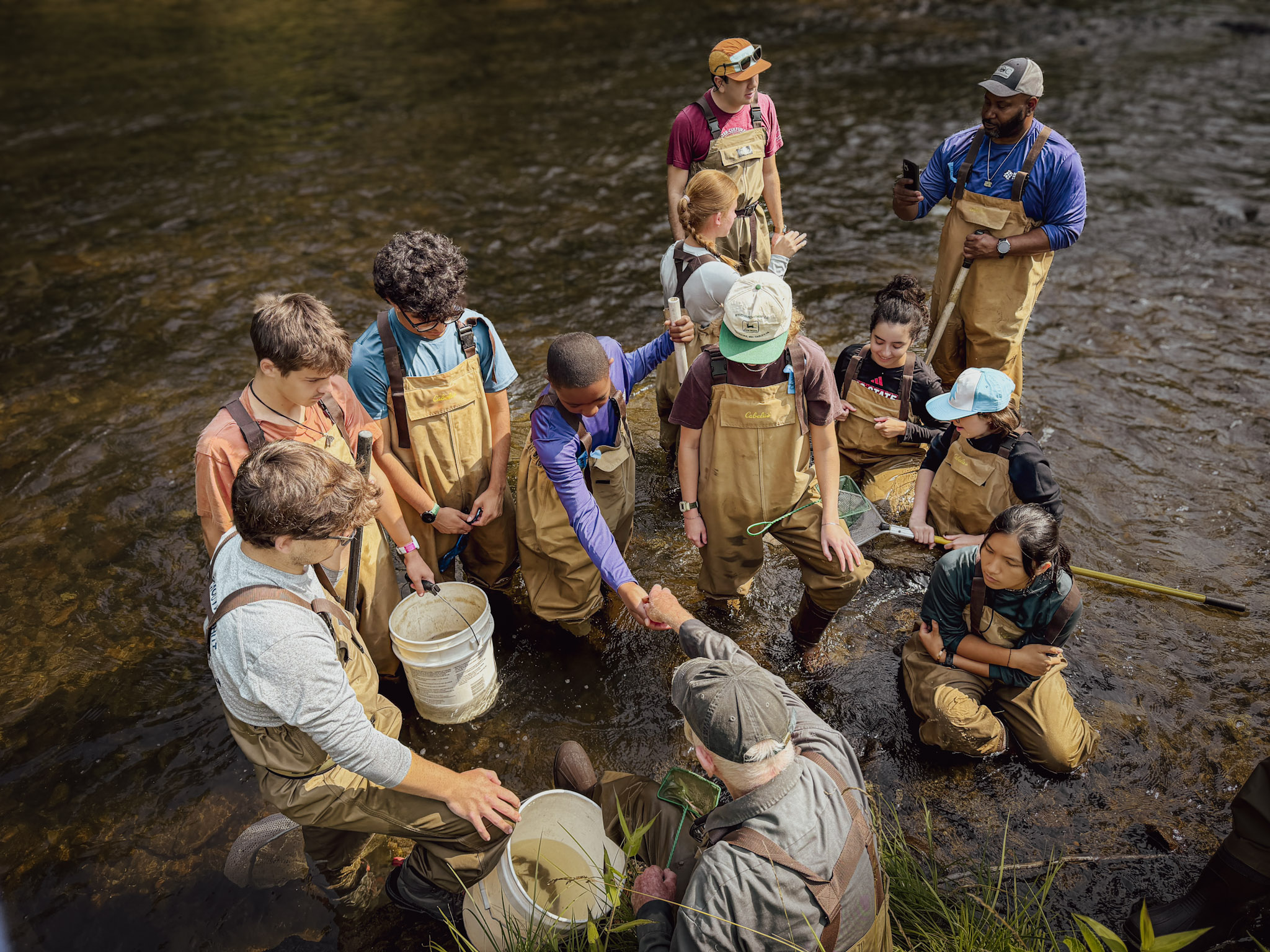
This summer, high school students once again took part in a long-term aquatic biomonitoring project, wading into a mountain river to count its fish — stunned, identified, and released, one at a time. On the Cullasaja, that count has become a reading of the stream’s health, kept every year since 1991.
This summer, the Highlands Biological Station is once again hosting high school students from the North Carolina School of Science and Math (NCSSM). Students spend 5 weeks working alongside HBS researchers, research assistants and undergraduate interns, assisting with various research projects, from bird banding to inventorying dragonflies in wetlands.
In the water
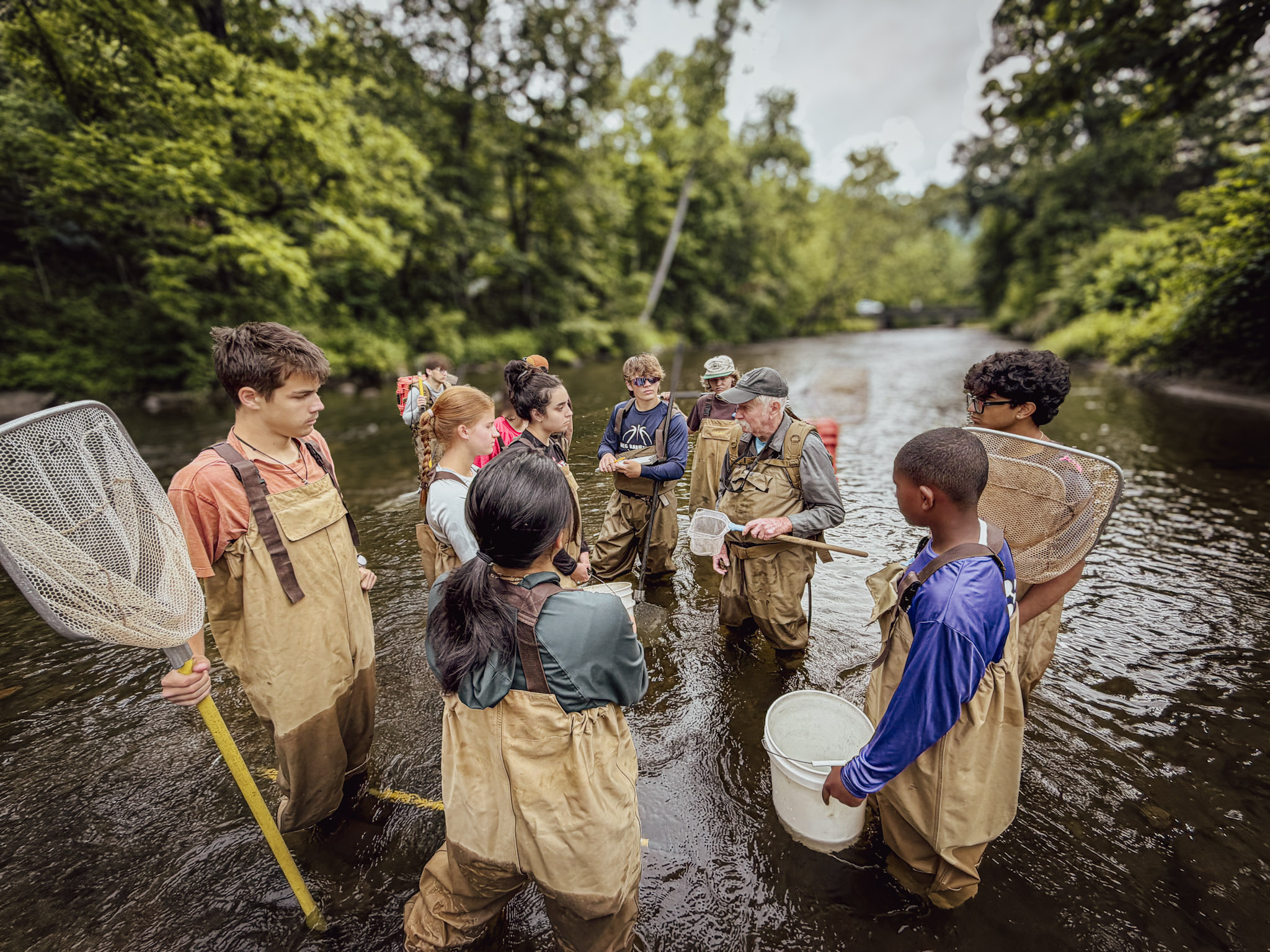
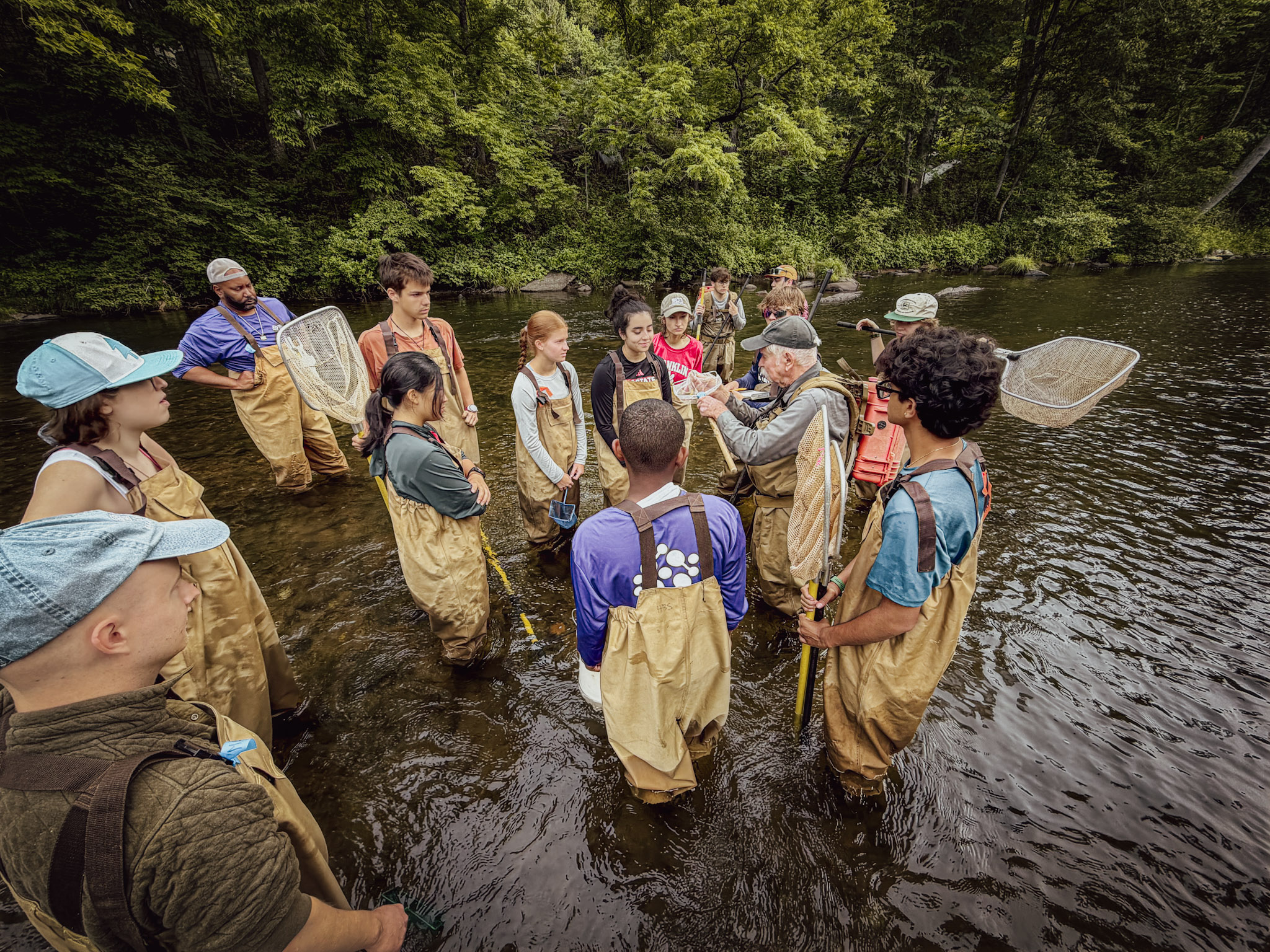
But one of the highlights each summer is joining Dr. Bill McLarney from Mainspring Conservation Trust to assist in their long-term aquatic biomonitoring project, where students help to inventory fish using an electrofisher. The electrofisher momentarily stuns the fish so they can be captured, identified, and counted before being released back in the stream.
The number and type of fish inventoried can tell us a lot about the condition of a stream.
On the Cullasaja, since 1991
This year, we once again helped sample the Cullasaja River near Peaceful Cove Rd. This site has been sampled annually since 1991. This year, we caught 19 species of fish, including the rare Wounded Darter and colorful Gilt Darter, as well as a Brown Trout and several Rock Bass.
The 2026 survey
The verdict
Based on the number and types of species we captured, the site scored FAIR, a slight drop from last year’s score of GOOD. However, overall trends show that the site is holding steady and perhaps even slightly improving over time, which is good news for both people and fish.
Keep reading
More notes from the field.
Dispatches from the streams, forests, and gardens of the southern Blue Ridge — the research, teaching, and long-term monitoring that happen at Highlands Biological Station all season long.
Read more field notesThe Upper Little Tennessee Aquatic Biomonitoring Program, which includes the Cullasaja River, is led by Dr. Bill McLarney of Mainspring Conservation Trust.