
Boulders and Bats and Bears, Oh My!
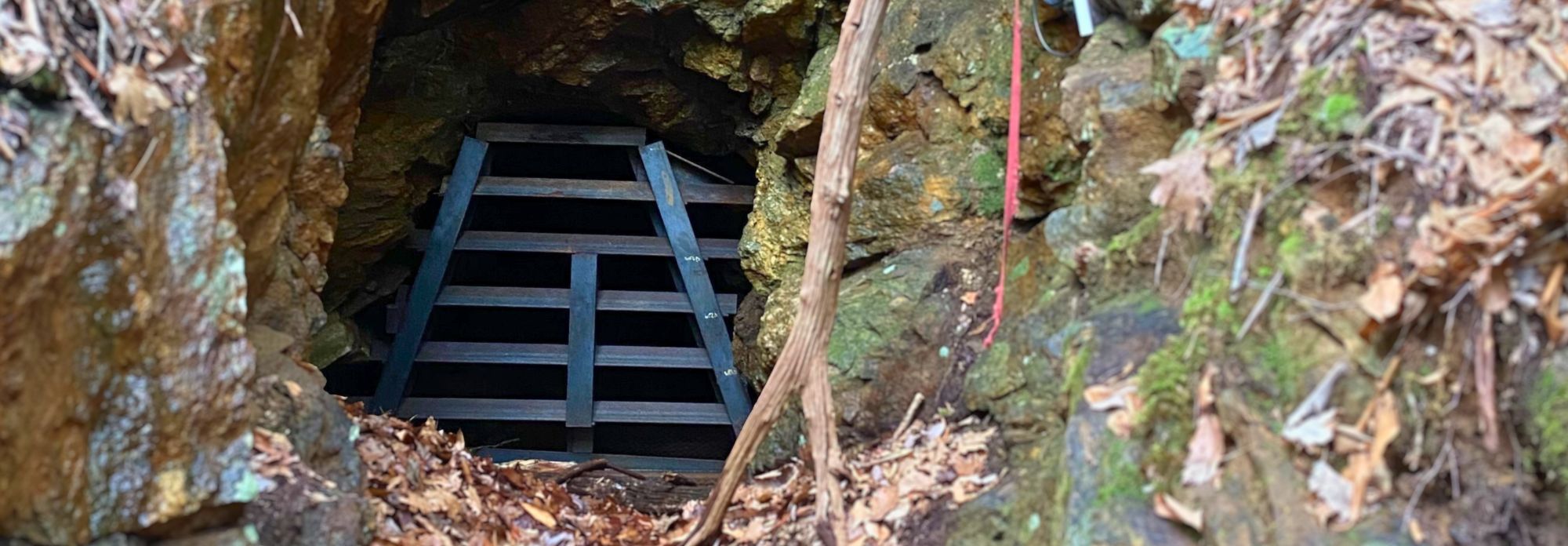
Winter is the season for counting bats — the ones that hibernate deep in the caves and old mines of the southern Blue Ridge. We went underground to tally them, and found the dark was holding more than bats.
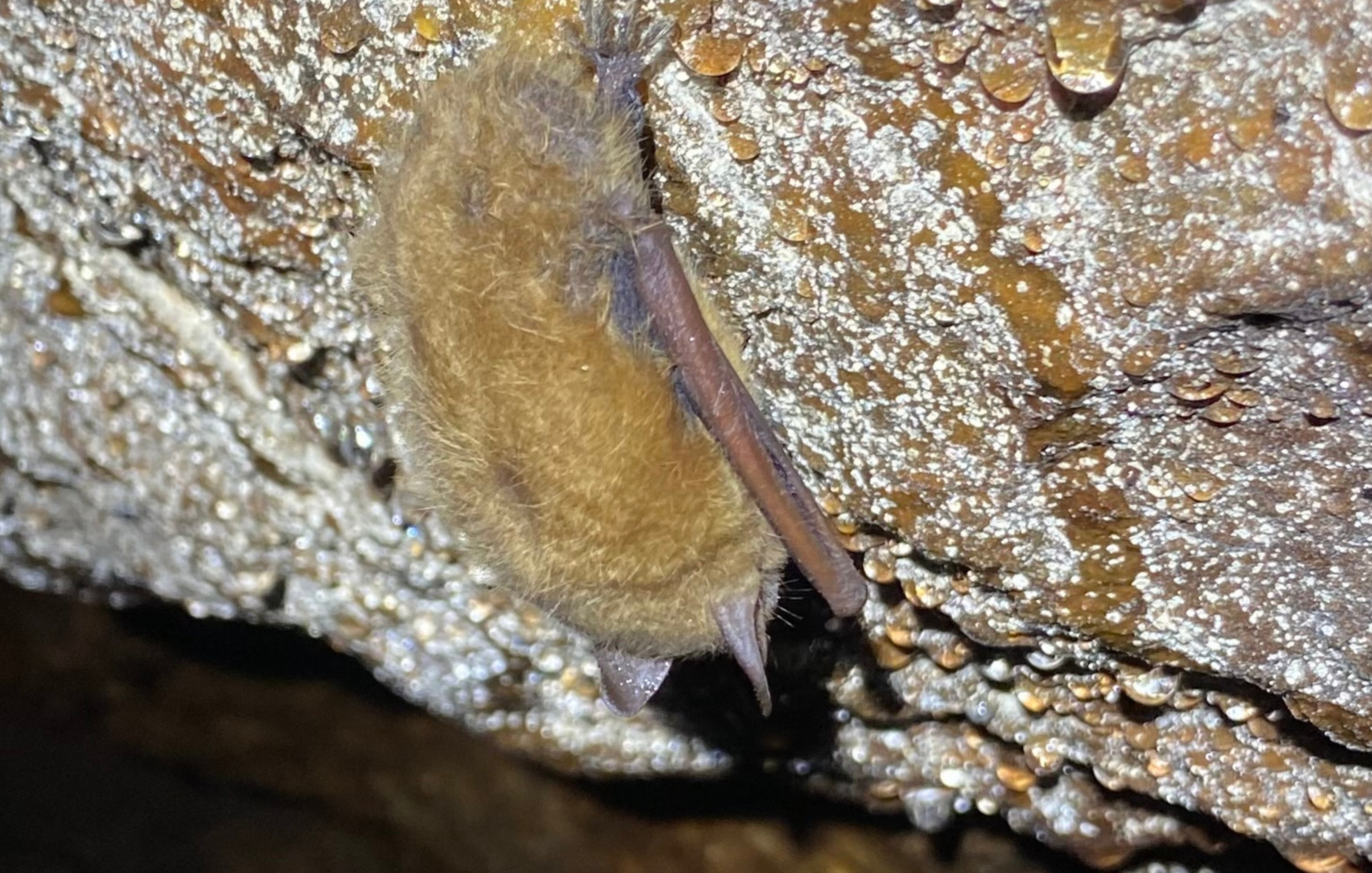
Winter is the best time to count bats. When the cold comes on, the bats of our region disappear into caves and old mines to hibernate — which makes these months the one reliable chance each year to find them, hold still, and count.
Recently, Highlands Field Site Director Dr. Rada Petric, research assistant Adriana Kirk, and I set out to do just that, visiting several of the mines and caves we monitor in partnership with the U.S. Forest Service and the North Carolina Wildlife Resources Commission.
We keep acoustic recorders running at these sites through the year. The devices capture the ultrasonic calls of bats — voices pitched well above anything we can hear — and afterward we run the recordings through software that names the species by sound alone. It is remarkable technology. What it can't tell us is how many bats are actually inside a given cave or mine.
Calls above our hearing
Bat calls sit far above the range of human ears. Recorders capture them all year, and software names the species by sound.
How many are inside
Sound tells us who is there. It can't tell us how many.
Answering that takes people, once a year, underground.
For that, there is no substitute for climbing in once a year and counting them ourselves — by hand, and by headlamp.

This year's count turned up several Tricolored Bats — among the smallest bats in the eastern United States, a palm-sized animal that, not so long ago, was also one of the most common. Over the last decade, that has changed with startling speed.
One fungal disease has hollowed out these colonies in barely a decade — and the numbers tell it plainly.
The culprit is White-nose Syndrome, a fungal disease that has moved through hibernating bat colonies across eastern North America. Its arithmetic is stark. In one natural cave we monitor in Swain County, biologists counted 1,600 Tricolored Bats in 2011. This year, Rada and her colleagues counted 34.
Each mark is one bat. 1,600 in 2011; 34 at the latest count.
Declines like that are why the U.S. Fish and Wildlife Service is now weighing whether to list the Tricolored Bat as federally endangered.
Holding still until spring
Acoustic recorders listen year-round, but only a hand count reveals how many bats are truly inside a cave.
Something else entirely
Some days, you go underground looking for bats and find something else entirely.
In Clay County, we lowered ourselves into a talus cave — a cavern formed by a jumble of fallen boulders — that we had never surveyed before. Inside, in the dark, lay the skeletonized remains of an American Black Bear.
From the size of the skull and the wear on its molars, we think it was an older female. From the bite marks scored into the skull, we think it was killed by a larger male. It happens: male bears will sometimes attack, kill, and even eat females and cubs, and this one may have been caught while it was denning.
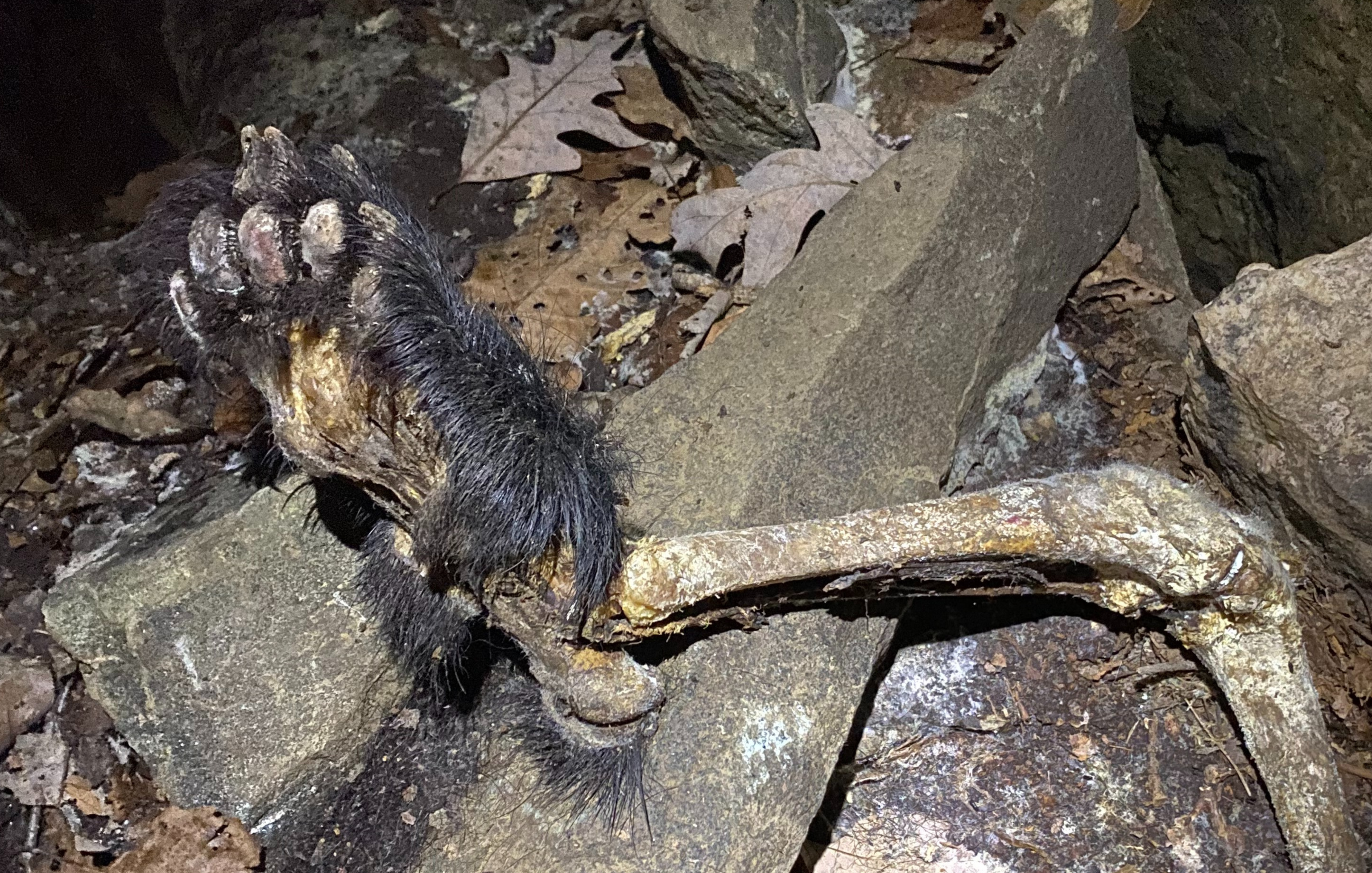
It was a reminder that these caves keep their own records — of who hibernates, who vanishes, and who doesn't make it back out.
For the record: no large, cannibalistic bears were home when we climbed in.
Photographs courtesy of Highlands Biological Station. Bat monitoring conducted in collaboration with the U.S. Forest Service and the North Carolina Wildlife Resources Commission. Notes from the Field is published by Highlands Biological Station, a center of Western Carolina University. More dispatches from the field.